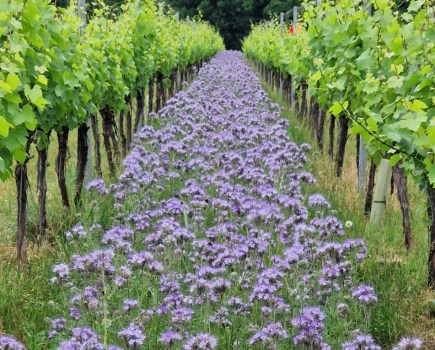

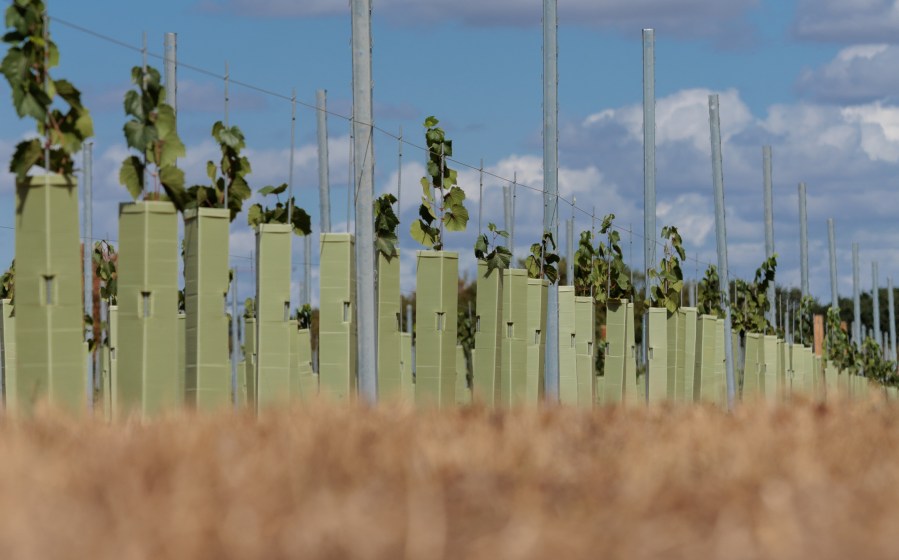
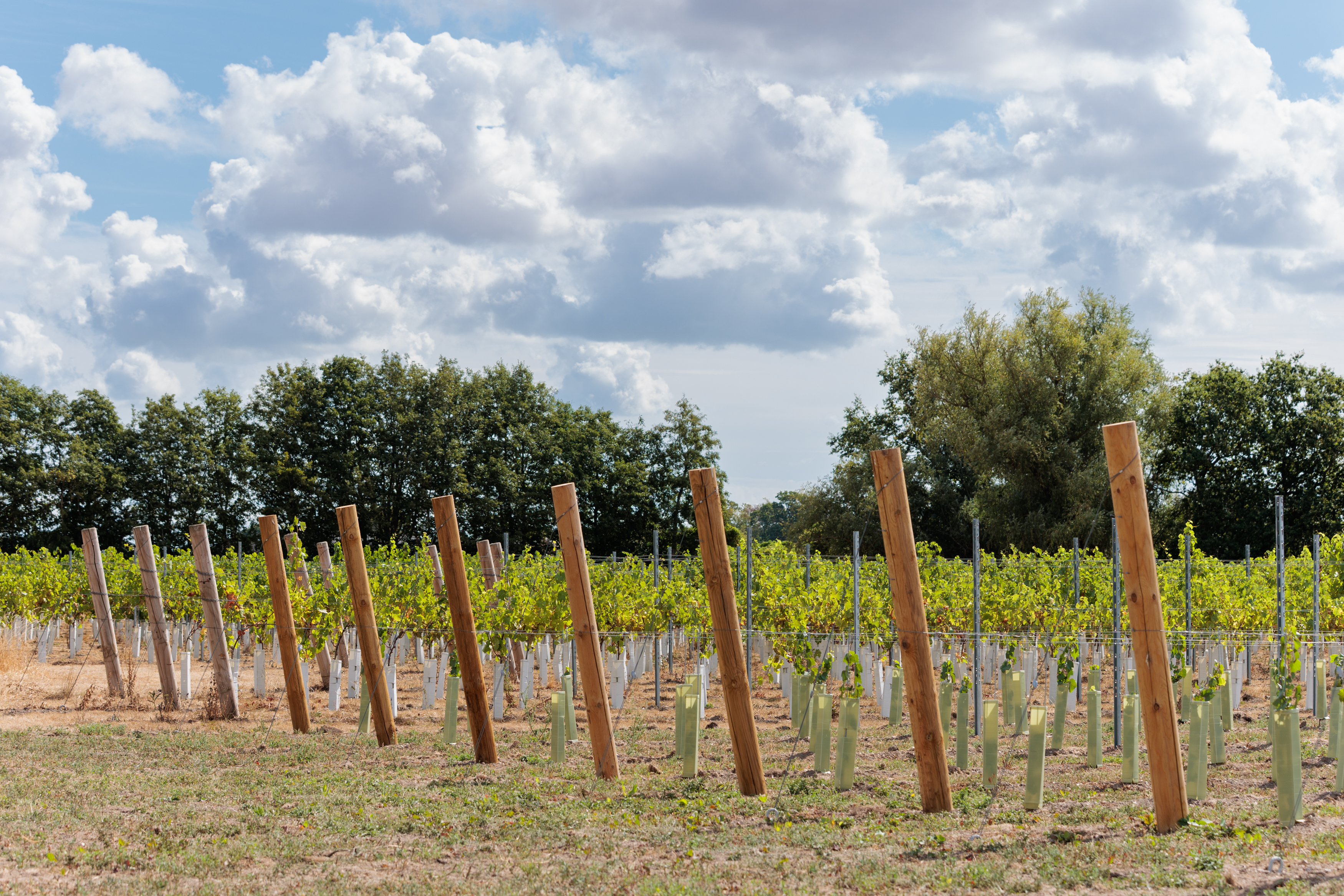
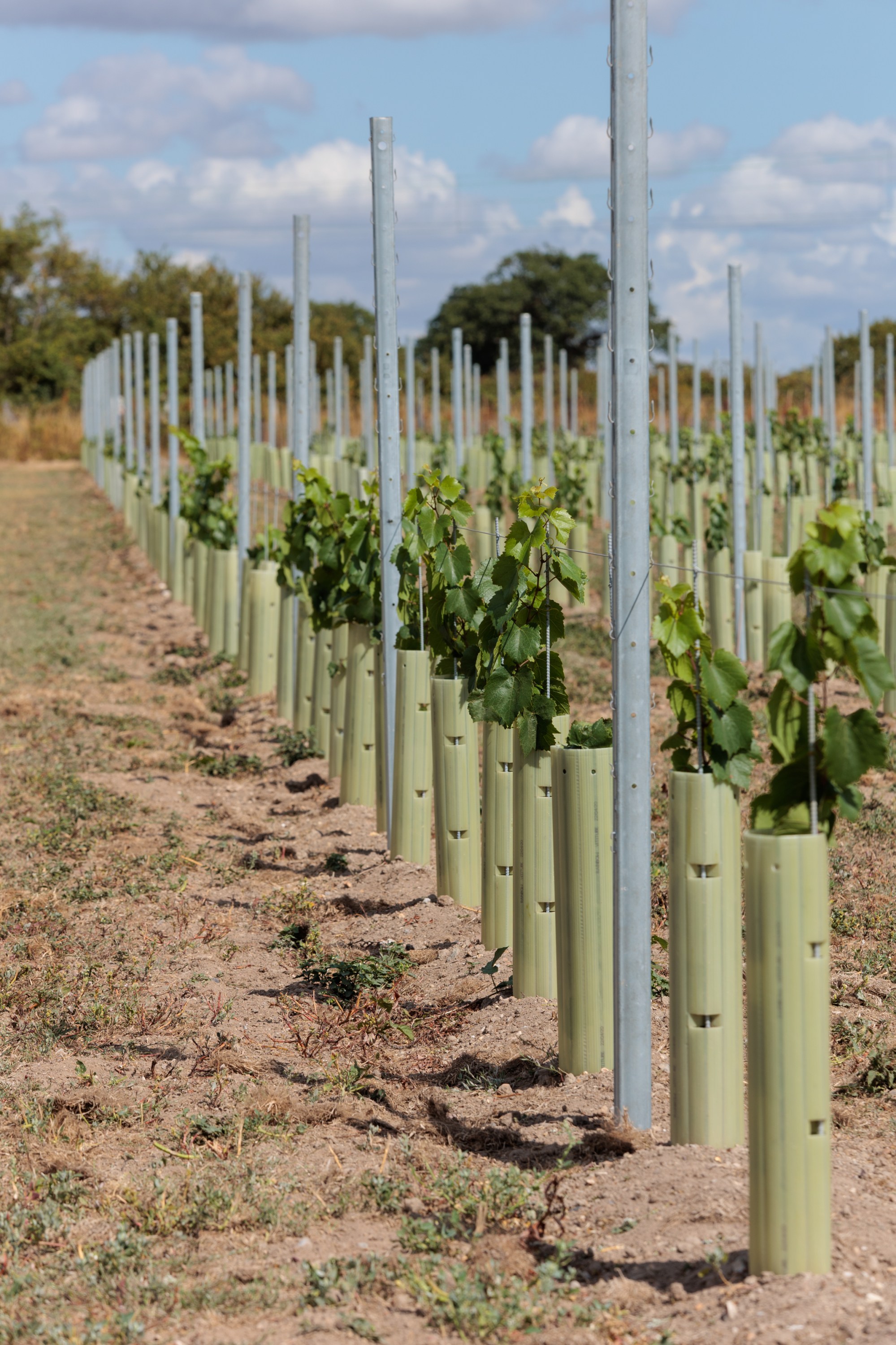
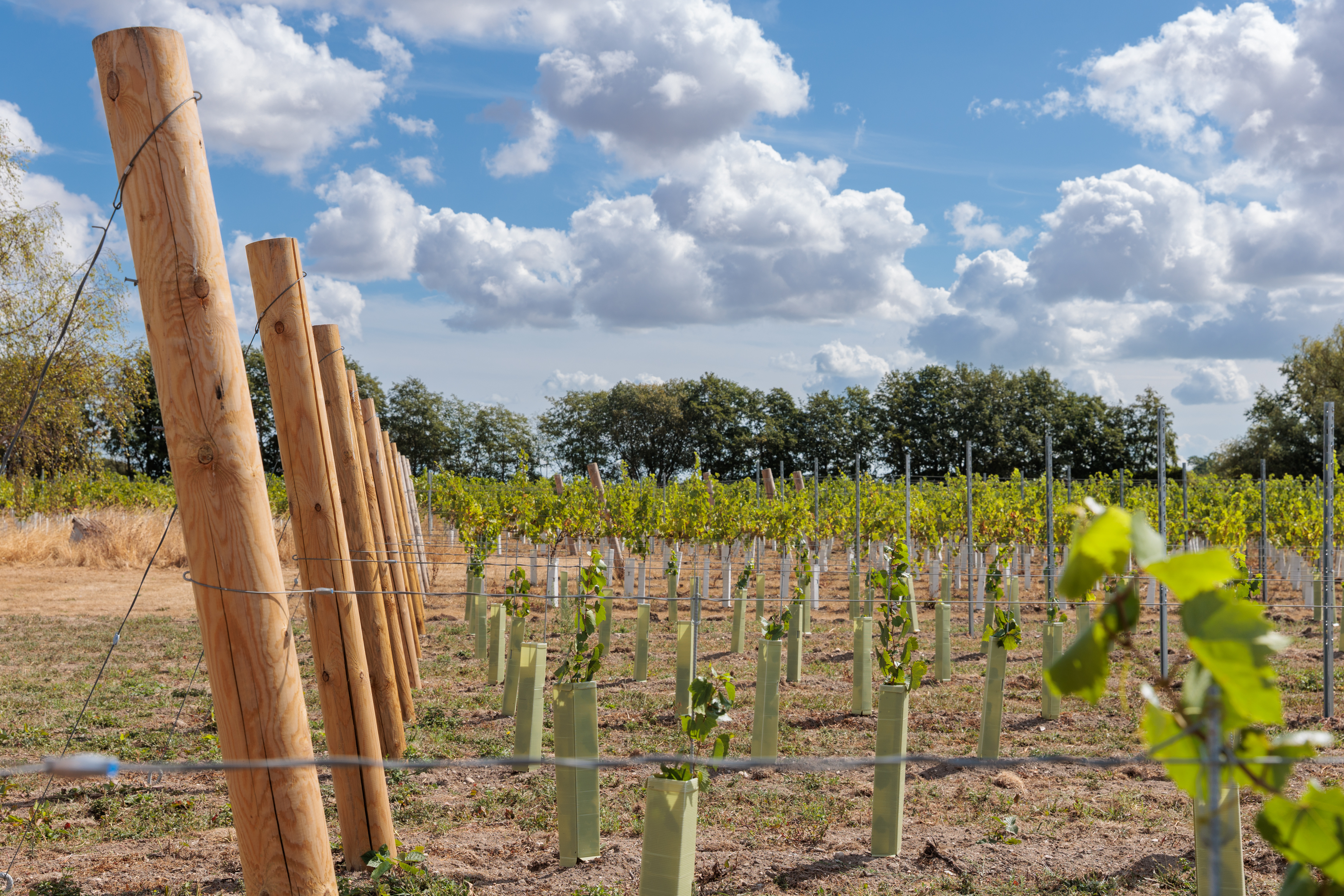
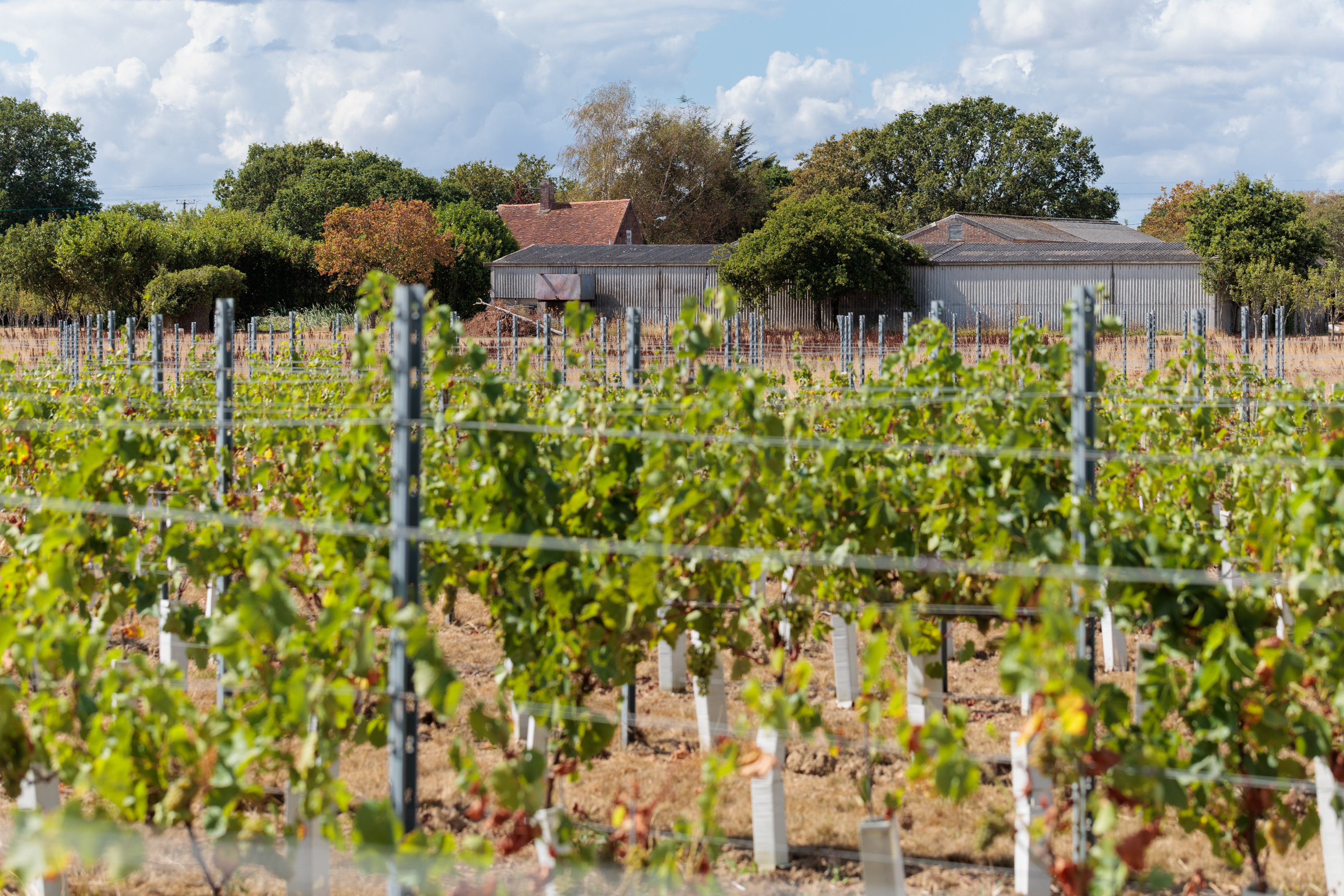
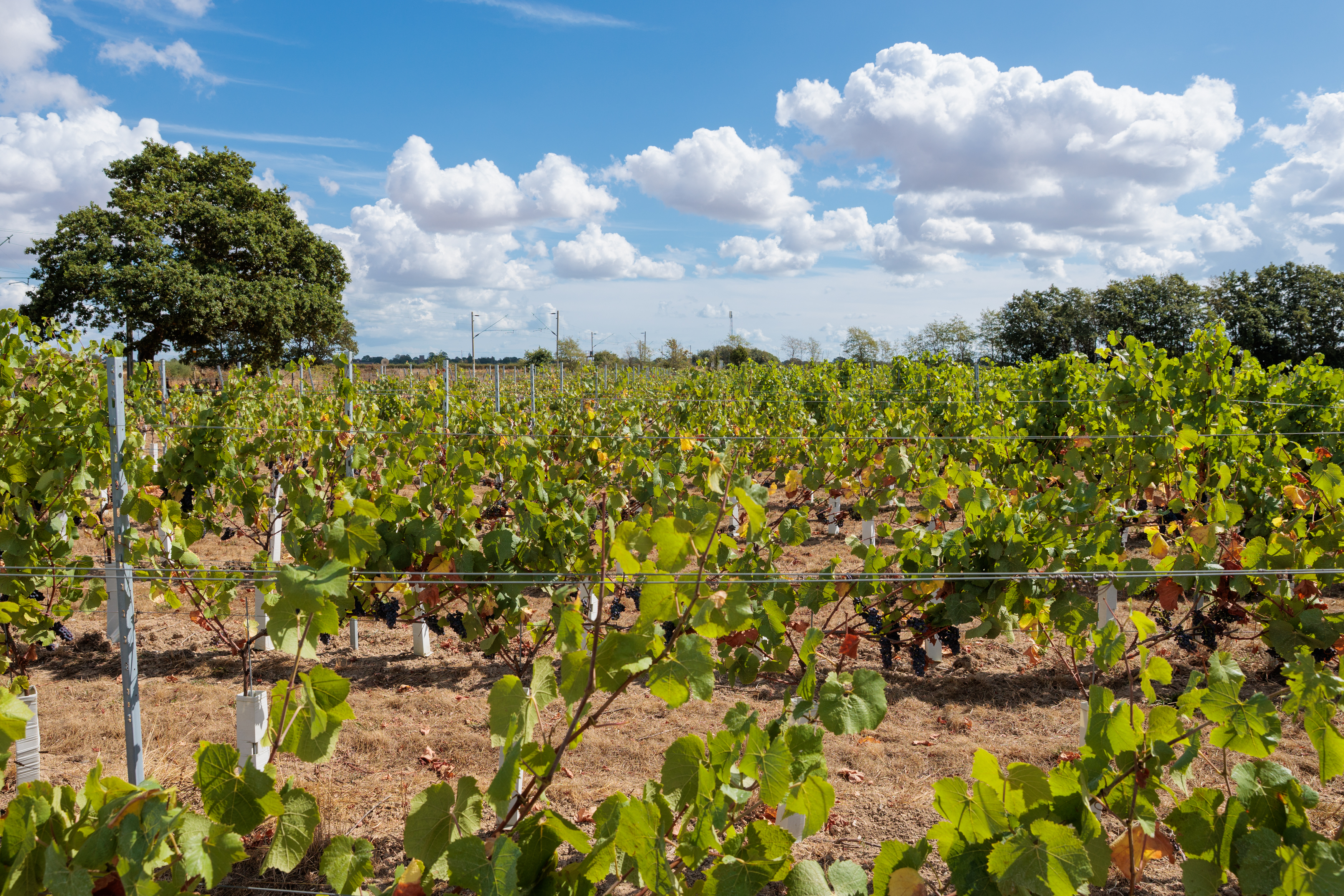
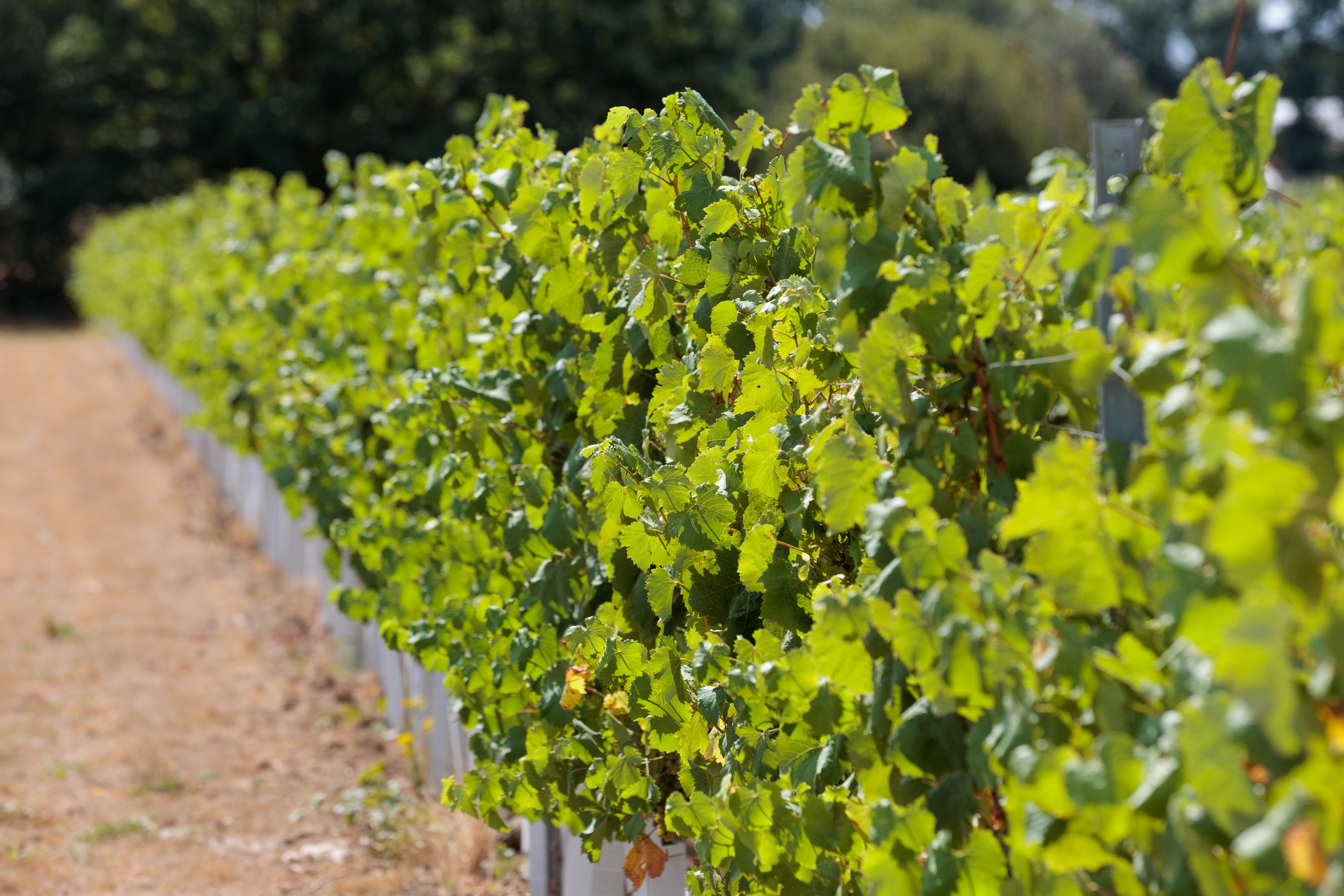
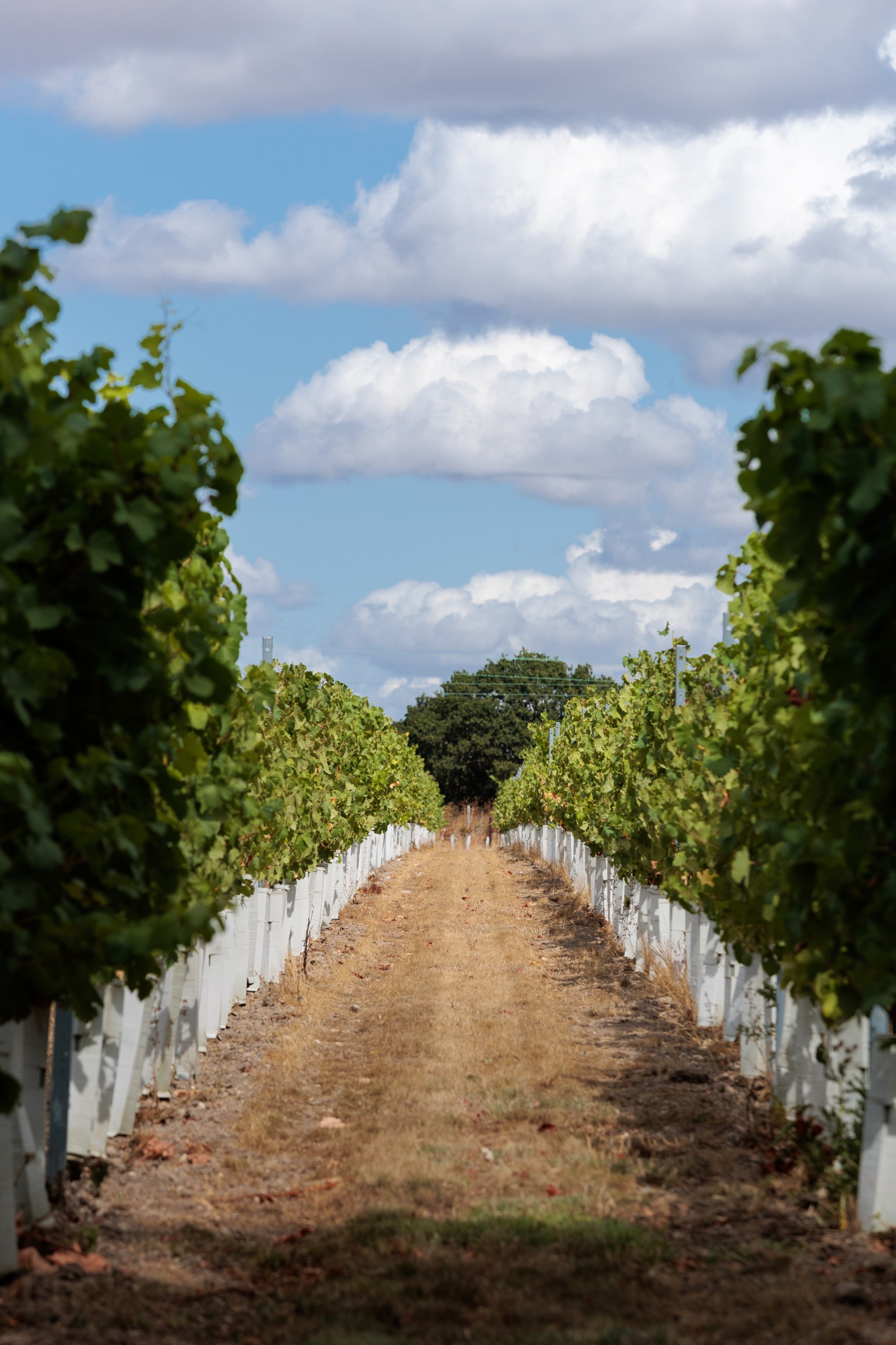
The approach to The Talbots takes the visitor through beautiful farmland views with ripening wheat fields but there are no vines in sight. So it is quite breath taking when you pass through the farmstead with its collection of buildings of varying ages to find that Fairgrove vineyard literally opens out in front of you. It is like opening the centre page of a vintage pop-up book with all the promise of a story that will unfold around you. That sense of being at the centre of everything is never far away as you travel deeper into the vines.
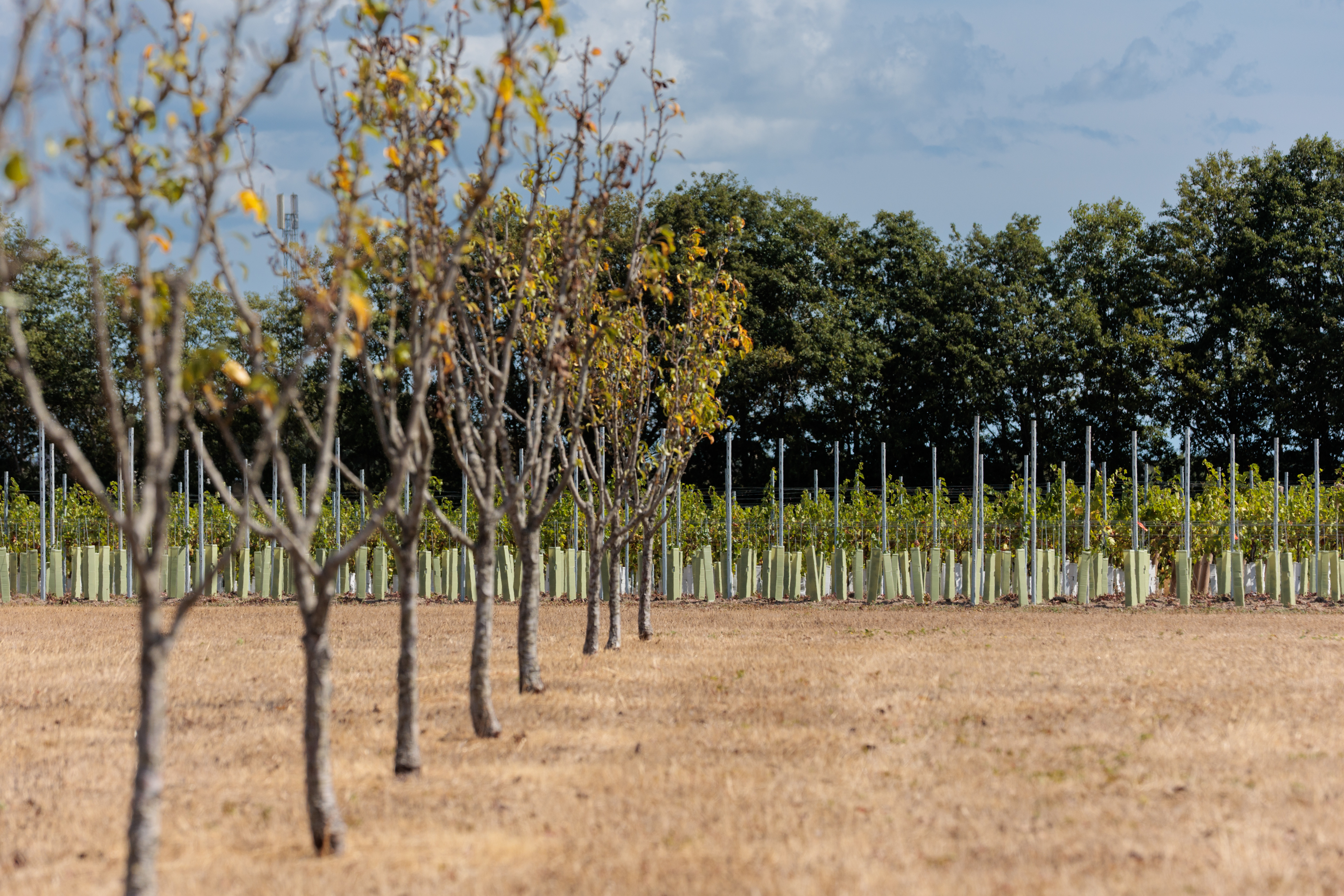
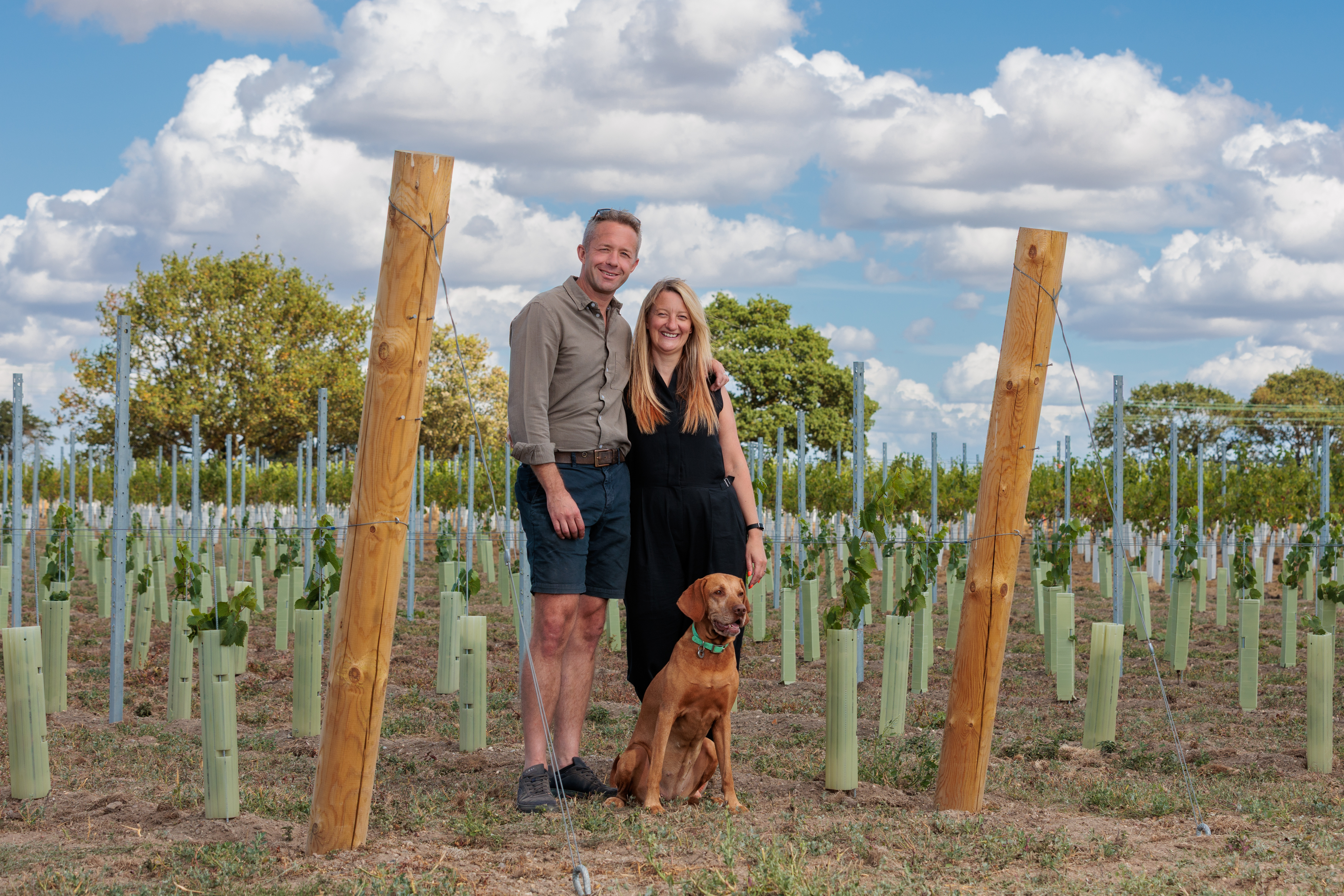
Claire and James Lovegrove have chosen the perfect site to create an atmosphere of inclusion. They purchased the former pear orchard in 2021 and it is an exceptionally wide site which allows the vines to fill the field which is a wonderful vision for the visitor.
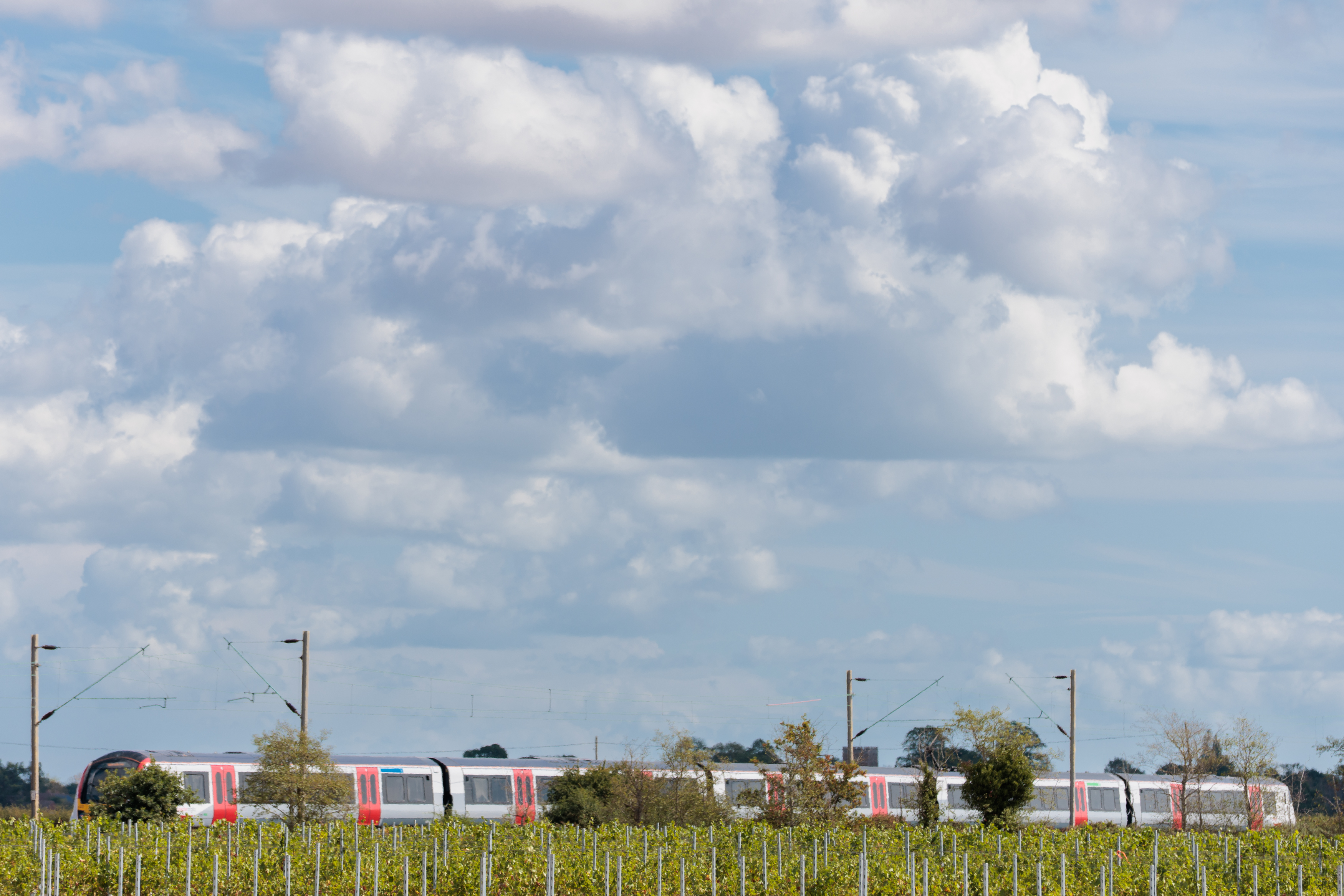
The north-south planting is 30m above sea level in the village of Thorrington in Essex. With close proximity to the popular Victorian tourist destinations of Frinton-on-Sea and Clacton-on-Sea the climate has been recognised as being both the driest and with the longest sunshine hours in the whole of UK. Proximity to these traditional Victorian holiday destinations also brings the additional benefit of excellent rail links to London. The direct journey to London Liverpool Street takes about 90 minutes and with access to the Stansted Express will allow the vineyard to connect with both domestic and international travellers.
“I had long thought about planting a vineyard and creating something from the land, it was a kind of constant thought,” explained James. “I was sure it would just be a dream and not come to reality,” said Claire with a smile who like James works in the centre of London throughout the week. However, like many who turn a dream into a reality it was a sad event in the family that convinced James that it was time to find out if it would be possible to fulfil his idea. “I went along to view the farm to be supportive but once I was here, I could just see the vision and all these ideas and plans came to me, I was convinced,” said Claire.
The farming family from which they bought the land however wanted to ensure that James and Claire really had a solid plan for the future and wanted them to talk through their plans for the vineyard and their vision of the future before they would sell the property to them. “We managed to convince them that we were serious and had thought about what we were doing and now we hope to share a bottle from our first vintage with them,” said James with warmth in his voice.
Before the couple even prepared the ground for planting they enrolled on the one year viticulture course offered by Plumpton College but James and Claire are both deeply interested in the world of wine. Having celebrated their wedding at Three Choirs, they have continued to travel to many wine producing regions and embraced the local wine production to broaden both their understanding and their appreciation for regional wines. “We visit small vineyards wherever we go in the world and this has given us a desire to approach wines from a different perspective and developed in us a willingness to explore wines and grape varieties that we may never have had the opportunity to try outside of these experiences,” explained Claire.
The couple have many friends and relatives who have farms and on a trip to New Zealand they made contact with award winning boutique vineyard and winery, Poppies in Martinborough. Having established in 2012 Poppy and Shayne Hammond have quickly built a reputation at Poppies as a vine and wine experience focusing on small parcel unique style wines of excellence. “During the visit we learnt so much,” said James. “This formed part of our initial inspiration and Claire and Poppy have continued to write to each other since,” he added.
The research continued at vineyards and wineries across England and Wales. “I am inspired by the vineyards that have created a tourism experience designed from the point of view of the visitor and the stories of the people within the industry that show an obvious love and connection to what they do,” explained Claire.
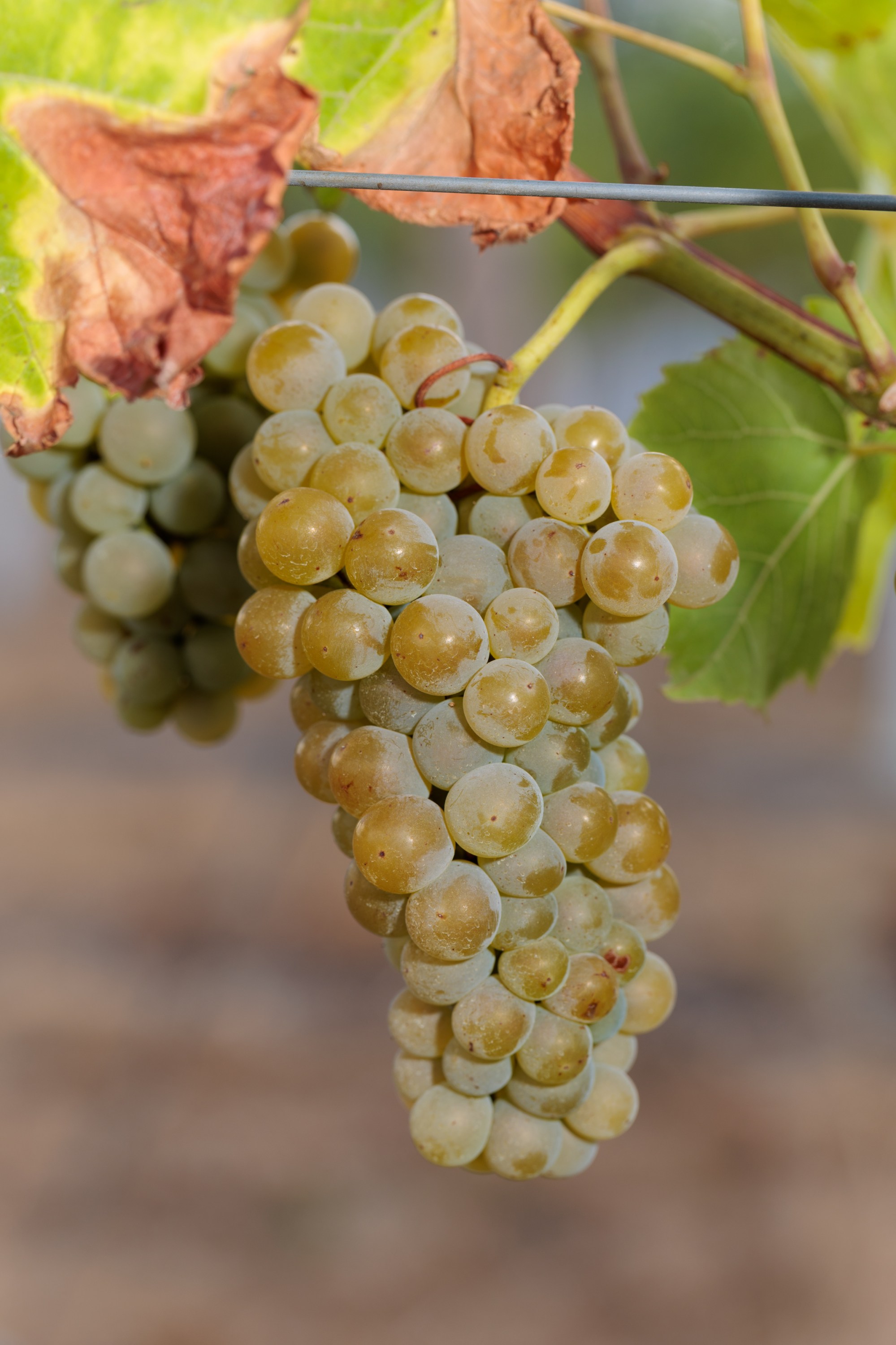
The two hectare site was finally planted in April 2023. The varieties planted are an interesting selection. “I feel that still Bacchus wines when they are produced in Esssex with the benefits of the dry sunny weather have elements of elderflower and green apple with light floral notes that remind me of the view from the air when you first fly back to the UK,” explained James. “I think wines are at their best when the flavour profiles are fitting to where the wines are made,” he added with conviction.
Seyval Blanc was chosen as a variety to produce sparkling wines. This choice was inspired by a visit to Camel Valley Vineyard and a subsequent tasting that included the highly praised Annie’s Anniversary Brut traditional method sparkling which is 100% Seyval Blanc.
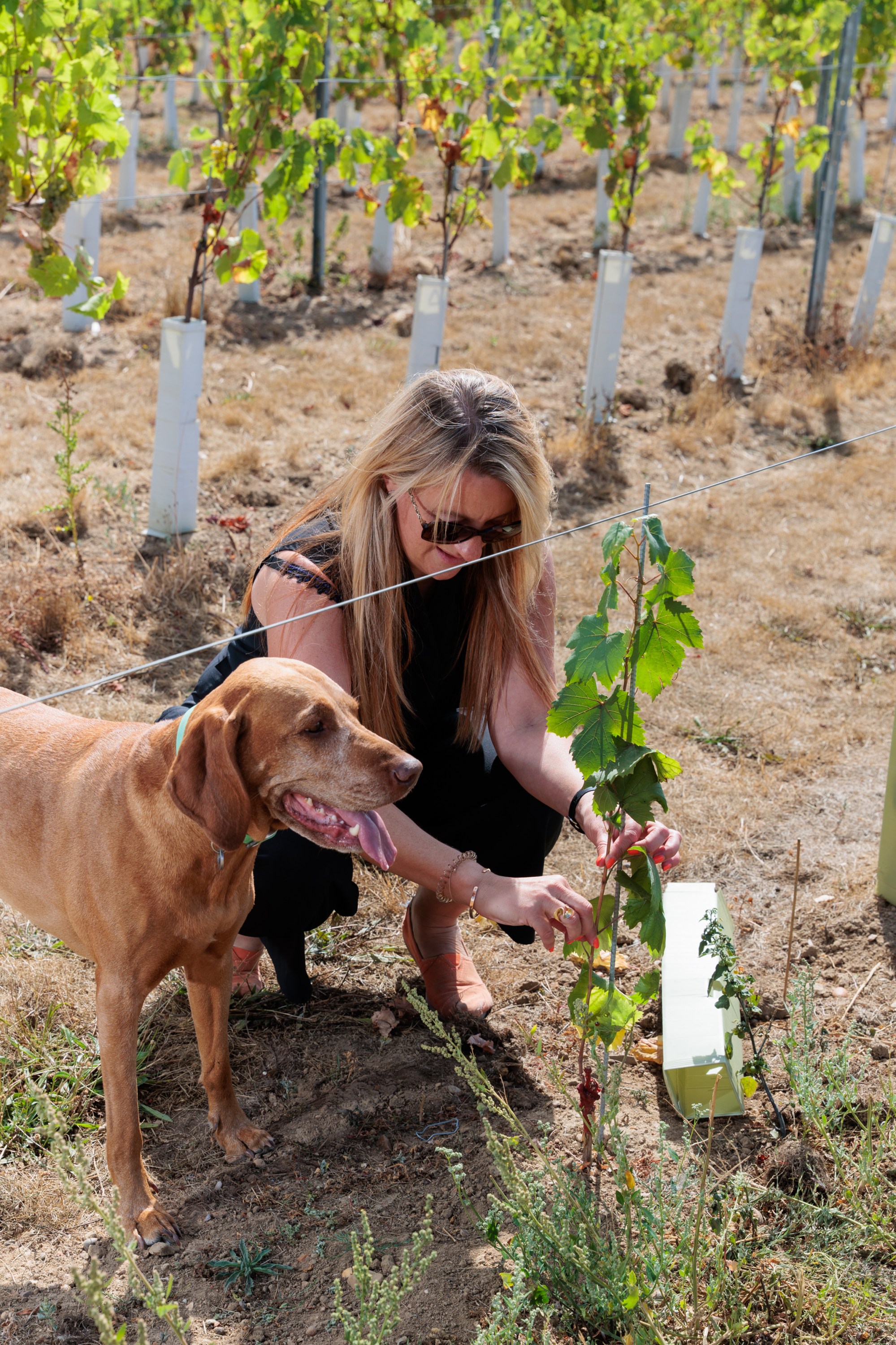
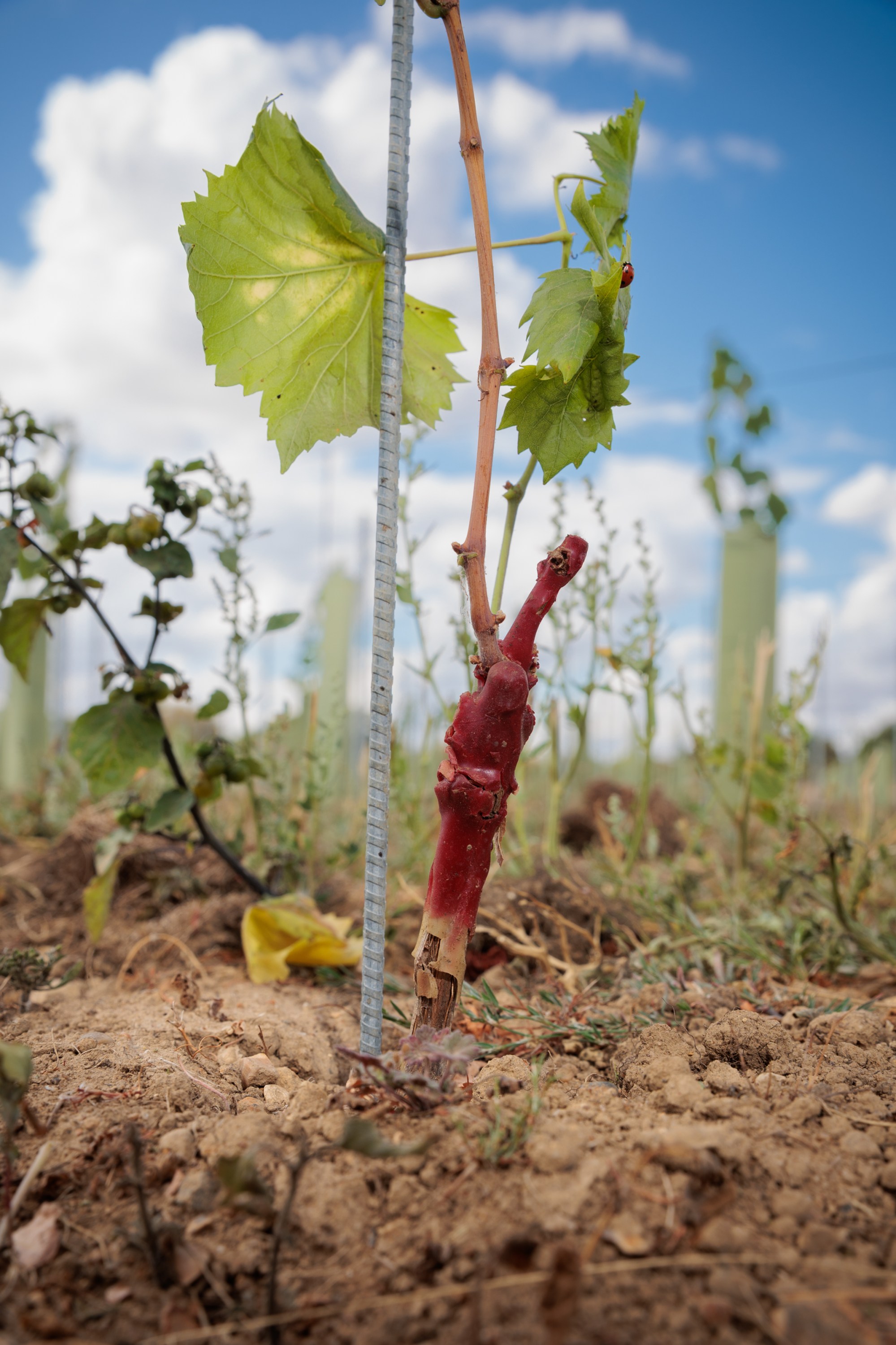
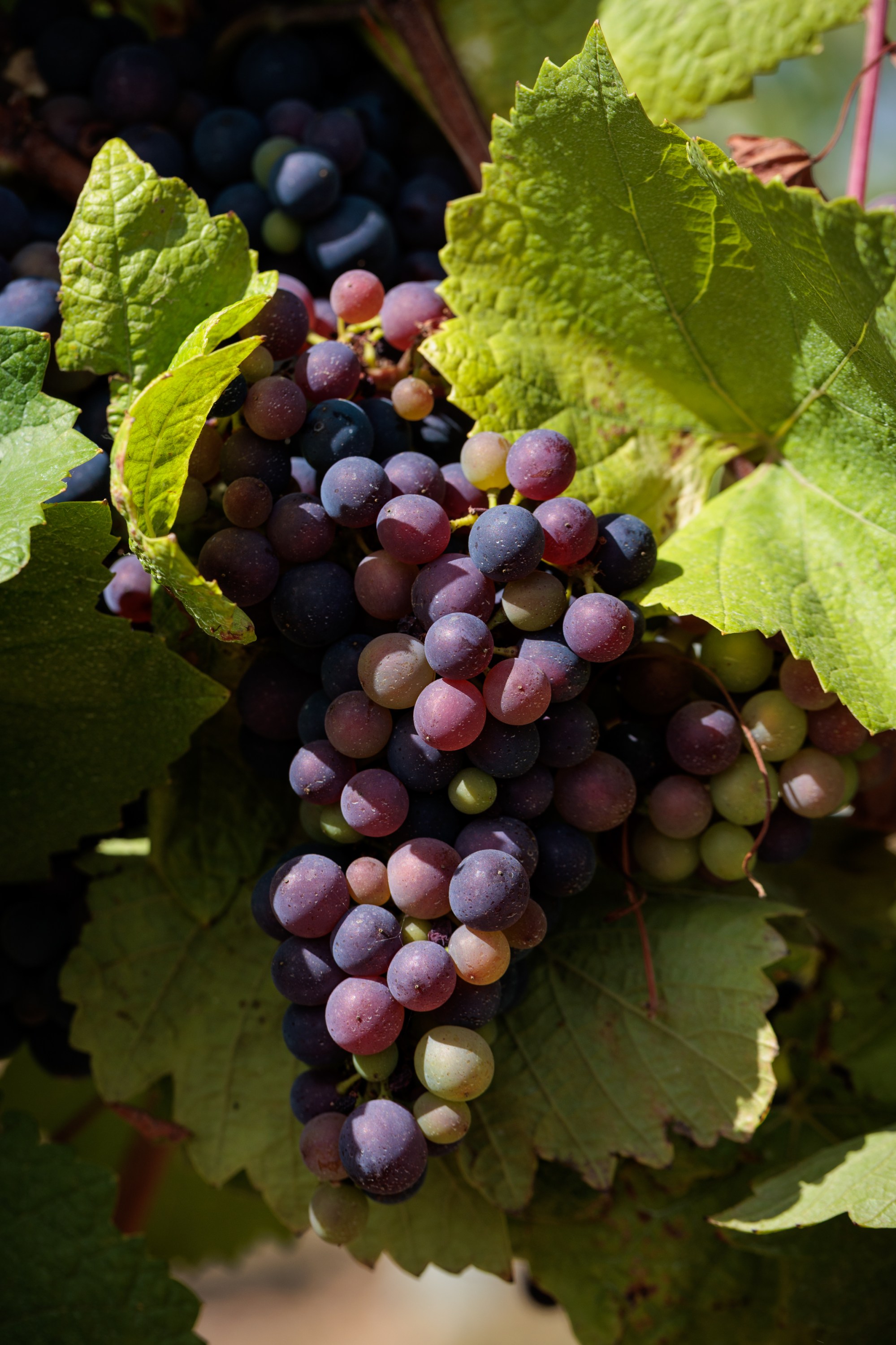
The sandy loam soil means the rootstock is SO4 and the Pinot Noir clones include 777, 115 for the floral notes it brings and 459. It becomes clear that James has literally immersed himself in the establishment and the life cycle of the vines. “The vines are individual and perform differently,” he explained as he walked the rows. “The 459 clone struggled more to establish than the other Pinot Noir Clones,” he explained.
James knows each of the vines and interestingly he finds peace from the continued learning experience that the vines (and Mother Nature) provide. “I enjoy the process of seeing what works and really as you go through the journey what is the point if you don’t enjoy the steps,” said James. In this one statement James has captured the atmosphere at Fairgrove Vineyard.
The 2026 harvest will be the first taken at Talbots Farm since the initial planting in 2023. In that time there have been significantly differing seasons. “The 2024 season was a significantly wet year but we very rarely have standing water in the vineyard and the wet winter of 2024 meant that pruning was delayed and took place in early 2025,” said James as he describes the experiences of this fledgling vineyard. As he looks at the vines he describes how he is adapting the vineyard management regime as he learns what works with each of the vines “I now know exactly how long a tractor pass for the Bacchus takes,” he said with a warm laugh.
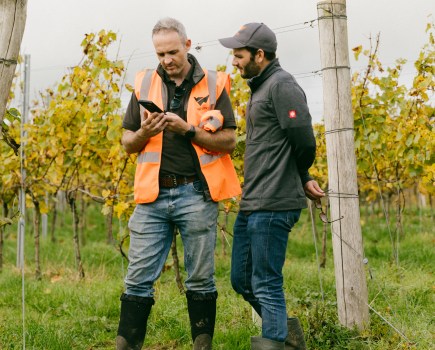
As part of the idea that the whole process is part of the journey, James and Claire undertake all the vineyard management tasks themselves “with the help of trusted family members,” Claire quickly added and there are numerous examples of how friends and family have been incorporated into this venture. “When we bought the farm in 2021 it became clear that we had a large task in front of us and Uncle Julian decided that for the sake of positivity and morale he would clear the space between the barn and the boundary wall of the brambles (which were at least waist high), so we have installed a humorous blue plaque to commemorate the feat. Aunt Gillian always declared that she wanted a ride on mower so we now have one which she happily takes for a spin at the weekends and our 13 year old niece finds herself enjoying the vineyard describing it as her ‘happy place’”, she said. As Claire is talking it becomes clear that the vineyard has very quickly become part of the fabric of this family.
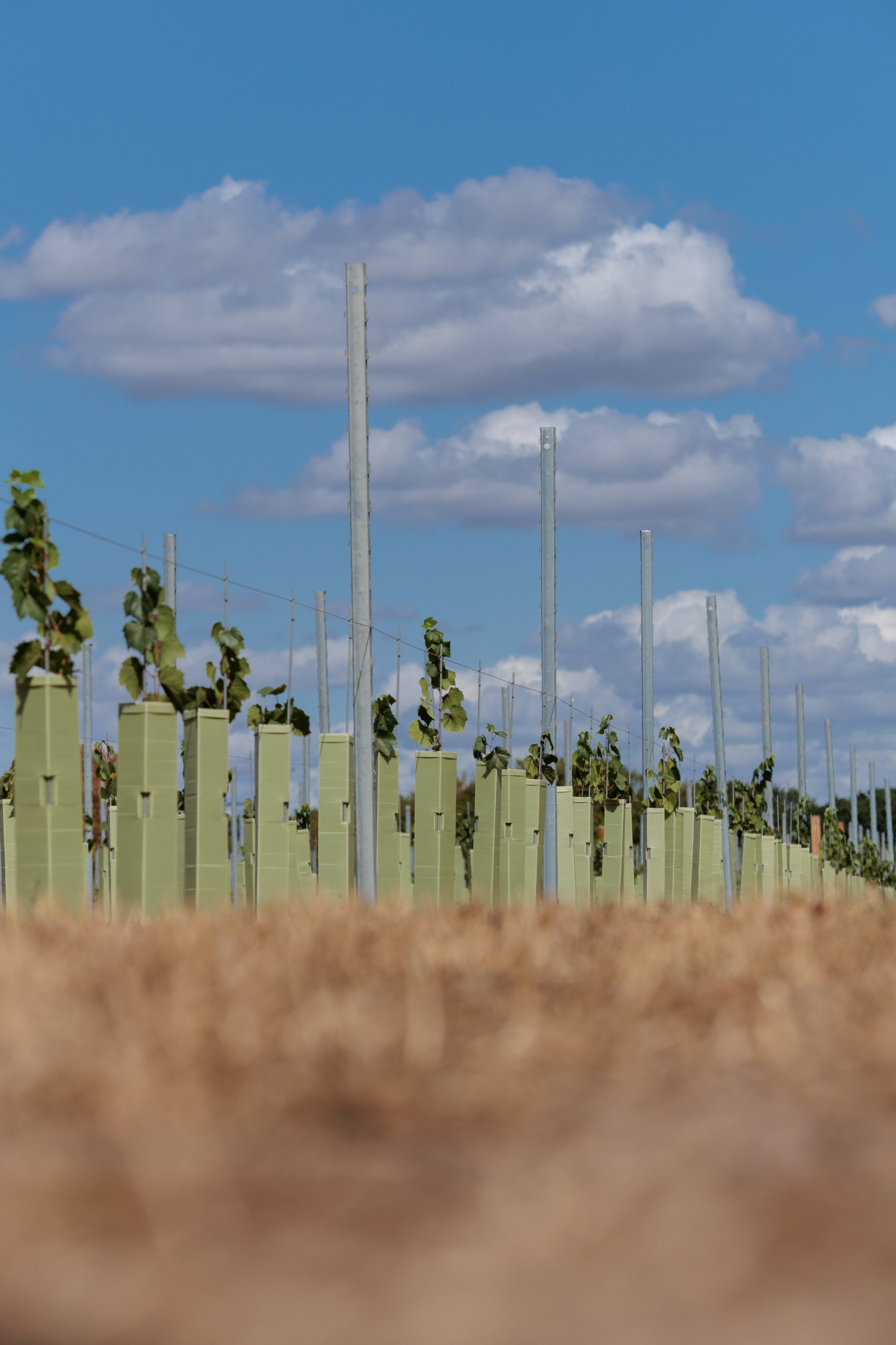
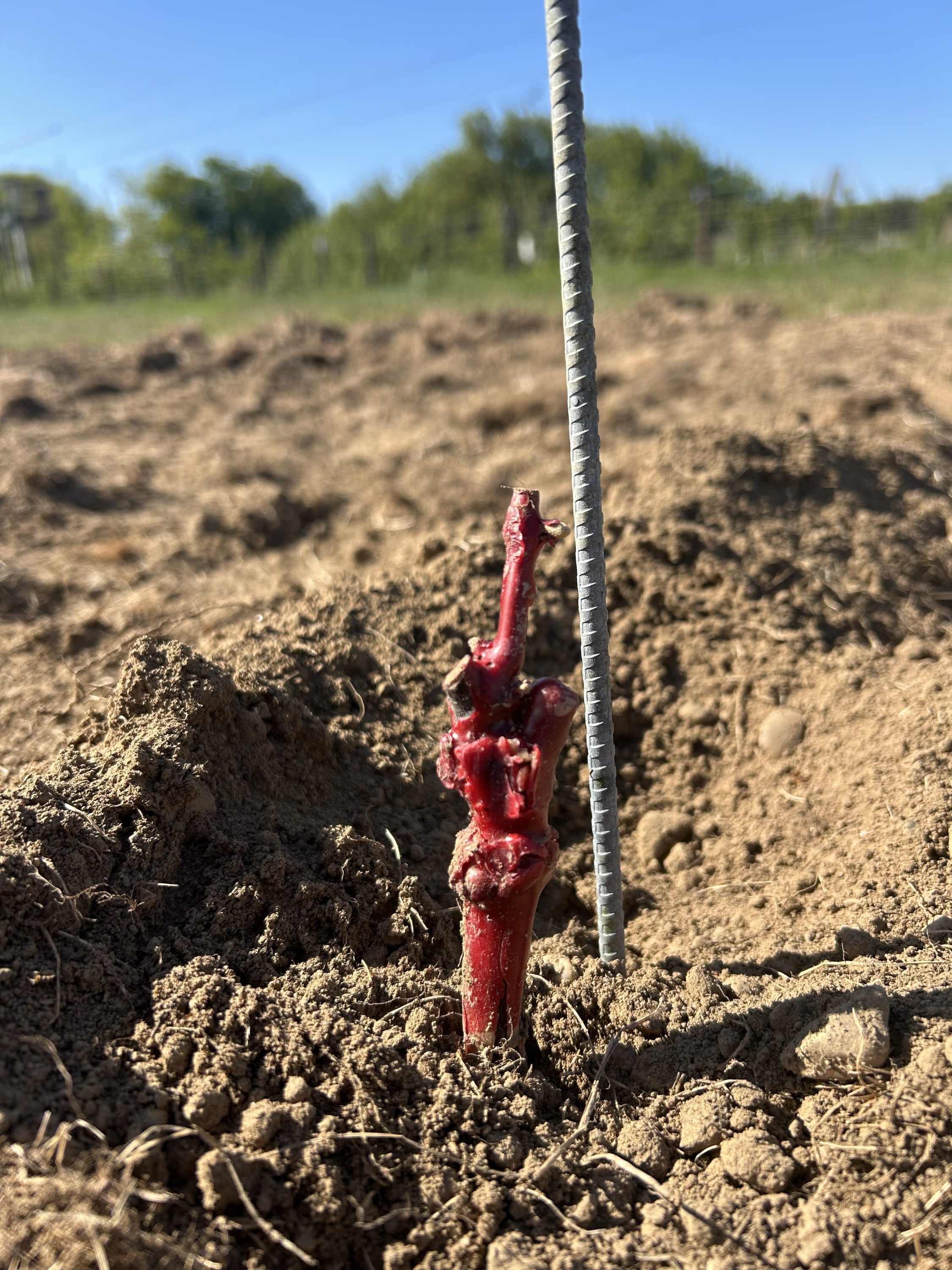
James and Claire have many plans for the future of the vineyard but are allowing them to take shape organically. One of those plans was implemented in April 2026 when the planting was expanded to include 2,300 Aligoté vines. James and Claire have been led to believe that there is no other registered commercial planting of the variety in England. With the couples characteristic charm the first Aligoté vine planted has been named Antoinette and her progress has been documented throughout the first growing season. “The new vines have established well despite the extremely dry weather,” said James with a hint of surprise. Highlighting how much peace he finds from the vineyard he added: “The Aligoté vines have very lush dark green foliage that is strikingly beautiful.”
One of the inspirations for the planting of this variety was the viticulture of other new world wine regions such as Oregon. “We have an industry that is new and does not have the confines of traditional regulations which dictate that you can only plant certain varieties so we have the ability to try something different,” Claire said with conviction. Another source of inspiration for this bold planting choice was Covent Garden bistro, 10 Cases. Known for its extremely varied wine list offering boutique wines Claire explained that the small production Burgundian whites on offer at this central London location really appealed to the couple and influenced their decision to move forward with the choice of Aligoté.
Claire and James continue to share future plans for the farm including the restoration of an onsite reservoir – 2026 has provisionally been declared the hottest on record by the Met Office with an average mean temperature of 16.5°C which is a significant 0.4°C above the previous record set in 2025 – this could prove to be a vital resource for the farm in future growing seasons.
Another plan that has yet to take shape is that of a tasting room utilising an existing farm building that will allow for an uninterrupted view straight over the vineyard. “We want the vineyard view to be the focus and the central feature of the tasting room and we want to ensure we incorporate the existing buildings and the heritage of the farm into the new vision,” said Claire.
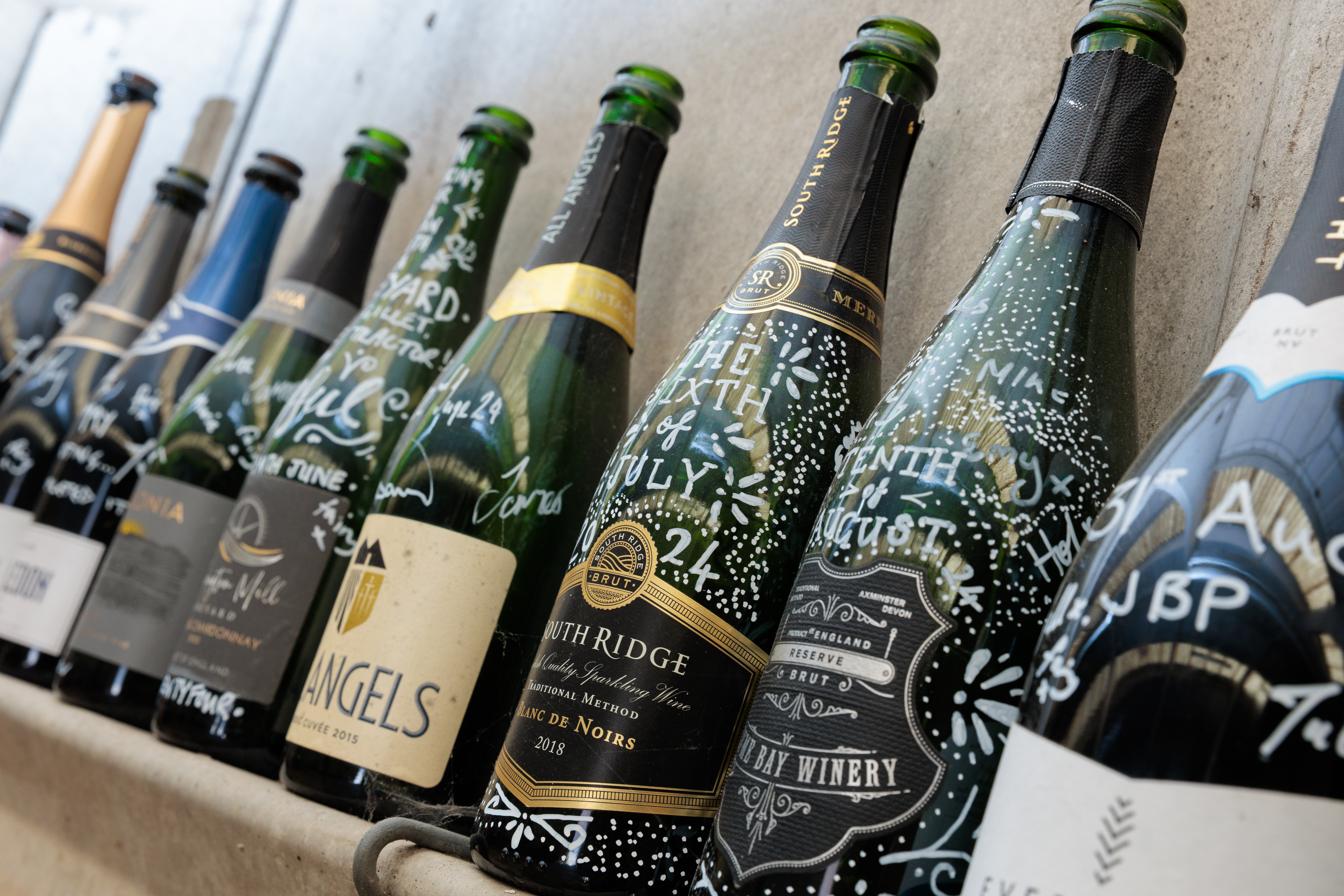
Claire and James are eagerly awaiting the first harvest at the vineyard but the research into the English and Welsh wine scene continues. Every Saturday the couple share a cheeseboard and a different English or Welsh wine with those who have been with them during the weekend helping with the vineyard tasks. The empty bottles are then signed by everyone who shared the moment and saved in the barn to become part of a memory library that will be displayed in the tasting room in the future.
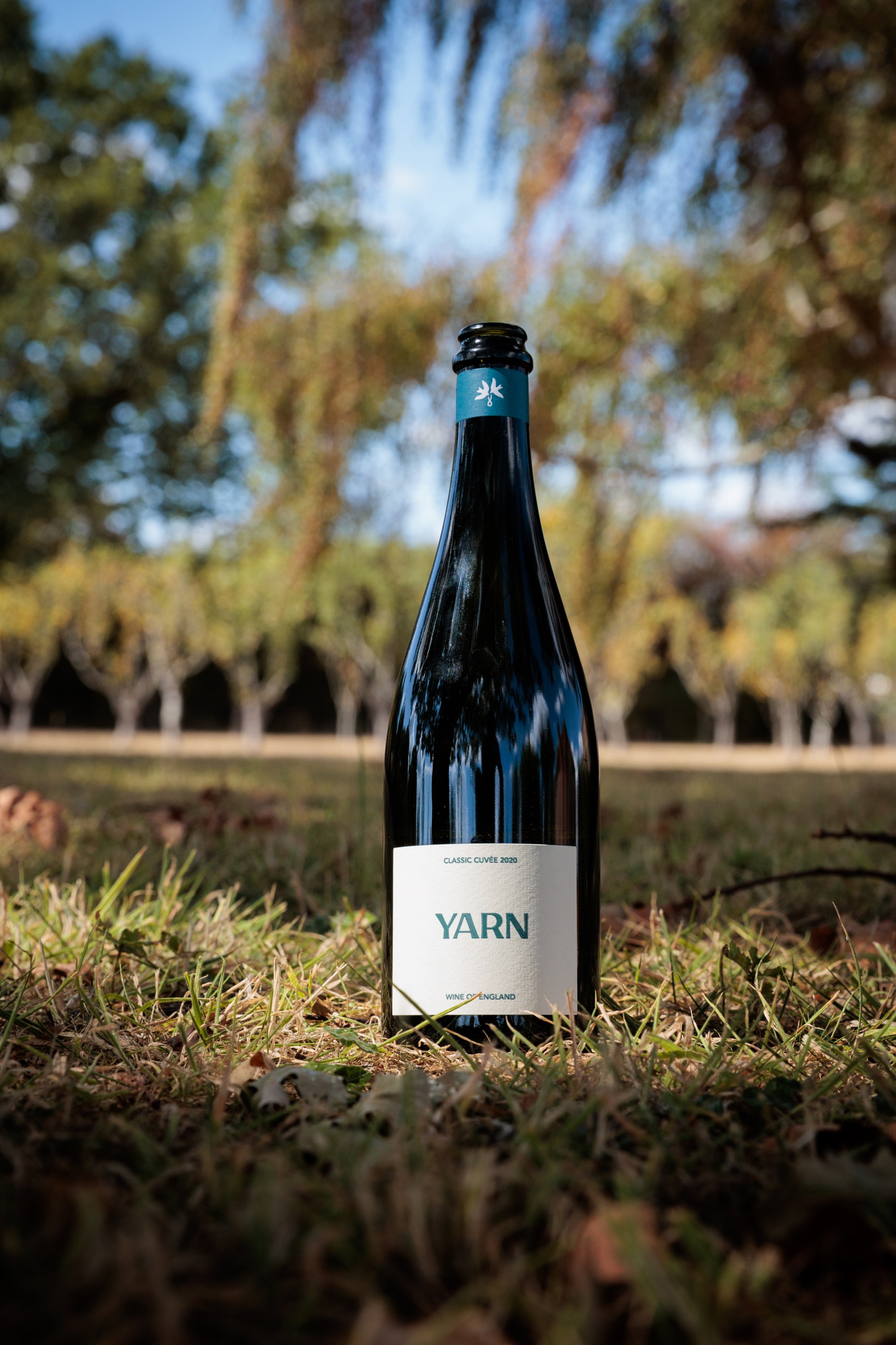
The Vineyard magazine team were very privileged to be welcomed into this library with a fantastic sparkling wine from Dorset. Yarn is a 64% Chardonnay and 36% Pinot Noir blended traditional method sparkling wine made from grapes grown by Colin Hawkins of D’Urberville Vineyard Dorset, produced and bottled by Langham Wine Dorset. The wine is a particularly fitting choice as it is aligned with the ethos of the Fairgrove Vineyard team in that it strongly evokes a sense of place. Made without sulphites and with zero dosage, Yarn is a collaborative project between Tommy Grimshaw and Alessandro Fraquelli and will work with individual growers each year based on the precise individual growing conditions creating low intervention wines that tell the story of the soil and the season.
Fuelled by their extensive wine journeys through worldwide travel alongside English and Welsh wine experiences the couple declared: “Ultimately we want to create wines that will best reflect the outstanding growing conditions of this part of Essex and open this story to each and every person that drinks our wine.”
Talbots Farm is a place that will continue to change and develop driven by a couple with imagination and a clear vision of the future but there is also a sense that this is a story that has no end; that there will be constant movement and that embracing the future one step at a time is where true passion unfolds. The maiden vintage is just around the corner which is definitely one giant step for this incredible Fairgrove Vineyard team.
Photos: © Martin Apps, Countrywide Photographic
For more like this, sign up for the FREE Vineyard newsletter here and receive all the latest viticulture news, reviews and insight