
Newick Wine Estate in East Sussex is a place of outstanding tranquillity. Newick Village is situated almost equal distance from both Canterbury and Winchester, two important Cathedral cities in the south of England. It is not surprising therefore that the village has an ancient history.
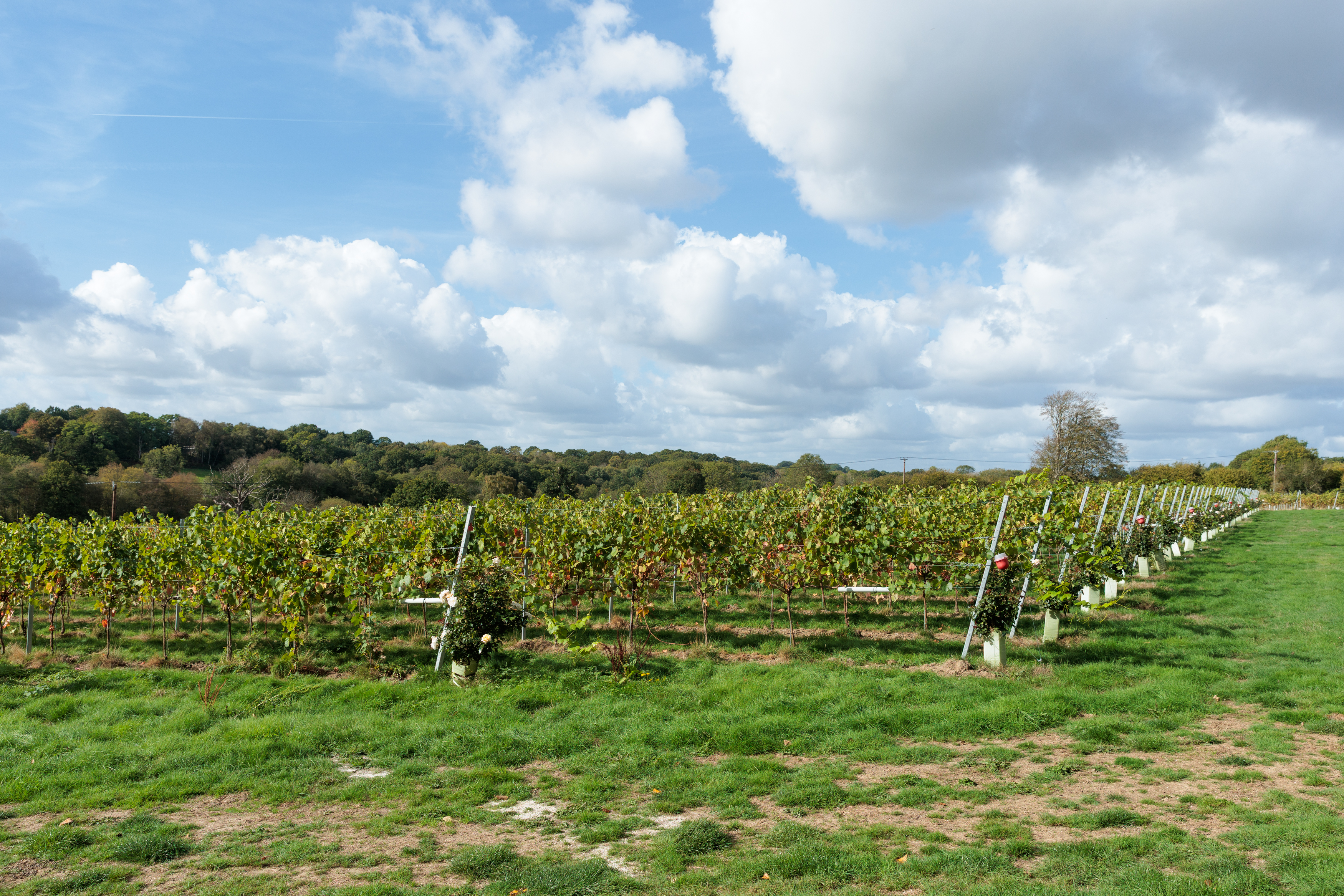
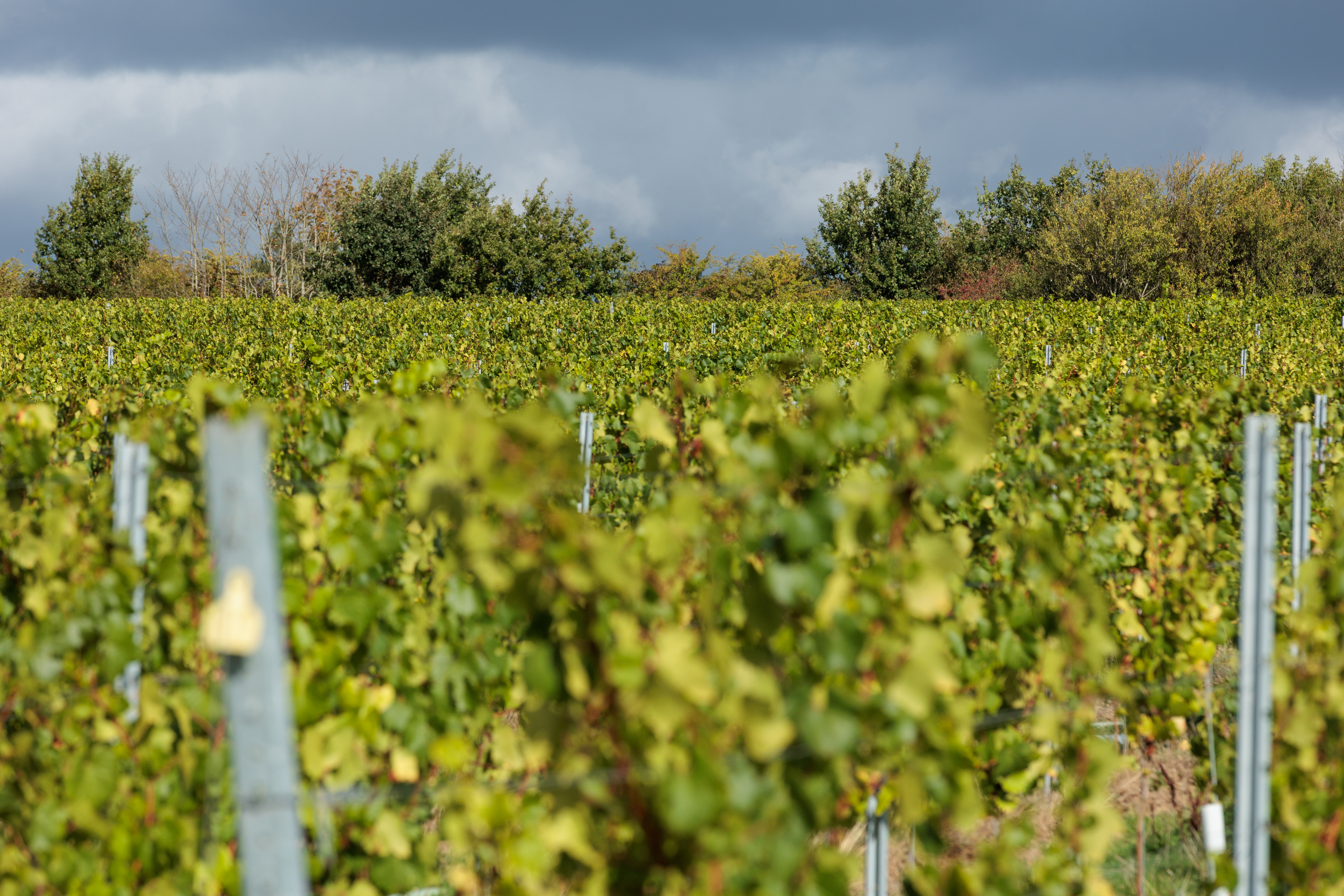
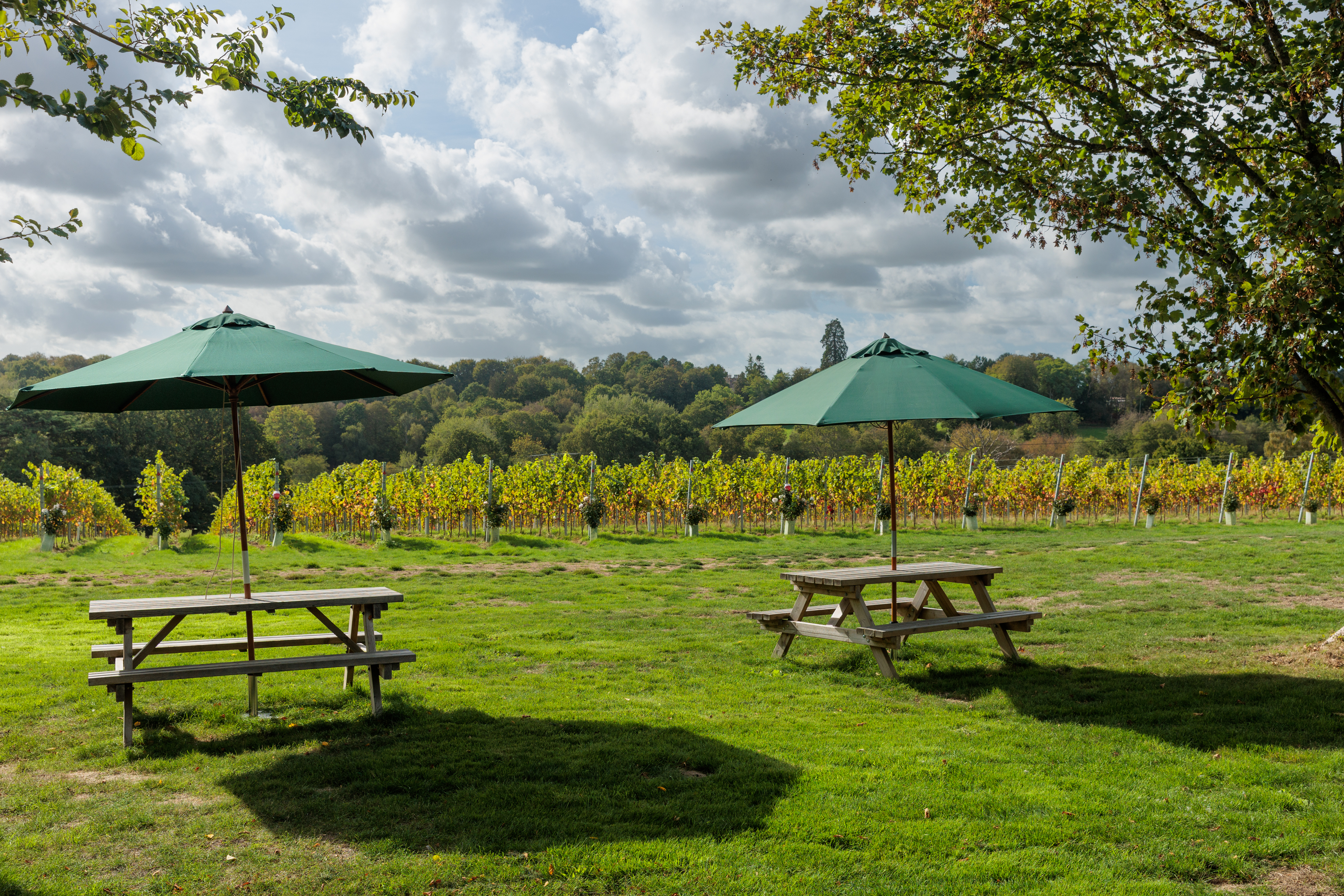
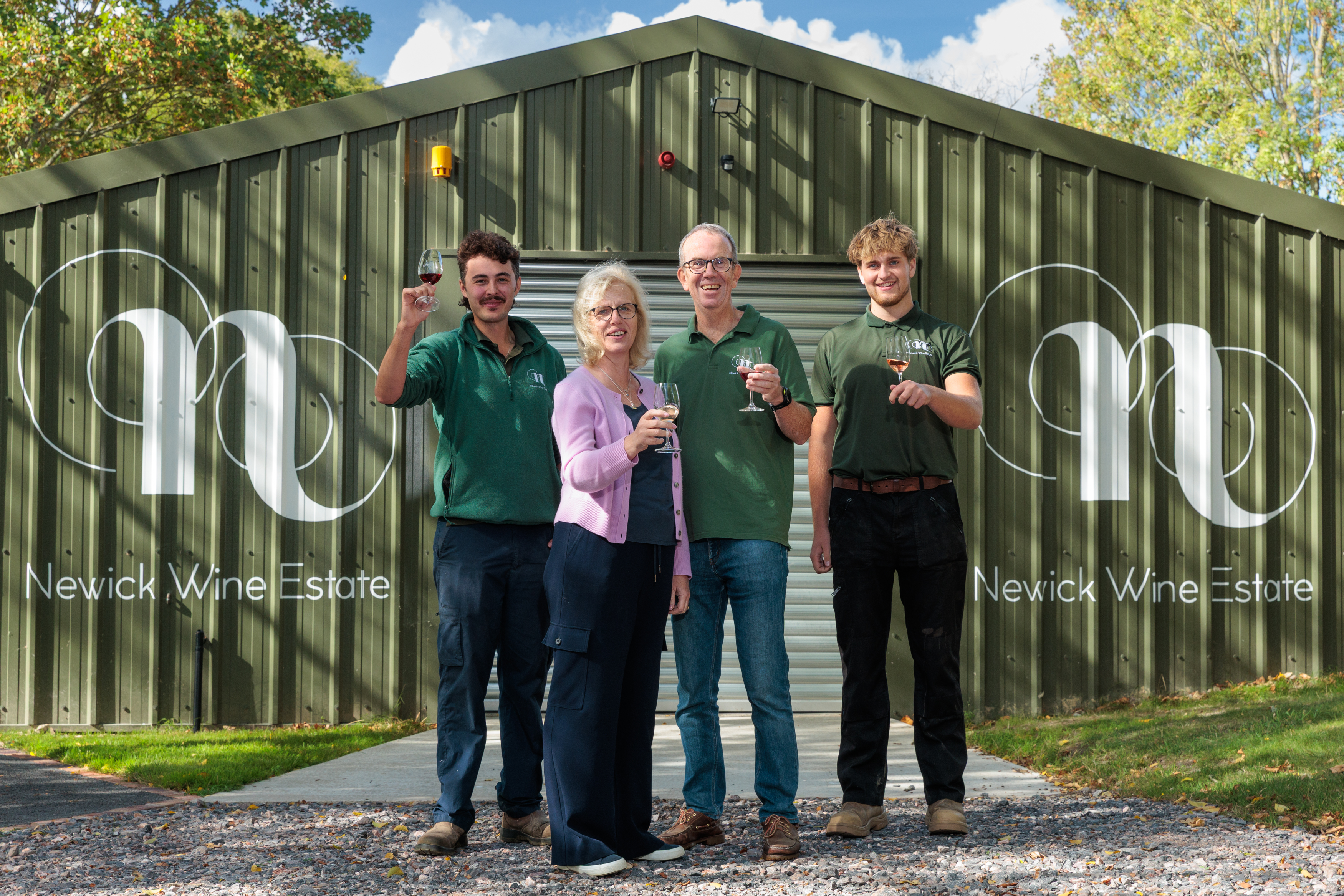
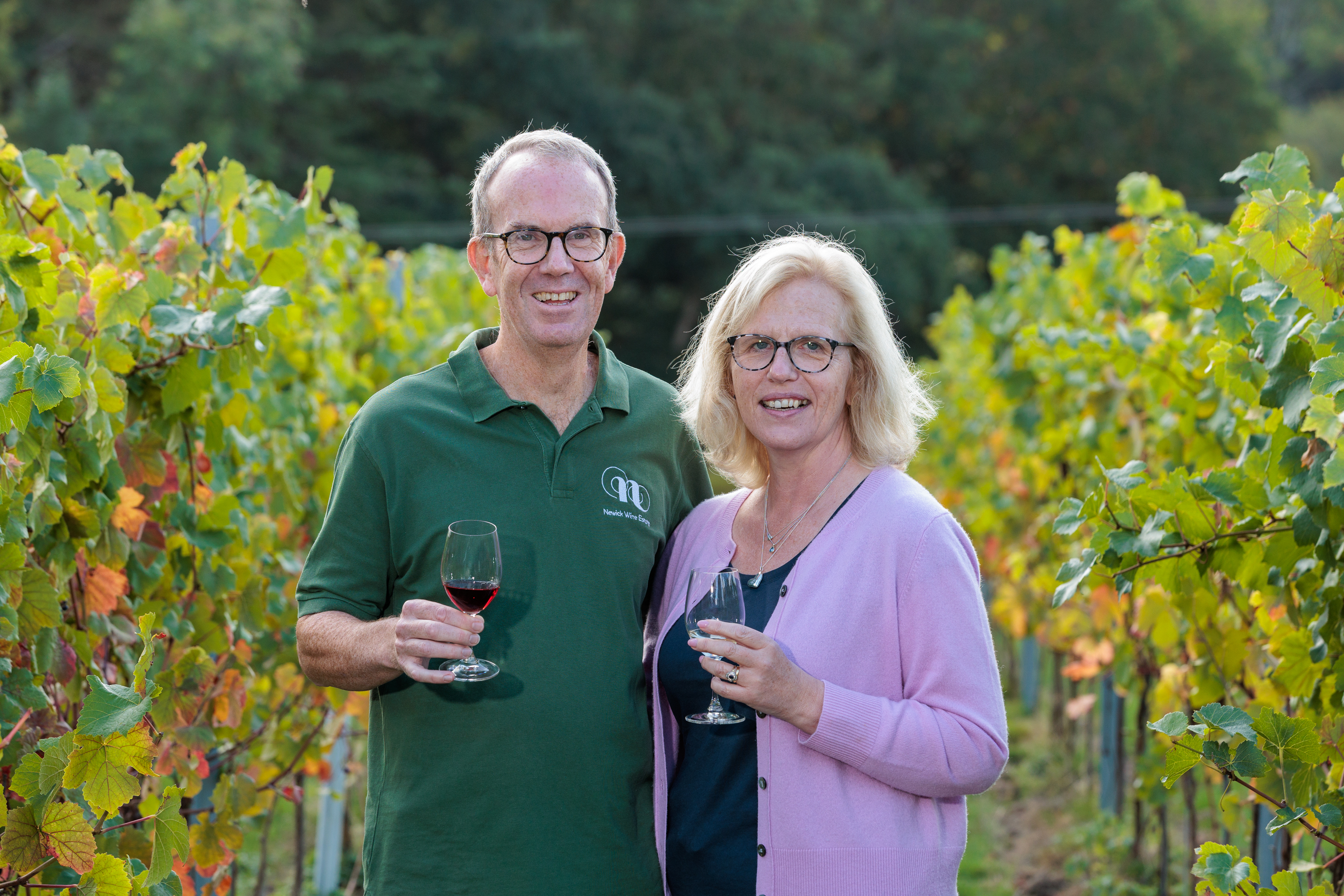
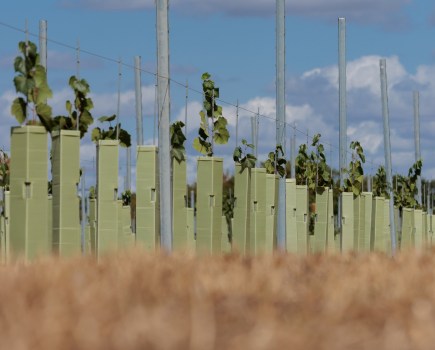
Standing in the vineyard there is a view down across the vines to the woodland behind and the distant views create a sense of peace that is quite surprising. The farm has been owned by husband and wife Jonathan and Charlotte Sharpe for nearly two decades and in 2023 the decision was taken to plant vines.
With a total of 16 hectares of land, Jonathan and Charlotte took expert advice on the best site to dedicate half of the farm to vines. The decision was taken to plant the vineyard at the beginning of the 2023 season, with 37,000 vines planted over several days. Describing the reasoning behind planting vines on this beautiful sloping land surrounded by woodland Jonathan explained: “There is not just one reason we decided to plant the vines, there are many, but after walking this land everyday for 20 years we wanted to build something together.” Charlotte added: “We have always enjoyed a challenge and wanted to start a productive project together that would preserve the land.”
The vineyard has Pinot Noir, Pinot Meunier, Bacchus and Chardonnay varieties, with the most widely planted variety at Newick Wine Estate being Chardonnay with 15,000 vines. Jonathan and Charlotte originally consulted with VineWorks on the best way to move forward with their desire to be able to produce not only premium sparkling wines but also premium still wines and this led to the planting of numerous Chardonnay clones including Chardonnay clone 548. “This is a Chablis clone that sits on the warmest part of the site; it is in effect a premium parcel of vines,” said Jonathan with a warm smile.
“Blanc de Blancs is my favourite wine style and it is quite exciting to think that we are able to make this style not only here in the UK but here at Newick Wine Estate,” added Charlotte.
Speaking in depth about the specific clones planted, it is clear how much work this vineyard team put into understanding each and every parcel of the 21 plots on the site. “In the Pinot Noir the GM20-13 have elongated bunches which reduce the disease pressures significantly whilst the 777 clone has fruit that tastes excellent but can easily go wrong,” explained Charles Negus, Vineyard Manager at Newick Wine Estate.
Across the vineyard there are a mixture of two rootstocks; SO4 and 3309C. “The 3309C prefers drier soils which is suited to the site and it also delivers a maturity in the fruit,” explained Charles. He has also noted that the vines on SO4 rootstock also reach veraison slightly earlier than the 3309C. The site is Tunbridge Wells Sand with sandstone bedrock “this provides good drainage and means that the soil retains heat,” explained Charles.
Whilst in many seasons the warm soils would be a significant advantage, producing great quality fruit, in 2026 it proved to be a problem. The heat retaining soils mean that the site is very early to bud and in 2026 this led to severe frost damage. The frost damage was caused across 10 frost events with four of these causing significant damage. “The vineyard was sitting at -3°C even with candles burning,” said Charles. The final frost event happened as late as the 10 May and Newick Wine Estate were only able to harvest a small tonnage of fruit for 2026.
Whilst we are talking about the frost damage Jonathan pointed out: “The frost damage was disappointing of course and we are looking at ways to mitigate frost in the future, but we have still had a lot to be positive about during the year.” This attitude of acceptance that there will be negatives without allowing negativity to be a defining part of the future is incredibly refreshing and it is evident in everything that is done at Newick Wine Estate.
As well as mitigating frost next year, the team at Newick Wine Estate are already implementing a variety of techniques across the vineyard to reduce and control the impact of another danger – SWD. This is one of the themes of this vineyard in East Sussex. The team are determined that each year will build on the year before. It is an attitude of progression that is quite inspiring.
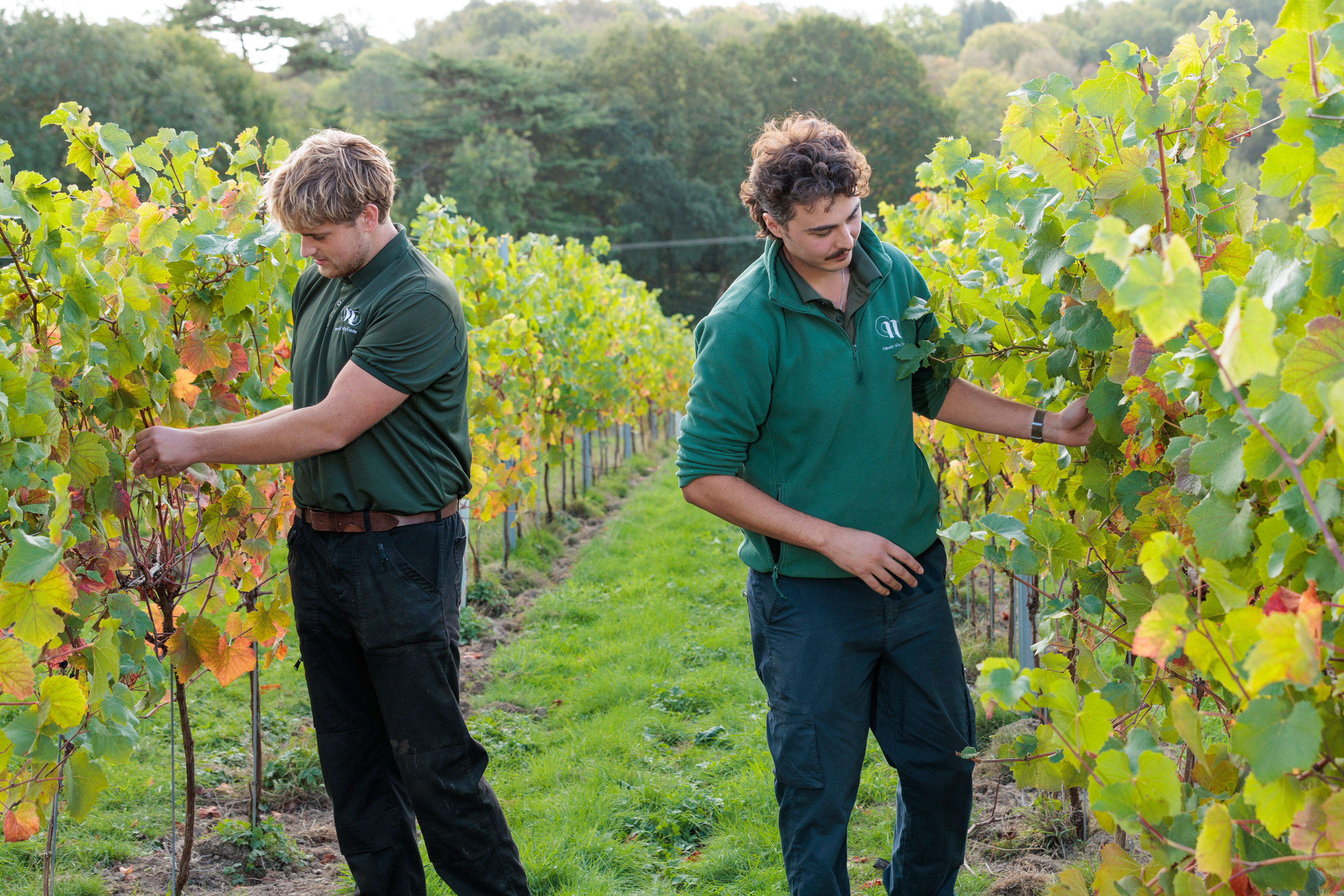
Linus Holter has been with the vineyard for two harvests. Linus is part of the apprenticeship scheme at Plumpton. “Linus is more than an apprentice here he is integral to our operations,” said Charles with a smile. Charles was previously a tutor for the apprenticeship scheme at Plumpton so he has an in depth and detailed appreciation of how apprenticeships can benefit individual students and the businesses that work with the scheme.
Linus and Charles have been working on measures to reduce the SWD population that caused difficulties in the 2025 season. “We have removed as many hosts such as brambles as we can but we are surrounded by woodland so eradicating these completely has not been possible, however this has definitely made an impact on the SWD and fruit fly populations,” said Linus. “We have also trialled dead end hosts such as Pyracantha,” he added. “For SWD we also researched other regions around the world to see how they had worked to reduce the potential for damage. One method that was beneficial was from a grower in the USA who advised to think of SWD as if it is a fungal spore which transforms the way you think of management,” added Charles.
It is interesting to note that the team continuously trial different methods of vineyard management adopting those that they feel work the best. This has helped them develop a very in depth knowledge of the vineyard in just five seasons. For instance, the team are able to explain that the GM20 clone of Pinot Noir remained completely untouched by SWD during the 2025 season. The harvest for 2025 was brought forward after a dramatic rise in the number of SWD found in monitoring traps. Interestingly this dramatic increase had happened after a sudden windstorm so the team had to adapt quickly.
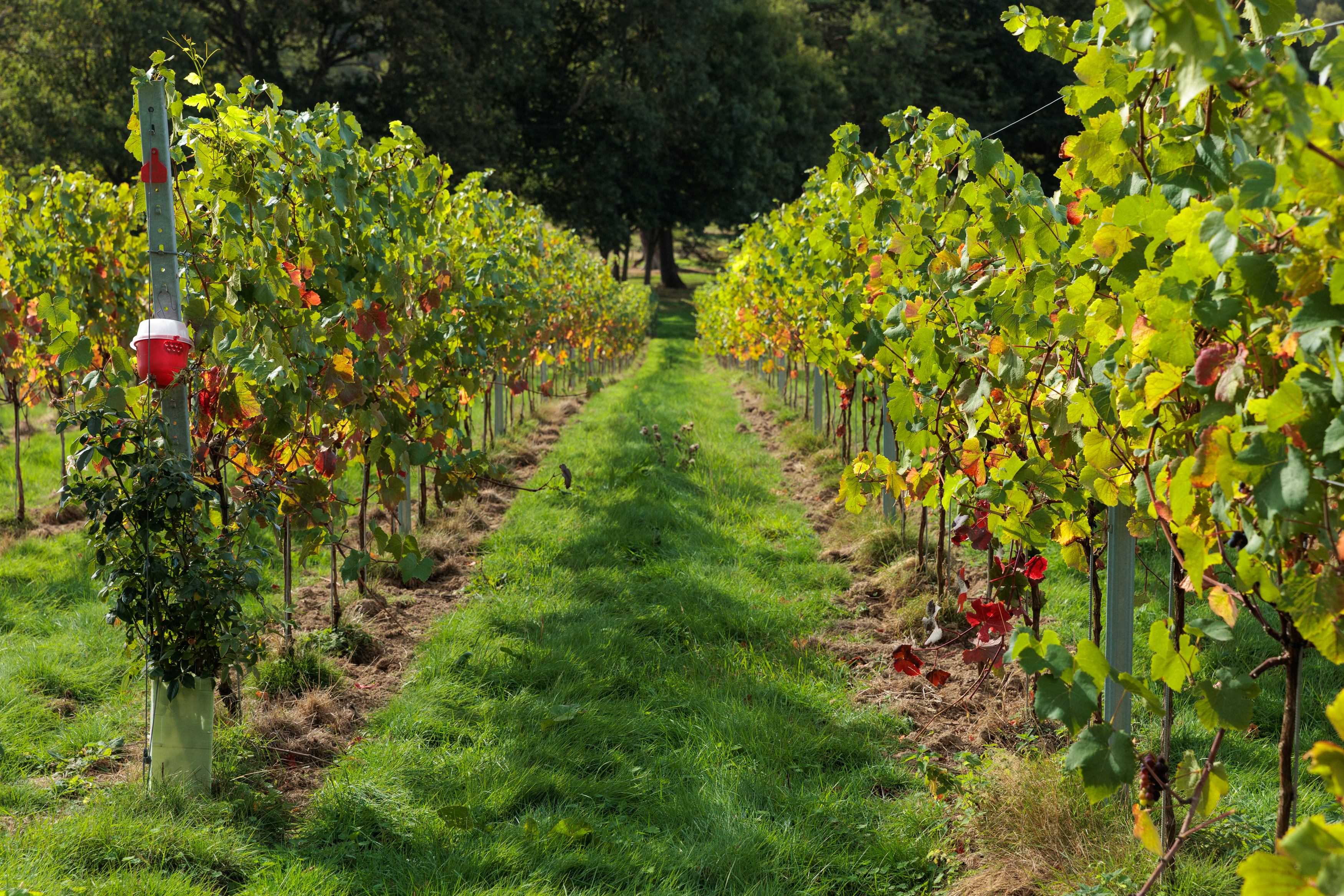
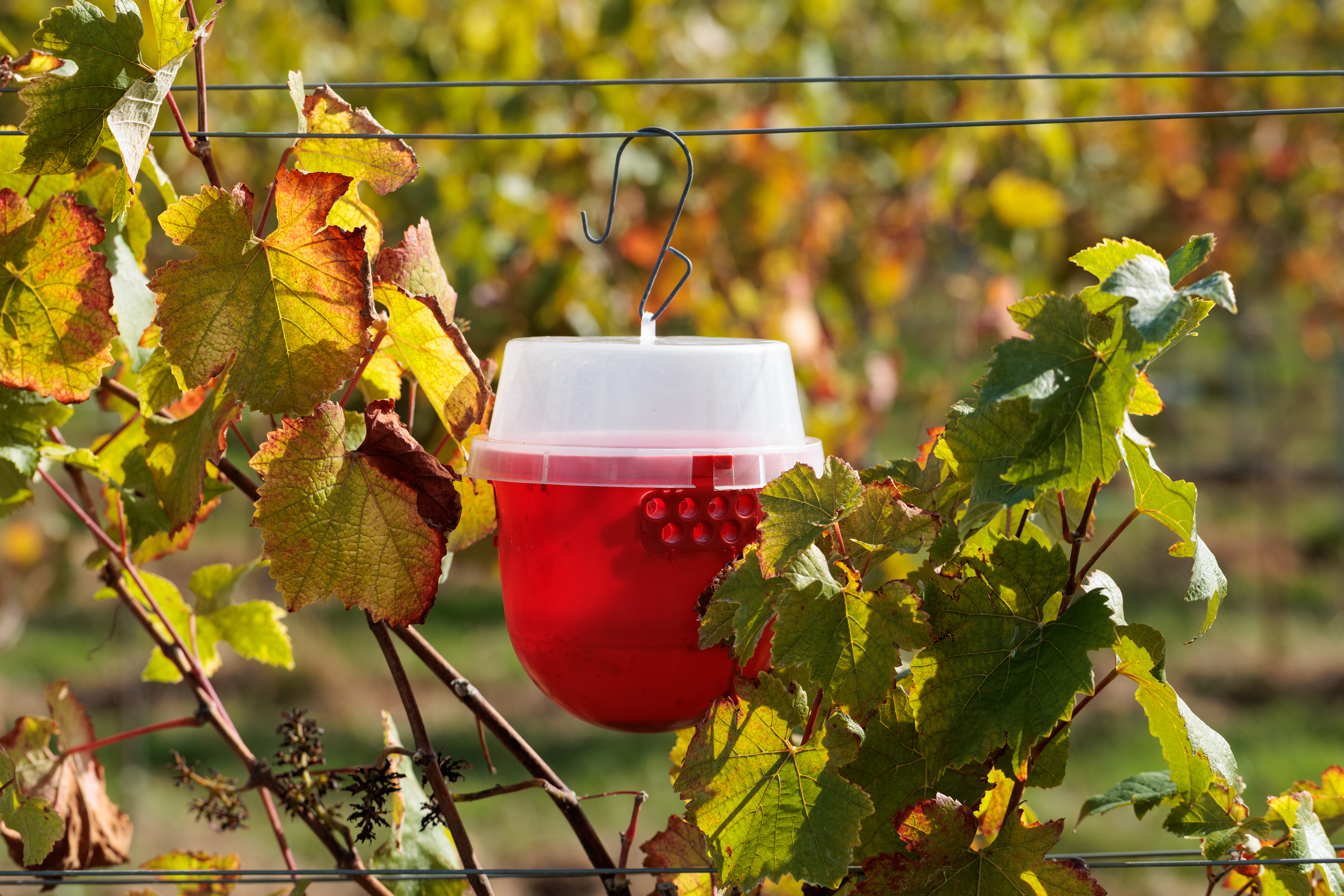
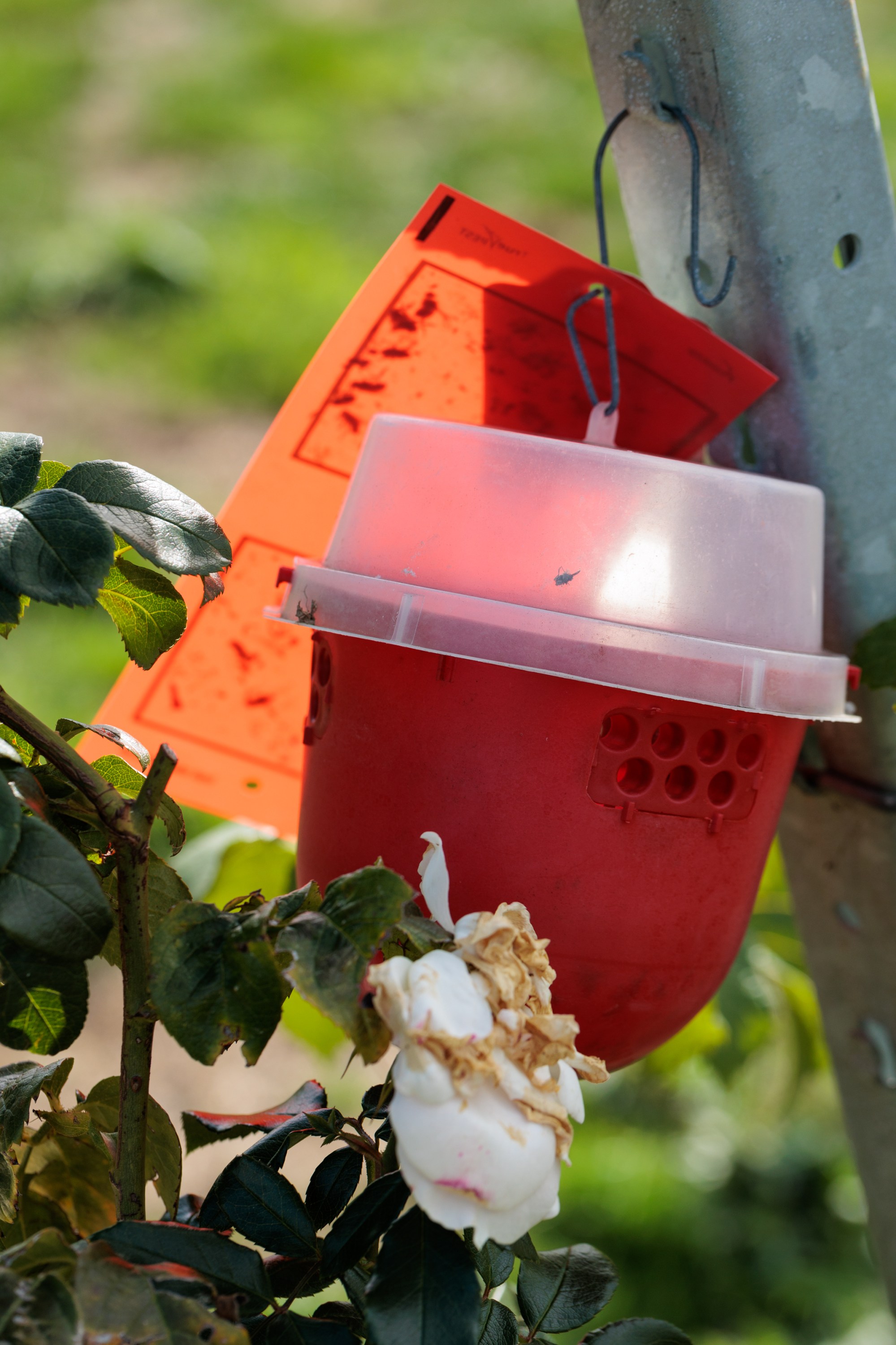
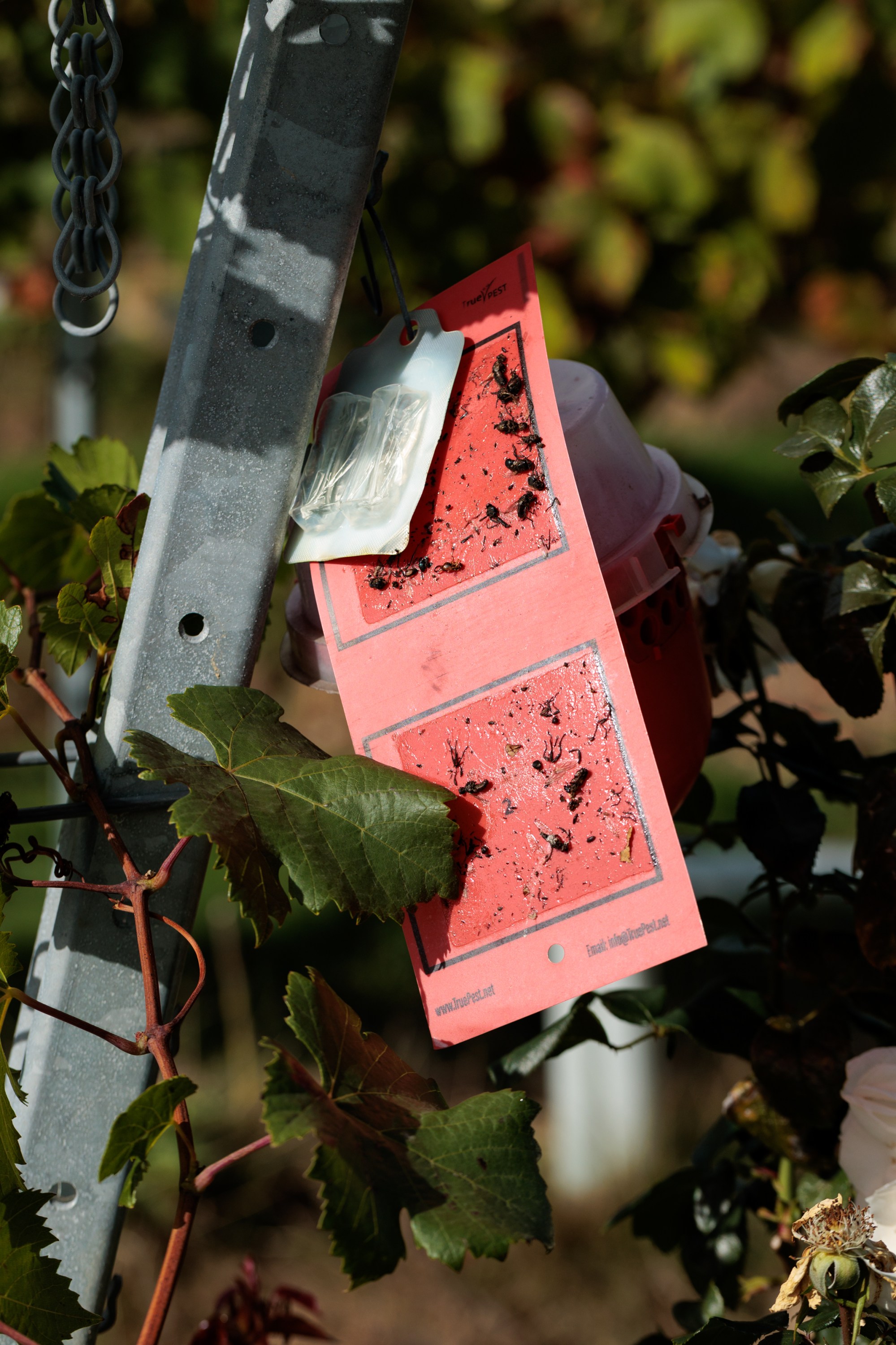
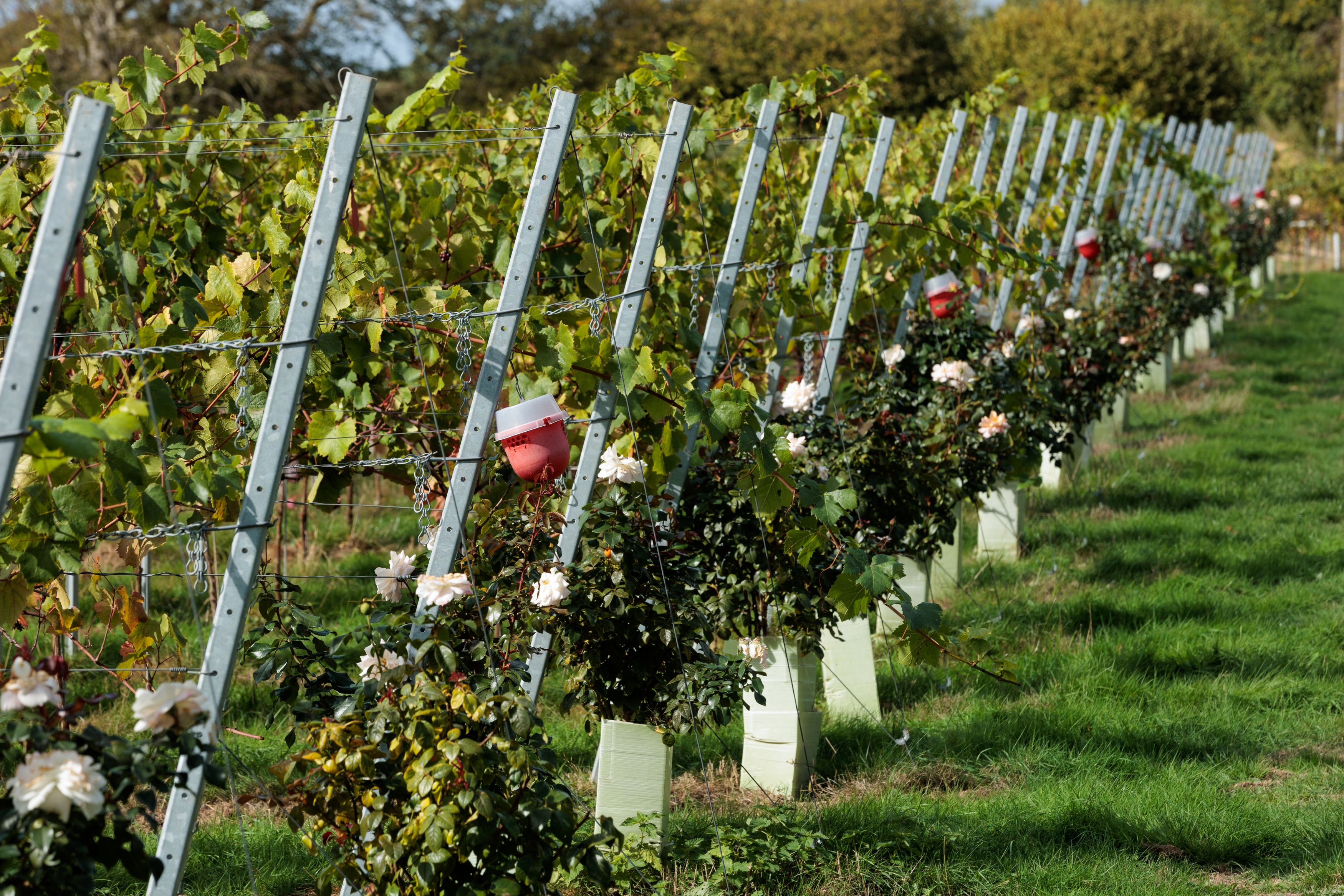
There are distinctive traps visible on the Pinot Meunier rows. Situated about 7m apart these traps utilise an attractant and a grid system which allows detailed monitoring for specific species identification. “This allows us to adapt quickly to any threat we find, not just SWD but any other pests that might pose a threat to the vines,” said Linus.
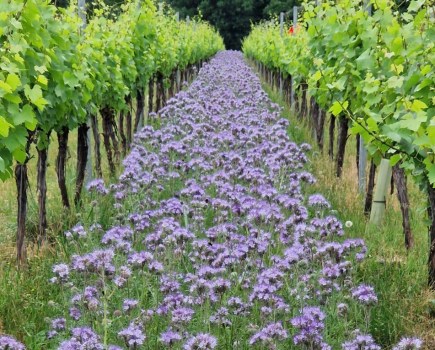
The vineyard team has worked hard to develop bio diversity and has positioned nesting boxes around the site to encourage owls, birds of prey and bats all of which are populations that need support but are also beneficial for the natural balance of a vineyard. A native Wealden wildflower meadow has been sown at Newick Wine Estate and alongside the beauty that this brings it also encourages natural predators that help keep the fruit clean.
The vineyard has also moved towards using organic fertilisers and bio-stimulants such as CalMax Ultra. “The soil type means the vines can be quite hungry so it is important to ensure the soils are healthy and the vines are able to get the nutrition they need,” said Charles.
In another example of balance in the vineyard the rows are mown in rotation. “Encouraging soil health, decreasing the number of passes in the rows, and decreasing the number of downy mildew splash back events, while balancing with the threat that longer grass increases humidity in the rows,” he added.
It is pleasing to hear that Newick Wine Estate has been welcomed by the local community. “The village of Newick has long held a food fair in June which celebrates local producers,” said Jonathan. The first wines were released in June 2026 meaning that Newick Wine Estate were able to attend the food fair in the village. “The wines have been so well received since we released them,” said Charlotte.
The vineyard also benefits from the help of local people at harvest and during other critical points in the season. “Even the people on the local footpath who have seen the progression of the vineyard have been really supportive,” said Jonathan with warmth in his voice.
“We have had so much support and have really experienced the wine industry as a community,” said Charlotte. “It is wonderful that the vineyard community is so willing to work together and that it attracts people of all ages working together and learning from each other,” she added.
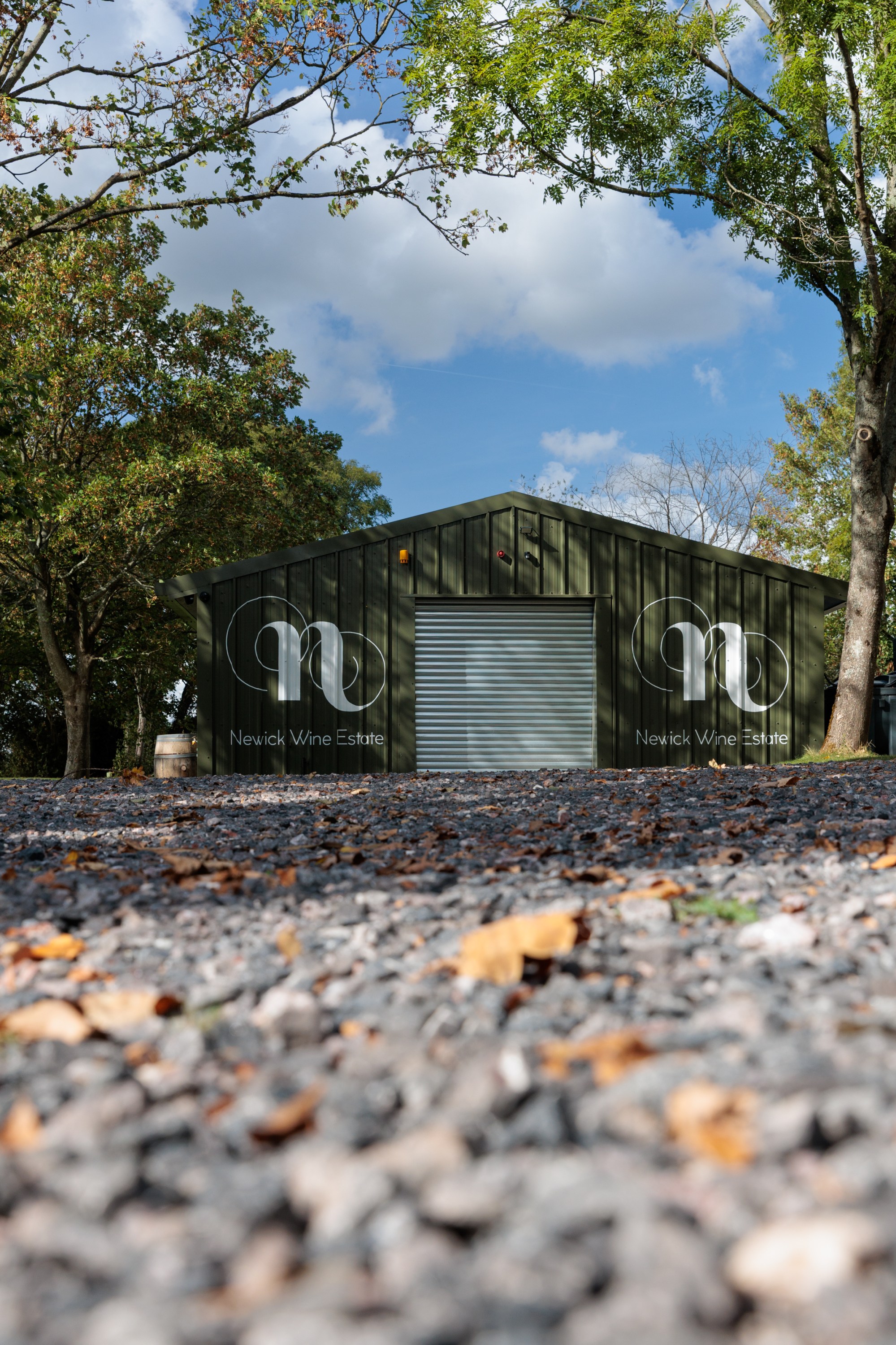
Open for tastings since the wines were released in June with tours led by Charles or Jonathan, tourism is important to Newick Wine Estate. “We want people to be able to see the vineyard as we do so we want to be hands on with the tours,” explained Jonathan. The tasting room is also the working cellar creating a great atmosphere. The tasting experience is fully immersive whilst guests are tasting the current wines, sitting at beautifully presented tables surrounded by photographs of the vineyard in its various stages of development, they are also able to see the next releases quietly aging. The tasting room is another example of Charlotte and Jonathan preserving the landscape by utilising a building that was already on the land and they have now made this redundant building an integral part of the new business.
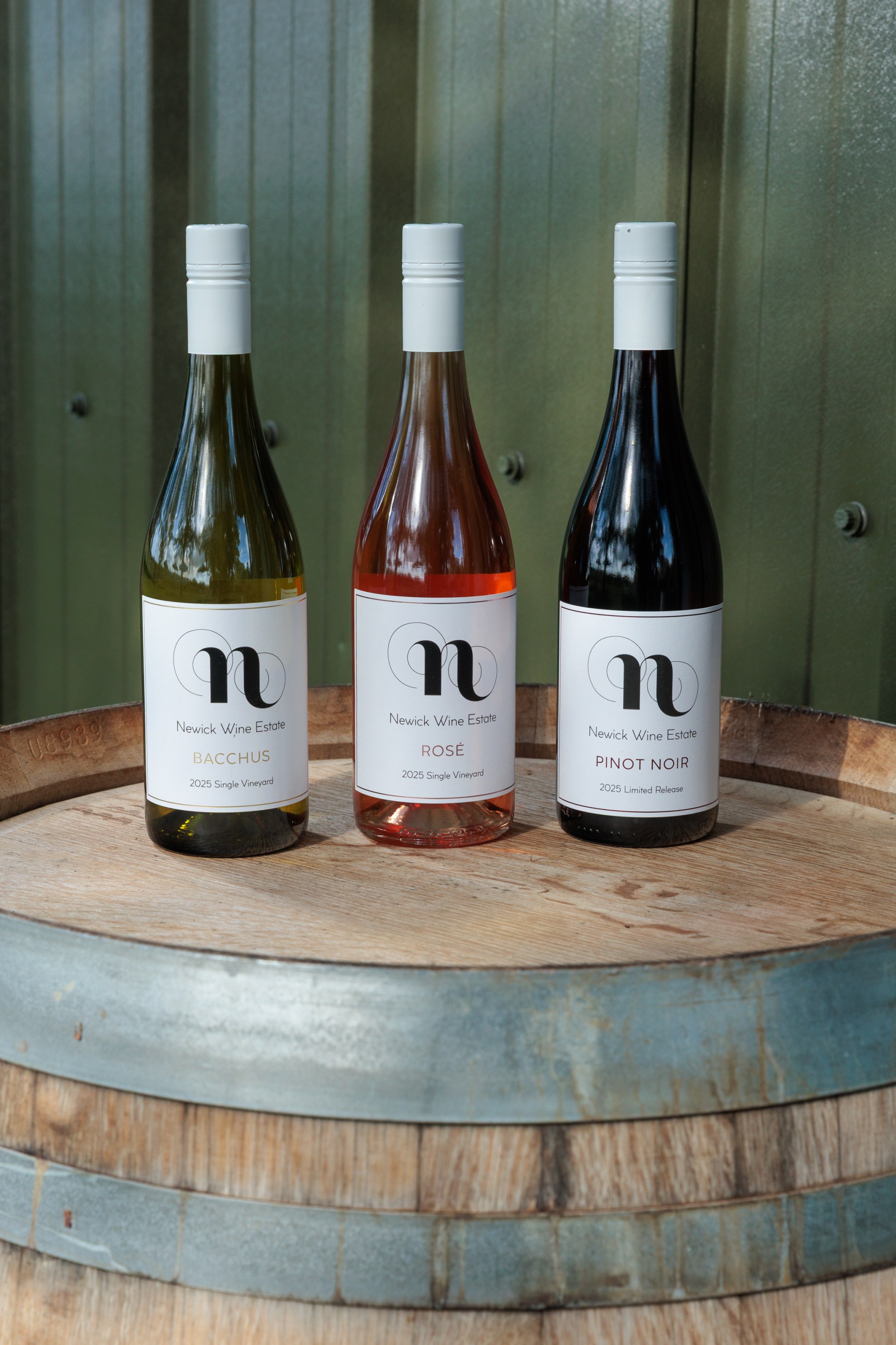
There are currently three wines from Newick Wine Estate which were made at Stopham Vineyard, but the next vintages will be produced at a winery less than a few miles down the road, allowing for a very local delivery during harvest.
The current wines are still wines of white, red and rosé “we have all the bases covered,” joked Jonathan. The first vintage of Bacchus produced 2,000 bottles and the wine has an excellent mouthfeel with grapefruit and gooseberry notes. A comparison with Sauvignon Blanc springs to mind and there is a very intense fruit aroma as the wine sits in the glass making this a great wine to share with friends. “We give the Bacchus grapes really long hang time to ensure we extract the tropical notes,” said Charles.
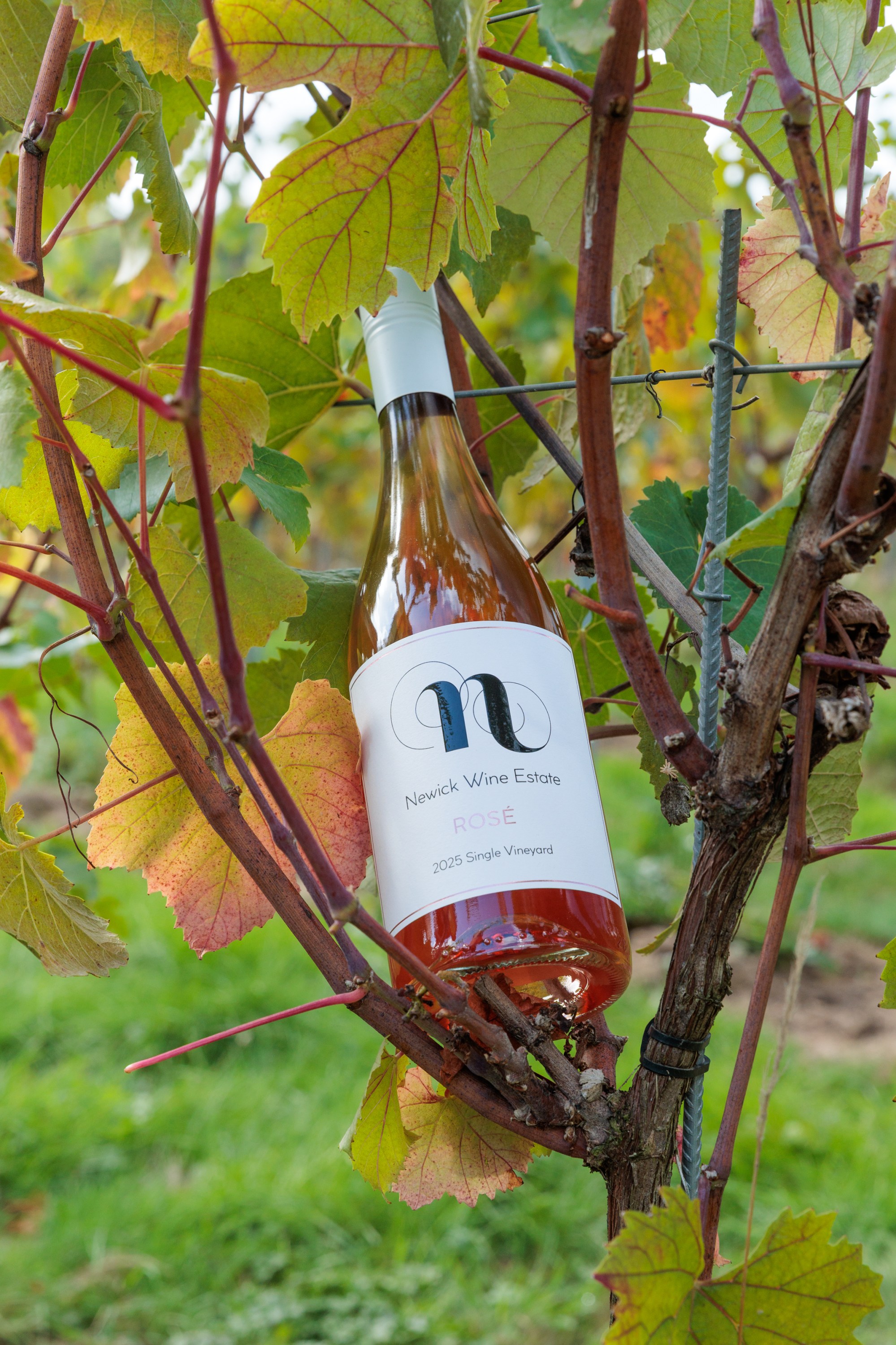
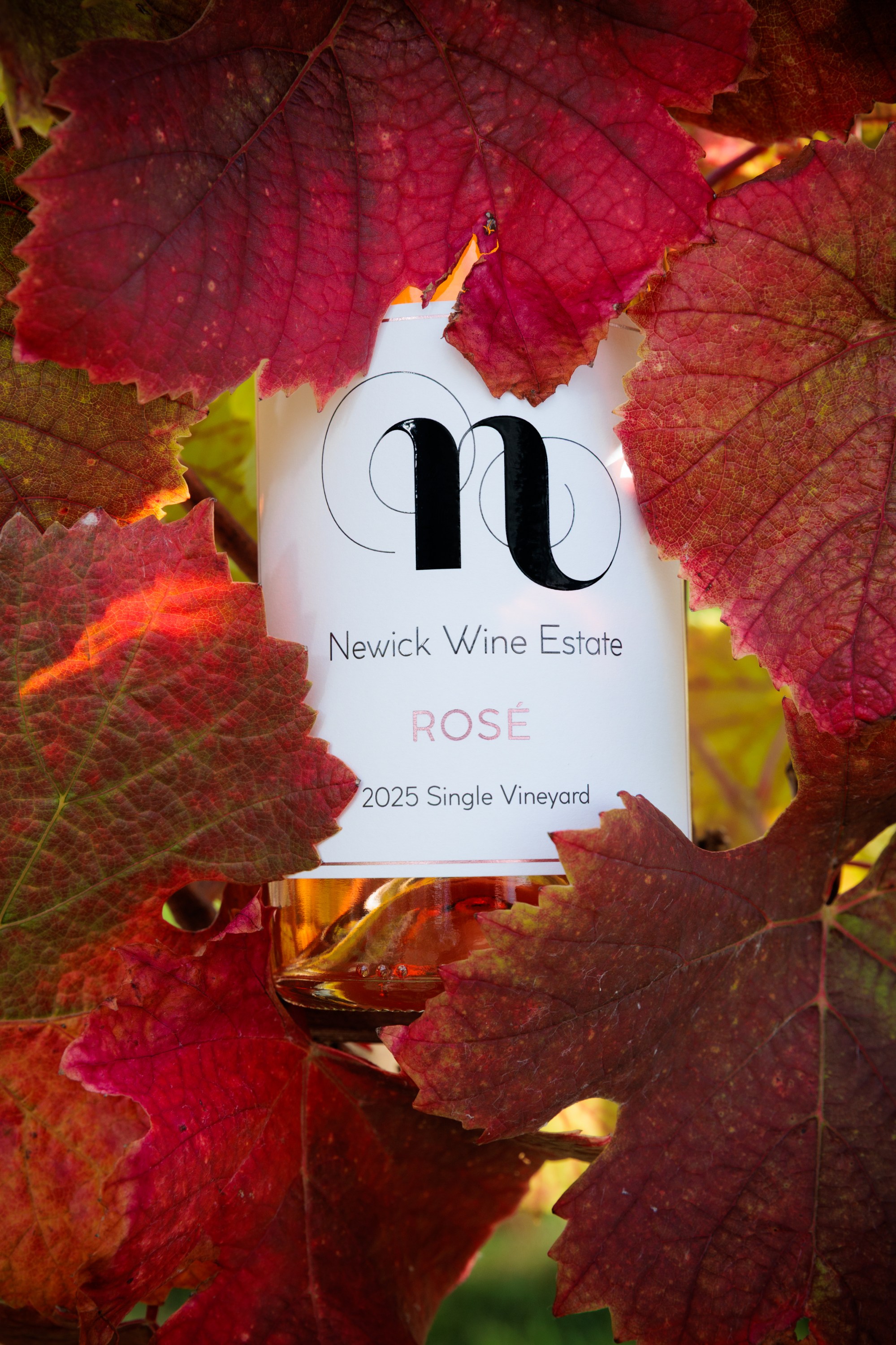
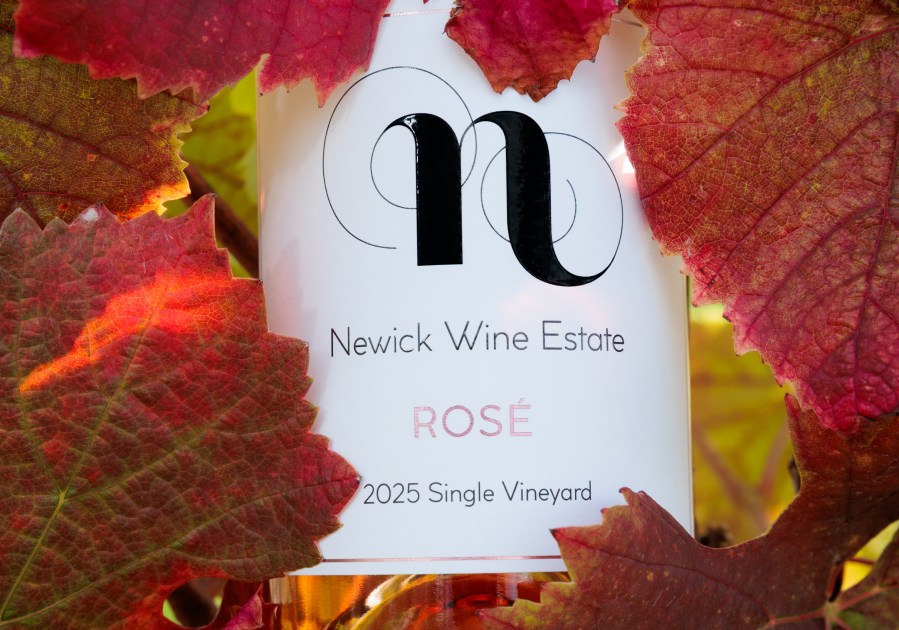
The rosé wine is produced with 50% Pinot Noir and 50% Pinot Meunier, the colour is outstanding and there is a maturity to the wine that is unusual in a first vintage. Strawberries and cream is the overriding theme. This is a serious wine able to carry an entire meal but light enough to be equally suited to summer afternoon drinks in the garden.
The star of the collection however is the limited release 100% Pinot Noir which has had 4 months in re-toasted oak. The resultant wine has a long lasting finish combined with a fruit forward layered complexity that will ensure the 900 bottles of this wine are not around for long.
“All the wines have received excellent praise across all sections of the wine trade from consumers to wine critics,” said Jonathan with conviction.
The Blanc de Blancs wine from the 2025 harvest will possibly be ready for a special early release in time for December 2027 but this may be available only in limited supply and members of the newly launched Newick Wine Estate membership scheme will be given the first look at this wine. This traditional Method Sparkling is all that is needed to ensure that Newick Wine Estate really do have the ability to share in every occasion on every table.
Newick Wine Estate is a place of outstanding beauty and I am sure this is part of the reason the team is able to accept that there will be disappointments without being defined by them. Staying true to the landscape the small vineyard team have a quality that could be described best as integrity. A desire to make the land productive but with a season by season improvement strategy that inspires both confidence and peace – a rare combination indeed.