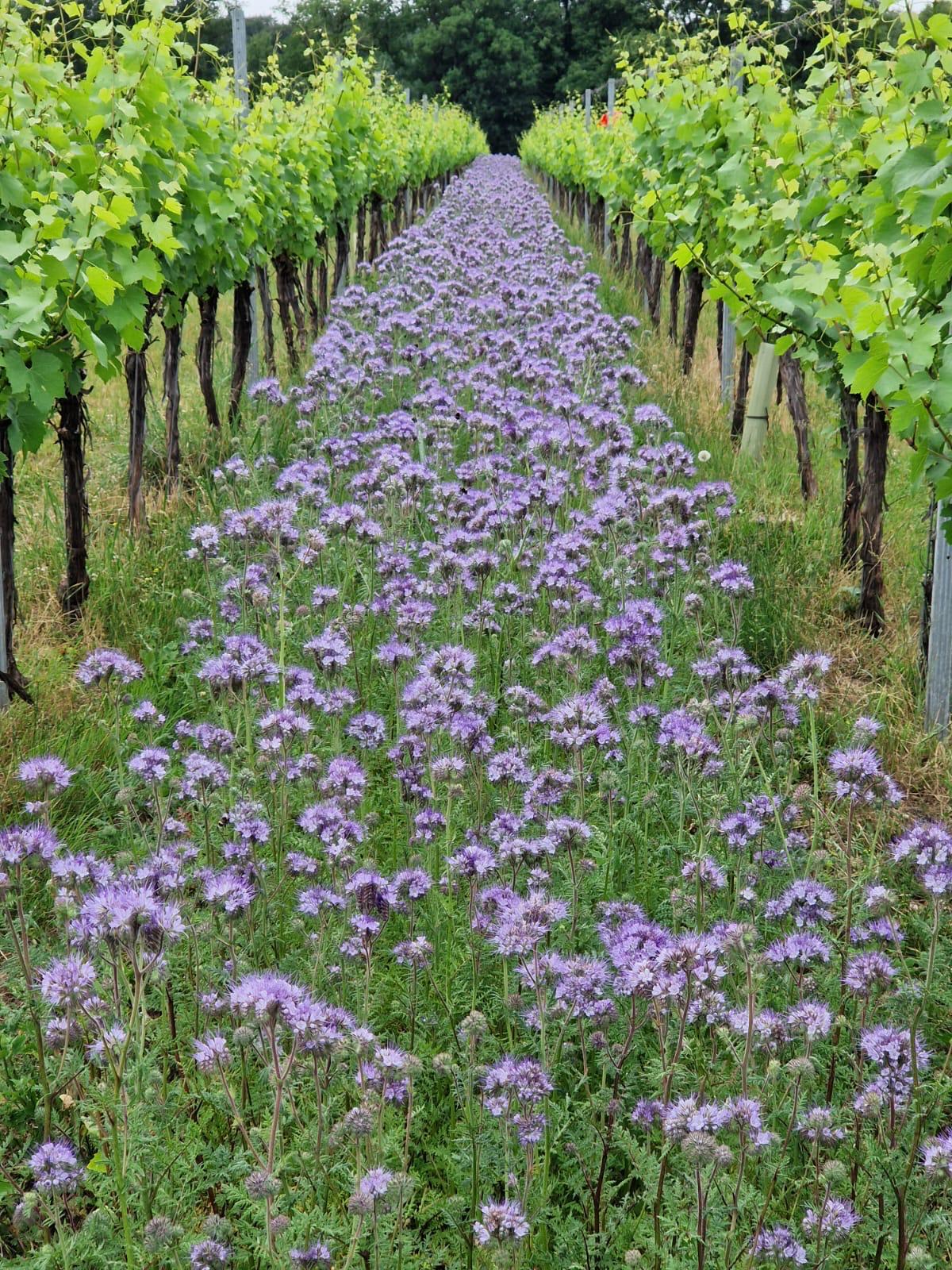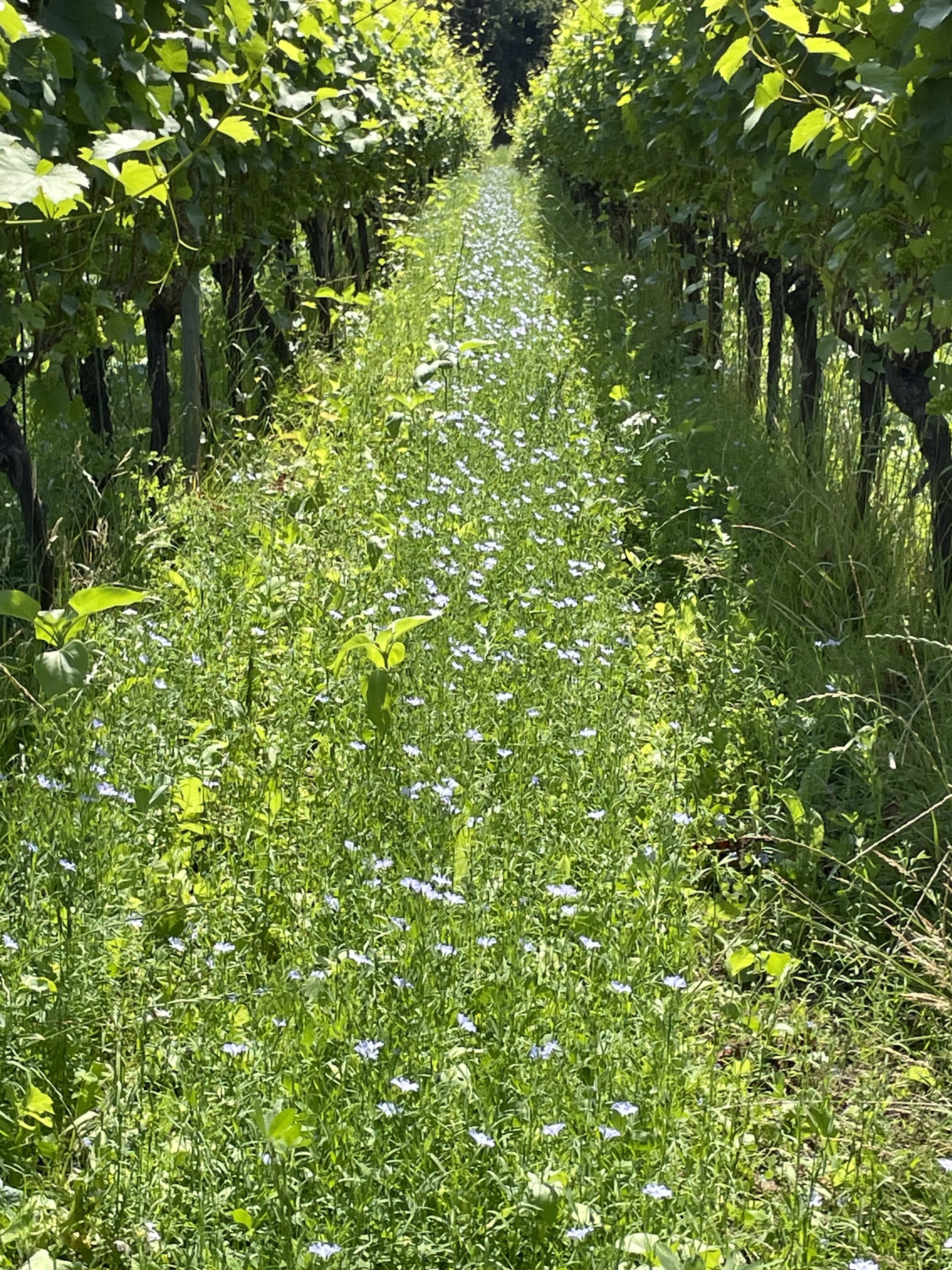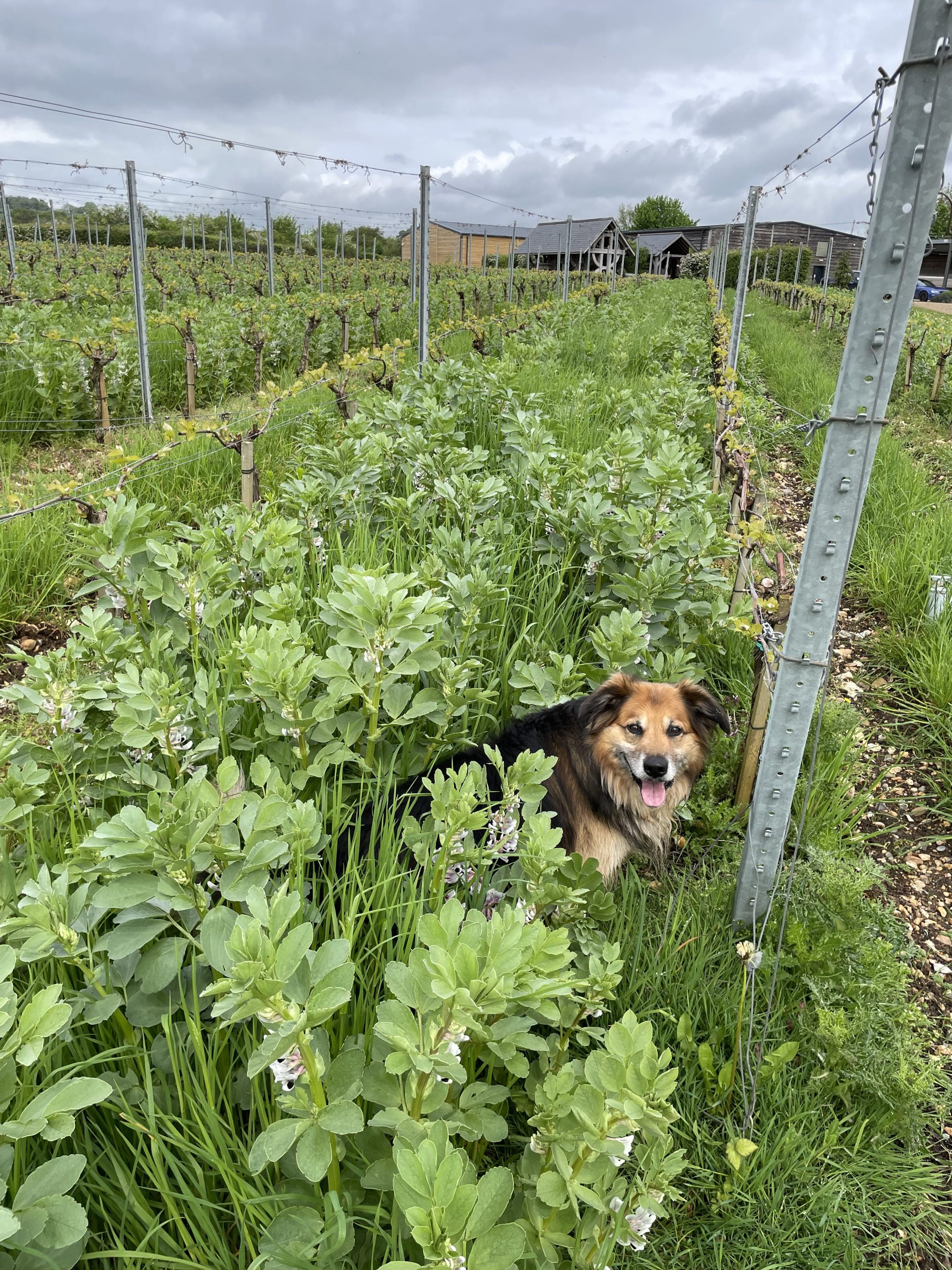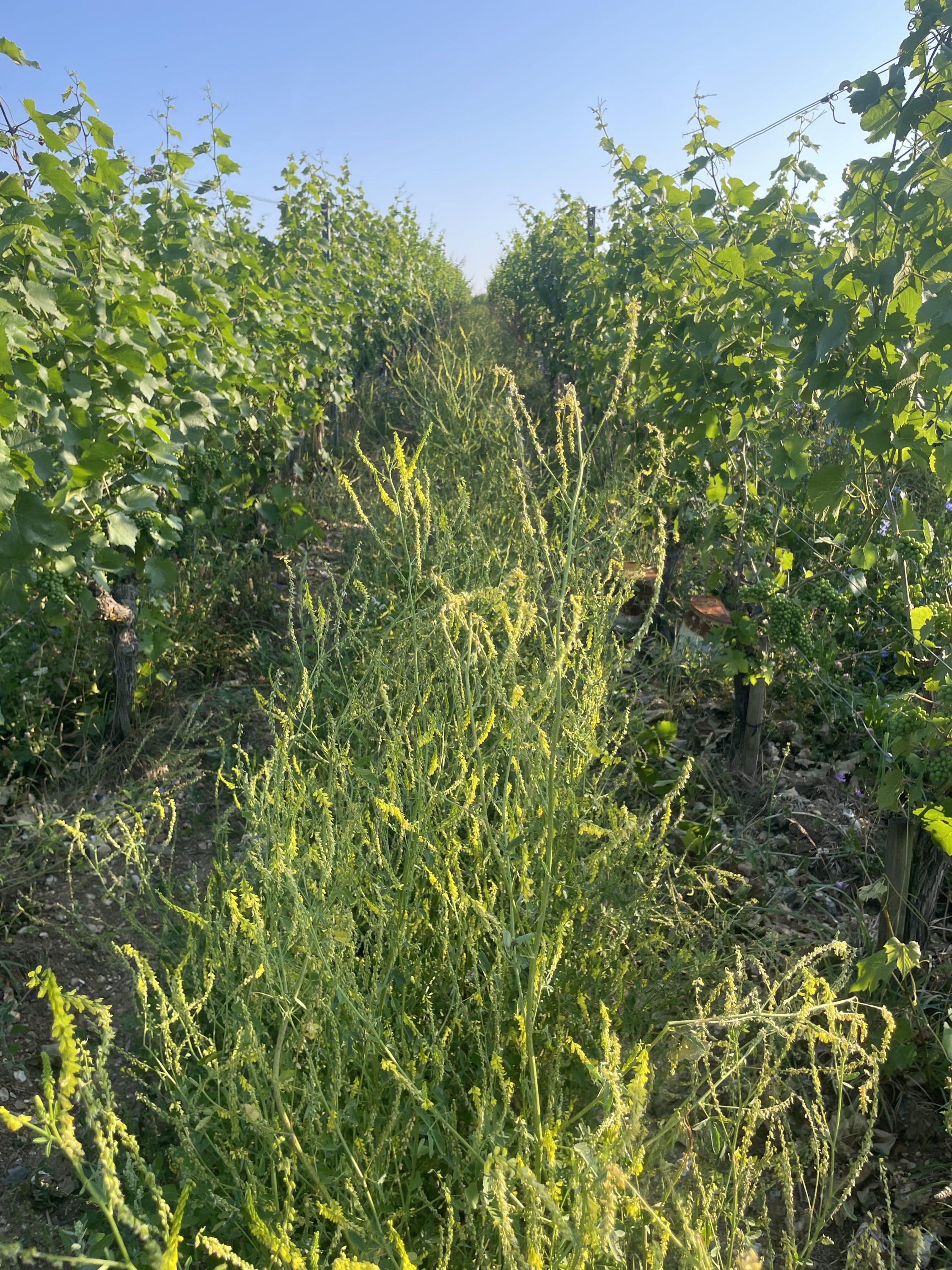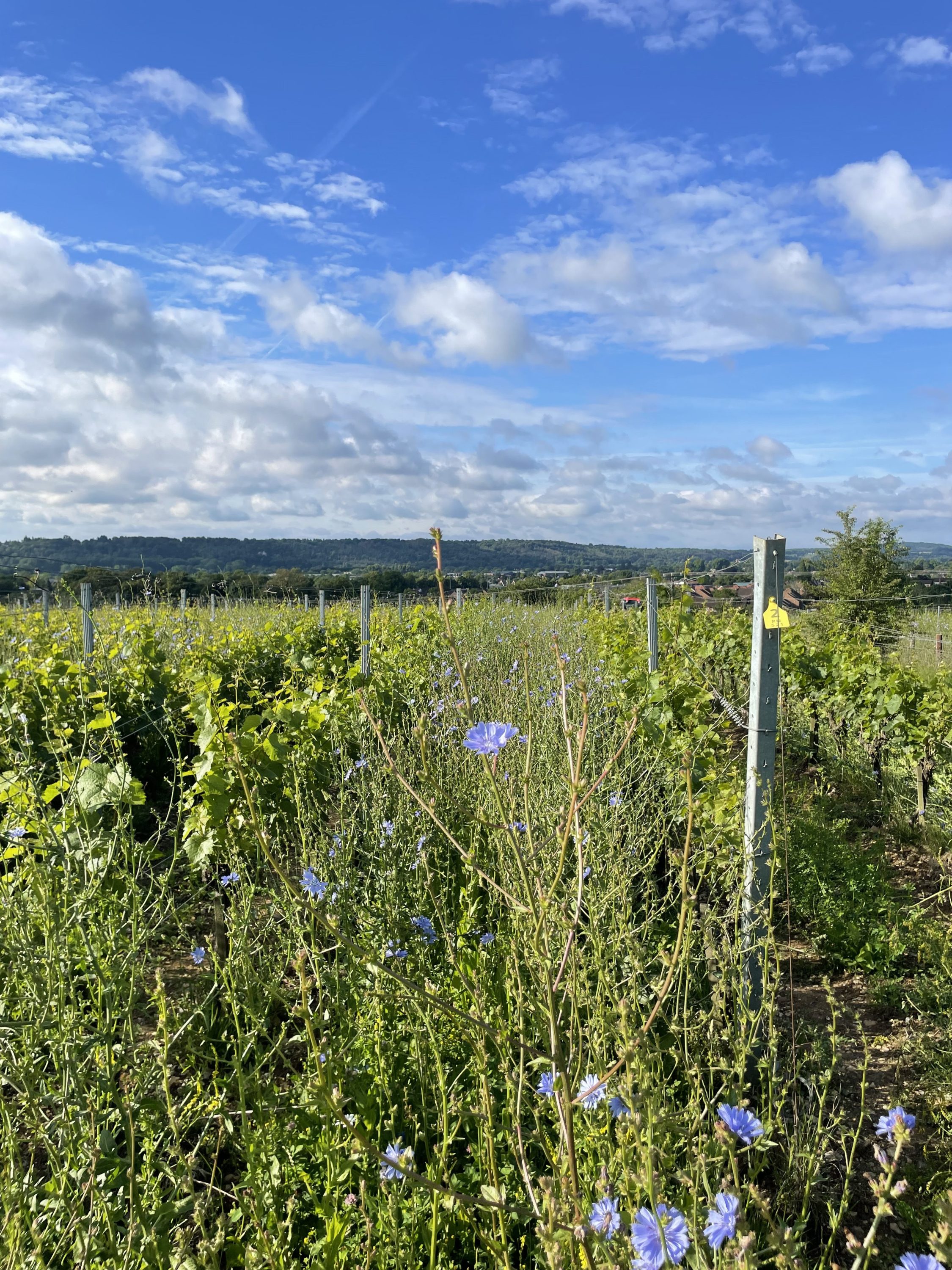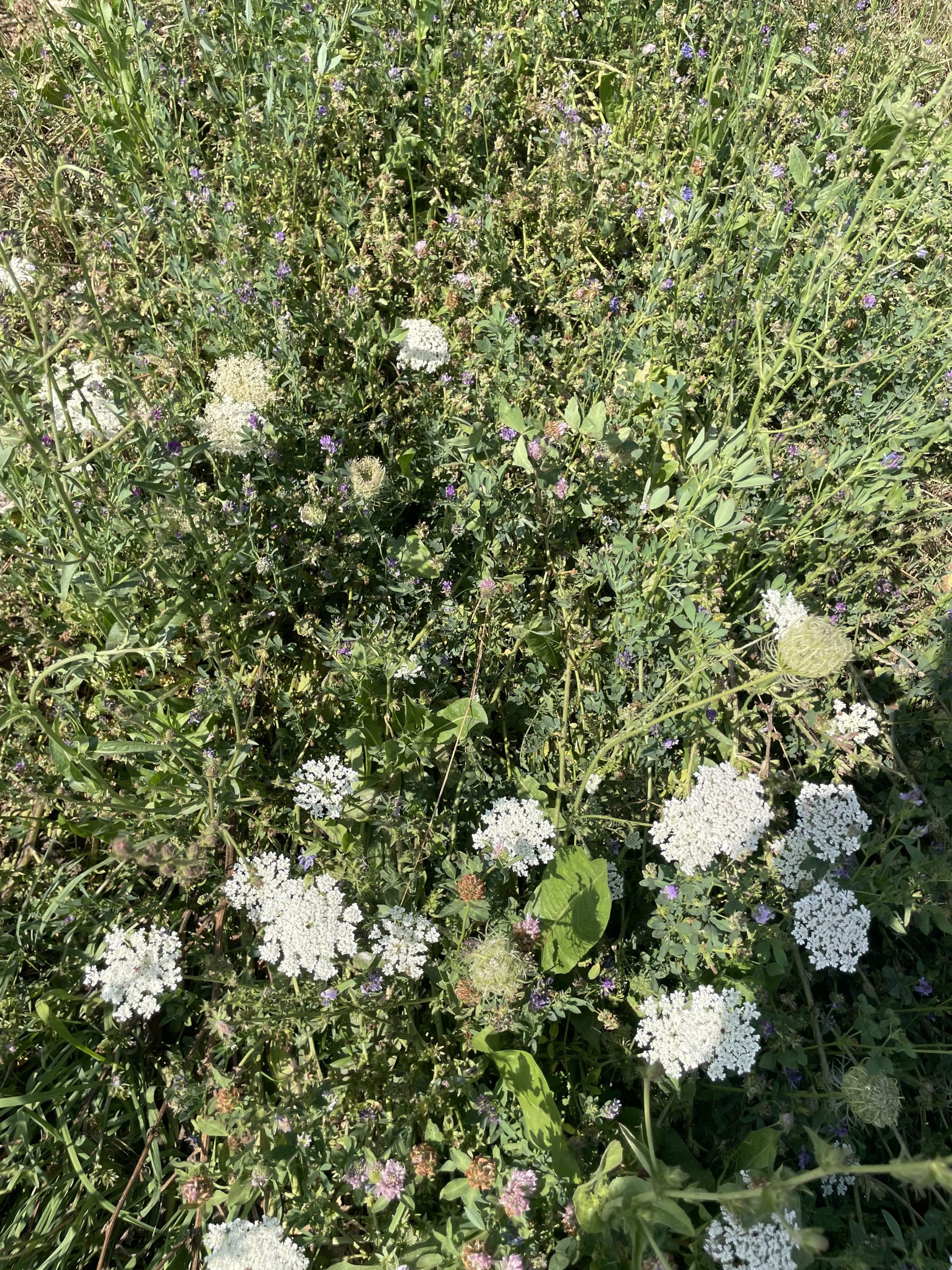

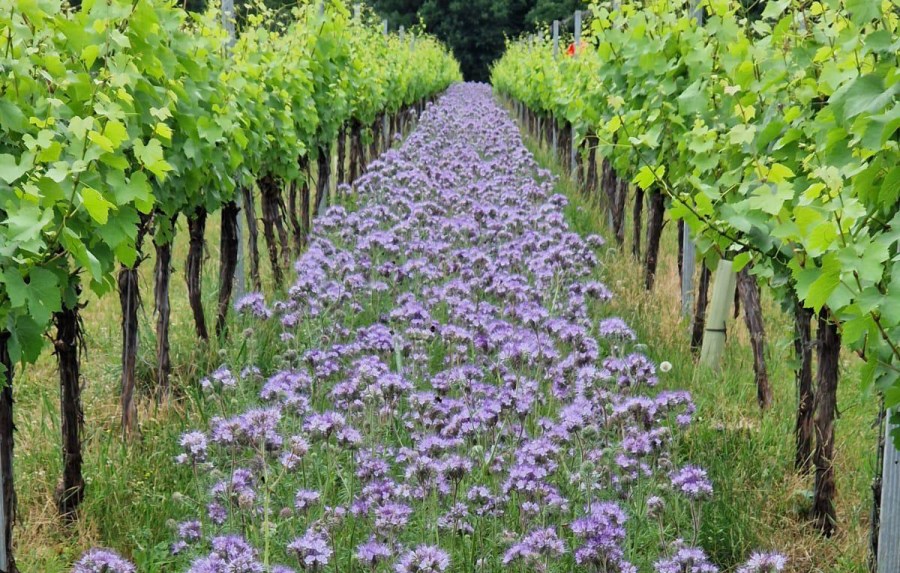
The increasing popularity of regenerative agriculture has seen a steady increase in vineyard managers introducing cover crops to their vineyards.
The use of cover crops supports soil health and biodiversity as part of a holistic approach to their stewardship of the land.
Ben Raskin, an agroforestry expert at the Soil Association has helped to define the role and key benefits of cover crops in organic viticulture: “Organic vineyards use cover crops between and under vines to build soil health and control weeds. Low growing species like trefoils (which can “fix” nitrogen from the air into the soil) and fine grass species are best, to avoid competition with the vines and ensure good airflow under the crop.
“The cover crops help with reducing soil erosion, drought resilience and water filtration. The healthier soil can also accentuate the terroir of the wine, the increased biological activity unlocking the full potential of the soil to deliver its unique flavour.”
But their use is not restricted to organic producers. Instead of aiming for the fussy maintenance of perfectly manicured grass cover down the rows, many vine growers across all scales of operation are now embracing the cover crop across England and Wales.
The undies test
New Zealand viticulturalist, Nick Paulin, has become well known for his unusual method for testing the soil health of a vineyard, suggested to him by a visiting consultant from Quebec. The “soil your undies” experiment takes a novel approach to offering visual proof of the effectiveness of a cover crop strategy.
Two identical pairs of cotton underwear are buried in side by side rows in the vineyard where different types of cover have been sown. The first time Nick engaged with the experiment, was in a traditional grass sward and also in a row that had a diverse cover crop, which had been grown through the winter and then crimped in the spring.
The pants were buried at a depth of 15cm and their location marked. They were left, undisturbed, for four weeks. The difference in decomposition was profound. The pair buried under grass had very little degradation. The cover crop underwear, on the other hand, had been almost completely broken down. Just the elastic waistband remained amongst the fragments.
When this striking visual test was followed up with soil testing in the winter, it was shown that the organic matter varied by only 0.5% between the two rows – but clearly that 0.5% made a huge difference in terms of the microbial activity that was taking place beneath the surface. The experiment certainly provides food for thought for those considering implementing complementary planting in the vineyard environment – or indeed any appropriate agricultural setting.
Working organically to build the natural biome
Case study: Harrow & Hope.
Harrow & Hope vineyard is a 6.5 hectare plot at the end of a Thames gravel terrace. The small team in Buckinghamshire aims to work with the land to allow the vines to best express the character of the site. To do this, they have chosen to work organically, building the natural biome both above and below the ground. Cover crops have played a part in their vineyard management system since around 2019.
Matt Robson, Harrow & Hope’s vineyard manager, is well known as a proponent for regenerative farming. He gave Vineyard magazine an insight into the system he has developed in Marlow, as the team employs trial and error to find out what works best for their specific parcel of land.
As a general cover crop strategy, we split the vineyard so every other row has got a perennial row of cover crops. That’s our low traffic row – they only get about three passes a year with the tractor to protect the soil structure and the cover crops.
We have multiple species in there. We’re trying to take out grasses because we don’t get that much benefit in comparison to other crops. The bulk of it is plantain, lucerne, chicory, red clover, sainfoin, white clover, yarrow and wild carrot. I like herbs in the lanes as much as possible.
The main reason we’re choosing those species is the rooting structure of the plants. We’re getting roots a seriously long way down with those particular choices. The sainfoin and the lucerne, for example, might have a metre and a half root on them. We want a fibrous rooting structure at different depths and these crops really do that. It improves the soil drastically and the vines benefit massively from it.
Then the high traffic rows – our spray rows and our working rows – have a lay of annuals. We tweak that every year depending on what we want. So it could go in as a winter cover crop or a spring cover crop. We are probably going to go with an autumn cover this season because of our early harvest and autumn being a better time to seed for us than in the spring. We have had quite a lot of failures from spring plantings.
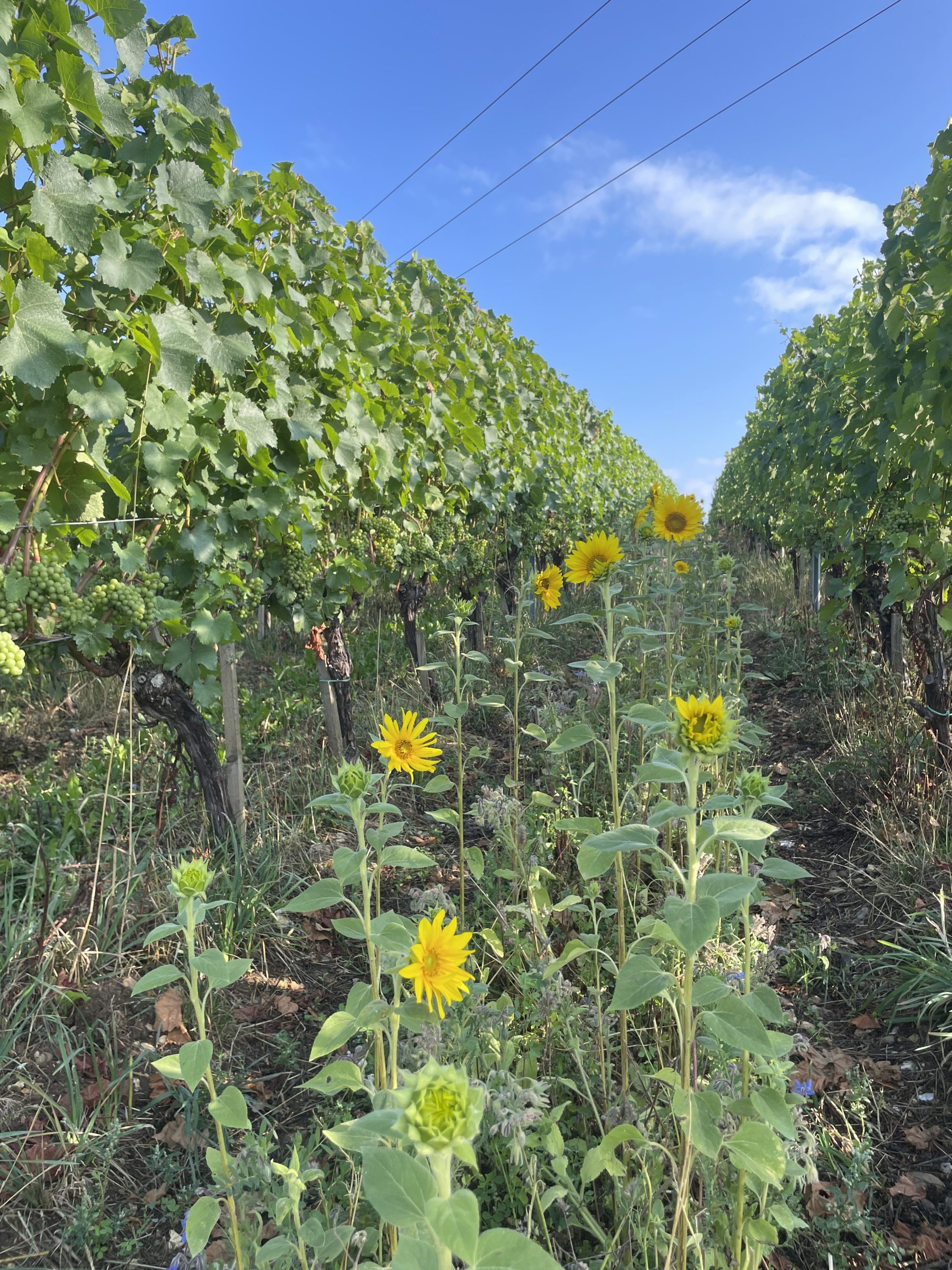
In our annual rows this year we put in dwarf sunflower, lupin, barley, oat and some borage, amongst other things. We want really high pollen and nectar producing plants. Obviously that helps with our insect life and bringing in beneficial predator species. Then if we have any other issues with certain pests, they are going to go for those plants first.
A few years ago, we had a fair bit of scale bug starting to attack the vines. We thought about how we could increase our predatory insects to take them out, which helped us to choose plant species for the cover crops. Last year there were not that many and this year I have only found one so far, so it looks like the system is working.
The place is a-buzz when everything is in flower and it looks wonderful. We get all the insect life you could possibly imagine, flying about. Then the bats and the birds, they love it as well because they get a good feed from it. So these cover crops are a massive benefit for in and around the vineyard. It is definitely ten times better than it was before it was planted into vines. It was a pony paddock, so it didn’t take a lot to make the place better.
When we terminate the cover crops I like to wait until they have set seed, if I can get them to go that long. Then I can build up my seed bank. They are all very high biomass producing plants that set seed quite nicely.
Then we will swap the annual and perennial rows around every five or six years – once the perennial rows start to give up a bit.
Crimping the crops
Crimping lays down the crop, covering the surface of the soil. Then, the crops act like a mulch, locking in moisture and suppressing weeds. The canny operator might combine seed distribution with crimping to reduce the number of passes needed over the row and improve efficiency in cover crop management.
At Harrow & Hope, Matt’s approach is a light touch one:
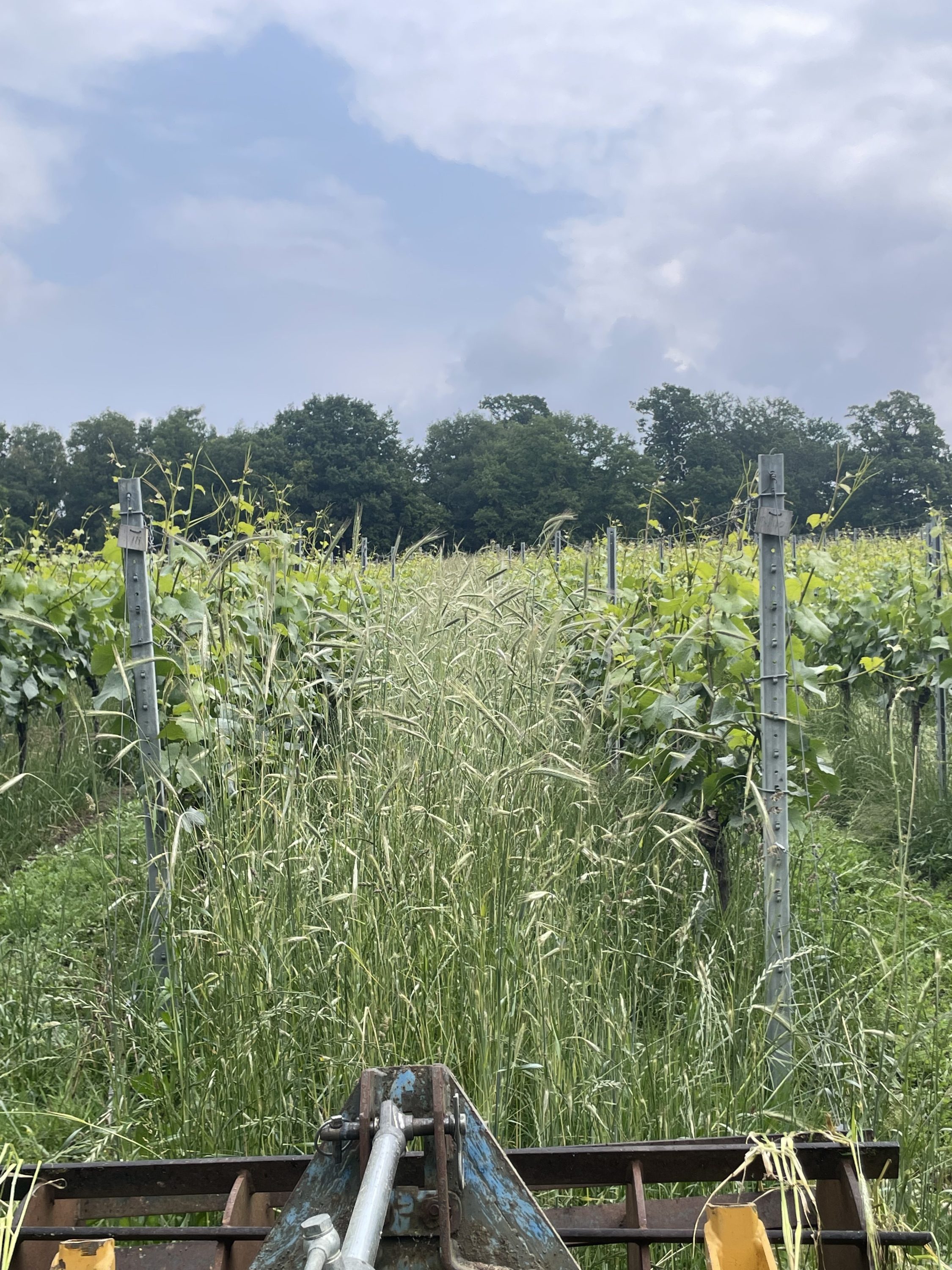
We crimp the perennial rows, but we let them grow tall. We crimped in June this year, when some of the chicory was two metres tall. It was just starting to get to the point where it was actually becoming difficult to work in the vines.
I used a Cambridge roller, not a flat bar crimper – although I’ve got both. The roller is a little bit more gentle and I still wanted everything to fully flower and set seed. The roller laid it all down. Some plants popped back up, as they always do with crimping, but it wasn’t enough to warrant doing another tractor pass.
We were left with this incredible blue, purple, white and red mat down the vines. Its brilliant stuff laid over, and it looks absolutely stunning. We didn’t take the mower out into the vineyard this season until mid-August.
Crimping is preferred over mowing by some because it helps the clover in particular to thrive, since larger plants around it that compete for light are pressed down. White and red clover are highly prized as cover crops since they work as a living mulch. They are known for their usefulness in nitrogen fixation, adding organic matter to the soil and suppressing opportunistic weeds without providing aggressive competition for the vines.
Cover crops in drought conditions
After the drought conditions of this year’s summer, the attention of many growers has turned to planning for the potential of long dry and hot spells in future seasons. At Harrow & Hope, Matt has observed a big benefit from his cover crop planting strategy in these extreme conditions. Water filtration rates are observed to be better than in areas without cover crops. The living roots and added organic matter help to give the soil a more porous texture which retains moisture better.
By crimping over the cover crops when they are terminated, Matt has seen that the soil temperature is also kept low thanks to the additional ground coverage. This is vital when the soil’s temperature is reaching such high levels, as we have seen in this growing season, that the soil is basically shutting down. The microbes within the soil are unable to function in the hostile environment.
“If there’s no cover on the soil, it is cooking like tarmac,” Matt said. “Being able to keep the ground covered and keep that soil temperature lower means that our soils constantly work throughout the season.”
However, there is a question to be answered as to whether the value of cover crops in drought outweighs the potential danger they pose to the vines in providing competition for scarce water resources. Even with this season’s unprecedented conditions, it feels anecdotally like we are not really at the point in England and Wales where this is an entirely credible issue, but it is not impossible that it may become one in the future.
OENO One has recently published research evaluating cover crop termination strategies to reduce water competition with grapevines, a study which took place over three years in organic vineyards in the Occitanie region of France.
The researchers highlighted that their results needed to be interpreted in light of the variability in soil type, management strategies and climatic conditions across their subject vineyards. Of course, this is a principle very much applicable to the testing and evaluation of cover crops anywhere.
As a guiding principle, though, the work suggested that “termination by tillage at grapevine budburst emerged as the most balanced option, as it preserved vine vigour and yield at levels comparable to the tilled control, while avoiding the increased water stress observed under late-termination or roller-crimping treatments.”
Choosing when and how to terminate the cover crops is emerging as one of the most critical elements of putting a successful management plan in place for these service crops.
Read the research on OENO One: https://oeno-one.eu/article/view/9896#
Potential drawbacks
As with anything, it is not all sunlight uplands with cover crops. They do have their potential drawbacks, and it is up to each individual vineyard to strike the right balance. For Harrow & Hope, cover crops have been built into the annual cadence of vineyard care, but they might not be right for everyone.
- It can take a lot of experimentation to get it right, and the system you use may vary from season to season. While some species may establish really well in your vineyard, others may be slow starters and others may fail entirely. This can also be strongly dependent on the weather at the critical point in the year. It may take a degree of perseverance to find what works best for you.
- There is a cost implication. Leaving the existing grass vegetation to do its thing and mowing it periodically is about as close as you can get to doing nothing and that strategy costs very little to boot. Buying seed, and maybe investing in kit like crimper attachments will take resources, as well as the time needed to plan and execute a cover crop strategy. But devotees of the effectiveness of cover crops, like Matt Robson, believe this investment will pay dividends.
- Is it the right look? From a purely aesthetic point of view, there will be some people who look at cover crops and see unsightly weeds. They like the neatness of mown grass between the rows and would struggle to see the beauty in a bustling, biodiverse meadow harboured between the vines. Each to their own; as many vineyards find that cover crops actually provide a good marketing hook to attract eco-minded consumers, but there is certainly no blame attached to those who want a vineyard with a more traditional look.
Offsetting the cost
The second stage of the 2026 Sustainable Farming Incentive (SFI) scheme opens in September 2026 for holdings of over 50 hectares and existing agreement holders. Some of the options provided by the scheme, aimed at supporting biodiversity, are well suited to existing vineyard practice.
Businesses may find that the support available will help to support the costs of establishing a new cover crop scheme, or bolstering an existing one. These options also illustrate that cover crops and complementary planting need not be restricted merely within the rows, but also for other awkward areas of unproductive ground that could be set to work feeding the biodiversity of the vineyard as a whole.
For example:
- CAHL1 Pollen and nectar flower mix (£739/ha) – Establishing blocks or strips of flower mixes from late spring through to summer offers a ready food source for the pollinators that are vital to a rich habitat.
- CIPM2 Flower-rich grass margins, blocks or in-field strips (£798/ha) – For low traffic areas of the land, this option seeks to create longer term habitats with grasses and wildflowers.
- CAHL3 Grass field corners or blocks (£590/ha) – Intended to create a year-round habitat by allowing a tussocky grass sward to develop in awkward areas, which will have the benefit of improving soil structure and reducing erosion.