
The end of harvest marks the beginning of another critical period in the vineyard calendar, with managers working against short weather windows to prepare for the following growing season.
What happens after the grapes leave?
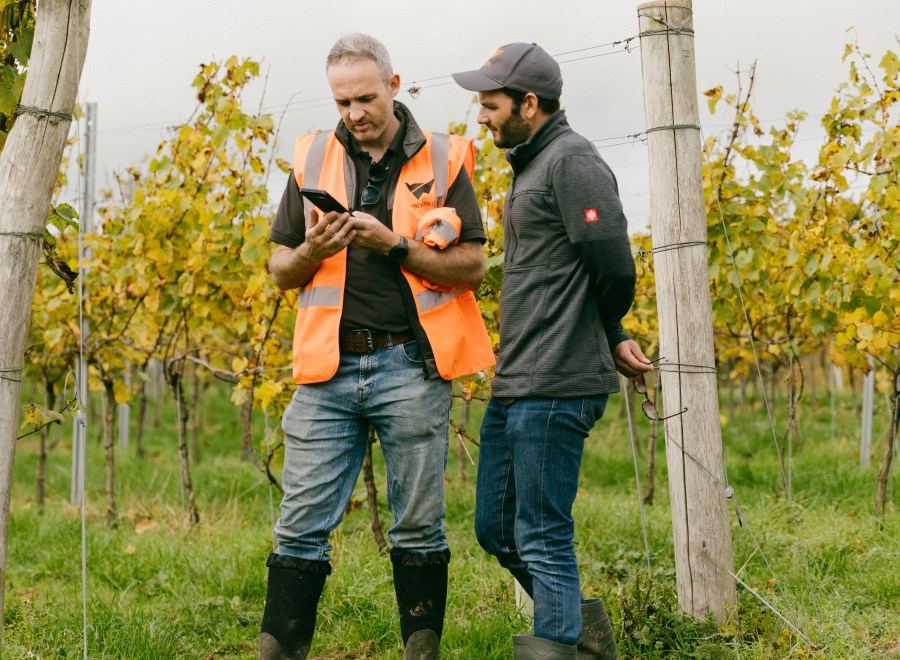
Post-harvest work should begin with a thorough vineyard assessment. Harvesting can reveal problems that were less obvious during the growing season: damaged posts, broken wires, missing vines, drainage issues, poor vigour and areas where machinery has struggled.
It is also an opportunity to review the season while it is fresh in everyone’s mind. Which blocks performed well? Where was disease pressure highest? Were there areas of uneven ripening, poor drainage or excessive vigour?
Recording these observations now provides valuable information when planning next year’s programme.
Preparing for a wet British winter
As UK autumns and winters become wetter, ground management becomes increasingly important. Heavy rainfall combined with saturated soils and regular machinery traffic can quickly lead to compaction and erosion.
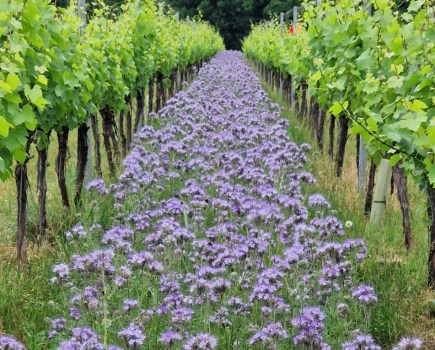
Where appropriate, autumn is an opportunity to establish or maintain ground cover to protect soil from erosion and improve its structure. However, cover crop decisions need to be site-specific. A vigorous cover may benefit an established vineyard but create unnecessary competition for young or weak vines.
The objective is not to make every vineyard floor look the same. It is about understanding the soil, topography and drainage of each site and managing accordingly.
Autumn is infrastructure season
Once harvest pressure eases, there is an opportunity to tackle infrastructure jobs that are difficult to fit into the summer programme.
Posts and trellis should be inspected, wires repaired and tension checked, alongside maintenance of fencing, gates and access tracks.
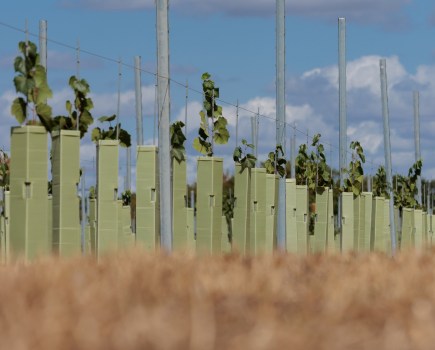
Young vineyards require particular attention. Guards may need repositioning, tutor clips checked and weeds controlled. Missing or failed vines should be recorded so replacements can be ordered for spring planting, or potted vines ordered for autumn infilling.
Planning pruning before winter
Although winter pruning may still be some way off, autumn is the perfect time to start planning.
Different varieties, blocks and vine ages can require different pruning strategies. Identifying weak or vigorous areas beforehand gives teams a clearer understanding of what they are trying to achieve.
For commercial vineyards, good preparation can make a significant difference to the efficiency of the winter programme. Knowing where additional labour will be required, where access may be difficult and which blocks need particular attention helps prevent valuable winter weather windows from being lost.
Don’t forget the machinery
The post-harvest period is also a major machinery-management exercise. Harvest equipment needs cleaning and servicing, tractors require maintenance and implements should be inspected before the winter programme begins.
UK vineyards place considerable demands on machinery. Mud, clay soils, wet grass and steep sites can all expose weaknesses that may not become apparent until the next operation is already due.
A machine that is ready to go when the weather window appears can make the difference between completing an operation on time and waiting another week for conditions to improve.
The 2027 harvest starts now
It can be tempting to see autumn as the period when the vineyard finally begins to wind down. In reality, it is the start of preparation for the next season.
For UK growers, successful vineyard management is often about making the most of limited opportunities. The weather will rarely provide perfect conditions for every job, so prioritisation, preparation and experience are essential.
Vineyards that enter winter with healthy soils, functioning infrastructure, good drainage and a clear management plan are better positioned when spring arrives.
Harvest may be finished, but the vineyard doesn’t stop. Autumn is when the focus changes from producing this year’s crop to preparing the vines, soil and infrastructure for the next one – one vine at a time.