

SFI, water and soil.
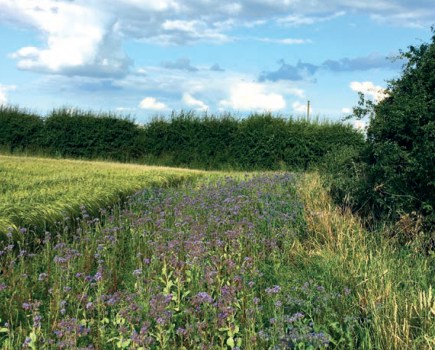
There is something revealing about a funding scheme that disappears almost as soon as it arrives. The second window of the Sustainable Farming Incentive (SFI) opened on 22nd September and, within six hours, the £253 million budget had been allocated and applications closed. Whatever individual views may be on SFI, that level of demand demonstrates a substantial appetite among farmers and growers for support to change how land is managed, with environmental measures increasingly being considered alongside wider business resilience.
For vineyards, one of the clearest lessons is the importance of preparation. Those able to submit applications successfully were often those who had completed the groundwork beforehand: checking land parcels, updating boundaries, reviewing land covers and ensuring digital mapping information was accurate. For those unfamiliar with the Rural Payments Agency (RPA) system, this proved to be a considerable hurdle. Growers who had specialist land agents managing their applications, or who had invested time in understanding the portal and resolving mapping or eligibility issues, were in the strongest position when the window opened.
Missing the September window does not mean the opportunity has disappeared. DEFRA has confirmed that SFI is expected to return in 2027, although the detailed scheme design has yet to be announced. Ministers have indicated that the broad structure is likely to remain similar, but individual actions, payment rates and eligibility requirements will need to be confirmed. For now, growers can use the intervening period to review their RPA mapping, land parcels and potential environmental actions so they are better prepared when the next window opens.
Water Management Fund
Water security is another area where preparation is becoming increasingly important. Although established vines are relatively drought tolerant, young plantations require consistent moisture while their root systems develop. This is particularly relevant on free-draining chalk, sand and gravel soils, where available soil moisture can decline rapidly during prolonged dry periods. Water requirements also extend beyond irrigation to filling sprayers and other operational purposes.
DEFRA is currently preparing round three of the Water Management Fund, with up to £15 million expected to support on-farm water storage and climate resilience. Final details are still to be confirmed, but eligible investments are expected to include reservoirs, rainwater harvesting and efficient irrigation systems.
For vineyards considering water infrastructure, a basic water budget is a useful starting point. Vineyard area, soil type, planting age, irrigation requirements and spray volumes will all influence demand. Understanding where existing supplies are insufficient will help determine whether storage, rainwater harvesting or irrigation improvements would provide the greatest benefit.
Winter soil management
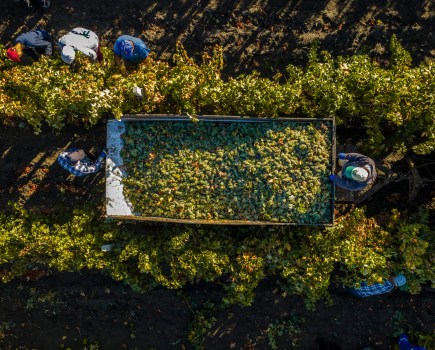
Once harvest is finished, there is a useful opportunity to look beneath the vineyard rather than simply preparing for the next season. The condition of the soil after a year of machinery traffic can reveal how the vineyard has responded to rainfall, drought and repeated passes through the rows.
Wheelings, areas where water has stood after rain, or sections that dried out noticeably faster during the summer can all provide clues to compaction. Before reaching for the subsoiler, however, it is worth establishing what is actually happening below the surface.
A soil pit can reveal whether a restrictive layer is present, how deep it sits and how it is affecting rooting, soil structure and moisture movement. Comparing a problem area with an unaffected section can also help establish whether machinery traffic is responsible. What appears to be a drainage problem at the surface may have a very different cause once the soil profile is exposed.
Where compaction is confirmed, subsoiling may have a role, but it should be a targeted intervention rather than a routine treatment. If the underlying cause is repeated trafficking, poor soil structure or low organic matter, mechanical disturbance alone may only provide temporary improvement. Changing traffic patterns, improving soil structure or establishing an appropriate cover crop may offer a more lasting solution.
The same principle applies to winter grazing. Sheep can be useful for vegetation management and nutrient cycling, but timing is important. Grazing firm, dry ground is very different from allowing livestock onto saturated soil, where poaching can quickly create compaction and damage soil structure.
The winter period therefore provides a valuable opportunity to assess the vineyard as a whole. SFI preparation, water planning and soil assessment may appear separate, but each contributes to the same objective: ensuring the vineyard is better equipped to manage changing weather, resources and regulation. Understanding what is happening beneath the vines now can prevent considerably more work later.