
The second application window for the Sustainable Farming Incentive (SFI) is set to open on 22 September, so Hutchinsons head of environmental services, Georgina Wallis, highlights some actions that may be of interest to growers in the viticulture sector.
While the SFI is primarily aimed at arable and livestock farms, vines and other horticultural permanent crops are included within the scheme’s remit, and of the 71 actions in SFI 2026, there are several of interest (see table).
The payments available could provide useful extra income for adopting measures that benefit both the vineyard and biodiversity, while also helping growers meet the increasing sustainability requirements from the supply chain and assurance schemes. The latest LEAF Marque Standard (version 17.0), for example, features a new requirement for 5% or more of the total farm/site area to be managed as habitat, with an (optional) advanced target of 10%.
As always though, it is important to evaluate any SFI actions carefully, building the scheme around what is right for your business, rather than chasing the highest payments. There will be costs associated with many actions, such as seed, establishment, topping, and other management activities, plus implications for day-to-day agronomy, so always read the guidance properly to fully understand what is required, and seek advice, before signing up to anything.
Cover crops
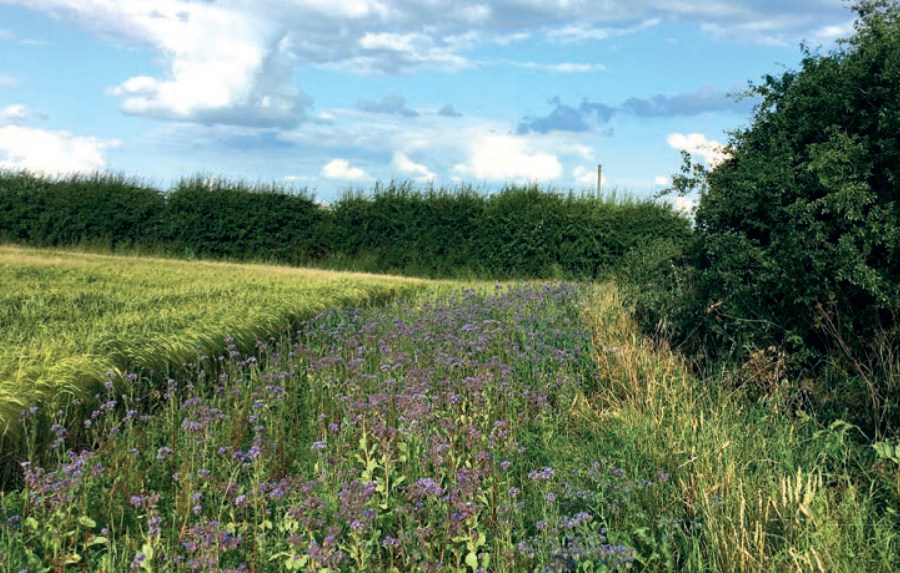
One particular area of interest is cover crops, which serve many useful purposes, from protecting bare soil over winter, building structure, organic matter and fertility, to providing habitats that support pollinators, natural predators, and other beneficial insects.
Areas around the outside of the vineyard can suit cover crops and flowering mixes, but be aware of any limitations this puts on vehicle movements, or other logistics (e.g. areas where boxes are stacked, etc), to avoid the risk of damaging cover. The same applies if you are planning to establish mixes down alleyways, as you will need to demonstrate the aims of the action are being met, and are not compromised by vehicle trafficking. The RPA is increasingly using satellite imagery to monitor the delivery of SFI actions, so there is no hiding should problems occur.
Timing is key for establishing cover crops successfully, and by mid-September, it is generally too late to sow an overwinter cover crop (CSAM2), which should ideally be sown by late August/early September to establish sufficiently before winter sets in.
SFI rules allow up to 12 months leeway to establish any mix where the scheme start date is too late for that season, so even if you have only just joined the SFI, it will be possible to wait until next August to sow overwinter cover. For many other actions, the focus is on planning and preparing for spring-established actions.
For all cover crops, selecting the right mix of species to deliver whatever it is that you want to achieve is crucial, as is recognising any potential risks, such as whether a certain type of plant could host insect pests, or has a growth habit not suited to the area around, or beneath vines. There are many options available, so discuss them with your agronomist or check the Hutchinsons 2026 Environmental & Cover Crop Seed brochure.
One technical point to remember is that the seeds in many multi-species cover crop mixes are usually very small, so will struggle to establish when direct-drilled into an existing grass sward, which is simply too competitive. There are ways to improve the chances of establishment, such as by scarifying and removing as much grass as possible, but generally, the best approach is to sow small seed mixes into a well prepared, fine, weed-free, seedbed.
Table 1: Examples of potential SFI 2026 actions for vineyards
|
SFI code |
Description |
Payment |
|
CSAM2 |
Multi-species winter cover crop |
£129/ha |
|
CAHL1 |
Pollen and nectar flower mix |
£739/ha |
|
CAHL2 |
Winter bird food on arable and horticultural land |
£648/ha |
|
CAHL3 |
Grassy field corners or blocks |
£590/ha |
|
CAHL4 |
4m to 12m grass buffer strip on arable and horticultural land |
£515/ha |
|
CIPM2 |
Flower-rich grass margins, blocks, or in-field strips |
£798/ha |
|
CHRW2 |
Manage hedgerows |
£13 per 100m for one side |