

Nitrogen is one of the trickier nutrients to get right in vines; too much encourages soft, sappy, growth, leading to overly-dense canopies with poor airflow, increased disease risk and slower ripening, while too little can compromise both this season’s vigour, and next season’s cane growth. Hutchinsons agronomist Rob Saunders explains more and offers his advice.
Yara figures show that more than 50% of a vine’s total nitrogen uptake ends up in the grape, with 42% going into leaves and shoots, and the remainder to the trunk and roots.
The influence of nitrogen on fermentation kinetics and wine quality is another important aspect to consider, as decisions made in-season can often affect fermentation speed, aroma, the ‘body’ and taste of the finished wine.
Nitrogen impact on quality
Nitrogen’s impact on wine quality all relates to the level of Yeast Assimilable Nitrogen (YAN) in the must. This is a measure of the nitrogen that yeast can actually use for fermentation, namely ammonia and primary amino acids.
As a minimum, YAN should be above 140-150mg N/L for healthy fermentation, however the optimum threshold varies widely depending on factors such as sugar content, fermentation temperature, yeast strain and fruit health.
Low alcohol, low sugar ferments may well be nearer 140-150mg/L, but modern high sugar, high alcohol fermentations can require nearer 250-300mg/L to avoid slow fermentation, or the production of hydrogen sulphide.
Generally, it is better to achieve the required YAN in the grapes before they are harvested, rather than having to correct levels in the winery vat. Soil type and inherent fertility inevitably play a big role in this, but so too does careful, targeted agronomy to ensure requirements for yield and quality are met.
Agronomy influences
Peak nitrogen requirement in grapevines is usually at flowering, but nitrogen is also particularly important during bud burst, leaf growth, and grape-fill. Many growers will typically apply base granular nitrogen early in spring, and sometimes top-up reserves for next season post-harvest, where required.
If extra nitrogen is needed in-season, foliar products are a good option to support greening and build YAN, without promoting excessive canopy growth. Foliar amino acid feeds and urea (amine nitrogen) applied around veraison are very efficient, as the nitrogen is already in a form that plants can use immediately.
Remember that many factors influence nitrogen use efficiency (NUE) in vines, from soil properties and environmental conditions, to the type of product and application timing.
Research presented at this year’s Cool Climate Wines symposium suggests soil-applied nitrogen is best applied to young, actively growing vines prior to veraison to maximise NUE, while applying to the soil between veraison and harvest is inefficient and ineffective, hence the need for foliar options.
Competition for resources
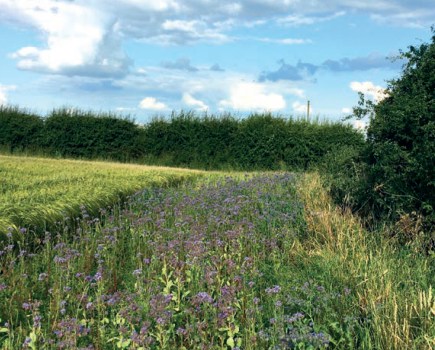
Also consider the impact of nutrient competition from grass, weeds or cover crops in the undervine strip and adjacent alleyways when assessing nitrogen requirements. Competition can reduce both vine vigour and yield, as well as wine quality.
Indeed, this has been illustrated by early findings from a three-year research project in Switzerland, which shows that where 100% ground cover was retained, YAN in harvested white grapes failed to reach the 140mg N/L threshold, even after applying 50kg N/ha. In contrast, YAN was above this threshold where plots were weeded under the vines, and the same amount of fertiliser was applied.
For those growing leguminous inter-row cover crops (e.g. clover, vetch), it is also important to recognise that legumes do not release the nitrogen they have fixed from the atmosphere until they are terminated. The amount and timing of this nitrogen release depends on various factors, such as the type of species, carbon:nitrogen ratio, method of termination, soil biology, and environmental conditions. Generally, aim to terminate in late winter if possible, to allow time for nitrogen to be made available for the following spring.
In conclusion, vines do not have a massive requirement for nitrogen, but it is vital all nitrogen is utilised as efficiently as possible, both from an agronomic and winemaking perspective, but also financially, given the rising prices we have seen this spring.