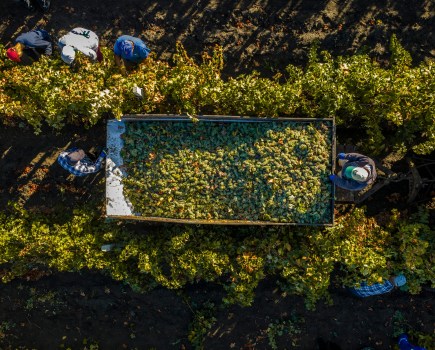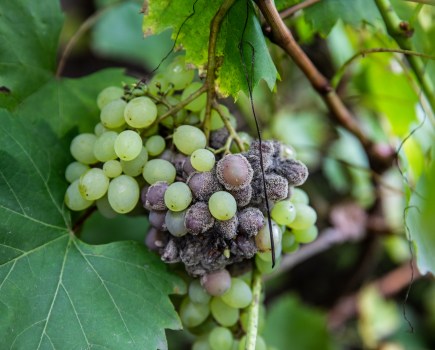


As vineyards move through spring and into early summer, attention naturally shifts to canopy management and disease control. Yet this is also the moment when the funding landscape quietly resets. With most major schemes opening from mid-summer onwards, and many operating on capped, first come budgets, growers who prepare now are the ones who secure the greatest advantage.
Here is your guide to the key government grant schemes available to UK vineyards.
Capital Grants – opening July 2026
Capital Grants fund specific, one-off physical items that improve the environmental performance of a holding. They do not fund vineyard establishment but instead support fixed items that deliver environmental benefits. Examples from the 2025 window include:
- BN11: Planting hedges to reduce wind exposure (£22.97 per metre)
- FG9: Deer fencing (£10.72 per metre)
- RP18: Above ground tanks for rainwater capture (£73.34 per m3)
Applicants should review requirements well in advance, as some items require approval from statutory bodies such as Natural England or Historic England.
Sustainable Farming Incentive (SFI) – Opening June and September 2026
With SFI now being the core scheme and replacing most of the Countryside Stewardship grant, it is one to seriously consider. The scheme opens in June for holdings between 3 and 50 hectares and those not currently in an Environmental Land Management agreement. A second window opens in September for holdings over 50 hectares or those with existing agreements. There is no fixed closure date, so early preparation remains essential.
A sample from the 71 actions include;
- WBD1: Managing ponds (£257 per pond)
- CHRW2: Managing hedgerows (£13 per 100m, one side)
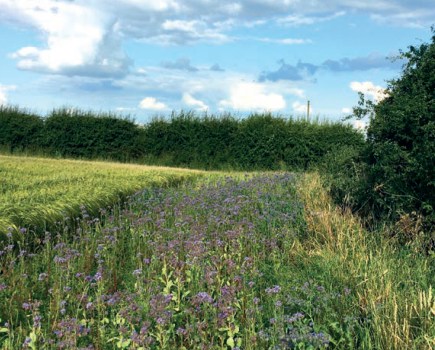
- CAHL1: Pollen and nectar mix (£739/ha)
- CAHL3: Grassy field corners or blocks (£590/ha)
Landowners may want to consider strategically pairing SFI actions with equipment and items that are funded through the Capital Grants scheme to maximise their annual payment.
Countryside Stewardship – invitation only
Countryside Stewardship is now in a managed phase out, with Higher Tier applications operating on an invitation only basis. Some vineyard estates may still be invited, particularly those in sensitive landscapes or with priority habitats, but for most growers, SFI and Capital Grants will be more accessible and practical.
Farming in Protected Landscapes (FiPL) – Open until March 2029
For vineyards in protected landscapes and Areas of Outstanding Natural Beauty, FiPL remains one of the most flexible and generous funding routes available for vineyards. Unlike SFI and Capital Grants, FiPL does not use a list of predefined actions. Instead, it funds projects that deliver against four outcome areas: Nature, Climate, People and Place.
FiPL pays landowners to deliver public goods that enhance the protected landscape, not to increase agricultural production.
Examples of vineyard FiPL projects:
- Kent Downs – Outcomes: Nature & Place – 70% funding
A vineyard reinstated 380m of historic hedgerow removed in the 1970s, reconnecting priority habitats and reducing wind exposure across the site. - Cotswolds – Outcomes: Nature & Place – 65% funding Screening and woodland edge planting were funded to soften the visual impact of a new winery building visible from a key viewpoint.
- High Weald – Outcomes: Nature & Climate – 75% funding
A shaded, low productivity corner of a vineyard was converted into a wetland scrape and species rich grassland, improving habitat diversity and water quality.
Farming Innovation Programme – Current round closes 8 July 2026
For vineyards interested in research, technology, or collaborative trials, the Farming Innovation Programme offers co funded opportunities for R&D, automation, climate resilience, and viticulture specific innovation.
Farming Equipment and Technology Fund (FETF) – Closed for 2026, expected to return
The FETF closed on the 28th April 2026. It is expected to return in 2027, potentially in a revised format. Historically, FETF has supported sprayer upgrades, small machinery, and precision farming tools.
Woodland Grants
England Woodland Creation Offer (EWCO)
Open year round and administered by the Forestry Commission, EWCO funds small woodland creation, shelterbelts to reduce wind erosion and protect crops, biodiversity corridors between vineyard blocks, and planting schemes that can help soften the visual impact of new winery buildings.
Payments include;
- Up to £10,200/ha for planting and establishment
- Up to £12,700/ha in additional contributions
- £400/ha per year for 15 years for establishment support
Woodland Tree Health Grant (WTHG)
Also open year round, this grant supports the felling and restocking of diseased woodland (e.g., ash dieback, chestnut blight). It is particularly valuable for estates managing woodland edges around vineyard blocks. The grant funds:
- Felling and removal of diseased trees
- Restocking with resilient species
- Tree protection and establishment operations.
Applying for grant funding can be an intensive and often complex process, but it is not something you need to tackle alone. If you would like tailored advice, support in developing your project, or help navigating the application process, please feel free to get in touch.