

In a well managed vineyard, the canopy is often the first clue to how the site is behaving, reflecting soil condition, nutrition and seasonal decisions. A balanced canopy isn’t a stylistic preference; it is the natural outcome of understanding what your site wants to do and guiding the vine rather than fighting it.
In most cases it starts with the soil. If your vineyard sits on compacted ground, low in organic matter or with limited cation exchange capacity (the soil’s ability to hold and exchange nutrients), the vine will tell you. Shoots may surge, stall, yellow, or grow unevenly along the row. In these cases, the most effective canopy work happens long before the season begins through introducing cover crops, adding organic matter and incorporating practices to protect the soil’s natural structure.
Cover crops
What to sow: Deep rooting species (radish, chicory, plantain), soil loosening species (phacelia, buckwheat), legumes (crimson clover, vetch) and grasses for structure (cocksfoot, fescue). Sowing between July and August gives the best establishment, provided moisture is available. Avoid drilling into dry, tight clay unless rain is imminent.
For growers implementing government support, the Sustainable Farming Incentive (opening in June) includes a £129/ha payment under CSAM2: Multi species cover crop.
Compost
Use stable, mature, screened compost with a carbon to nitrogen ratio around 15:1, low salts, no wood chunks and a good humus fraction. Well-made green waste works, fully matured farmyard manure is suitable, and vermicompost remains an excellent option.
Trials show organic matter increases of 0.1%-0.2% per year from 5-10 t/ha applications, with chalk and flint soils responding the fastest.
Reducing tillage
The aim is simple: avoid breaking the soil apart faster than biology can rebuild it. In practice, this means moving away from undervine cultivation and allowing cover crop roots to do the structural work.
Targeted subsoiling
Subsoiling is only beneficial when a clear, diagnosed layer is restricting roots, not as a routine operation. It is justified when water lingers in the profile after rain, when weak zones appear in the same rows year after year, or when penetrometer resistance consistently hits 2.5 MPa at a specific depth. How to do it well:
- Use a single leg or twin leg subsoiler with narrow points
- Work just below the compacted layer (usually 25cm–40cm)
- Only when soil is moist but not wet
- Follow with a deep rooting cover crop to stabilise the fissures.
Tasks you can implement this season
- Bud rubbing: The first hands on job is removing unwanted basal buds from the trunk or lower crown. This typically falls between April and May, when buds are still soft, but on lower vigour sites you may choose to leave a few shoots to help maintain balance. You can do this by running your thumb or a blunt toll down the trunk while the buds are soft.
- Shoot thinning: This is where the canopy takes shape. Thin early and decisively on high vigour sites; on lower vigour blocks, prioritise the strongest, best spaced shoots. For VSP systems, aim for roughly 12–15 shoots per metre.
- Tucking and wire lifting: As shoots reach 30cm-40cm, begin lifting wires to keep the canopy upright. Fast growing sites may need more frequent lifts, but staged lifting always outperforms a single rushed pass.
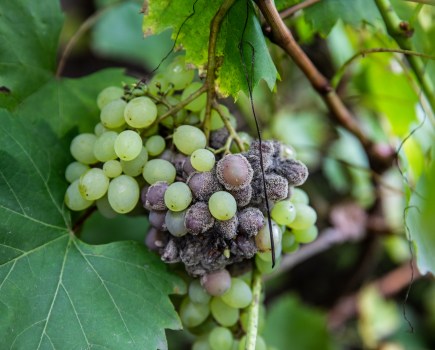
- Leaf removal: Remove leaves around the fruiting zone early if Botrytis pressure or tight bunches are a concern. Focus on the south facing side of the row and work early in the morning to reduce the risk of scorch.
- Trimming: Trim earlier (late June to early July) on high vigour sites to prevent a top-heavy canopy. Delay on low vigour sites to maintain leaf area and support ripening.
- Pendlebogen training: Although not an in season job, growers seeking a more even shoot emergence and better vigour distribution may benefit from the Pendelbogen method. Allowing canes to arc naturally, rather than tying them rigidly horizontal, the method remains one of the most reliable ways to achieve uniformity. It does require an additional wire between the fruiting wires, adding to trellis cost.
A balanced canopy is never the result of a single action but of a series of well-timed decisions rooted in an understanding of soil, vigour and site behaviour. For growers wanting tailored guidance or support with implementing these practices, professional agronomic advice can make a meaningful difference.