
Late frosts caused considerable damage to many vines this spring, so Hutchinsons agronomist Will Robinson explains how to manage affected areas over coming weeks.
Any late frost is bad for vines, but repeated late frosts that hit both primary and secondary growth are even worse, resulting in yield loss, disruption to canopy architecture, uneven maturity, and management complications through the summer.
In the worst cases this year, some vines have been left with mainly blind buds bursting from around the crown, trunk, and thick canes that had been laid down, presenting considerable challenges for canopy management, and cane selection for next season.
Any tertiary buds that have come through could produce some fruit, however bunches that do form are likely to be small, very late to develop, and slow to ripen, if at all. At the time of writing, many frost-hit sites were already three to four weeks behind others.
Keep on top of canopies
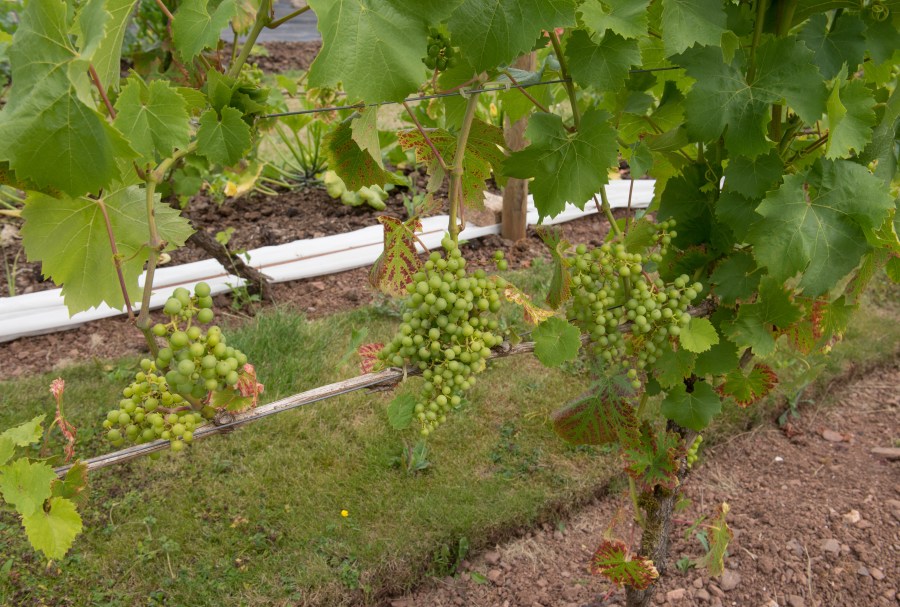
Frost damaged shoots lose their apical dominance, frequently resulting in two shoots arising from axillary buds, leading to denser canopies, which in turn drives greater disease pressure.
Managing, and restoring, canopy architecture is therefore one of the biggest challenges facing many growers with frost-hit vines.
Even those that were only lightly affected by frost, with damage to the top 50mm of apical growth, have seen growth disrupted, with secondary buds emerging where primary shoots were still viable, and more lateral shoots appearing on primary growth.
Any bud rubbing that has already been done will help reduce crowding and ensure there is enough space, light and airflow getting through to remaining buds for floral initiation, which usually occurs around mid-June.
Canopies need managing carefully throughout summer, to avoid the excessive lateral growth causing issues with poor airflow and increased disease risk in this year’s crop, and to nurture those optimal shoots for future spurs and canes. For that, we want shoots that are disease-free and growing in the right position – i.e. along the row, not into the alleyway – and are spaced out to ensure sufficient sunlight and airflow to become fruitful for 2027.
The architecture of many vines may have been disrupted by late frosts, but careful canopy management over summer months could make pruning choices easier this winter.
Protect what’s there
Although frost has severely reduced yield potential, effective disease control must be maintained on all vines, especially where canopies are denser, or vines have become stressed. Evidence of anthocyanin build-up was clear to see in many inflorescences during May, and this reddish or purple colouring on the rachis or stems is an indicator of the plant’s stress response, that could predispose the vine to diseases such as phomopsis and powdery mildew.
Avoid the temptation to cut costs by skipping treatments just because yield is not there; an effective spray programme should be maintained on all vines, but tailor what you do for individual sites, yield potential, canopy growth and disease risk.
Particularly careful planning is needed on sites where there have been isolated pockets of frost damage, potentially resulting in vines on the same site having vastly different yield potential and development. Inputs need adjusting accordingly to maximise yield potential on unaffected vines, while still doing enough to protect frost-damaged vines from disease.
Generally, for powdery mildew, leave no more than two weeks between conventional fungicide treatments, and maintain this through to veraison. An interim application of an organic product or sulphur may also be needed if powdery mildew risk is particularly high – which it could be where canopy architecture and growth has been badly disrupted.
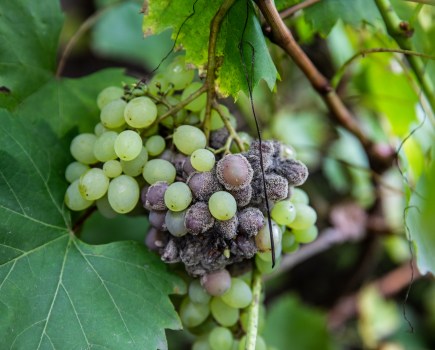
Failing to address powdery mildew this season, could lead to more disease overwintering on the wood, and diseased and deformed shoots – known as ‘flag shoots’ – appearing next year. Those shoots are unviable, and will be a source of infection for the whole site next spring.
Foliar disease also reduces the photosynthetic capacity of vines, and therefore their ability to replenish and build carbohydrate reserves, potentially reducing vigour and leading to more blind buds next year.
Even though frost-affected vines will not be producing the yield this season, energy reserves will have been severely depleted by repeated losses of primary and secondary growth, and the diversion of energy into normally dormant buds.
A balanced nutritional feed, with sulphur, copper, and amino acids, on a monthly or fortnightly basis should provide the extra support needed to replenish reserves, and help reduce disease pressure.