
Every year I take a fresh look at Spotted Wing Drosophila. This continual research has highlighted that the problem has become more entrenched in our landscape. It is no longer a potential, or background, issue. For many growers SWD is an established pest that has to be dealt with season upon season. And it is not just the UK that is suffering. SWD is a global issue.
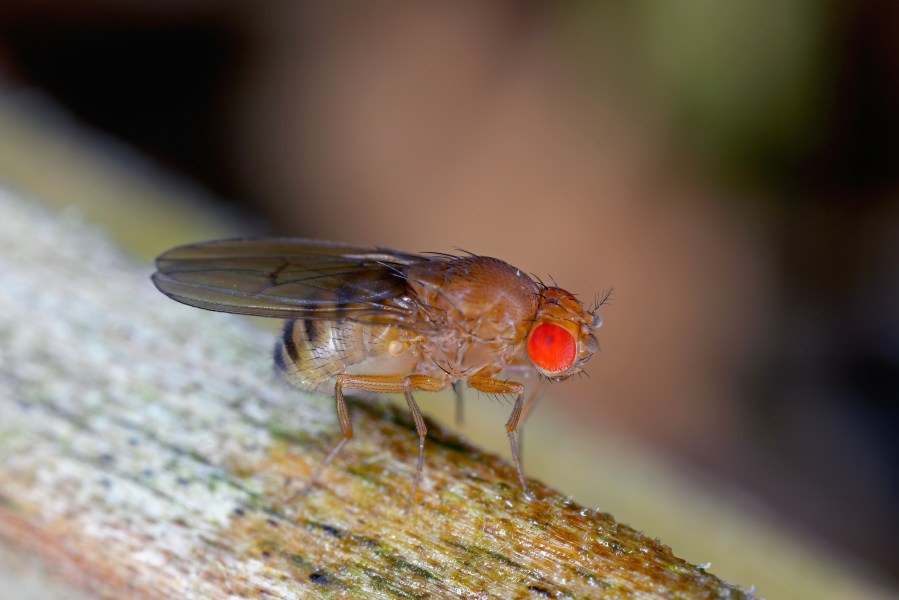
Spotted Wing Drosophila (SWD) is an invasive species of fruit fly that is native to South East Asia and has gradually been spreading worldwide, attacking soft fruit crops.
SWD was first detected on the North American and European mainlands in 2008, then identified in the UK at NIAB’s East Malling site in Kent in 2012. Gradually spreading north, it was first detected in Scotland in 2014. Since then the spread of the pest has also been tracked to South America in 2013 and northern Africa in 2017.
What is the threat?
SWD poses a more severe threat than Drosophila melanogaster, the common fruit fly, because it is attracted to underripe, ripe and overripe fruit. SWD can therefore cause damage to crops both before and during harvest.
Left unchecked, this fruit fly can cause the entirety of a crop to be lost. Females have a serrated ovipositor at the base of their abdomen that allows them to penetrate the skin of the fruit to deposit their eggs. That is why they don’t have to wait for grapes to become overripe or damaged like other species in the Drosophila family.
The population size can increase dramatically and quickly if uncontrolled. Like other insects, their development can be affected by temperature, but on average the flies only take a week or two to mature. A single female can lay up to 900 eggs over her life. Now that climate change is bringing higher temperatures to England and Wales, the threat appears to be on the rise, borne out at first by anecdotal evidence – and in more recent years by hard data.
Milder autumn temperatures are allowing SWD populations to peak at harvest time, when the fruit is at its most vulnerable. The problem is compounded by milder winters that give the flies a head start on building up populations in habitats close to vineyards earlier in the year, before the vines themselves become attractive to the fruit fly.
SWD are weak fliers, but can easily be dispersed by the wind. They find a wide range of plants amenable as hosts – both wild and cultivated. This explains why their global spread has taken place with such vigour and why soft fruit crops generally are at such risk.
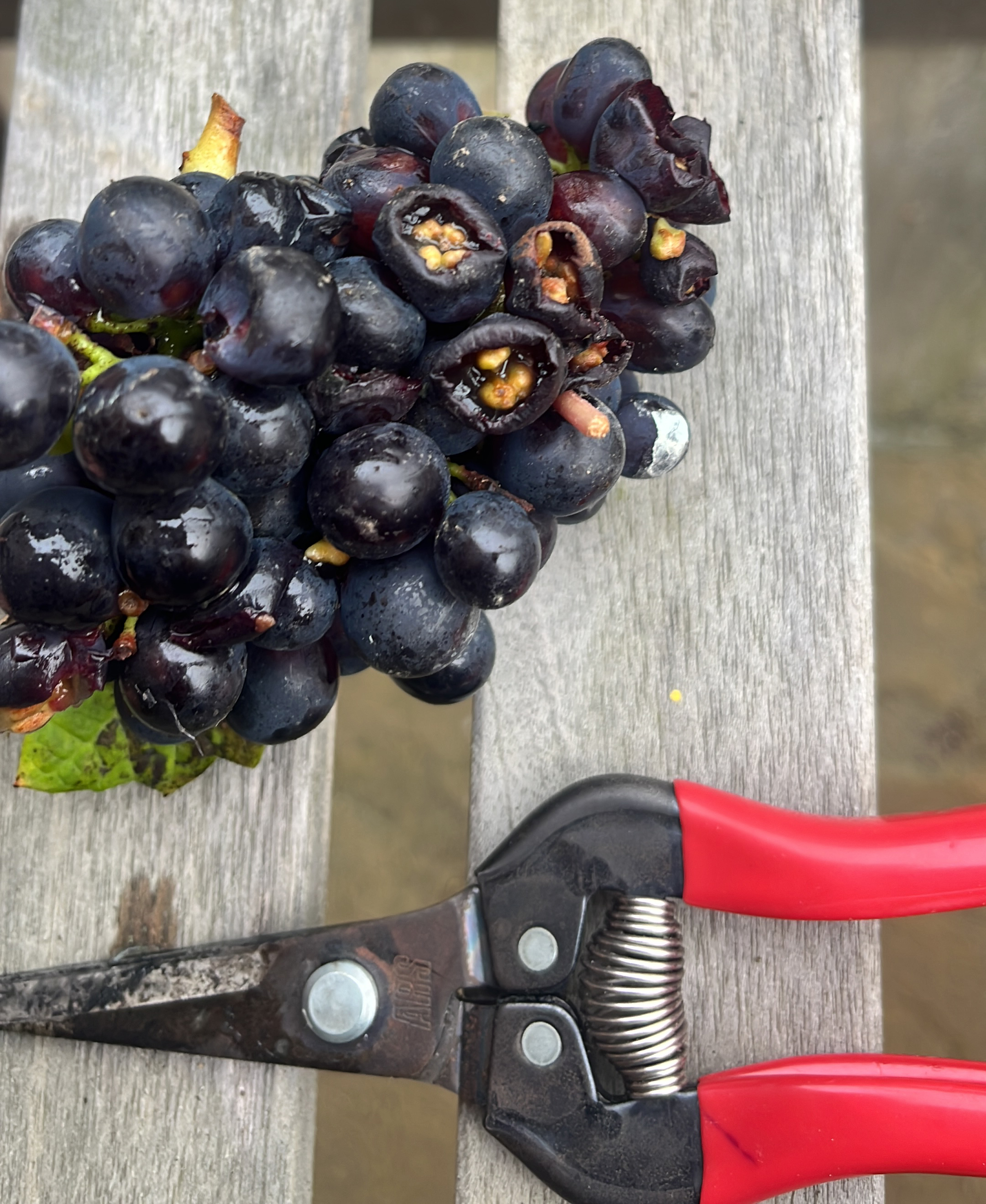
It has been suggested that red wine grapes are most susceptible, but there are plenty of reports of white varieties being attacked too. The damage they wreak is caused not just through the piercing of grape skins, leaving them open to secondary infections, but also through the action of the larvae feeding on the fruit. Once inside the grape, SWD eggs hatch within one to three days. The feeding action of the young leads to softening or even collapse of the berry.
Once fruit has been damaged by SWD, a clear path is available for other species of fruit fly to further attack the fruit and lay their own eggs. Infestations can also speed up the spread of sour rot and Botrytis. In this way, the pest creates a quality problem as well as a yield issue.
Some areas of England and Wales are not yet reporting populations in numbers as significant as others, but most commentators believe this to be due to a lack of systematic monitoring, as opposed to evidence of absence.
Modern techniques for detection and control
International problems on this scale can quickly attract a large body of research, as the scientific community grapples with the new threat. One such recent peer-reviewed study, from the University of Georgia in the United States has been testing new techniques to identify hidden SWD infestation in blueberries, since the flies often infest the fruit internally.
Their study made use of a hyperspectral imaging system. This is a detailed way of gathering information. It analyses each pixel in an image across the electromagnetic spectrum, including all types of light – most of which are not visible to the human eye. The technique allows for the identification of different objects and materials by analysing their unique spectral signatures.
Two control groups of several thousand blueberries were imaged first – an infested group and an uninfected sample. The data from those images was used to build classification models via machine learning that were then tested and shown to produce consistently stable and accurate results in identifying “hidden” infestations in fruit. Projects like this are the first stage in the deployment of new technologies that will support the agricultural industry in its fight against SWD.
Research has also been underway to develop the so-called Sterile Insect Technique as a way of reducing SWD populations. Sterile males are released at repeated intervals throughout the season. They outcompete the wild males, leaving the females infertile. By keeping populations low, reliance on chemical insecticides is also reduced.
In 2025, an EU-funded project called React announced that the technique would shortly be deployed in Europe to allow growers to react quickly as the first signs of SWD are identified. Scientists from 15 institutions across 12 countries worldwide have been developing the technique, where the pest flies are bred and sterilised using radiation before being systematically released into the wild. By using gamma or X-rays to sterilise the flies, there is no possibility of resistance being developed, in comparison to other methods of sterilisation.
The React project coordinator, Marc Schetelig of the Institute of Insect Biotechnology at Justus Liebig-University Giessen in Germany, called it “one of the most environmentally sustainable pest control methods available today.”
The project aims to be very reactive – allowing rapid intervention when pests are detected at border checkpoints or on farms. The time from detection to release is just a few weeks. The React programme seeks to create a future commercial application that has regulatory approval and can be put out on the market.
The first steps in more traditional biological controls for SWD have also been taken in recent years. Research has focused on parasitoids – specialised natural enemies that can reduce the SWD population across a range of habitats.
Two Asian larval parasitoids have been discovered – Ganaspis kimorum and Leptopilina japonica. Having received the proper regulatory approval in 2021, G. kimorum was released in the US and Italy, with the initial observations being positive. In northern Italy, the parasitoid population was shown to recover well after overwintering and its continual release showed the population spread as anticipated and its effectiveness as a parasite increased over a four year period.
Such studies are the initial phase in developing an effective control. Researchers are working on how to deploy efficient sampling methods, and good practice for rearing and storing populations of the parasitoids for controlled release going forward. There is also work on other biological control agents taking place, including entomopathogens, nematodes, and predators.
Read the study in full on Science Direct: www.sciencedirect.com/science/article/pii/S2666154325005460
Read more about the Justus Liebig University Giessen (JLU), which inaugurated the Liebig Centre for
Agroecology and Climate Impact Research in May 2026: www.react-insect.eu/new-research-hub-strengthens-sterile-insect-technique-science
Read more about a UK trial of the Sterile Insect Technique by BigSis in 2023, which was reported as reducing numbers of female SWD flies by 88% in an 11ha field of Maravilha raspberries: www.fruitnet.com/fresh-produce-journal/bigsis-trials-indicate-chemical-free-path-for-swd-control/257699.article
Read the research in the Entomological Society of America’s publications: www.academic.oup.com/insect-science/pages/special-collection-recent-advances-in-biological-control-of-spotted-wing-drosophila-drosophila-suzukii
Spotted Wing Drosophila at home
Studies and trials are all very well, but they offer little succour to growers who are trying to find ways to combat the threat of SWD right now.
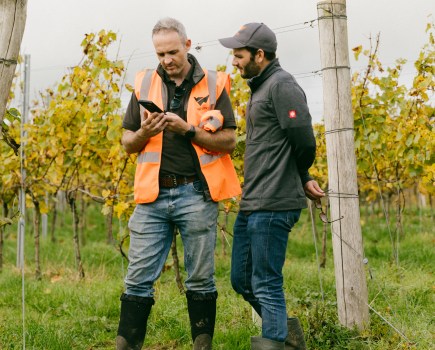
“There is no silver bullet,” said Luke Wolfe, a viticulturalist and founder of the vineyard management and consultancy firm, Agro-Pro. He has seen firsthand how the issue has exploded, particularly in the last couple of years. I asked him to tell me about his experiences.
“2014 was the first year we saw SWD in the UK. It would come, it would go. We never really knew how big the problem was going to be. Now it is a real challenge and there are a number of issues compounding the problem. The winters are not getting that cold, so they are overwintering in quite large numbers. I know of growers that are pulling out certain grape varieties just because they are really prone to damage.”
Step one: vineyard management
Luke went on to describe the sort of control measures that Agro-Pro have been putting into place in recent years to try and prevent the spread of SWD in the vineyards that they manage and advise.
“Prevention really starts with the canopy management. We don’t have any more shoots than we need on the red varieties, which is predominantly what we are concerned about. The quicker we can dry canopies out and burn off the morning dew, the more favourable it is. Especially for premium still Pinot Noir, we do a 100% canopy leaf strip and we remove bunches through green harvesting. We do that as early as possible so that we are not creating SWD’s favourite environment of rotting fruit on the vineyard floor.
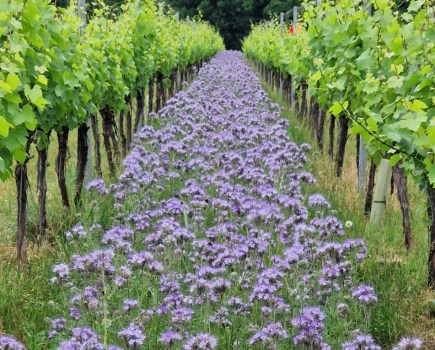
“If we ever need to drop fruit late in the season or do a secondary pass because the bunches have swelled and got bigger, we again remove the fruit. We are quite hot on vineyard floor management; lack of weeds, keeping the grass cut short, removing brambles from nearby – things like that to keep the humidity down, which we have found has been quite an issue.
“That can be challenging on some sites where there are ancient hedgerows that we can’t really touch, but we might try to thin them out a little bit if we can. We can’t do much with our neighbour’s growth on the other side of the fence either, so that can be a little tricky too.”
Observations in the field
“Last year I noticed something new. We have typically seen SWD in early ripening years. Around 55° Oechsle, the vineyard is mid-veraison and the berries start to soften. That is when the females are able to pierce the grape skins and lay their eggs. Last year, we saw the earliest ripening we have ever had. The grapes got to the mid-50s, and we expected the flies to come. The traps were out, but there was nothing in them. No sign of SWD.
“It was only when we had fruit hitting the high 70s and low 80s that there was a sudden explosion in the fruit fly population. I noticed it was almost to the day that the blackberries went. Everyone had been out picking them for weeks because they were big and plump, then suddenly they were finished. Practically the next day, the SWD had moved to the grapes.
“We saw it in the traps too. There were regularly one or two individuals, which you will see throughout the year. But then – bang – they were in the fruit, so we had to react as quickly as we could. That normal reliable indicator that it is time to defend against SWD – the level of ripeness of the berries – just didn’t work that time. They were not in the traps yet even though the grapes were mid-veraison.”
Step two: vine nutrition and insecticide
Agro-Pro’s second prong of attack in the fight against SWD is to try to bolster the vine’s natural protection systems, in an attempt to deploy insecticides at the most effective time. Like the rest of the industry, Agro-Pro is employing trial and error to try and find a way forward against this invasive new pest. Luke’s observations about when SWD might reach the grapes have made him cautious about when insecticides should be used.
“We have a robust soil health programme. Healthy soils support balanced vine growth, nutrient uptake and berry development. Ultimately, if we can improve berry integrity and reduce stress within the vine, we make it harder for SWD and secondary infections to gain a foothold.
“We have started using potassium silicate early season alongside chitosan, a natural plant defence elicitor, to support berry integrity and enhance the vine’s own defence mechanisms. We also use calcium as a foliar feed to strengthen berry skins and reduce susceptibility to splitting and secondary disease infection.
“We’ve also reviewed research into products such as kaolin particle films, which have shown some promise internationally as a deterrent by making fruit less attractive for egg laying. At present, these are not widely available or adopted within UK viticulture, but they are an interesting area of ongoing research. Even where alternative tools show potential, when you’re growing premium still Pinot Noir in a cool climate, you have to balance SWD management against achieving full ripeness. Ultimately, any solution has to protect both the fruit and the quality of the final wine.”
“If those actions get us another two weeks before we need to switch to insecticides, then I’ve achieved what I needed, which is coverage against SWD throughout the ripening period.
“On most of our sites we use insecticides, which is not something I’m proud of. We really try to limit it. We only use insecticide specifically against SWD and then only on the red vines. We won’t do blanket coverage over the whole vineyard.
“It is a balancing act. If we apply insecticide early, we run the risk of getting infection towards the end of the season when we are just about to pick, so we put in all that work and end up with slightly inferior fruit that we might have to put into different wine products than we were planning. If we hold off and get early infection, then try to protect ourselves down the back end of the season, the population has got much bigger. It is really, really difficult. We just can’t stretch the insecticide applications long enough for the hang time needed.
“Where a client is selling wines that have been measured on an international scale and sold in the £30–£50 price bracket, the grapes need that time on the vine. SWD is our biggest enemy in achieving that quality.
“We use Hallmark and Tracer in combination. The biggest issue is that the number of applications is limited, so effectively you only get around four to five weeks of coverage. We are in a cool climate and when we are trying to grow premium Pinot Noir, the ripening period will be well over five weeks.
“This season we are trying to combine all of these approaches for the first time. The aim is to build a system where a series of small gains gives us the best chance of maintaining fruit quality throughout a long ripening period.”
For more like this, sign up for the FREE Vineyard newsletter here and receive all the latest viticulture news, reviews and insight