
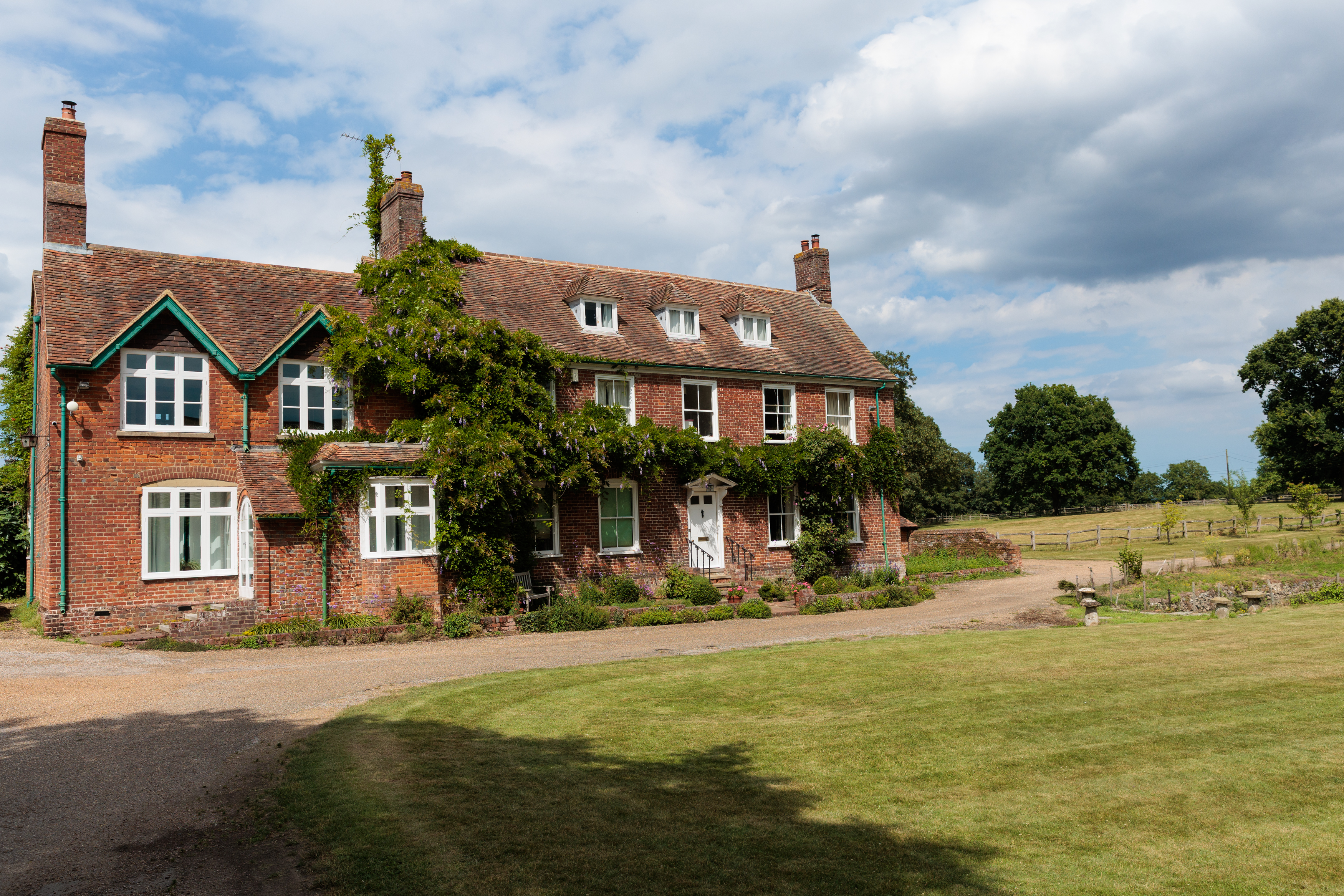
The approach to Brenley Farm is a tree lined route that transports the visitor back to an age when coach and horses would make this journey with a finesse (if a little less comfort) that lingers in the very branches of the ancient trees that adorn the estate.
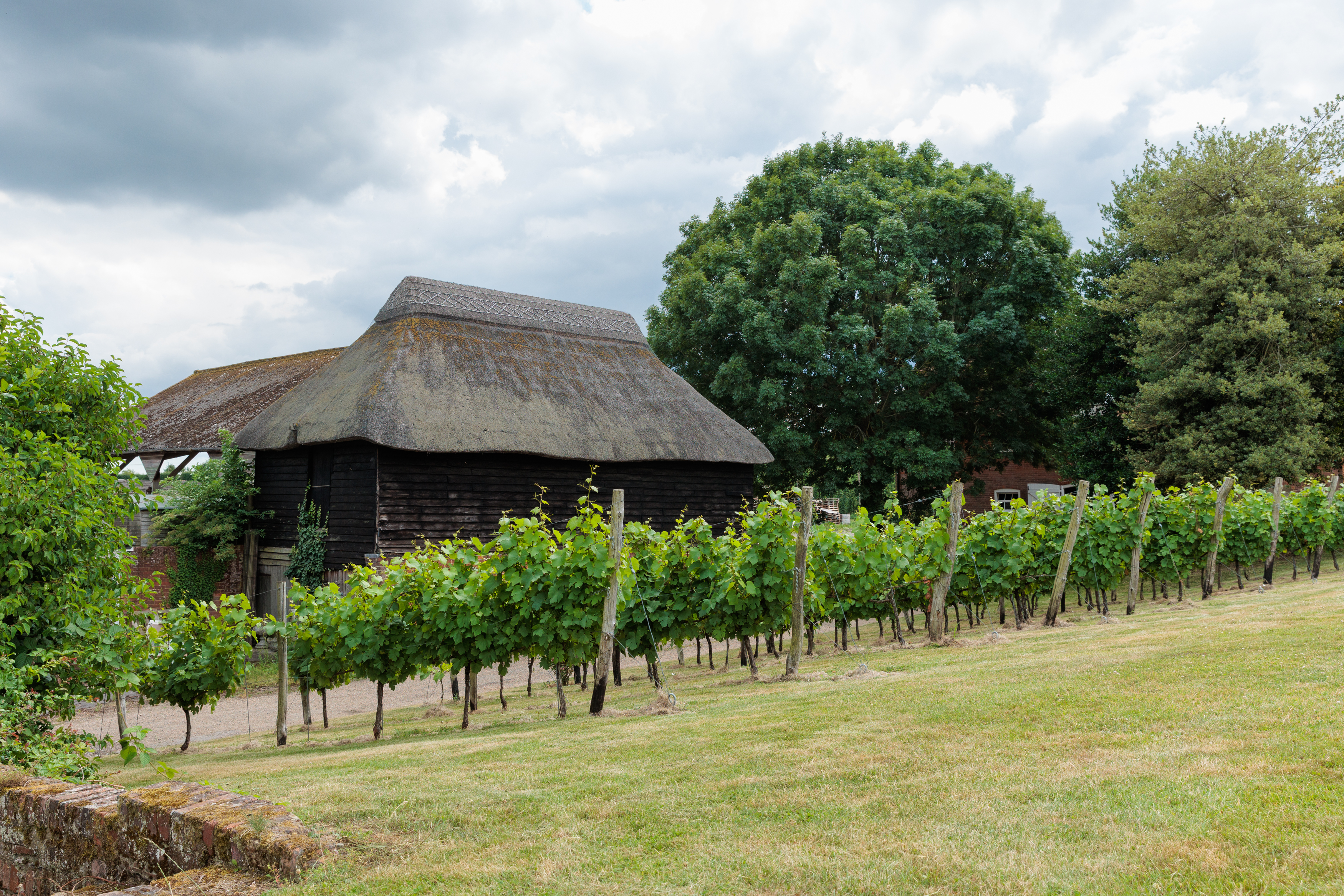
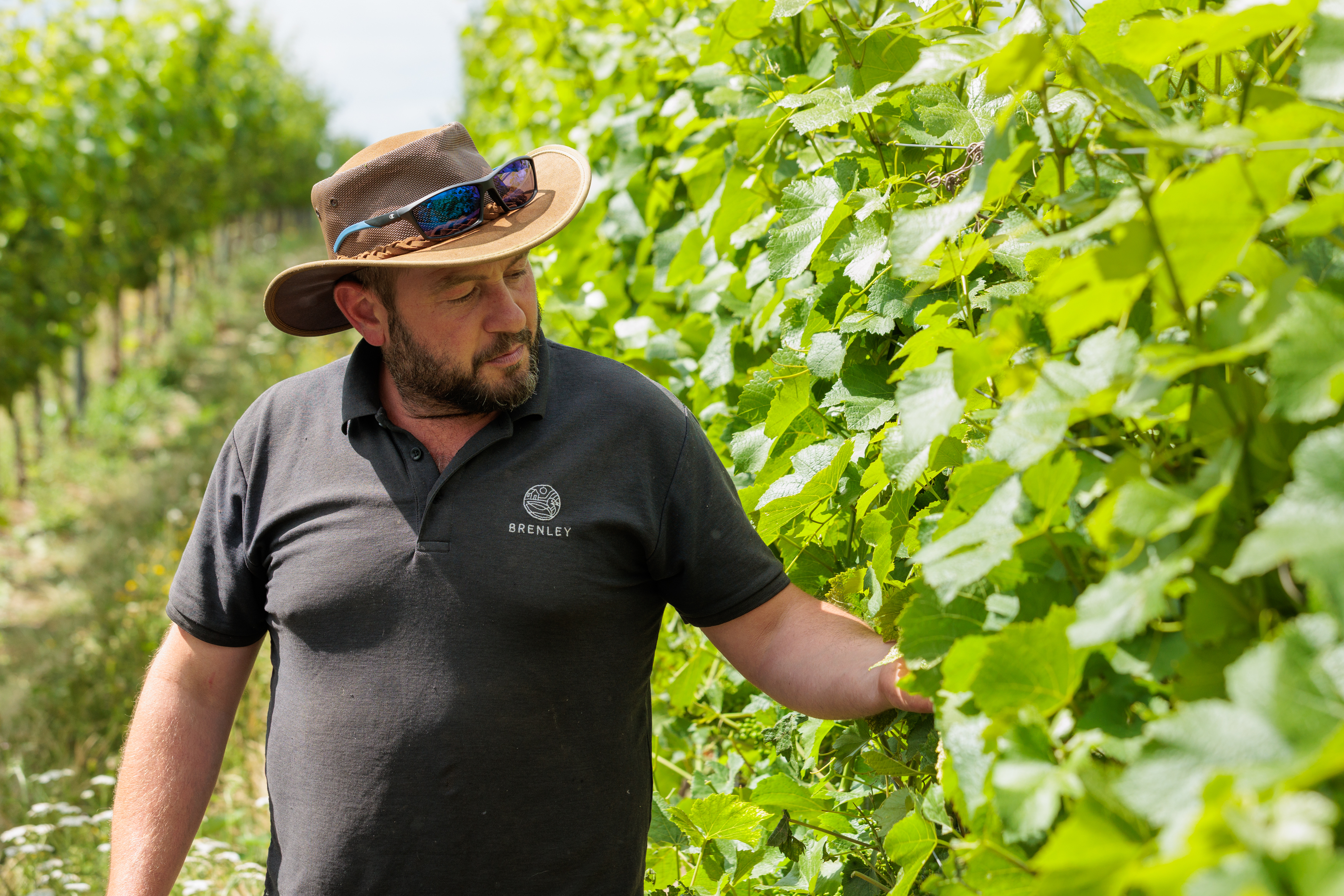
At Brenley Farm in Boughton near Faversham in the heart of Kent the heritage buildings take centre stage. The grade II listed farmstead has original features from the 1400’s “with extensions made over several centuries,” said Tom Berry who is the fifth generation of the same family to reside at Brenley Farm. Tom’s love of the land in this corner of Kent started many years ago. “I was helping my grandad on the farm at the age of eleven,” he said with a warm smile.
Having studied at university Tom returned to the family farm 20 years ago at a time when the business was facing an economic struggle. “This was just before the craft beer boom and we were facing a severe downturn in the hop market,” he explained. “As tenant farmers we have to be pragmatic and have to be business led so it seemed like a good time to look at the types of niche crops that we could grow at Brenley.”
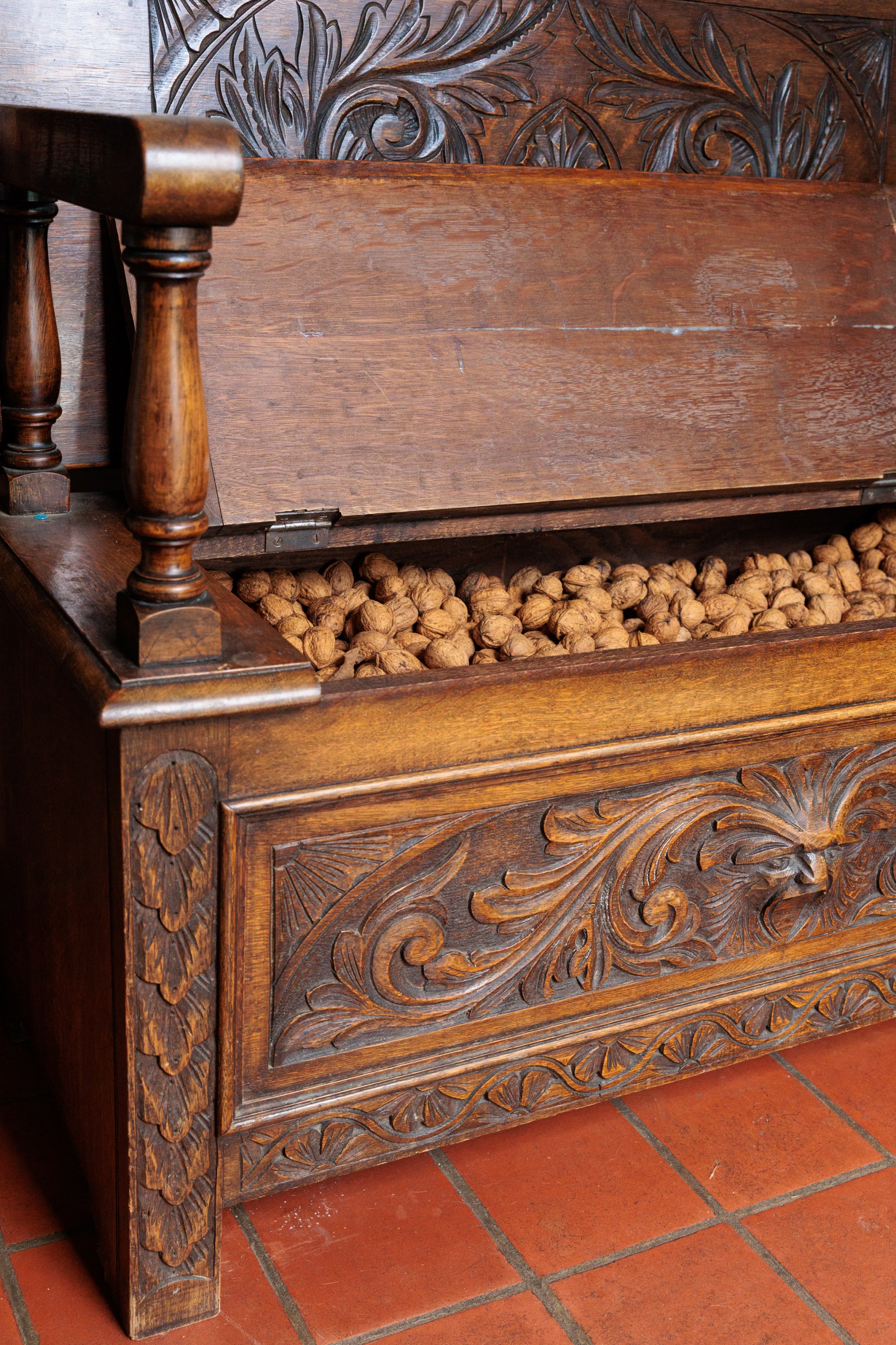
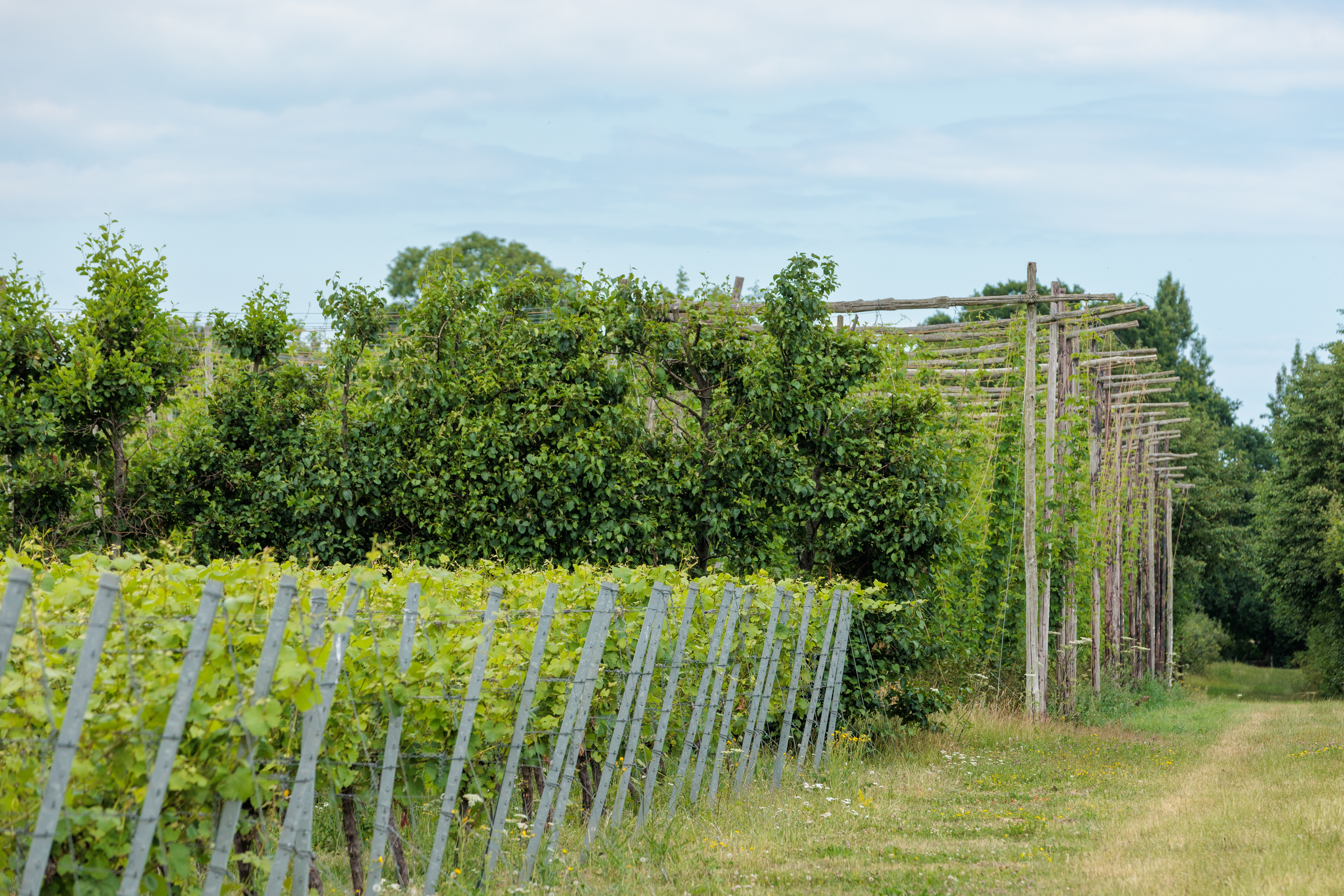
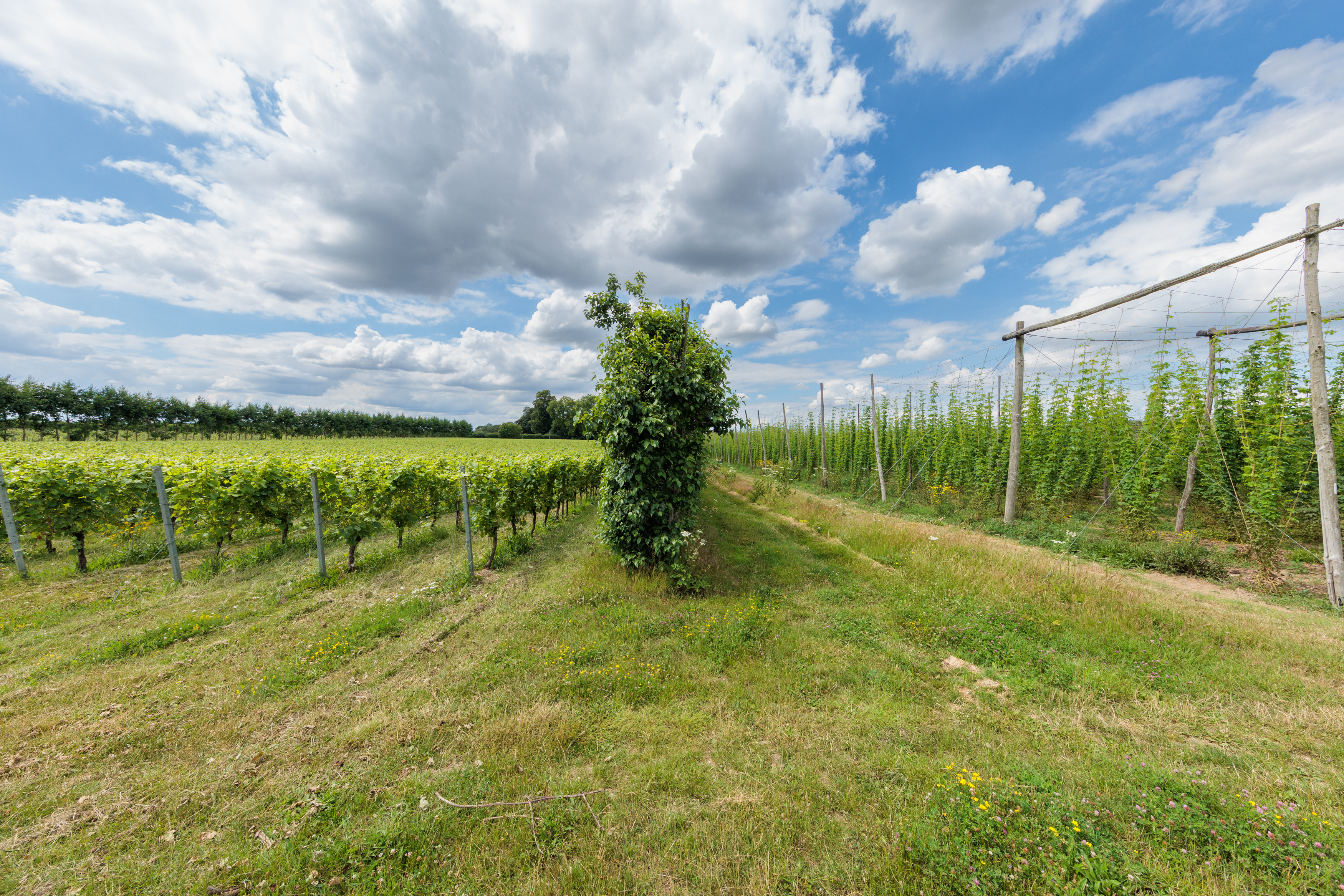
For inspiration in this journey Tom didn’t have to look far. His grandfather was a horticulturist and brought many beautiful specimens back from his overseas service during World War II. There are walnut trees, figs, peaches, pears and a grape vine all surrounding the farmhouse. After considerable research Tom finally decided that grapes would be the best fit for the farm. The farm still has the highly prized niche hop variety East Kent Goldings, which are only grown in Kent, and the skills developed in the hop gardens by several generations of Tom’s ancestors have played a huge part in Tom’s decision to plant grape vines at Brenley Farm.
With his usual attention to detail Tom secured a contract to grow grapes in 2011 and the first vines were then planted in 2012. There are now a total of 25 hectares under vine at Brenley. The vines fit seamlessly into the mixed farming environment and as we travel around the farm the hop gardens and the vineyards mix with the distant views of the chalk downs and The Blean (one of largest ancient woodlands in England and an area that is also now home to the UK’s first free roaming bison herd).
Tom runs the farm, which is in the Environmental Land Management Scheme, and the vineyards along organic principles and has paid particular attention to soil carbon capture, “but I won’t sacrifice an entire crop because sustainability has to be applied to every aspect of the business including producing a consistent crop that will pay the bills,” he said with conviction.
“I enjoy the symbiosis of plants, everything comes from the soil – the top soil, the subsoil and the chalk bed rock but the mycelium layer is so important. It is this layer that develops naturally healthy plants,” Tom explained. The mycelium layer is often compared to the internet for plants – it connects everything.
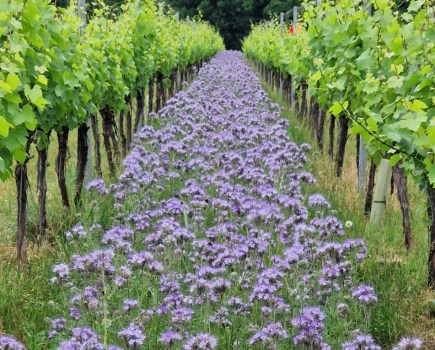
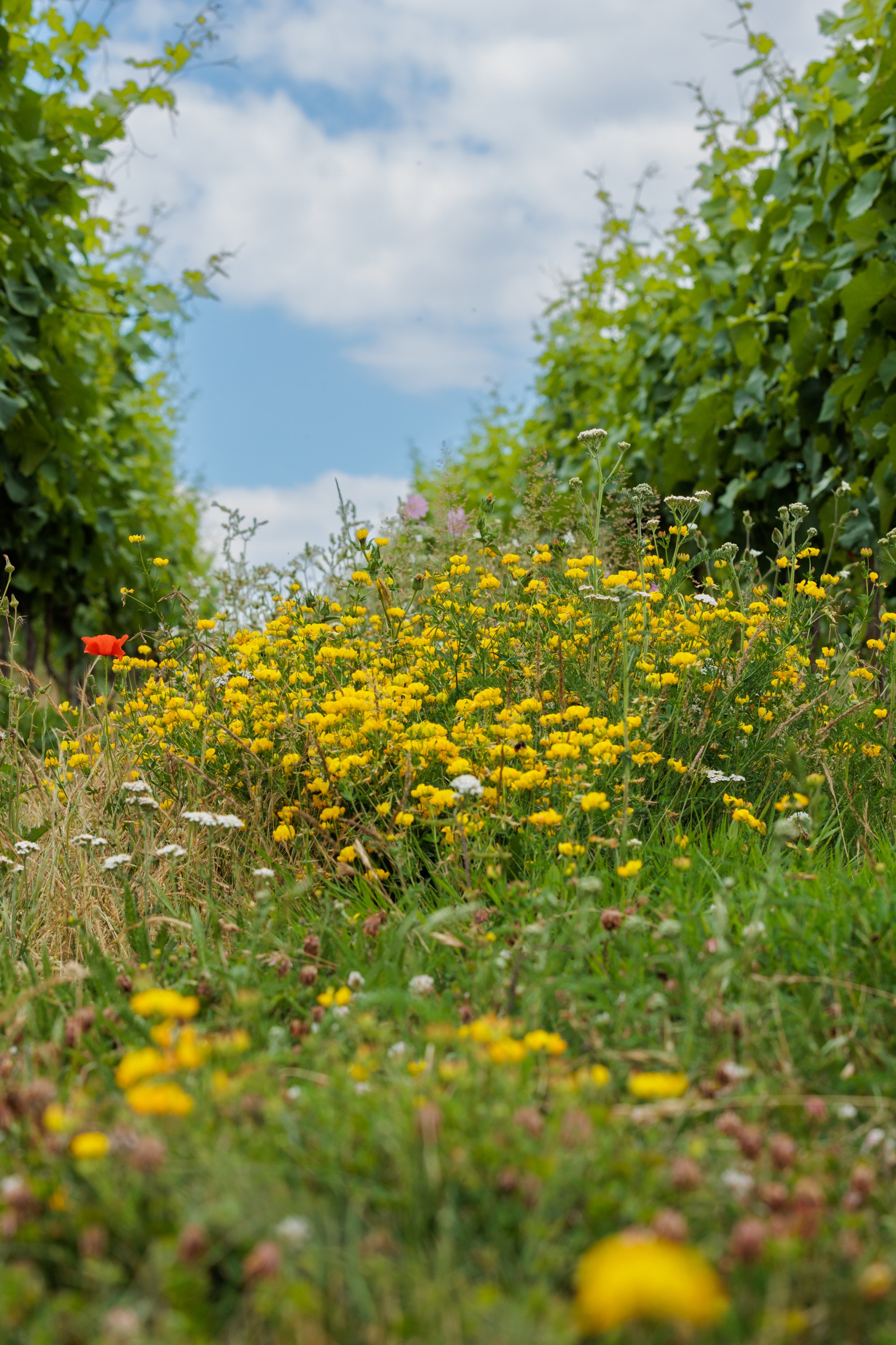
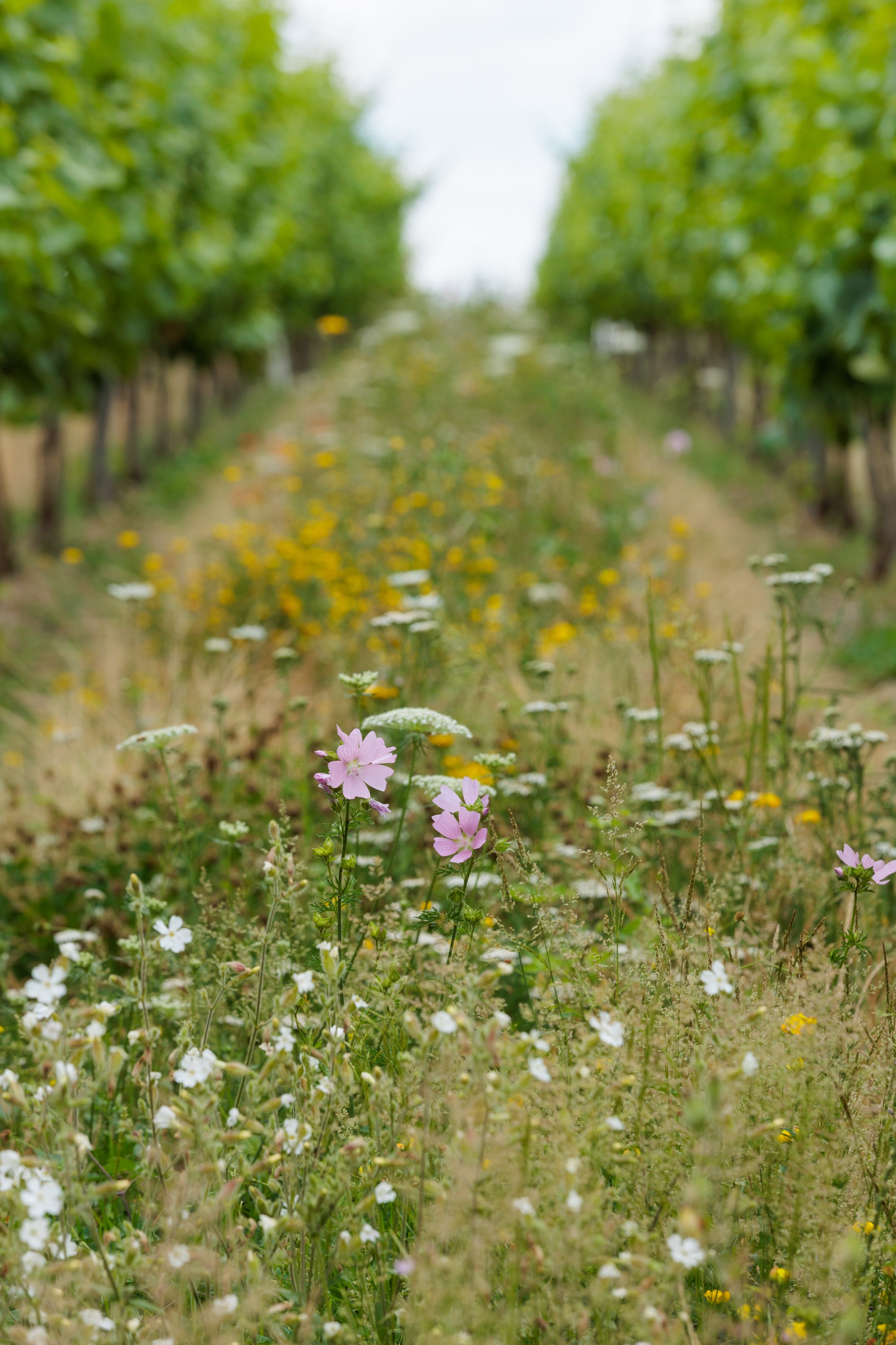
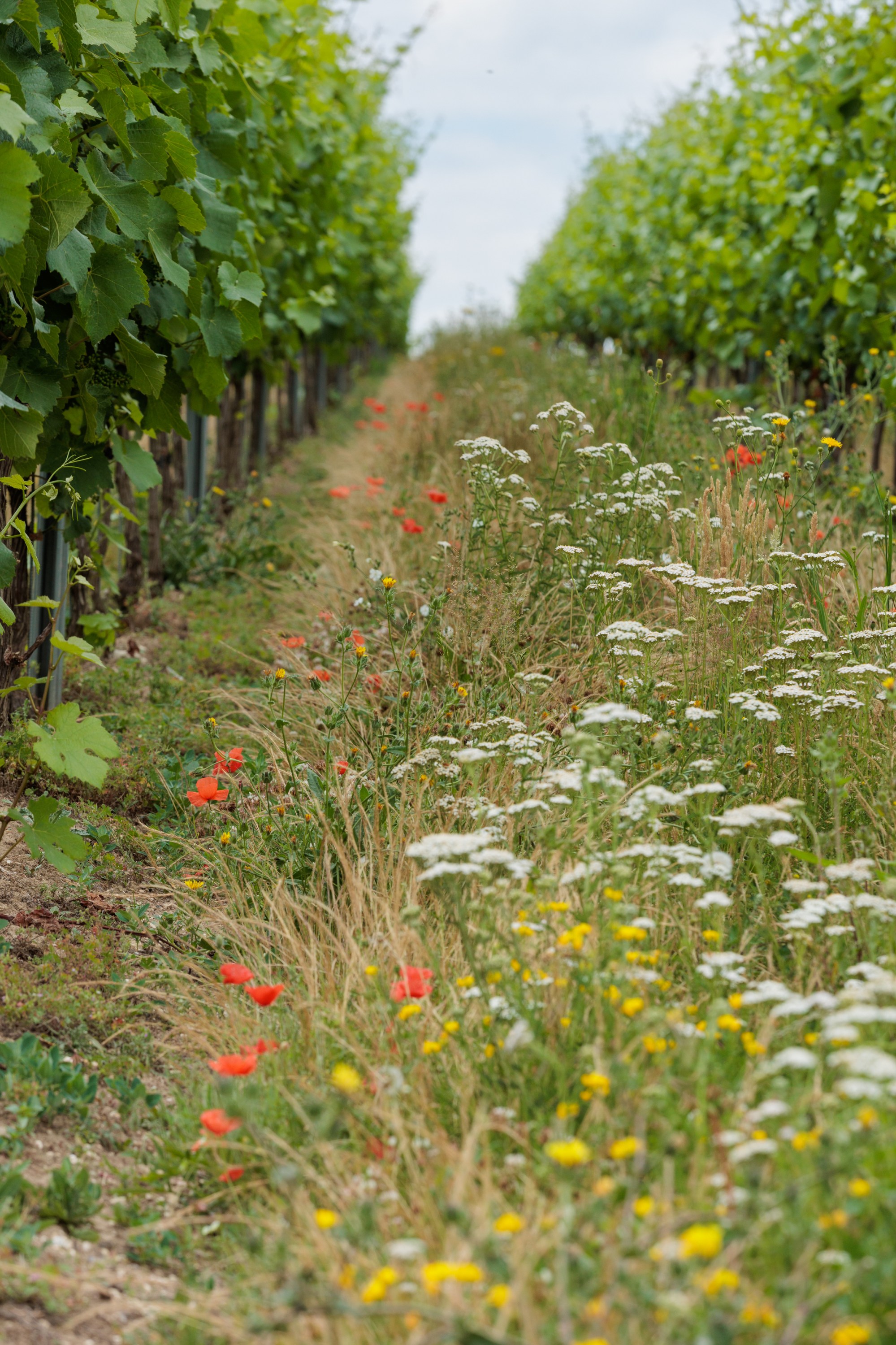
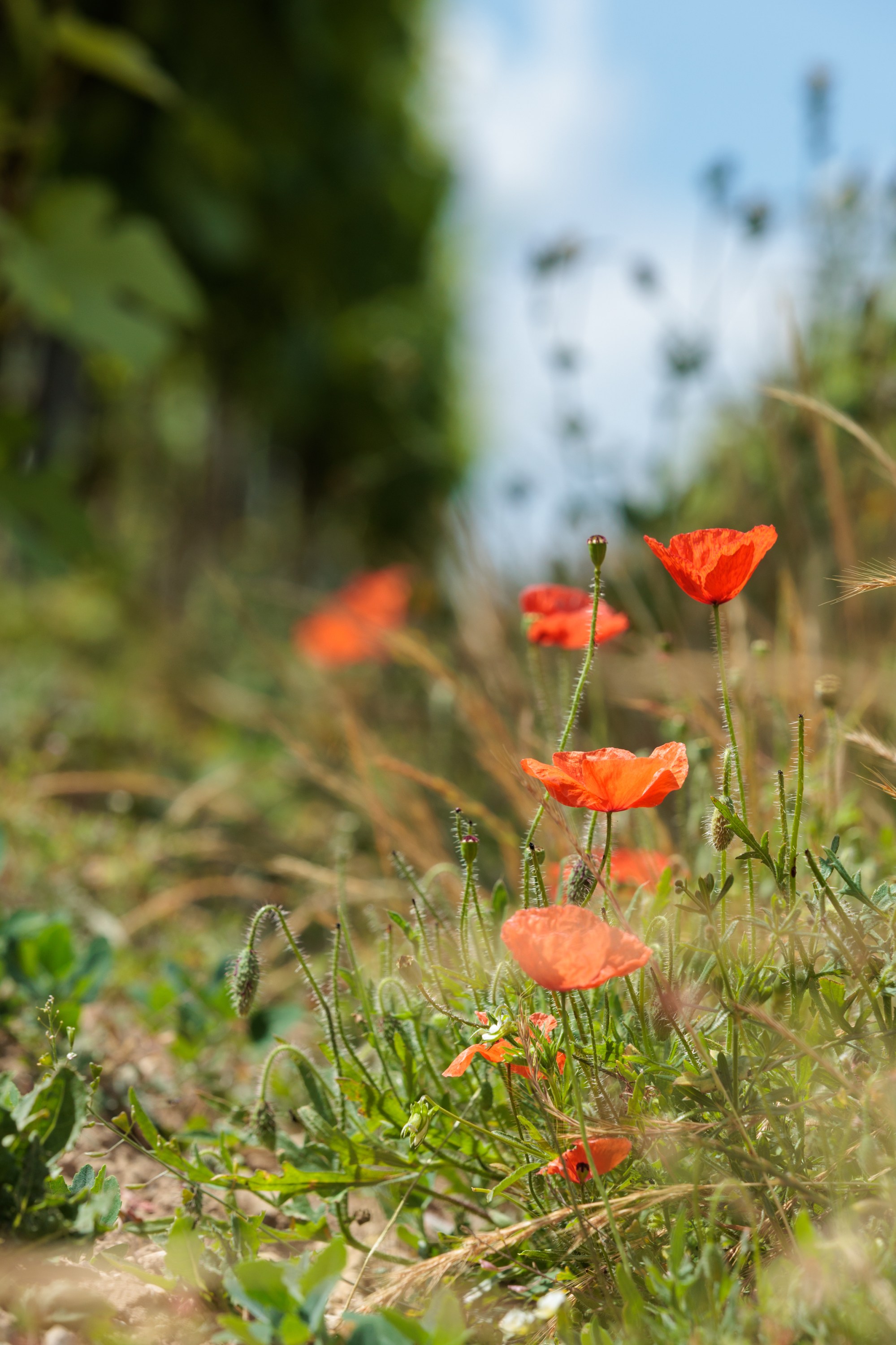
The inter row area is a riot of colour with native wildflower species such as ox-eye daisy, common yarrow and poppy. “I am convinced that all these native species add to the terroir of the grapes grown here,” said Tom.
Tom has used his skills in hedgerow management in the control of SWD. We have pulled out any hedgerow hosts of SWD and replaced these with dead end hosts such as bird cherry and cotoneaster.
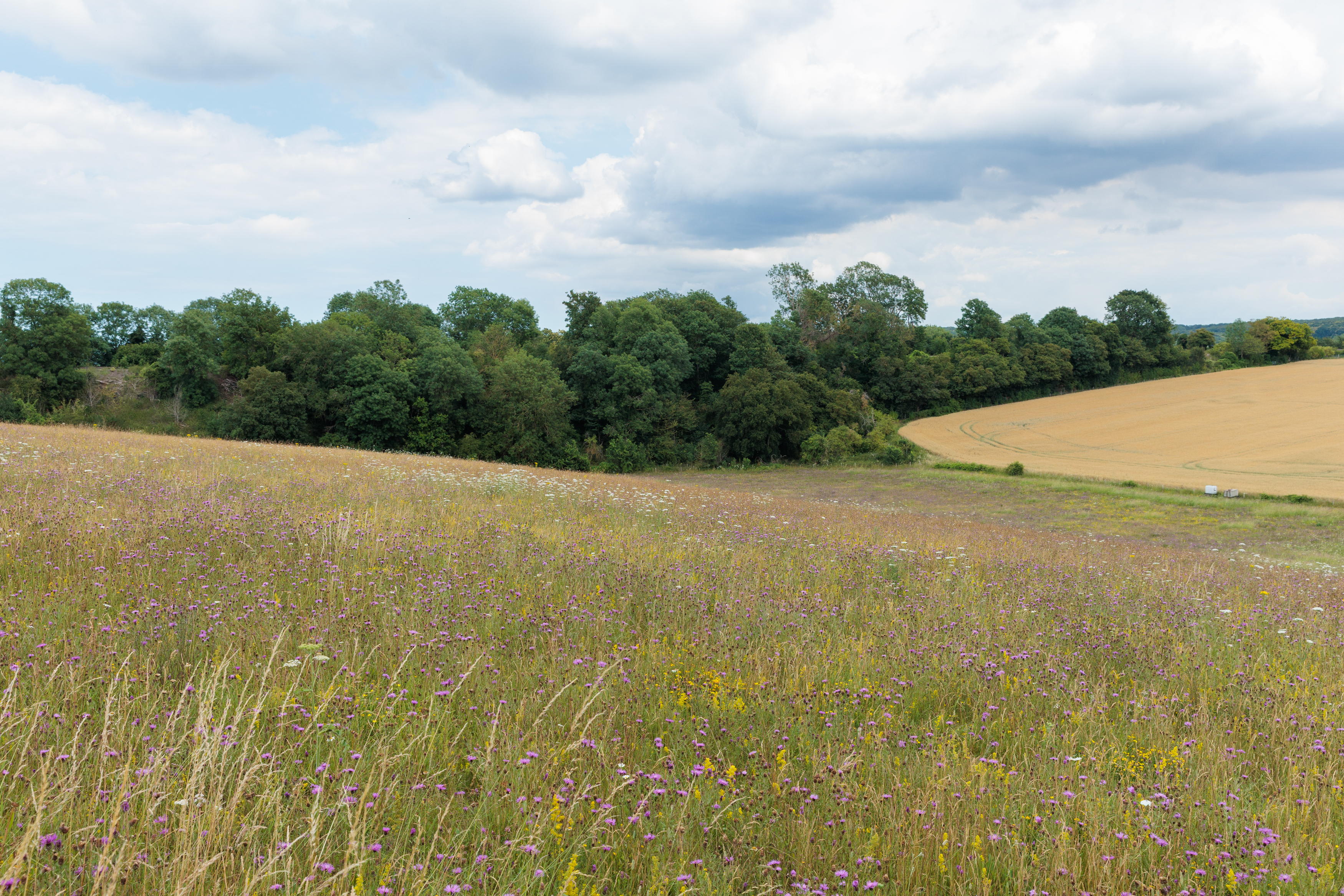
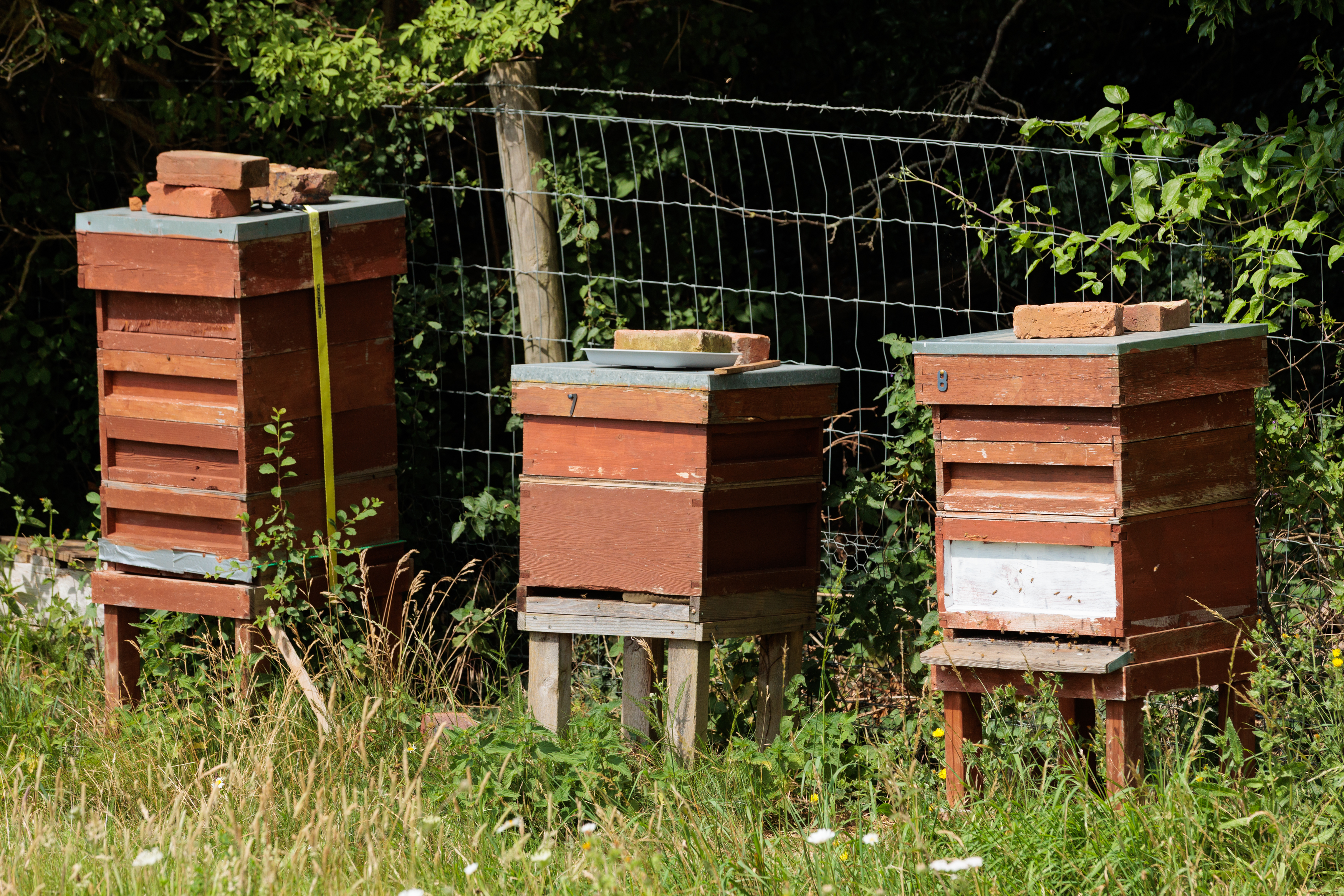
There are 150 hectares farmed at Brenley Farm with 20 hectares dedicated to naturalised wildflower meadows and active beehives are to be found in the field margins. The efforts of the team at Brenley Farm to encourage natural diversity and soil health have seen the return of wild orchids along with the red listed species of English Partridge and both barn owls and brown hares are to be found at Brenley Farm. There are also resident buzzards to be seen in the skies above the vineyard and such natural predators have proved useful as a bird deterrent. “We have some power lines that cross the vineyards and this is the perfect place for flocks of starlings to congregate and strip the grapes from the vines,” said Tom. “We use bird scarers at harvest to protect the crop. Our neighbours are all really great and are aware of the necessities of farming,” said Tom with gratitude.
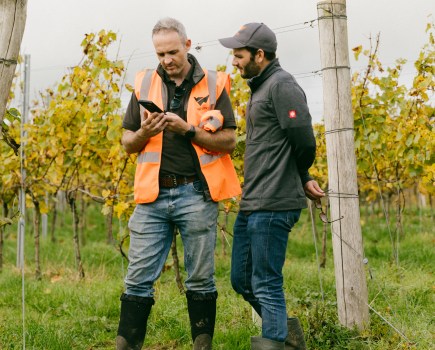
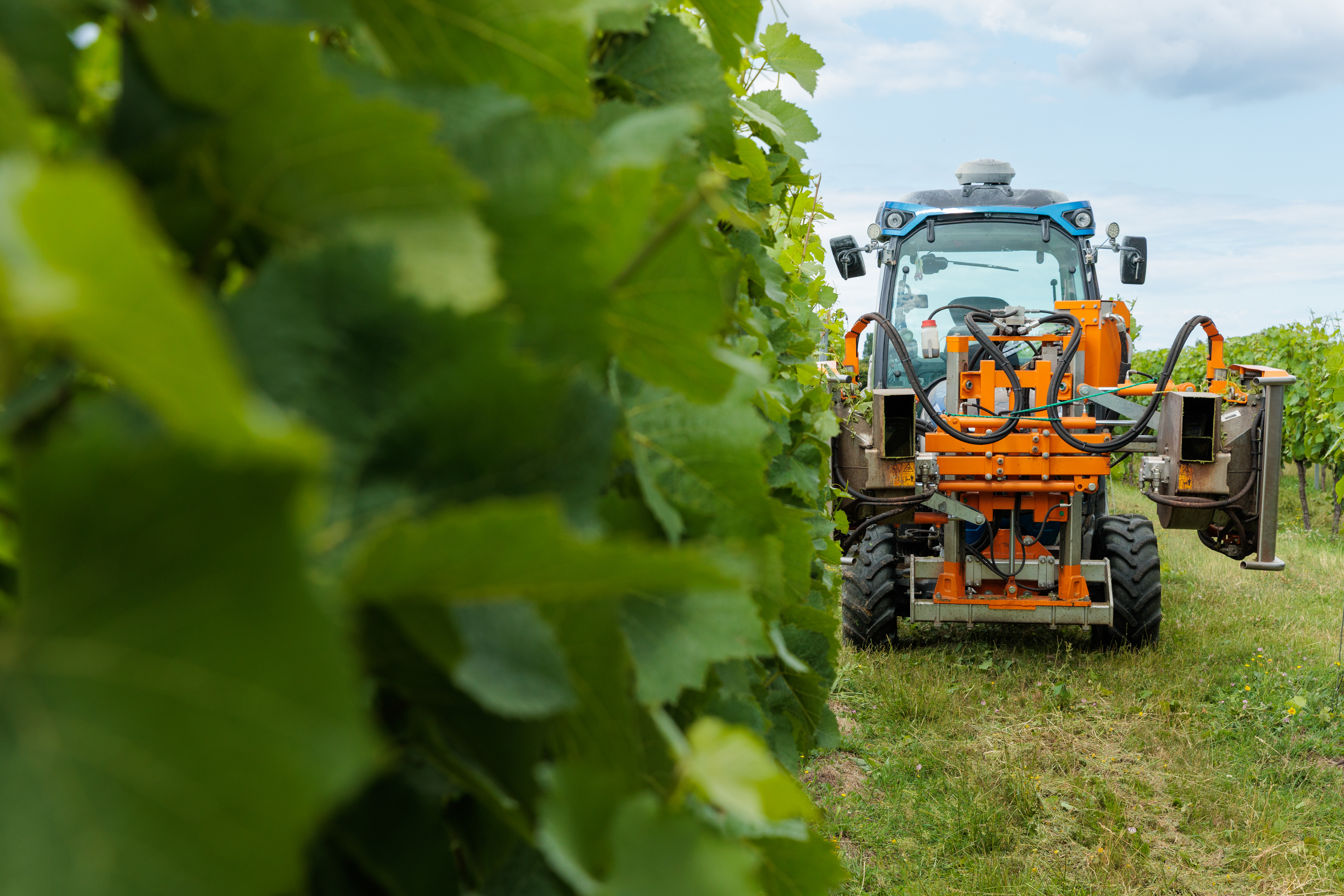
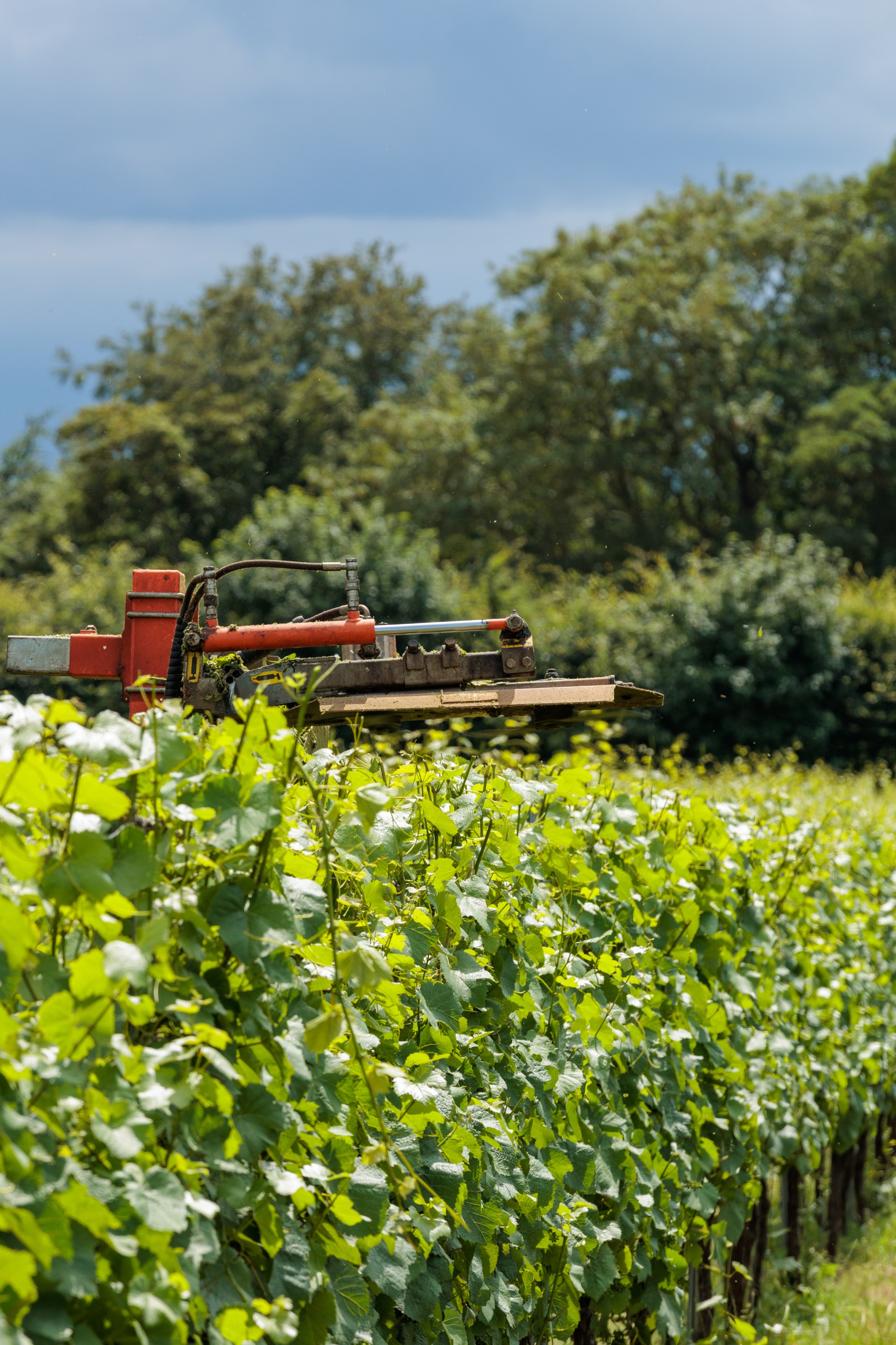
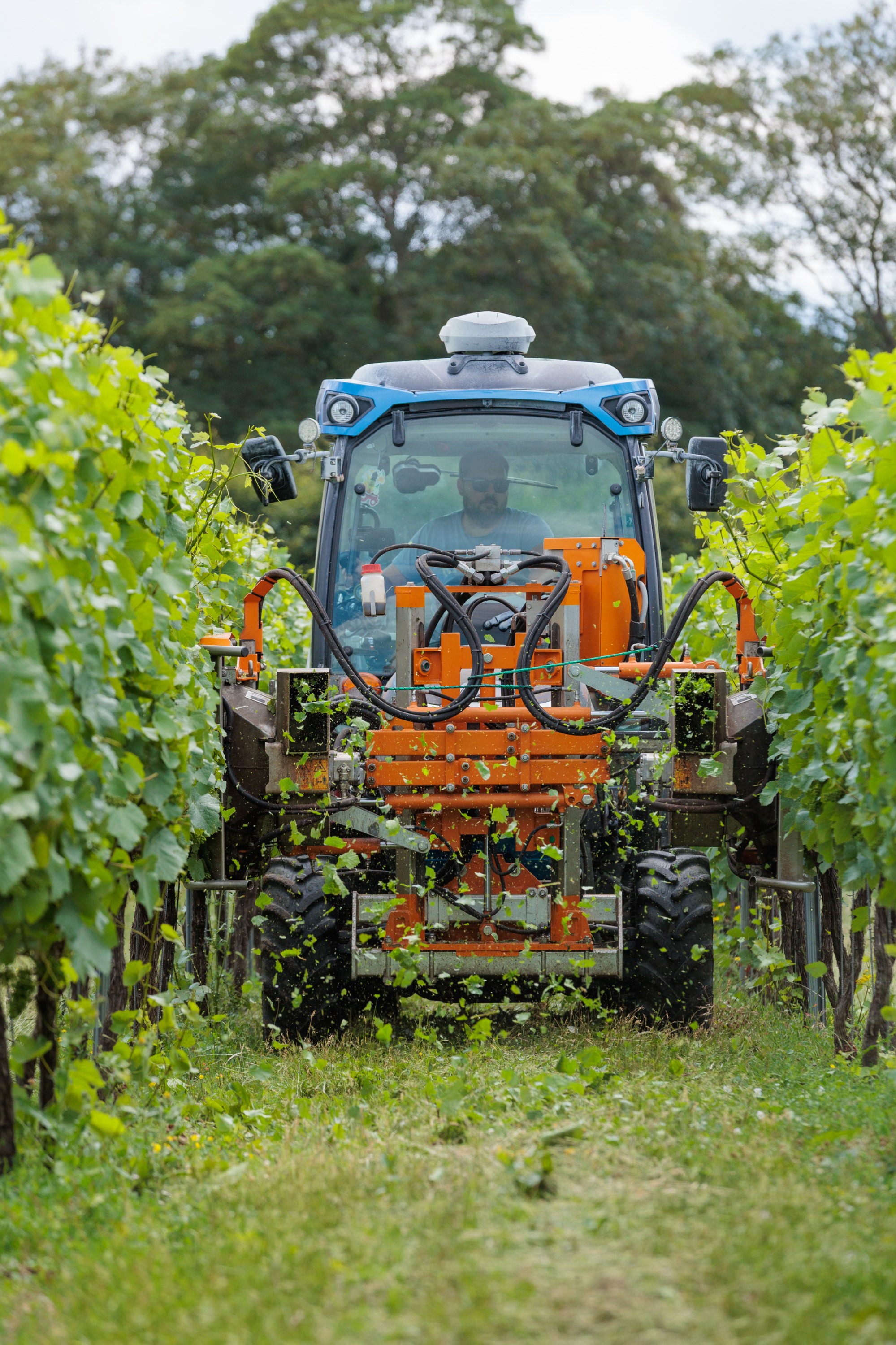
During Vineyard magazine’s visit at the beginning of July the vineyard team were busy leaf stripping. Ben Turner has been the farm manager at Brenley for 10 years, he explained that leaf stripping with the mechanical stripper takes between
1.5 – 2 hours per hectare and that the team is aiming for 90% large leaf removal to ensure even ripening. “A VITIpulse Combi is on my shopping list,” laughed Tom as we admired the recently de-leafed vines. Vineyard skills have been an integral part of Brenley wine for many years with Ben heading up the pruning team that won the 2022 WineGB pruning competition fondly referred to as the battle of the secateurs.
Brenley have also taken a proactive approach to frost protection. “In 2020 we lost the entire crop to frost so I invested in a FogDragon and in 2021 we again had frost events but the dragon saved the crop. So I increased the investment in the machines and this year we used the dragons a number of times and have managed to limit the losses to between 5%-10%,” said Tom.
The Brenley vineyard team also work with a small number of other growers and contract manage around 60 hectares of vines. This can make life rather difficult for the team at peak times of the vineyard year and harvest 2025 started on 16 September and lasted until 26 October “we picked every day of that period,” said Tom with a smile. Tom has embraced machine harvesting for still wines and speaks highly of the New Holland Braud 9090L Harvester. “The berries are treated with such care,” he said. It is clear that he treats the entire process of ground to grape with an intense dedication, but this has not prevented him from adopting new ideas and thinking about the future of the business. To illustrate this, as we pass the barn that serves as the tasting room there is a small patch of vines in front. These are for the benefit of those on the tours and tastings so that they can experience the vines and the wines together but “in the future I am thinking of a ‘rent a vine’ venture to get more people involved in the joy of viticulture,” said Tom with infectious enthusiasm.
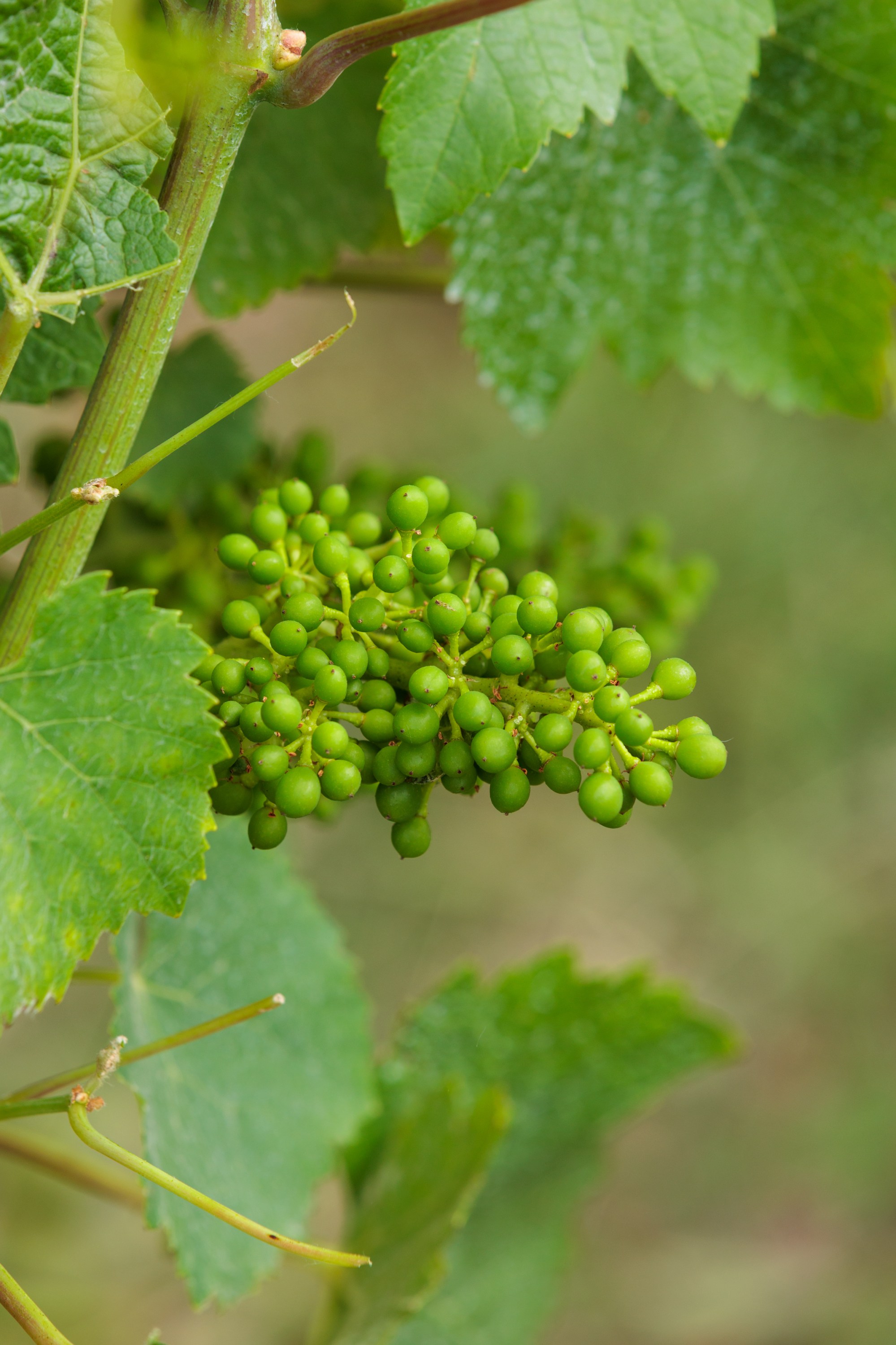
There are Pinot Noir, Pinot Meunier, Chardonnay and Bacchus vines planted on a variety of rootstocks including SO4, Fercal and Binova which is a daughter of SO4 and is particularly suited to calcareous soil types.
Soil testing is carried out across the site every three years. Tom explained: “There are 20 soil pits across the site and over time through regular testing we have used these to build a soil map.” The site can be prone to magnesium deficiencies so a mixture of foliar sprays along with chicken manure are used to correct any deficiencies that might arise.
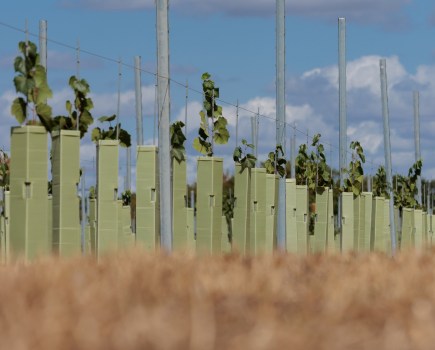
“Every year since 2015 we have invested money back into the vineyard with new plantings,” explained Tom. In 2016 Burgundian clones of Pinot Noir were planted and there are now 10 hectares of Pinot Noir with different clonal varieties including well known clones such as 777, 115 and 375 along with the less planted Tete de Negra. “This adds a wonderful ruby colour to our Pinot Noir along with rounded mouth feel and notes of cherry,” said Tom.
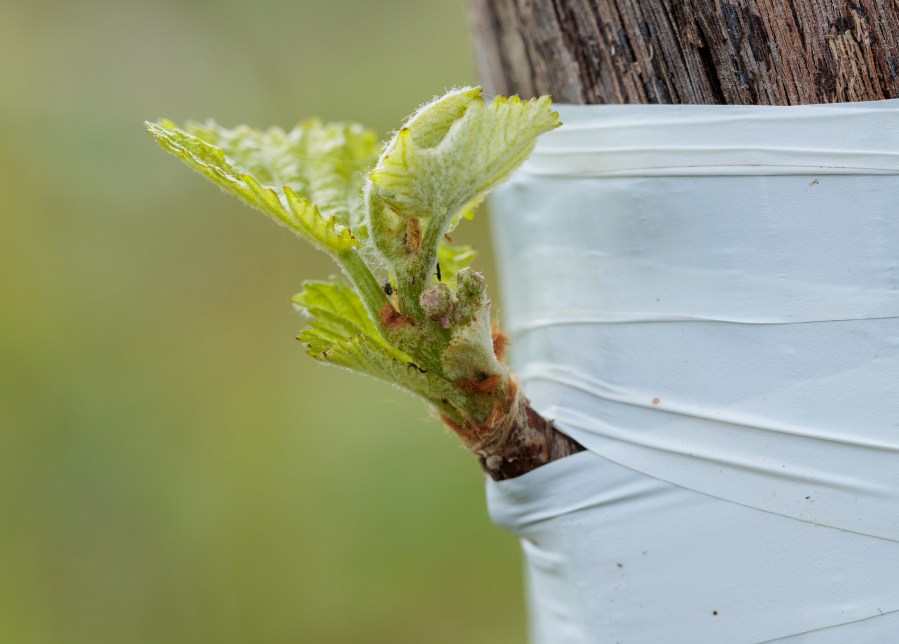
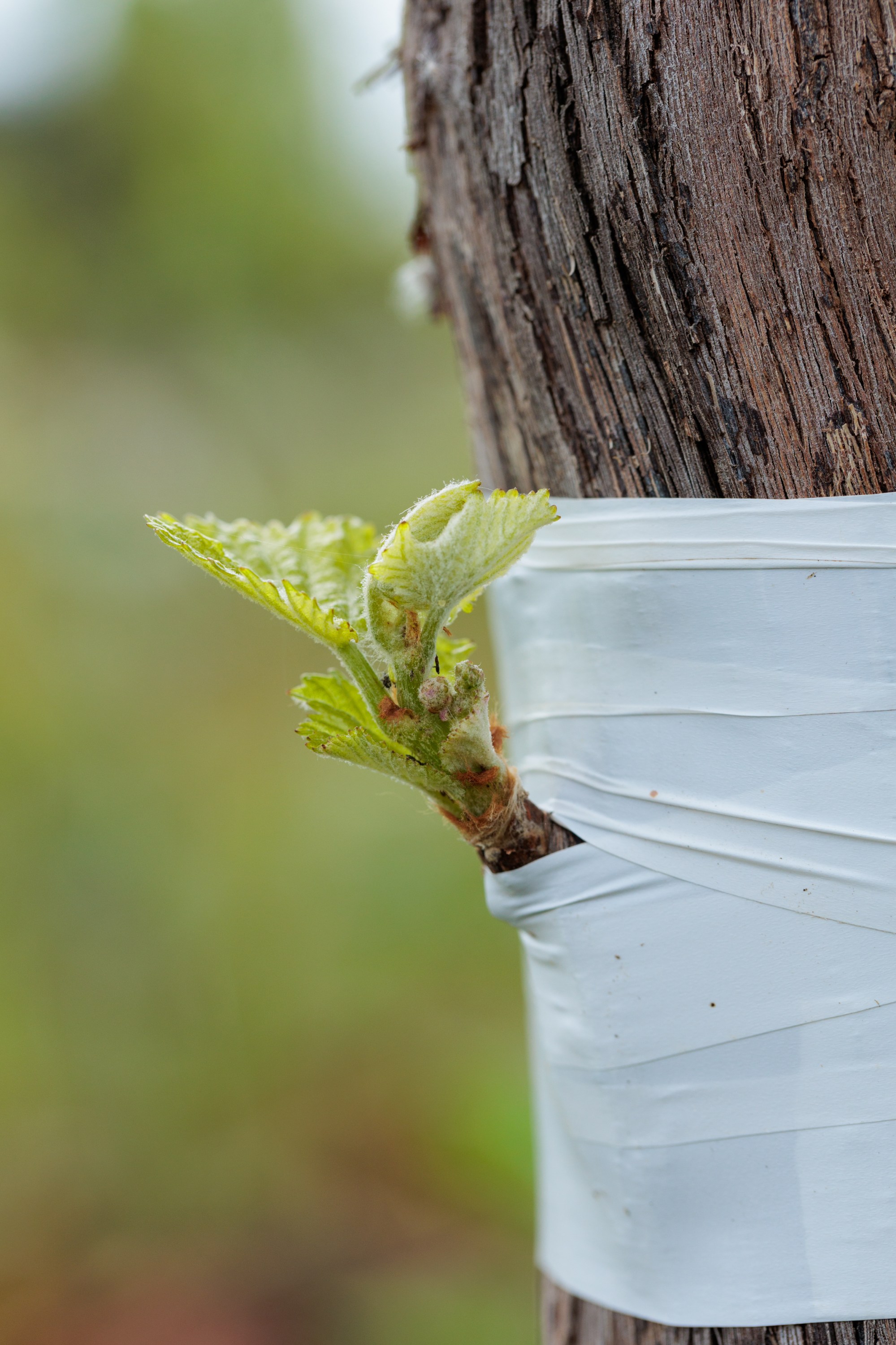
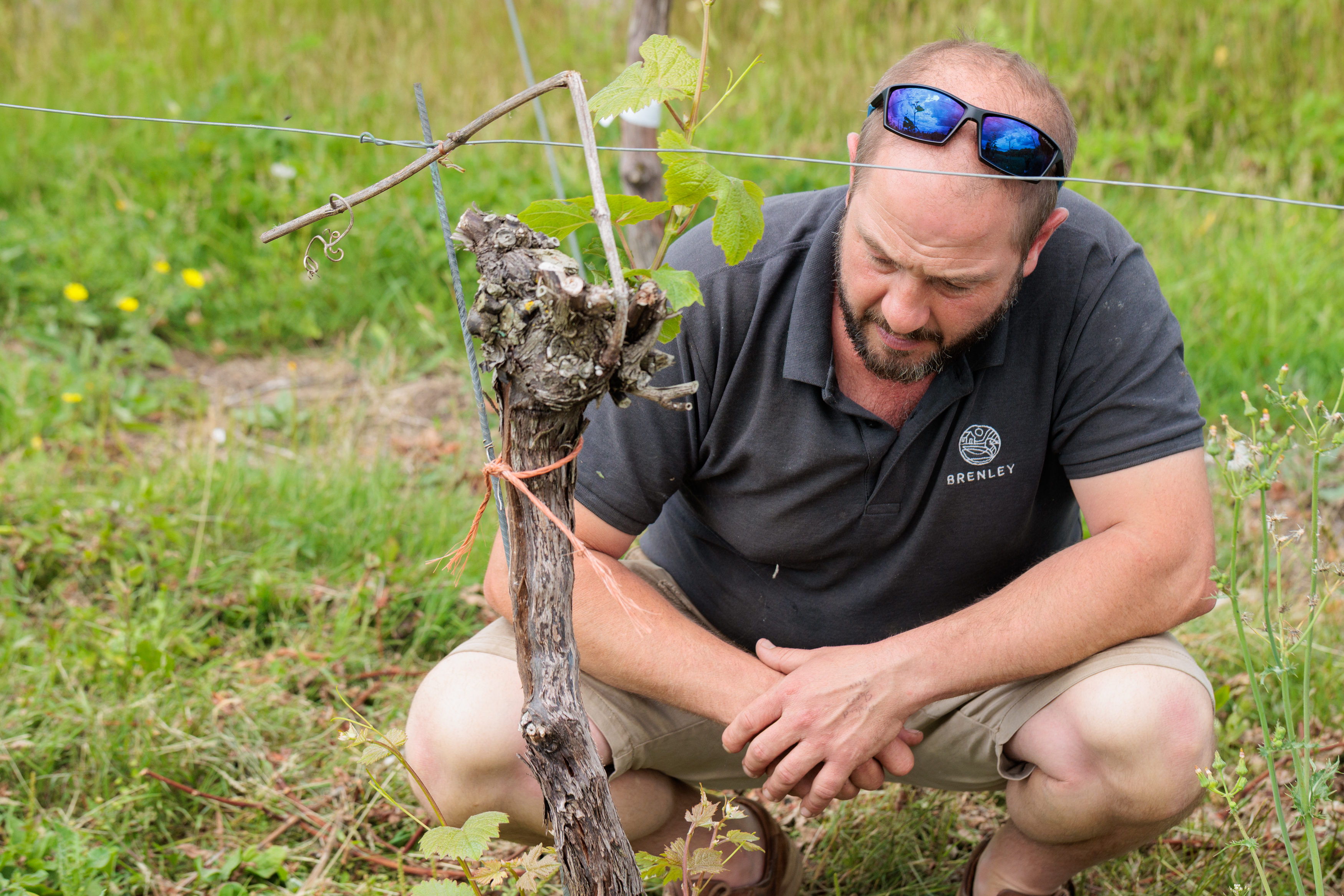
The vineyard team at Brenley have recently worked with the team from Worldwide Vineyards to transform 14 year old Bacchus vines into Chardonnay vines. The unique top grafting process has allowed Brenley to increase the size of Chardonnay production by two hectares. The process is fascinating, and the successful grafts were clearly visible with some of the grafts showing significant establishment after only a few weeks. “One leaf is left behind from the original Bacchus graft as a sap draw but the rest of the growth is removed and these are now Chardonnay vines,” said Tom and it takes a moment to fully comprehend the weight of his words.
“These 14 year old vines will have approximately 2.5 foot of growth of Chardonnay by the end of November and may well be up to full production for next harvest,” he added. There are many benefits to this process of top grafting. The vineyard structure and trellis does not have to be removed. The soil and root structure, in this case Binova rootstocks, do not have to be disturbed which is in line with the regenerative principles that Tom has adopted and according to the team from Worldwide Vineyards there will be no loss of maturity in the resulting Chardonnay fruit next year.
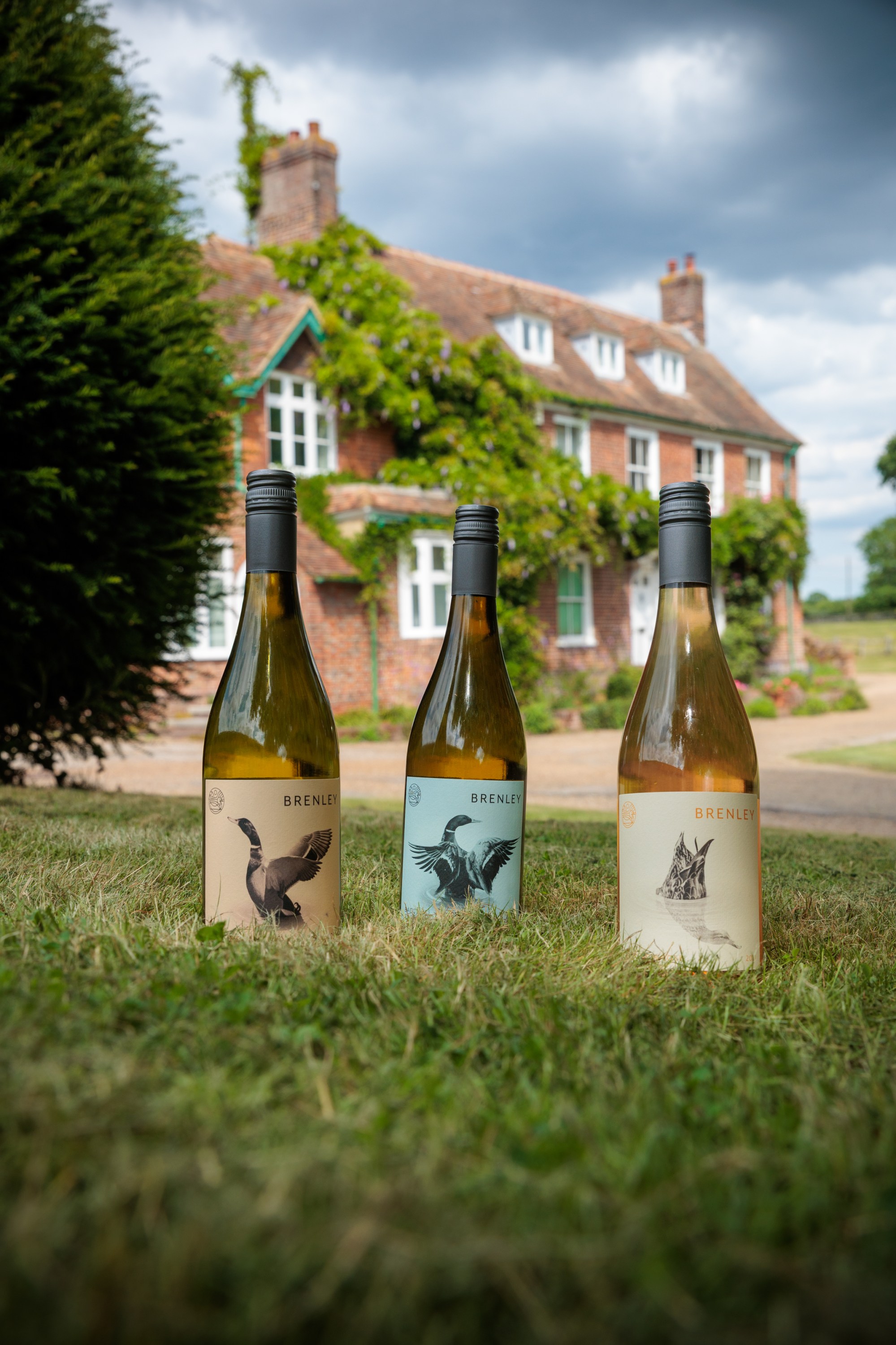
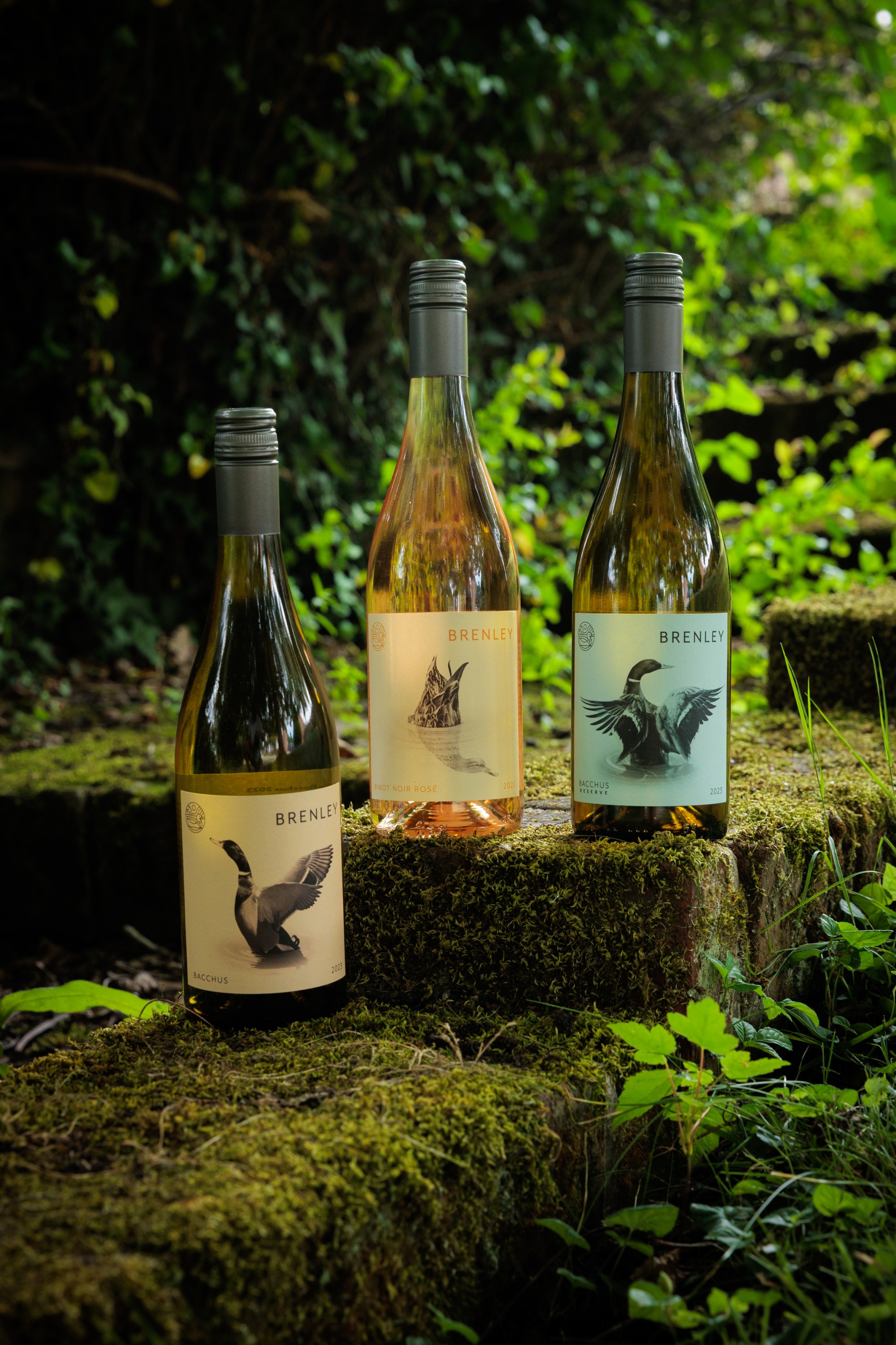
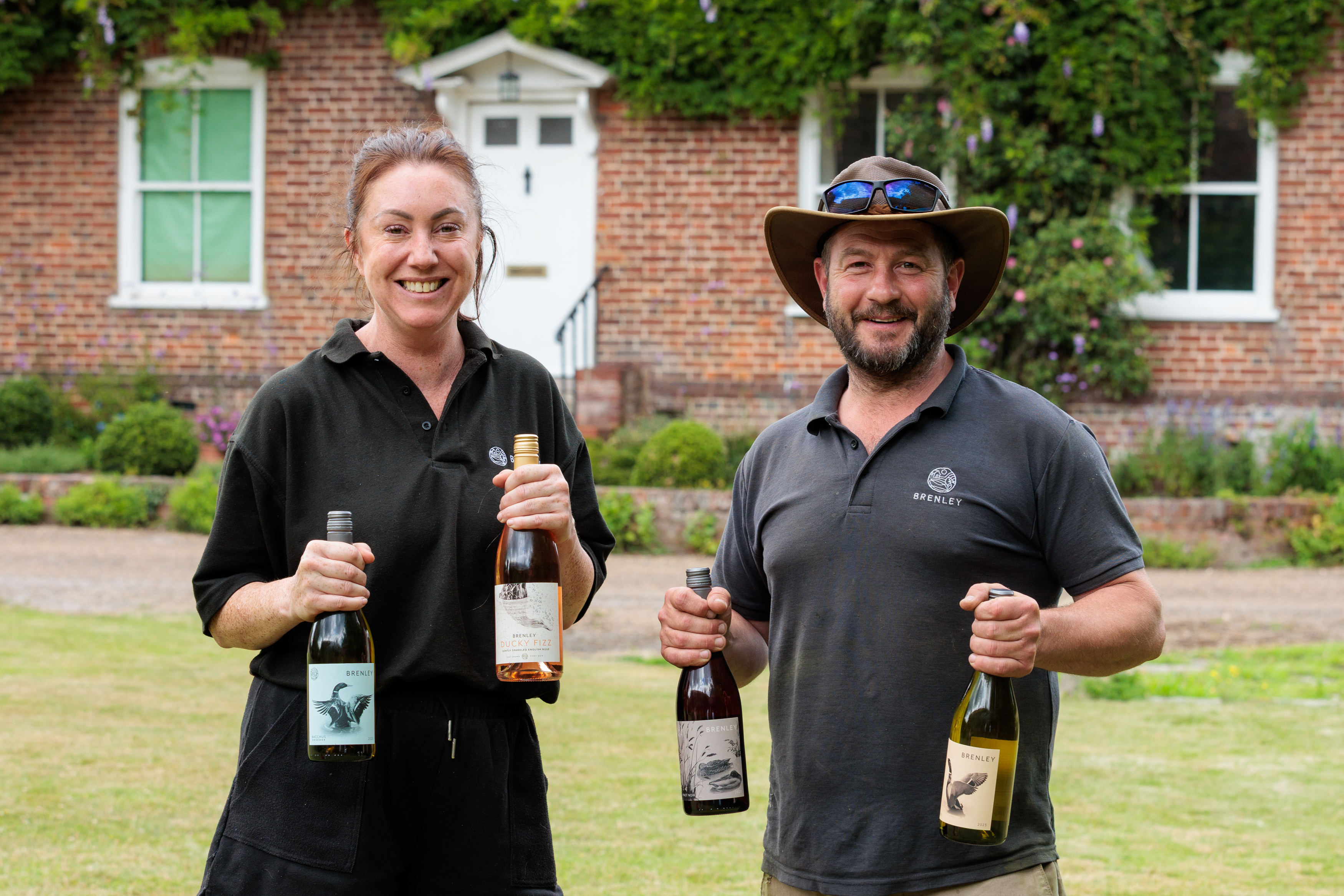
Although some vines have gone through this astonishing process there are still Bacchus vines at Brenley and it is Tom’s knowledge of the land under his care that has encouraged him to keep a special parcel of Bacchus vines where ripening is slow, allowing interesting flavour profiles to develop in these Bacchus grapes. “We keep only 5% of the grapes that we grow and these become Brenley Wines,” said Susie Buckley who is the Sales Events and Wine Coordinator at Brenley. The family nature of the business becomes apparent as Tom explained that Susie is the partner of his brother Simon who is a chef. Brenley wine is clearly rooted in family atmosphere. “The wine labels incorporate ducks because Tom’s great, great, great, grandfather was a duck enthusiast who kept many rare breeds so the heritage of the farm and the family have been subtly incorporated into the wine,” Susie explained.
Susie has long been passionate about English wine and bringing small independent producers to a larger audience. After running her own business, The English Wine Room, bringing local wines to local people through small laid back tastings at a premises in Whitstable Susie has brought that same atmosphere to the tastings at Brenley. “I want people to experience a front room atmosphere when they come here for tastings, that same feeling you get when you open a bottle of wine with friends just because you want to,” she said with warmth.
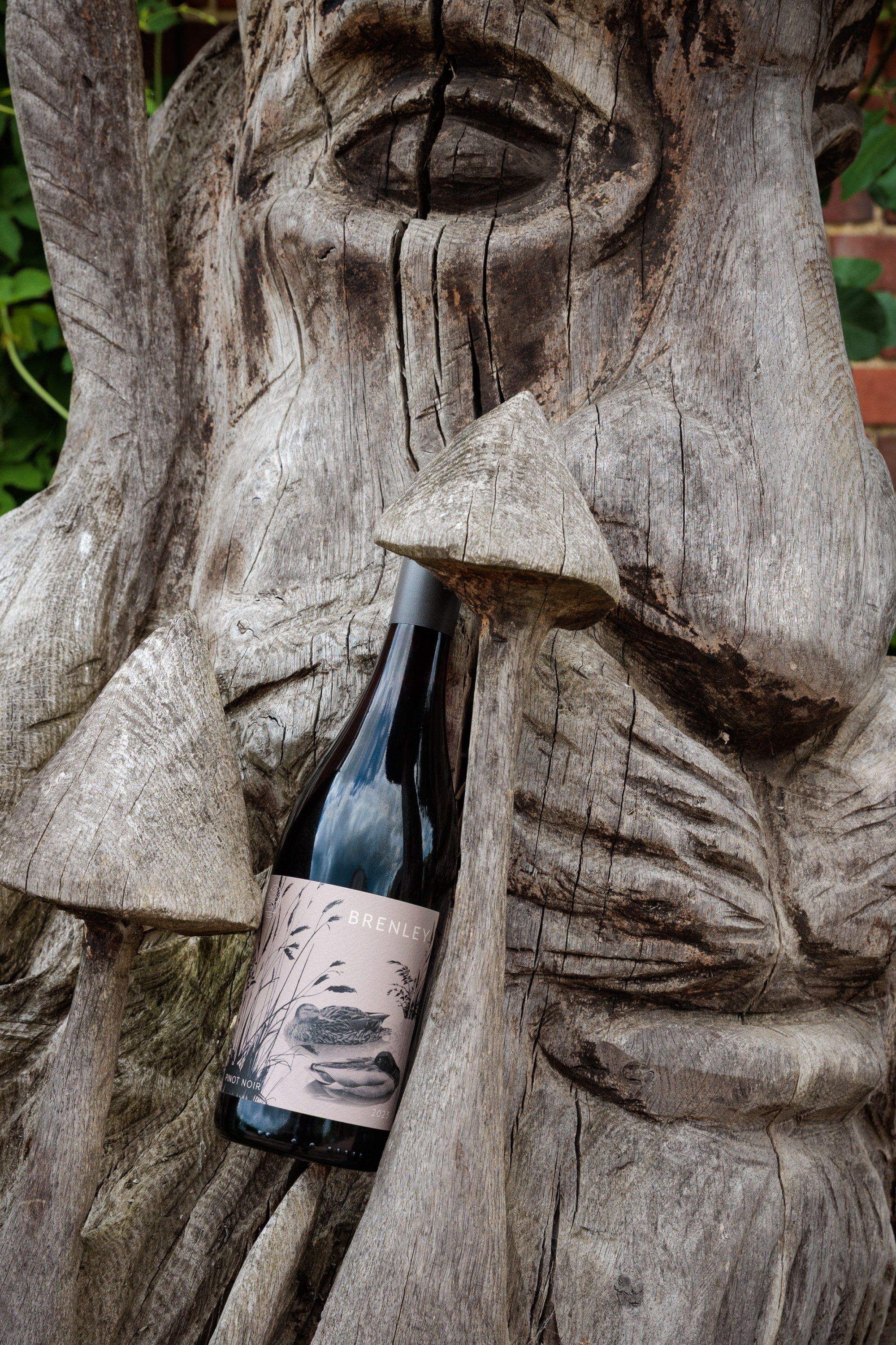
Brenley wines are made at Defined in Canterbury which is little more than a stones throw from where the grapes are grown and although Brenley only keep a small percentage of their grapes for their own wines they are still willing to make bold choices with the wines they produce. “We produce a clean crisp Bacchus wine but also a Bacchus Reserve which is blended with different levels of oak aging which changes the profile quite a bit and produces a wine with a roundness and a long finish,” said Susie. There is also a Pinot Noir 2022 which is a barrel oaked red wine with 12.5% abv and fruit forward notes of cherry and blackberry. Only 1000 bottles were produced and the label describes the wine as an “expression of the English countryside,” hinting at the unique nature of all the wines produced under the Brenley label.
Brenley produced a limited number of traditional method Blanc de Blancs from the 2019 vintage and these proved extremely popular and have since sold out. Brenley will soon release a gently carbonated rosé wine called Ducky Fizz. The wine is 100% pinot noir and the name is a playful take on the popular drinking game. The label incorporates a diving duck surrounded by bubbles which instantly conjures the idea of refreshing enjoyment. With a lower price point than traditional method wines this wine is aimed at an audience who want to have fun with their wine but appreciate both local connections and products with a story to tell. A wine for the summer, the beach, a bbq, a garden party, an outdoor summer concert, this wine will be welcome at any or all of these events. In the current heat of Summer 2026 it seems like just the right product at the right time.
Brenley Farm is a place where tradition meets modernity, where viticulture is undertaken with immense dedication and enthusiasm but with a refreshing sense of realism. Wine and its production are brought together, and the natural environment is given a level of respect and gratitude that is expressed in every enjoyable glass.

Photos: © Martin Apps, Countrywide Photographic