
By Sarah Stott and James Snowden.
As the UK wine industry matures, growers are increasingly faced with important long-term decisions. The UK vineyard area has expanded rapidly, while climate projections suggest that variety and wine-style suitability will continue to shift over the coming decades (WineGB, 2026;
Nesbitt et al., 2022).
Vineyards planted twenty or thirty years ago may no longer be planted to the most suitable variety or clone, markets continue to evolve, and growers are increasingly required to adapt. Traditionally, changing a vineyard has meant pulling out vines and starting again. Field grafting offers another option.
What is field grafting?
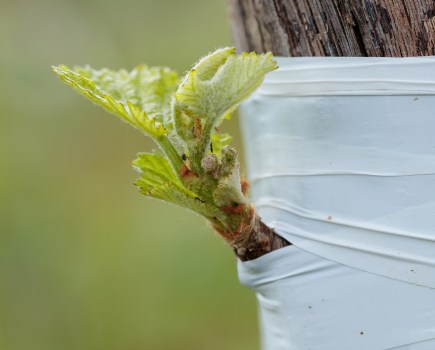
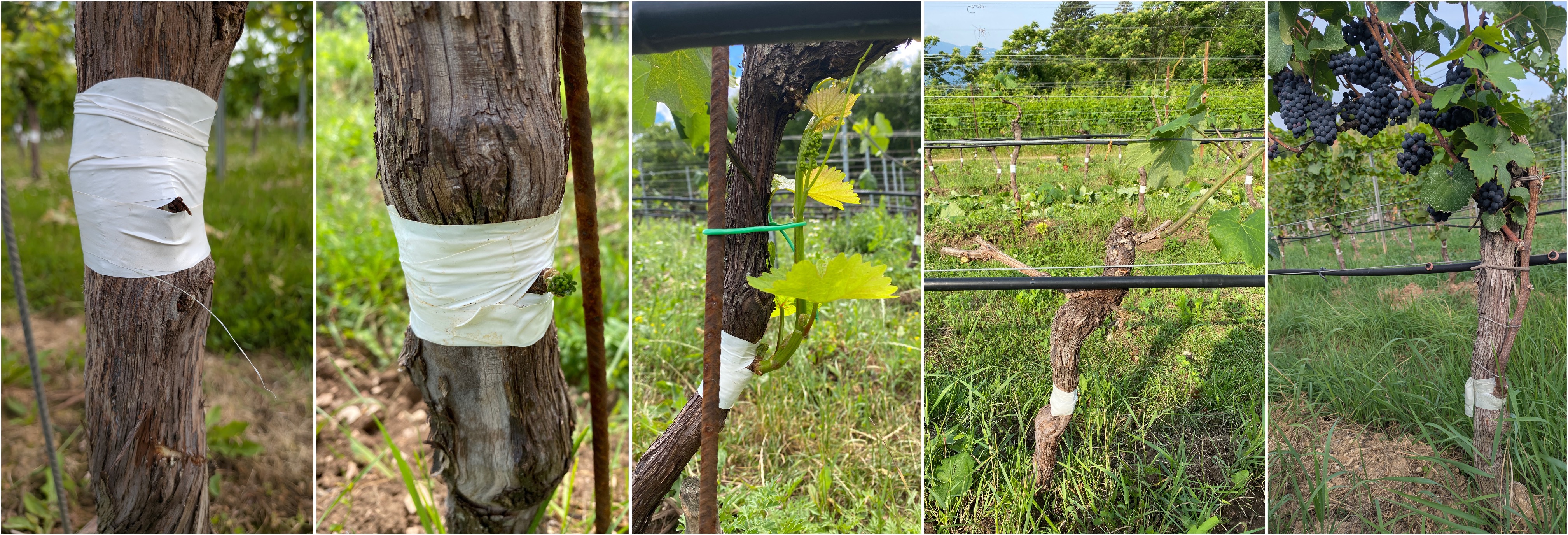
Field grafting is the process of changing the fruiting variety or clone of an established vine by grafting new buds or scion material onto the existing trunk or rootstock. Instead of removing the vineyard and replanting, the established root system is retained while the above-ground variety is replaced. The principle is simple: keep the roots, change the vine.
Why is it done?
Field grafting can solve several challenges facing modern vineyards. Perhaps the most common reason is a change of variety.
A vineyard originally planted to one cultivar may be better suited commercially or climatically to another. Rather than waiting several years for replanted vines to become productive, growers can convert an existing block while retaining its established roots.
It is also used to change clones, improve vineyard uniformity, replace poor-performing material, or convert vineyards to varieties better suited to changing climatic conditions. This is particularly relevant in a UK context, where projected warming is expected to change the suitability of certain varieties and wine styles, including increasing opportunities for still wine production in many areas (Nesbitt et al., 2022).
Where a vineyard possesses healthy, well-established root systems, grafted vines can generally return to production far more quickly than newly planted vineyards. This reduces both establishment costs and the period during which the vineyard produces little or no commercial crop. Furthermore, the smaller graft wound, “green-on-green” grafting, and preservation of the existing trunk architecture have also prompted ongoing discussion and research into whether field grafting may influence the long-term development of grapevine trunk diseases in comparison with bench-grafted vines. However, this remains an active and nuanced area of investigation, and field grafting should not be presented as a guaranteed solution to trunk disease (Mary et al., 2017; Waite et al., 2015; Villa-Llop et al., 2025).
How is field grafting carried out?
Unlike nursery bench grafting, which produces an entirely new vine by joining dormant rootstock and scion canes indoors during winter, field grafting regenerates an existing vineyard. Rather than replacing the vine, the established trunk and root system are retained while a new variety or clone is introduced (Gale and Moyer, 2020; Waite et al., 2015).
There are several field grafting techniques, including T-budding, chip budding, whip grafting, and cleft-type grafts. The key principle in all grafting is accurate cambial contact between rootstock and scion, allowing callus formation and the subsequent development of vascular continuity between the two plant parts (Gale and Moyer, 2020; Villa-Llop et al., 2026).
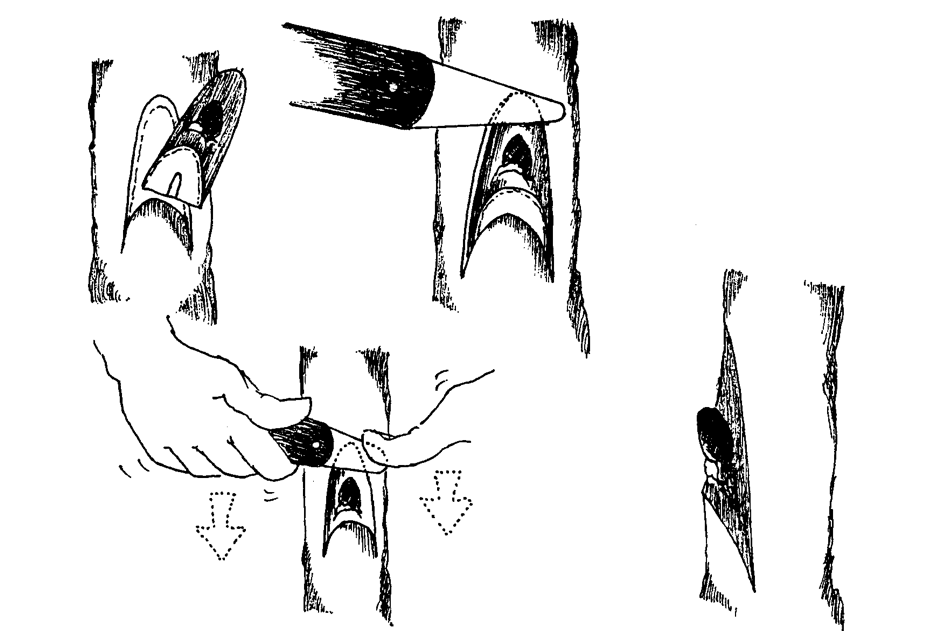
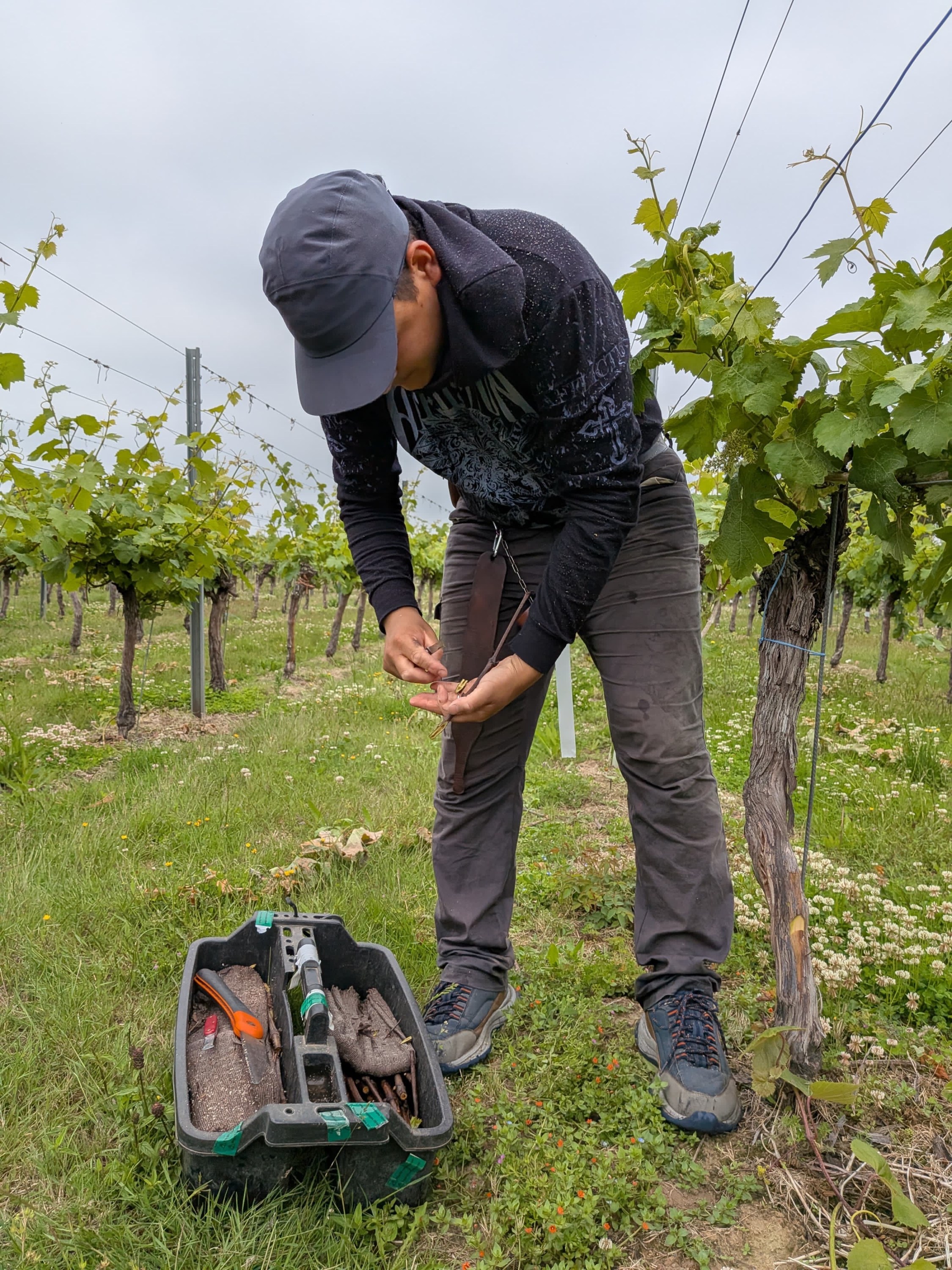
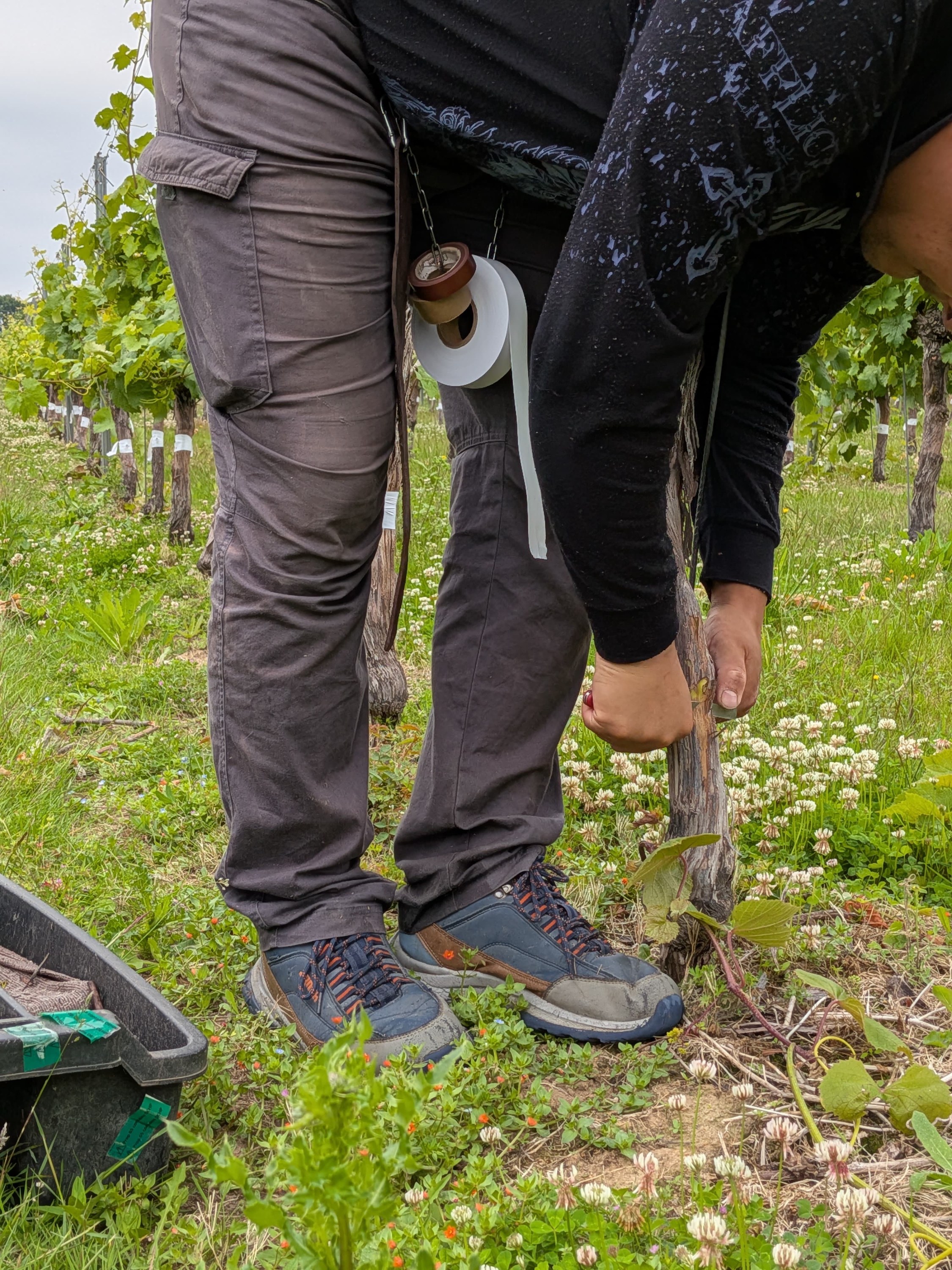
In commercial vineyard field grafting, T-budding and chip budding are commonly used due to high success probability. A dormant bud from the desired variety is inserted into a precisely matched cut or slit on the trunk of an actively growing vine. Once the cambial tissues unite, the original canopy is removed and the new variety develops using the mature root system already established in the soil (Gale and Moyer, 2020; Worldwide Vineyards, 2023).
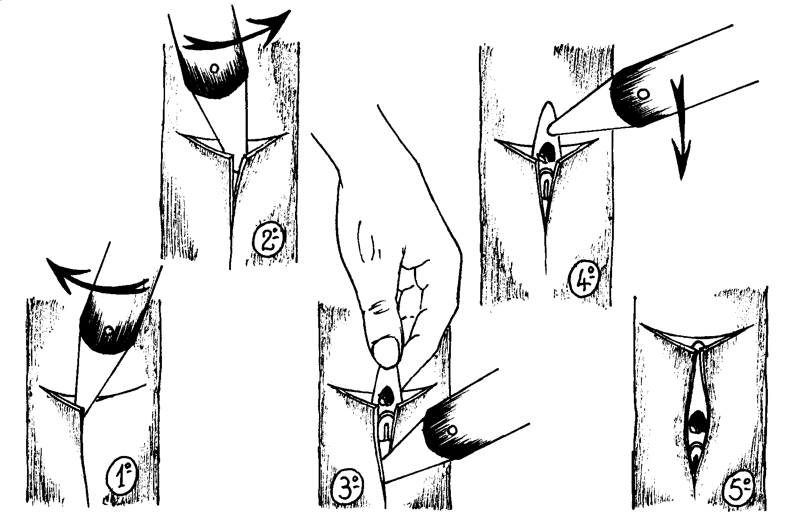
T-bud graft
When is grafting carried out?
Planning begins many months before the grafting team arrives. Potential vineyard blocks should ideally be assessed during the growing season before grafting. This allows vine health, vigour, suitability and project objectives to be evaluated (Gale and Moyer, 2020).
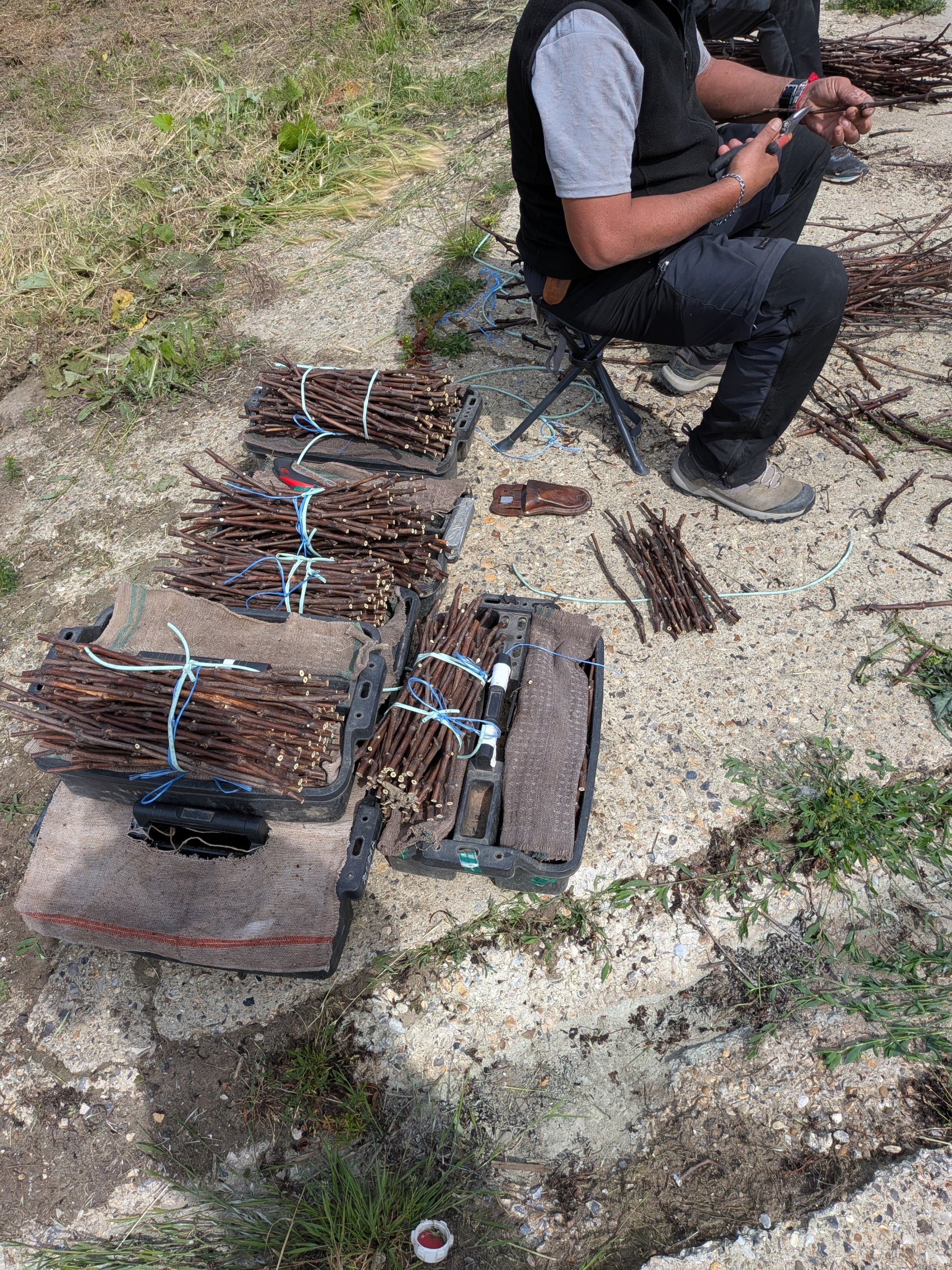
Budwood should be selected during winter pruning from healthy, true-to-type vines and stored under carefully controlled conditions until grafting. Virus status, vine health and budwood quality are critical, as pathogens can be transmitted across the graft union and poor scion material can reduce graft success (Gale and Moyer, 2020; Waite et al., 2015).
Field grafting itself is generally carried out from late spring into early July, when the vines are actively growing and conditions favour successful healing. Timing varies according to the grafting technique, seasonal conditions and the physiological state of the vine. T-budding relies on the bark slipping, while chip budding offers a wider working window because it does not rely on bark slip in the same way (Gale and Moyer, 2020; Worldwide Vineyards, 2023).
Who should carry out grafting?
While the basic principles of grafting can be learnt by individual growers, achieving consistently high success rates across commercial vineyards requires significant experience. Professional grafting teams carry out thousands of grafts each season, using refined techniques developed over many years and across many different vineyard conditions.
Equally important is the work carried out before and after grafting: assessing vine health, selecting suitable blocks, sourcing and storing budwood correctly, preparing the vineyard, and providing the aftercare required for successful establishment (Gale and Moyer, 2020). For commercial vineyards, specialist teams generally provide the highest success rates and the greatest long-term reliability.
One such specialist is Worldwide Vineyards, a French viticultural consultancy and grafting company with over 40 years’ experience in vine grafting and over-grafting across many of the world’s wine-producing regions. It was founded in 1985 by Paul Birebent, a fifth-generation grower who brought top-grafting techniques back from the United States in the early 1980s and adapted them to Europe’s more temperate conditions, work recognised with the Gold Medal for Ingenuity at SITEVI 1988. His son Marc Birebent, trained in viticultural law, took over the company in 1997 and has since developed and promoted the T-bud and chip-bud methods and led the company’s expansion across continents. He is the author of the Practical Guide to Grafting Vines by the T-bud and Chip-bud Methods, the source of the line drawings used in this article.
Worldwide Vineyards specialises in field grafting techniques including T-budding and chip budding and has carried out several tens of millions of over-grafts internationally. They note that several years of practice are required before someone can properly be considered a professional grafter, underlining the level of skill involved (Worldwide Vineyards, 2021).
Advantages
Field grafting can offer several advantages where vineyard conditions are suitable:
- Retains the existing mature root system (Gale and Moyer, 2020).
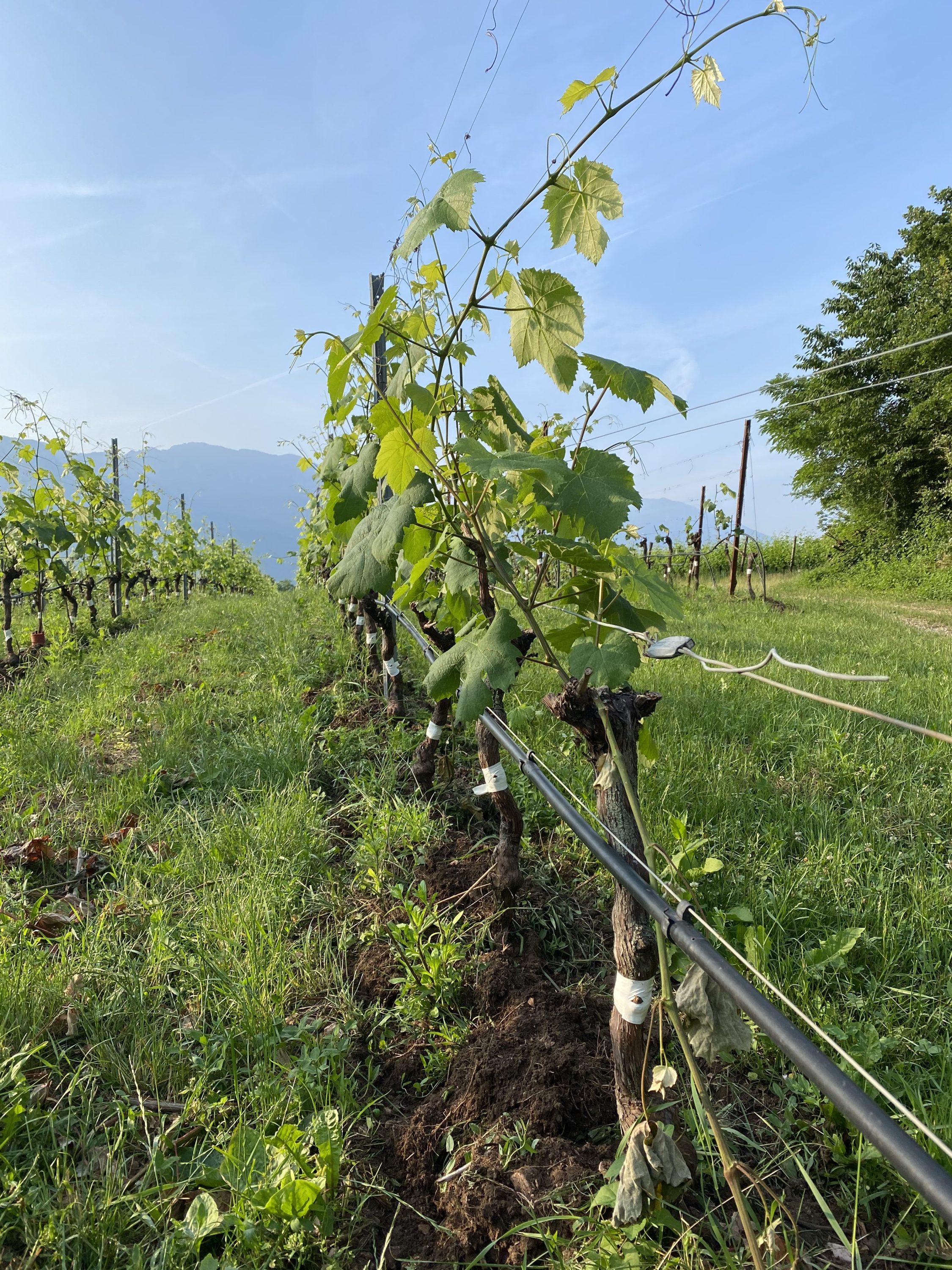
- Can allow a faster return to commercial production than replanting, with only the grafting year’s crop typically lost, rather than the four to five years often associated with grubbing up, replanting, vine establishment and any necessary period of soil rest between plantings (Gale and Moyer, 2020; Worldwide Vineyards, 2023).
- Can reduce establishment costs compared with full vineyard replanting (Gale and Moyer, 2020).
- Allows variety or clone changes without removing the vineyard (Gale and Moyer, 2020).
- Makes use of existing trellis and vineyard infrastructure where appropriate (Gale and Moyer, 2020).
- Enables vineyards to adapt to changing markets, site understanding, and climatic conditions (Gale and Moyer, 2020; Nesbitt et al., 2022).
- Can achieve excellent success rates when carried out by experienced specialist teams under suitable vineyard and seasonal conditions (Gale and Moyer, 2020).
Considerations
Field grafting is not suitable for every vineyard. Existing vines must have healthy trunks, sound graft unions and well-functioning root systems, and projects require careful planning well in advance (Gale and Moyer, 2020).
Suitable blocks for grafting, along with potential sources of budwood, should be identified during the growing season. Budwood then needs to be selected and collected during the dormant pruning period, stored correctly, and matched carefully to the objectives of the project. Virus testing and careful budwood selection are especially important where material is being sourced from existing vineyards rather than certified nursery material (Gale and Moyer, 2020; Waite et al., 2015).
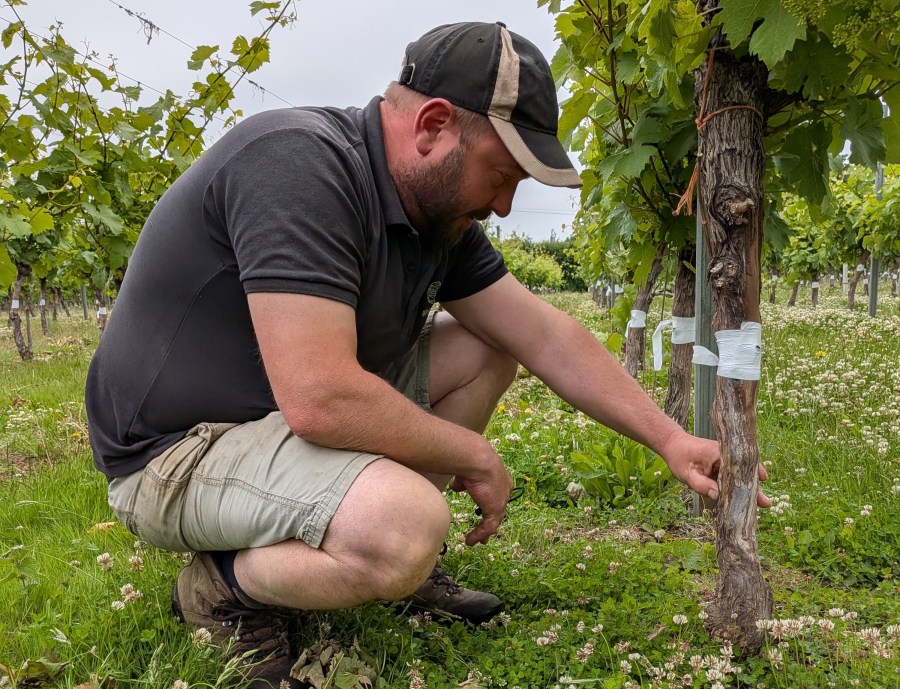
Successful grafting also depends on intensive preparation and aftercare. Vines must be appropriately managed before grafting, and the first season after grafting is particularly important. Careful attention is needed for shoot selection, tying-in, removal of competing growth, water management where irrigation is available, nutrition, crop control, and protection from mechanical damage (Gale and Moyer, 2020).
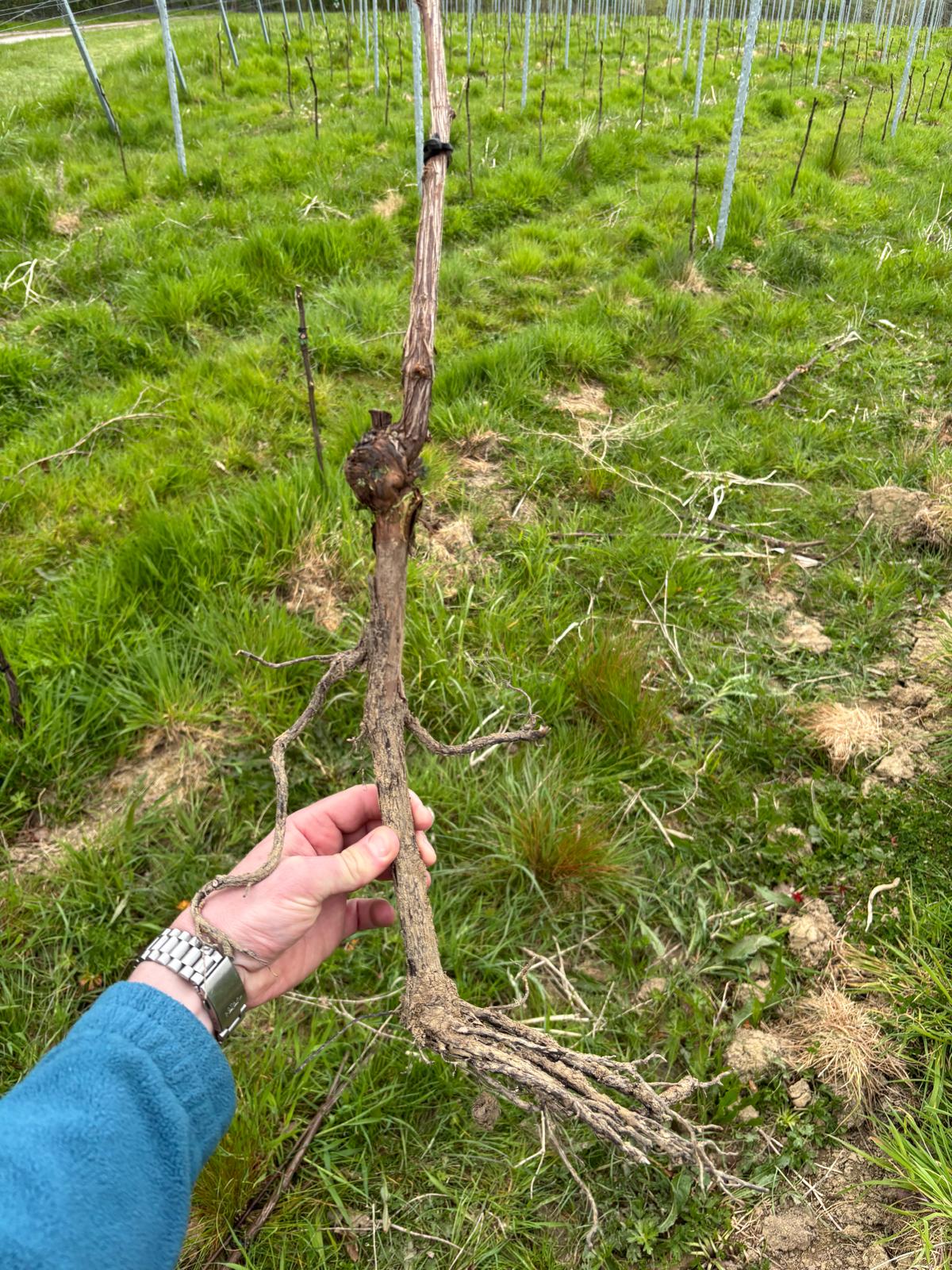
Where vineyards are affected by systemic viruses such as Grapevine Leafroll Virus or compromised root systems including problems such as J-rooting, replanting remains the better long-term option. Some evidence suggests that a low regraft, placed on the rootstock, below the original nursery graft union can in some cases address trunk decline. Overall, field grafting is best understood as a regeneration tool for fundamentally healthy vineyards, not as a rescue technique for vines with failing root systems or serious systemic disease problems (Gale and Moyer, 2020; Stamp, 2001; Gubler et al., 2004). Heavily contaminated plots shouldn’t be taken on for renewal by top-grafting at all.
About Domaine of the Rose & Bear
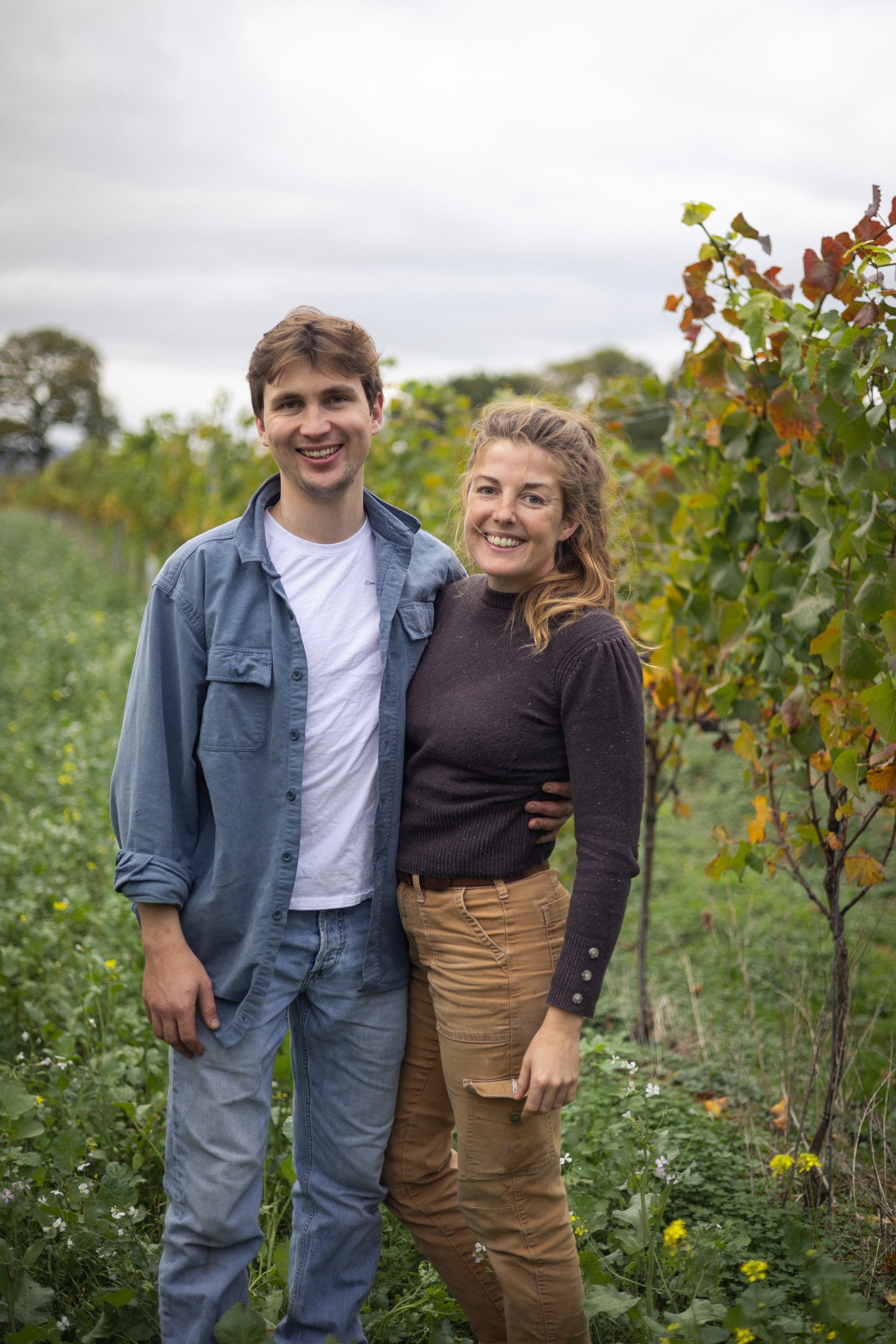
Domaine of the Rose & Bear (DRB) is a small producer based in south-east England, alongside providing Viticultural and Oenological consultancy and contract services to vineyards and wineries throughout the UK.
We are the exclusive UK Representative and Technical Facilitation Partner for Worldwide Vineyards across England, Scotland, and Wales. Our role is to support growers and Worldwide Vineyards through the full process: identifying suitable vineyard blocks, assessing project feasibility, coordinating budwood and scheduling, helping prepare sites ahead of grafting, and helping manage the crucial aftercare period that follows.
Through this partnership we combine internationally recognised field grafting expertise with local vineyard knowledge, project planning, coordination and technical support. We have previously worked alongside Worldwide Vineyards on grafting projects in Germany and Italy, including at Ökonomierat Rebholz and Azienda Agricola Foradori, working on both vineyard regeneration and new plantings.
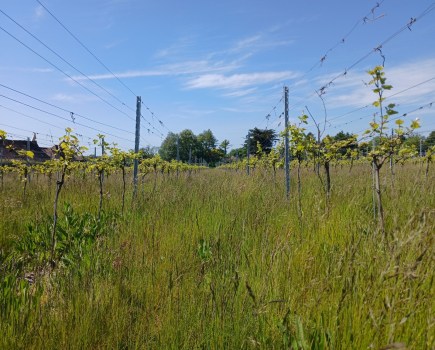
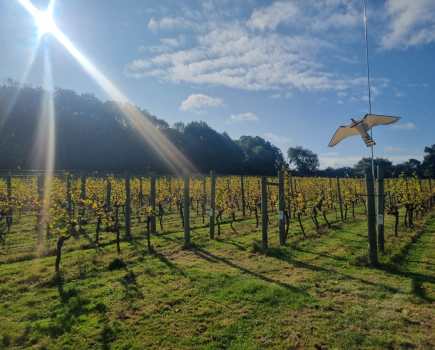
This year Worldwide Vineyards and DRB have successfully completed two grafting projects, including one at Brenley Farm near Faversham in Kent. Owned and operated by Tom Berry, a long-standing friend of DRB and supplier of Meunier grapes for our D.P. Rowe wine sub-brand, we were keen to help them in the development of their vineyard. Tom decided to graft a block of Bacchus over to Chardonnay. We agreed upon 548 and D263 clones, of which he had a good bud-wood source onsite. The grafting carried out at Brenley is a step to future proofing their operations, for their own wine production and for grape sales.
For growers considering a variety change, vineyard redevelopment or grafting programme, early planning is essential. Projects for 2027, for example, should ideally begin with vineyard assessment during the 2026 growing season, with suitable budwood identified and sourced during the 2026 winter pruning period. Growers considering vineyard regeneration, variety change or field grafting for 2027 and beyond are welcome to contact us for an initial discussion.
References
- Birebent, M. and Birebent, C. (2015) Influence of the graft on vine decline. COST Action WG4 Disease Management meeting, Bordeaux, 8–9 October 2015.
- Gale, E.J. and Moyer, M. (2020) Field grafting grapevines in Washington State. Washington State University Extension, EM121E.
- Gubler, W.D., Baumgartner, K., Browne, G.T., Eskalen, A., Rooney Latham, S., Petit, E. and Bayramian, L.A. (2004) ‘Root diseases of grapevines in California and their control’, Australasian Plant Pathology, 33, pp. 157–165. doi: 10.1071/AP04019.
- Mary, S., Laveau, C., Lecomte, P., Birebent, M. and Roby, J.-P. (2017) ‘Impact of grafting type on Esca foliar symptoms’, OENO One, 51, pp. 221–230. doi: 10.20870/oeno-one.2016.50.4.1408.
- Nesbitt, A., Dorling, S., Jones, R., Smith, D.K., Krumins, M., Gannon, K.E., Dorling, L., Johnson, Z. and Conway, D. (2022) ‘Climate change projections for UK viticulture to 2040: a focus on improving suitability for Pinot noir’, OENO One, 56(3), pp. 69–87. doi: 10.20870/oeno-one.2022.56.3.5398.
- Stamp, J.A. (2001) ‘The contribution of imperfections in nursery stock to the decline of young vines in California’, Phytopathologia Mediterranea, 40, pp. S369–S375. doi: 10.14601/Phytopathol_Mediterr-1640.
- Villa-Llop, A., Torres, N., Loidi, M., Velaz, M., Galar-Martínez, M., Crespo-Martínez, S. and Santesteban, L.G. (2025) ‘Does omega-type graft compromise vine performance? Evaluation of five bench grafting methods across nursery, vineyard establishment, and first productive years’, Scientia Horticulturae, 350, 114346. doi: 10.1016/j.scienta.2025.114346.
- Villa-Llop, A., Crespo-Martínez, S., Loidi, M., Pina, A., Irisarri, P. and Santesteban, L.G. (2026) ‘Evaluation of grafting method and scion–rootstock alignment effects on anatomical development and hydraulic properties of grapevine (Vitis vinifera L.) graft unions’, Plant Ecophysiology, 2(1), 2. doi: 10.53941/plantecophys.2026.100002.
- Waite, H., Whitelaw-Weckert, M. and Torley, P. (2015) ‘Grapevine propagation: principles and methods for the production of high-quality grapevine planting material’, New Zealand Journal of Crop and Horticultural Science, 43(2), pp. 144–161. doi: 10.1080/01140671.2014.978340.
- WineGB (2026) Data. Wines of Great Britain. Accessed 1 July 2026.
- Worldwide Vineyards (2021) Grafting tools: grafting kits and tools. Worldwide Vineyards. Accessed 1 July 2026.
- Worldwide Vineyards (2023) The noble art of field grafting: greffage et surgreffage. Worldwide Vineyards. Accessed 1 July 2026.