

As UK vine growers strive to balance robust disease control with residue pressures and sustainability goals, new trials suggest integration of biorational fungicide products could be the way forward.
Integrated programmes combining conventional chemistry with biorational products could offer UK grape growers a practical route to maintaining disease control while reducing reliance on synthetic fungicides.
That was one of the key messages emerging from Certis Belchim’s first UK vineyard trials under its Growing for the Future (G4TF) banner, which were carried out during the 2025 season at NIAB East Malling.
The work forms part of the firm’s wider European initiative to explore how biorational and conventional fungicides can be combined into practical disease management programmes.
Already established in other crops across Europe, the concept is now being adapted for UK viticulture as growers face increasing pressure around residues, resistance management and sustainability expectations.
Alex Cooke, horticultural technical support specialist at Certis Belchim UK, said growers are already looking at how they can maintain robust disease control while reducing reliance on conventional chemistry.
“The aim of Growing for the Future is not to remove conventional fungicides entirely, but to understand how integrated programmes can work in practice under the UK’s unique growing conditions,” he explained.
Trial details
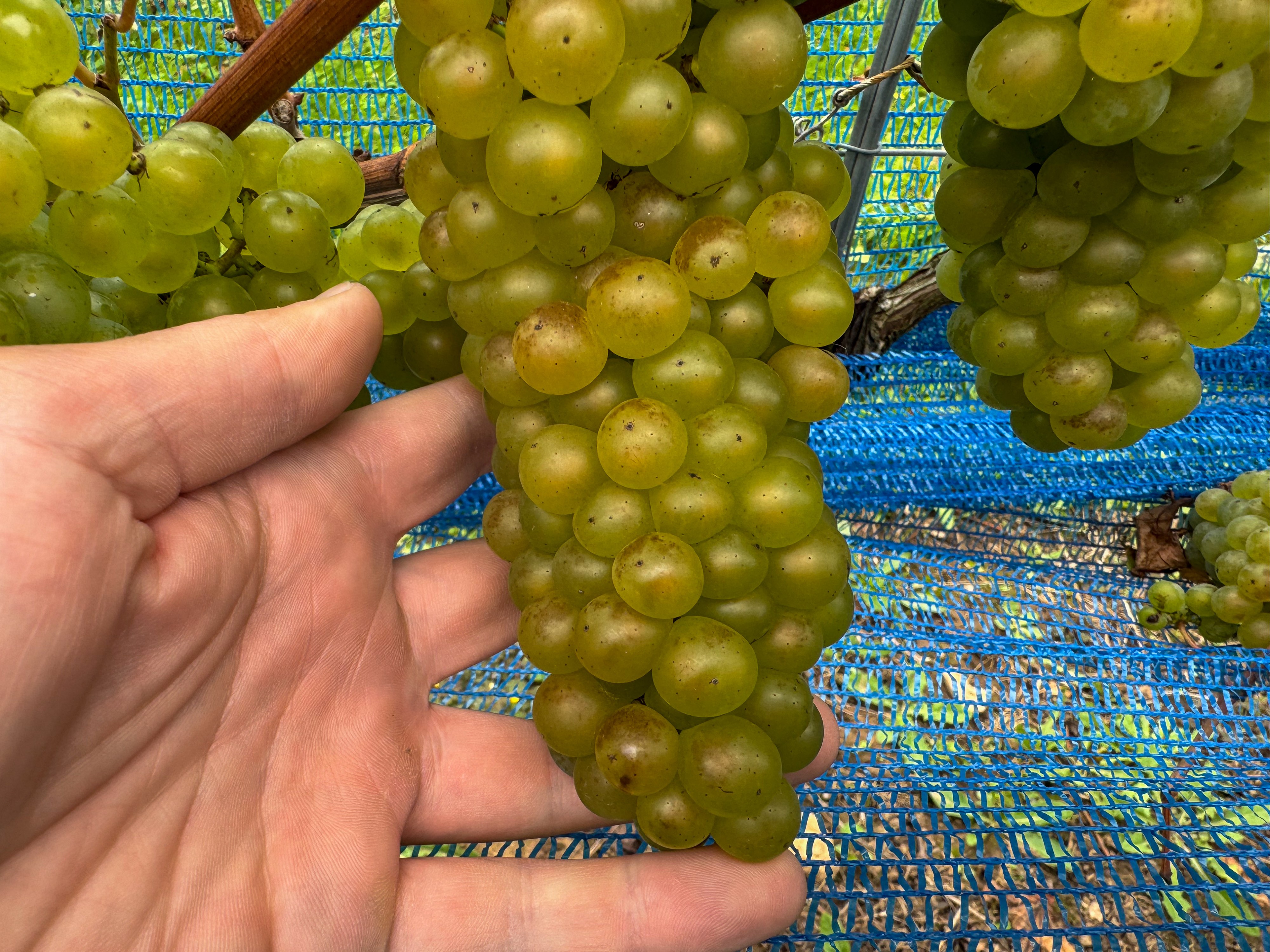
The 2025 trial was carried out on Chardonnay vines at NIAB EMR, with the variety selected for its high susceptibility to downy mildew, powdery mildew and Botrytis.
Four replicated programmes were compared across the season.
Three integrated G4TF approaches, focused on downy mildew, powdery mildew and Botrytis management respectively, were pitted against conventional programmes for each disease (see right box).
The G4TF programmes incorporated Certis Belchim’s Amylo-X, Karma, Vintec, Frutogard and Cuprokylt biorationals alongside conventional chemical fungicides.
Assessments included powdery mildew and downy mildew incidence and severity on leaves and fruit, Botrytis incidence at harvest, bunch numbers and weights, and grape quality measurements including acidity and yeast assimilable nitrogen.
While the trial had originally been designed to assess both downy and powdery mildew, the season ultimately developed into a predominantly powdery mildew year, as is becoming more frequent with the UK’s changing climate.
Powdery performance
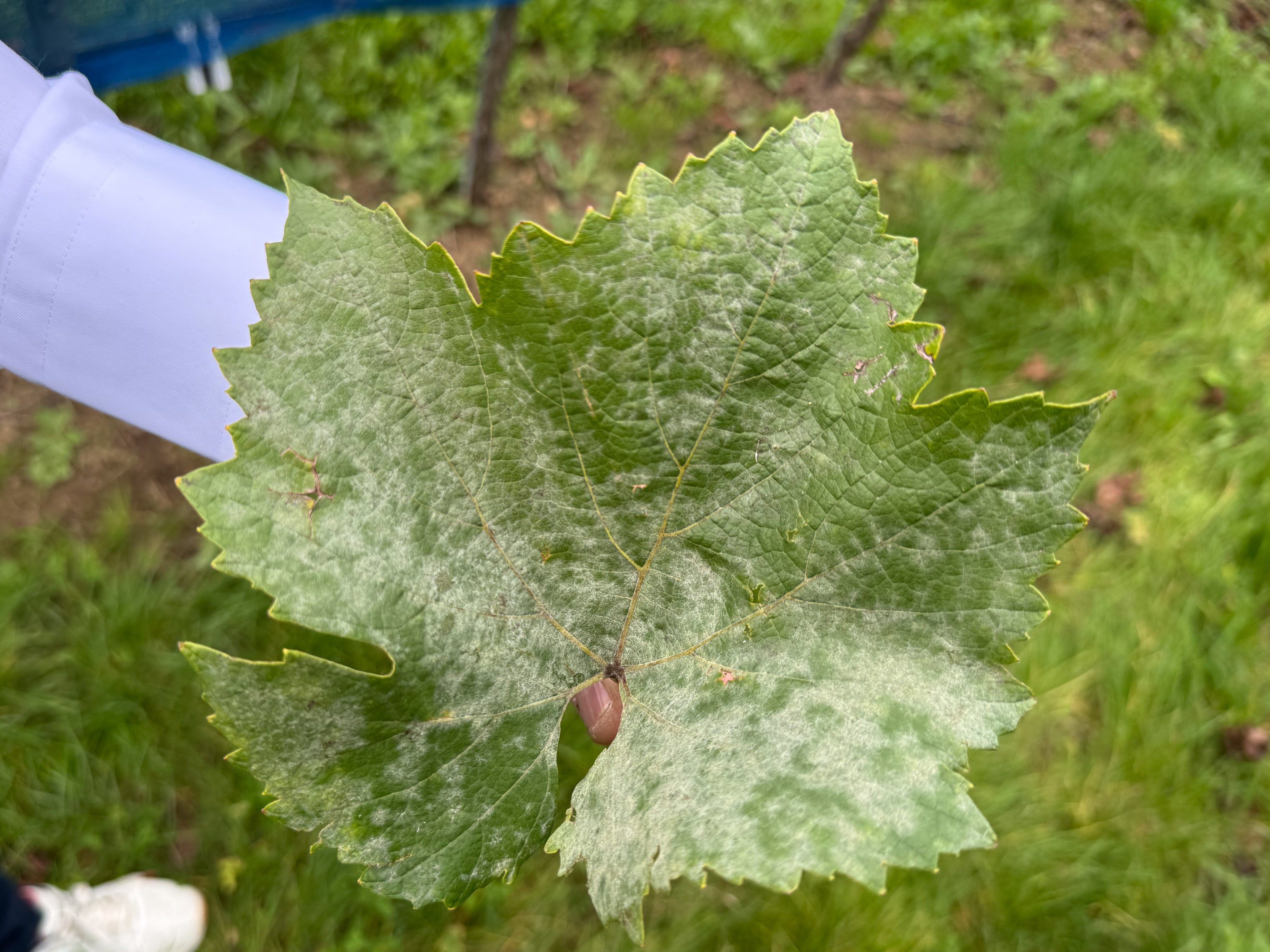
Powdery mildew pressure escalated later in the season to generate meaningful separation between programmes.
One of the most notable findings was that two of the integrated G4TF programmes delivered significantly better control.
NIAB EMR’s report concluded that both the downy mildew-led G4TF 1 and powdery mildew-led G4TF 2 gave significantly better control of foliar powdery mildew than the conventional programme in both lesion number and lesion size.
By the final assessment on 19 September, the conventional programme averaged 36.8 infected leaves per 100 assessed, compared with just 2.8 leaves in G4TF 1 and 16.8 leaves in G4TF 2.
Importantly, the integrated programmes used far less conventional powdery mildew fungicide during the latter part of the season, with only biorational products at critical crop stages.
Alex explained this was particularly encouraging given the level of disease pressure seen later.
“It was a very high powdery mildew year, especially towards the back end. What was encouraging was that the integrated programmes held up very well, relying heavily on biorational products,” he added.
Beating botrytis
The Botrytis-focused G4TF 3 also produced encouraging results.
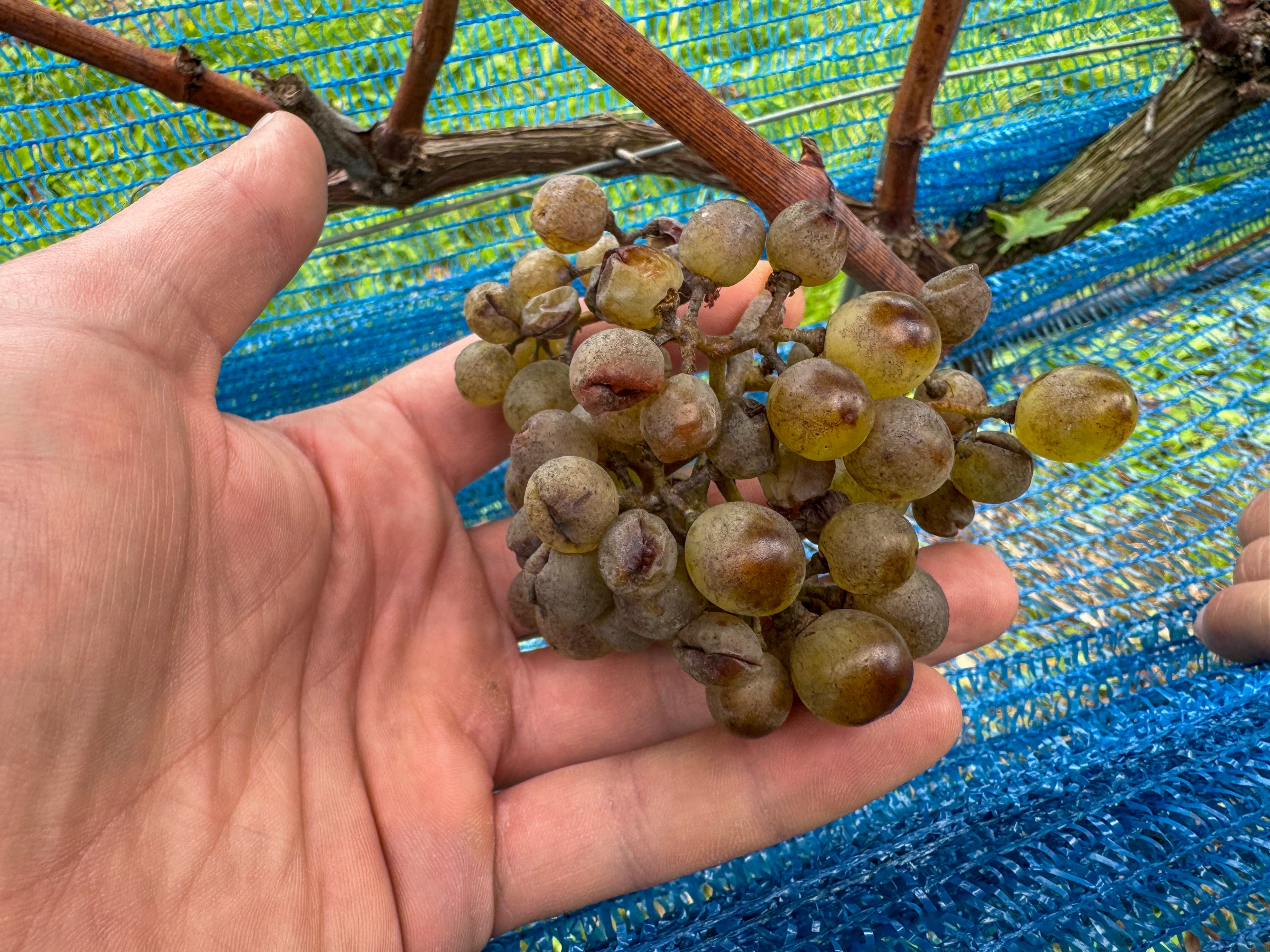
All programmes delivered statistically similar levels of bunch rot control, despite differences in programme structure and chemistry.
That result is particularly significant because the Botrytis programme relied heavily on biorationals Vintec and Amylo-X.
“For us, the Botrytis result was one of the standouts in the report. To see a programme built around those products delivering comparable control to a conventional standard is very encouraging,” explained Alex.
Another key finding was that none of the programmes negatively affected yield or bunch quality, with no statistically significant differences in bunch numbers, bunch or berry weight.
Some differences were observed in grape must chemistry, particularly around tartaric acid and yeast assimilable nitrogen levels, although Alex said more work is needed before drawing firm conclusions about practical implications for wine production.
“The wine quality measurements are really interesting, but we need more seasons and more understanding before overinterpreting those results,” said Alex.
Building for 2026
The 2025 work marked Certis Belchim’s UK foray into dedicated G4TF vine trials and the company’s horticulture crop manager Libby Rowland said the programme captured the interest of vineyard agronomists.
The plan now is to expand and refine the 2026 work, with the help of the company’s global head of vines Emmanuel Archer, building and testing even more commercially focused integrated programmes.
There will be a refinement of spray timings and potentially the incorporation of decision support systems and disease forecasting models into the trials’ design.
Libby is also exploring opportunities to continue the work at NIAB East Malling or alternative UK vineyard sites.
“We are still at the early stages of understanding exactly how these programmes fit into UK vine production, but the first year has given us positive signals.
“Integrated approaches can maintain disease control while reducing dependence on conventional fungicides alone and that is ultimately what Growing for the Future is about.”
Biorational product active substances
- Amylo-X
Bacillus amyloliquefaciens D747 - Karma
Potassium hydrogen carbonate - Vintec
Trichoderma atroviride strain SC1 - Frutogard
Potassium Phosphonates - Cuprokylt
Copper oxychloride
Growing for the Future vines trial treatments 2025
| Programme | Approach | Key features |
| Conventional x 3 | Conventional-led programmes against each key disease | Predominantly conventional fungicide actives, supported by selected biorationals |
| G4TF 1 | CB integrated downy mildew-led strategy | Frutogard, Cuprokylt and Amylo-X integrated into programme |
| G4TF 2 | CB integrated powdery mildew-led strategy | Karma, Cosine and Amylo-X integrated into programme |
| G4TF 3 | CB integrated Botrytis-led strategy | Vintec and Amylo-X integrated into programme |