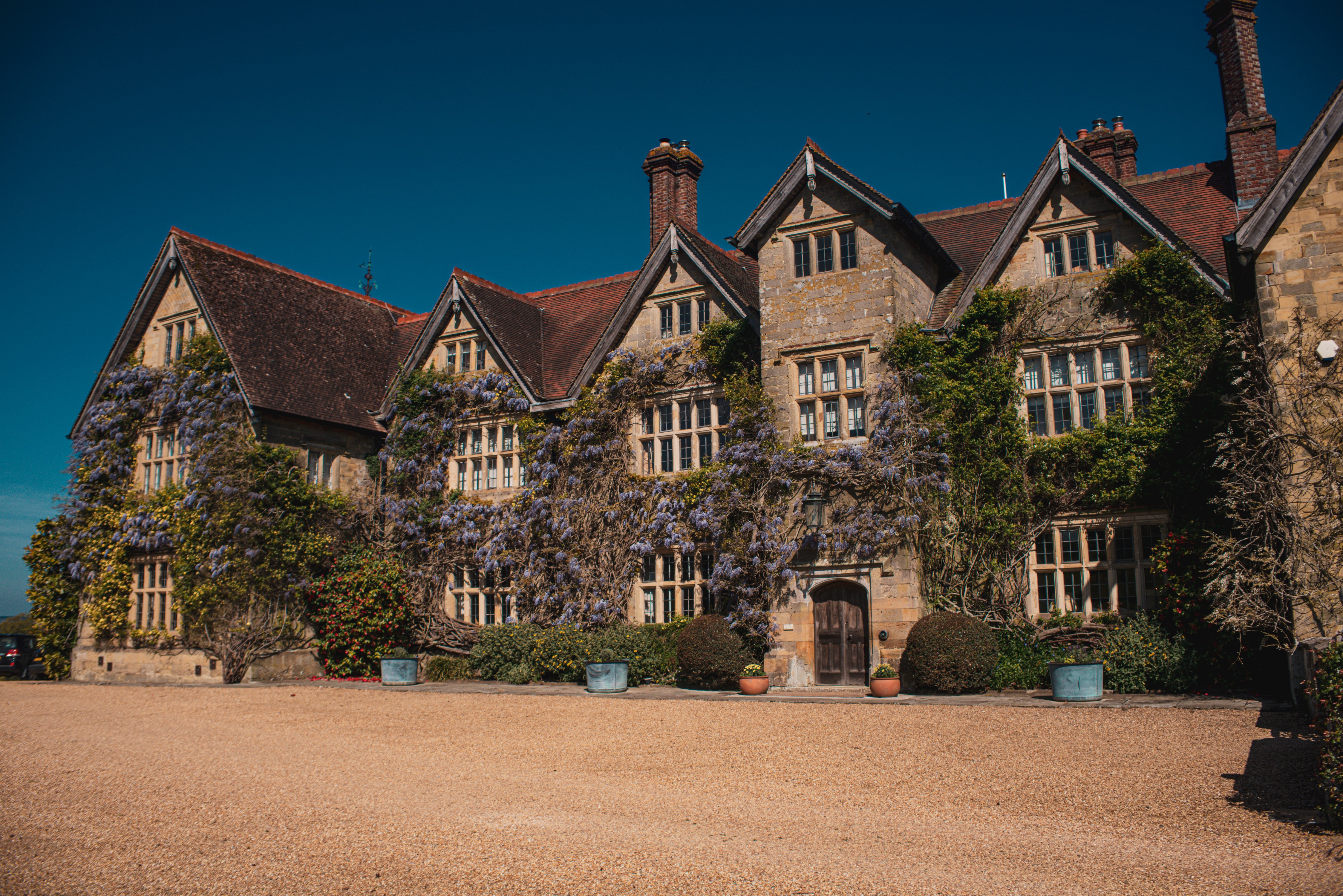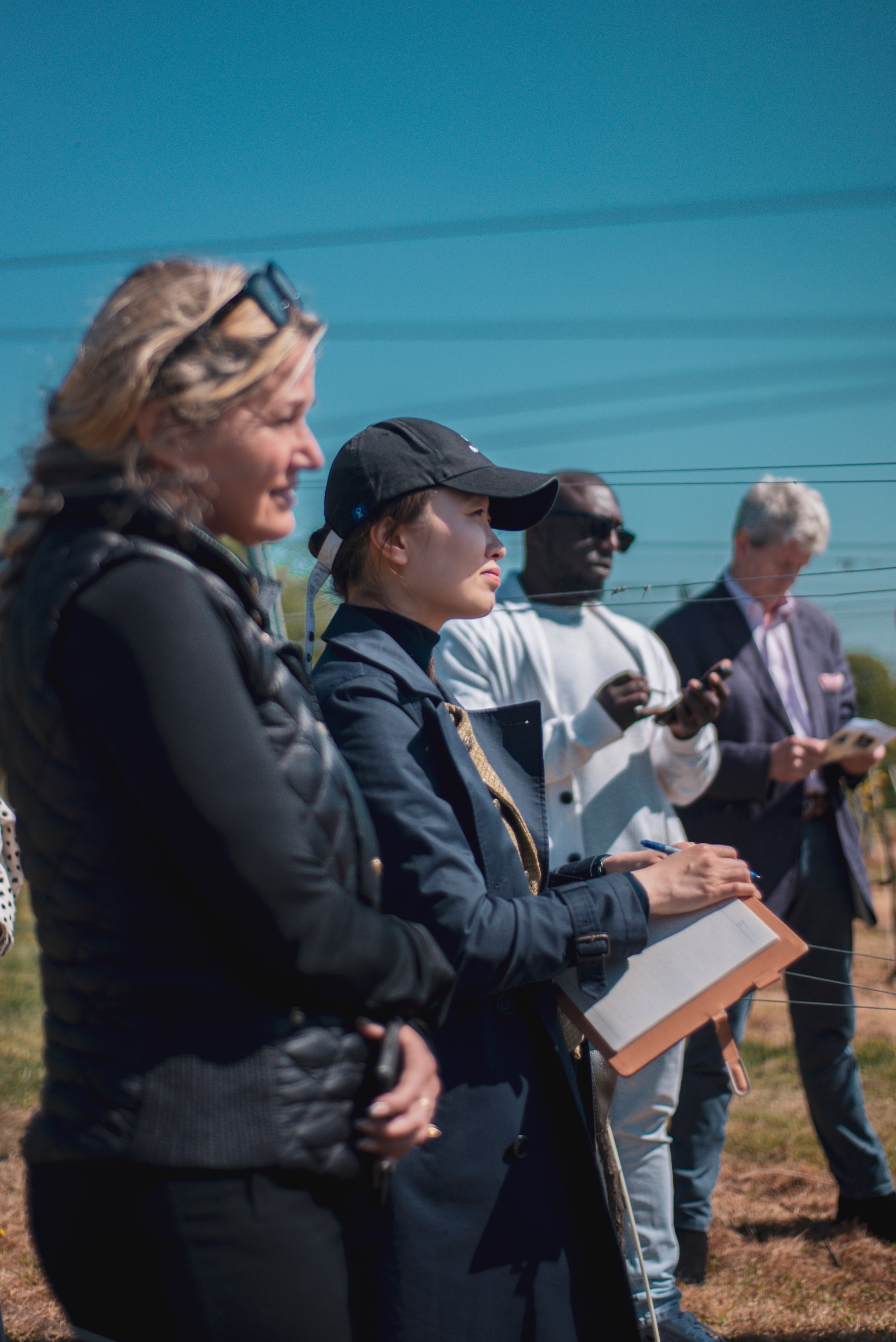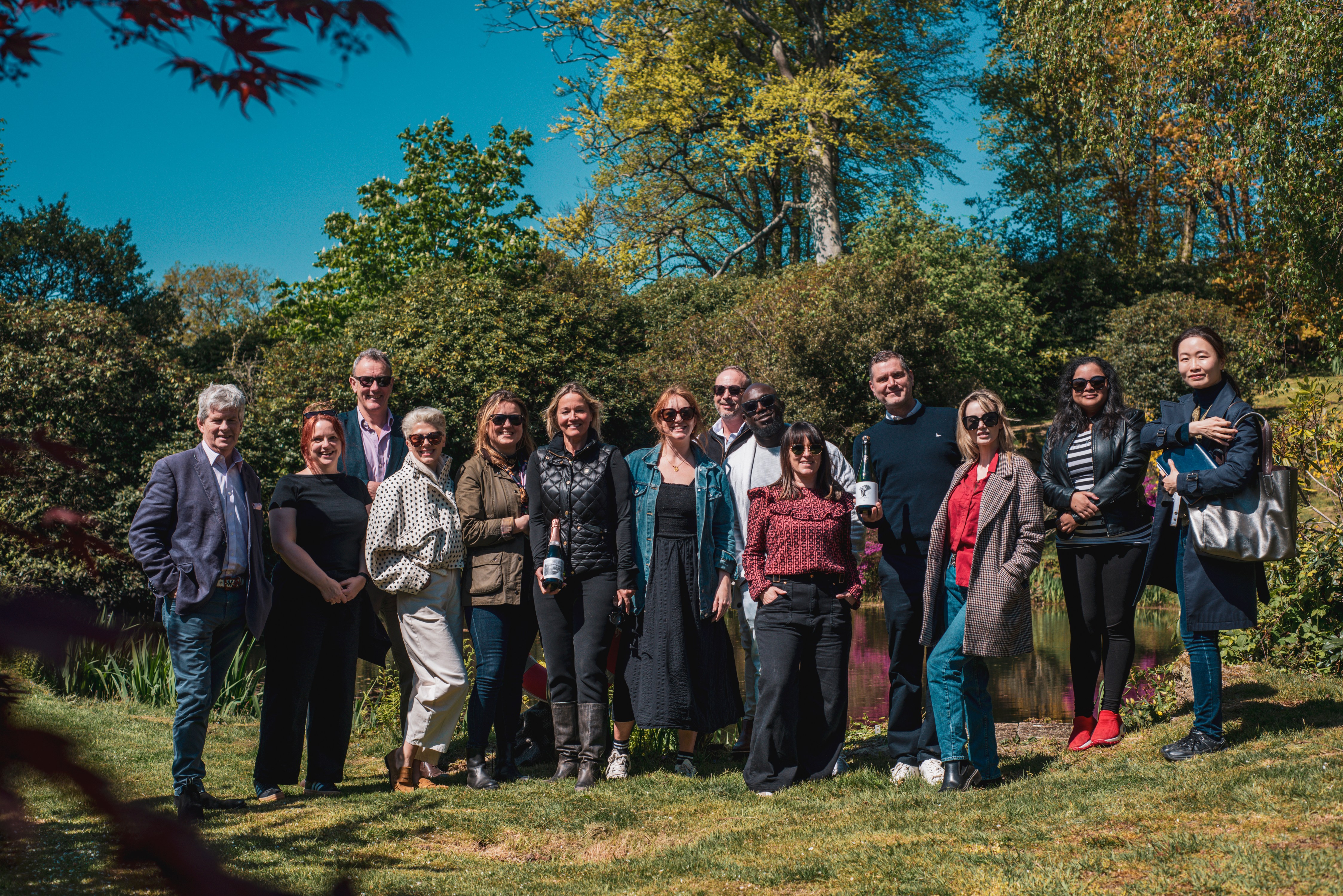

There are moments in the vineyard year that serve as a genuine marker of progress, not just seasonal progress, but the longer arc of an estate finding its footing in an increasingly competitive market. A return visit to Weyborne Estate near Haslemere, Sussex, offered both at once: the ritual of budburst on one of England’s most elevated vineyard sites, and a clearer picture of how far this estate has travelled since its first vintages reached the market.
At 190 metres above sea level on the highest point in the South Downs, Weyborne occupies a site with a particular physical logic. The estate takes its name from the River Wey, which rises here on the chalk and sandstone beneath the vines. Twenty-five acres are farmed across five plots, the oldest planted in 2007, at an altitude that delivers a marked diurnal temperature range, thicker berry skins, and the kind of natural frost buffer that lower-lying sites cannot replicate. The soils, a combination of sand, clay and flint above chalk, provide the mineral framework that runs through the wines.
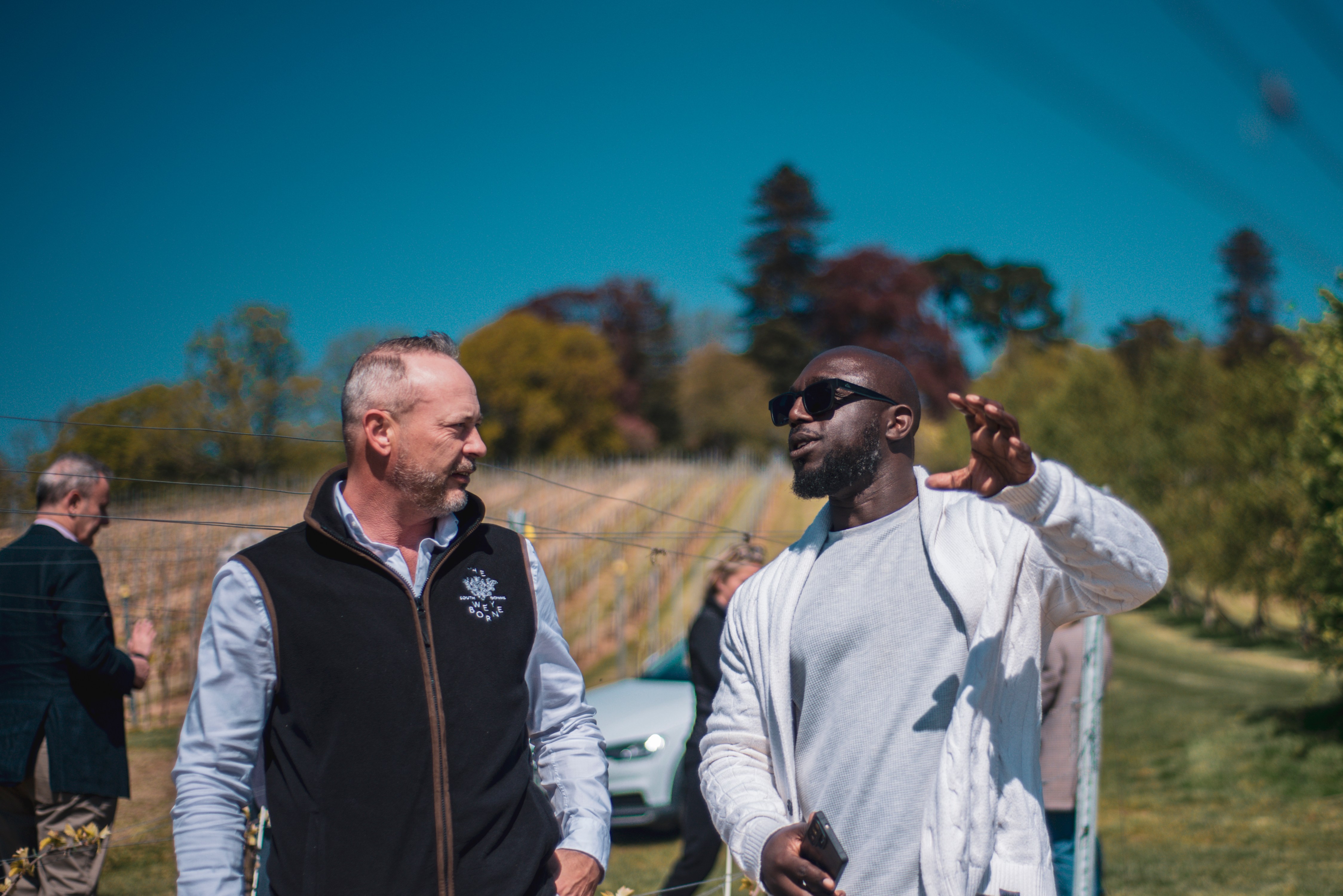
At the centre of the operation is General Manager and winemaker Benjamin Abric, who led the tour of the estate and conducted the day’s tasting. His depth of knowledge across both viticulture and winemaking gives Weyborne a clear through-line from vine to finished wine, and his focus on the particularities of this high-altitude site is evident at every stage.
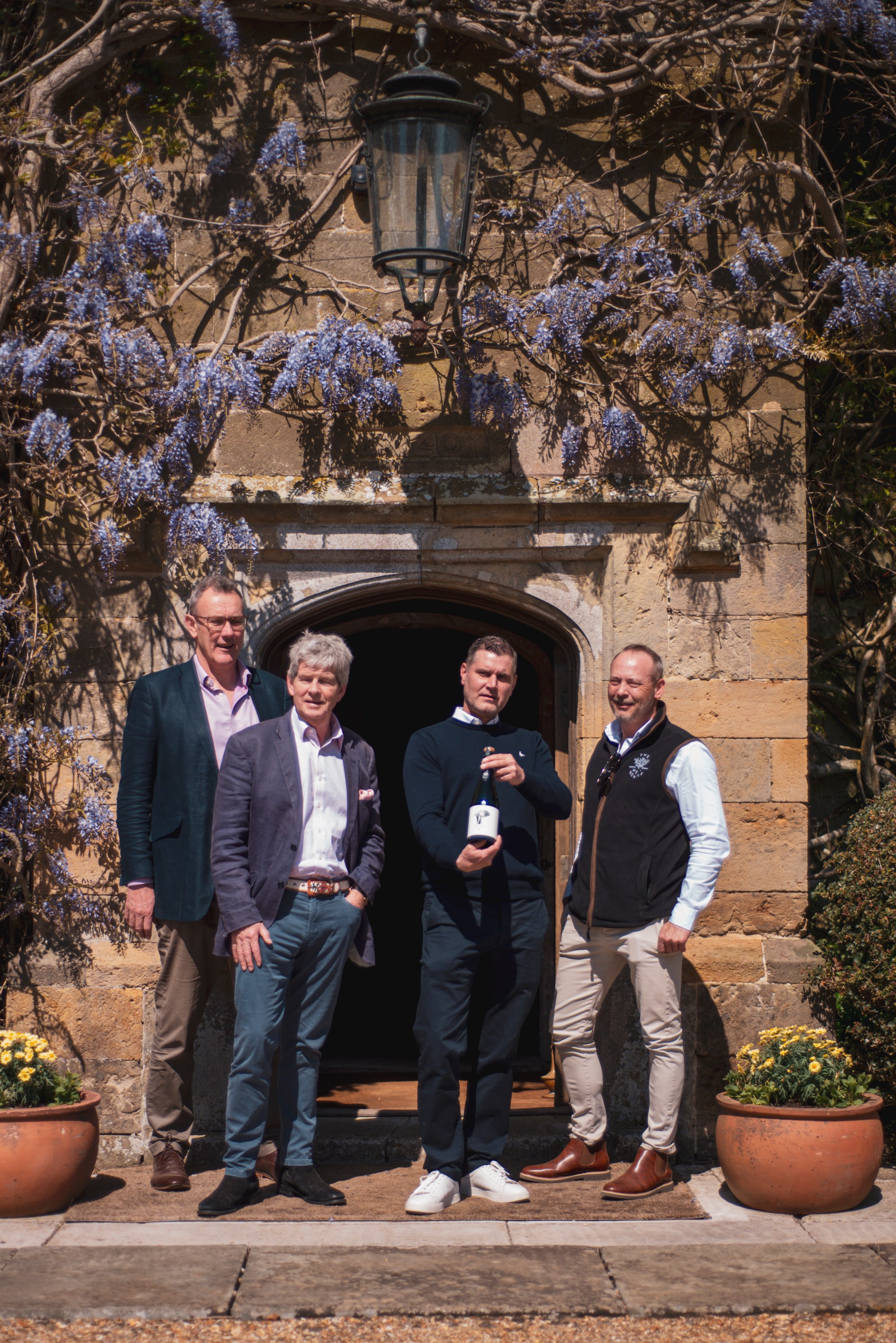
The team around him has grown with the estate’s ambitions. Founder Nick Clarke came to wine through a lifelong passion for geology, recognising in Weyborne’s terroir the potential to produce sparkling wine of genuine distinction. It is a conviction that has shaped every decision since. Commercial Director William Sharpley, who joined in March 2024, brings nearly four decades in the wine trade to the role, including a formative start in Paris and considerable experience in Champagne. Vineyard Manager Damian Cross, the most recent addition, joined in Spring 2025 with a background in estate management and a clear affinity for the rhythms of the growing season. Together they bring a complementary range of expertise at a moment when the estate is consolidating its position in the market.
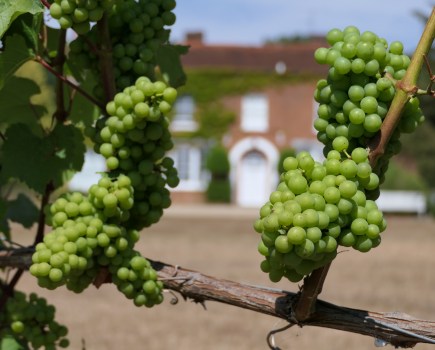
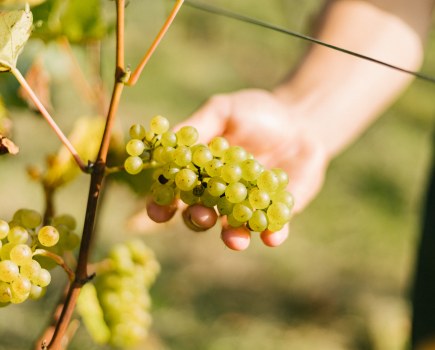
Budburst, even in a season carrying frost risk, was at its most vivid during the visit. Walking the plots with Abric, the conversation ranged across varietal performance, canopy decisions, and the longer-term direction of the vineyard. Weyborne grows Pinot Noir, Pinot Meunier and Chardonnay, the classic Champagne varieties, and the site’s altitude and aspect give the fruit a character well suited to the traditional method wines the estate produces.
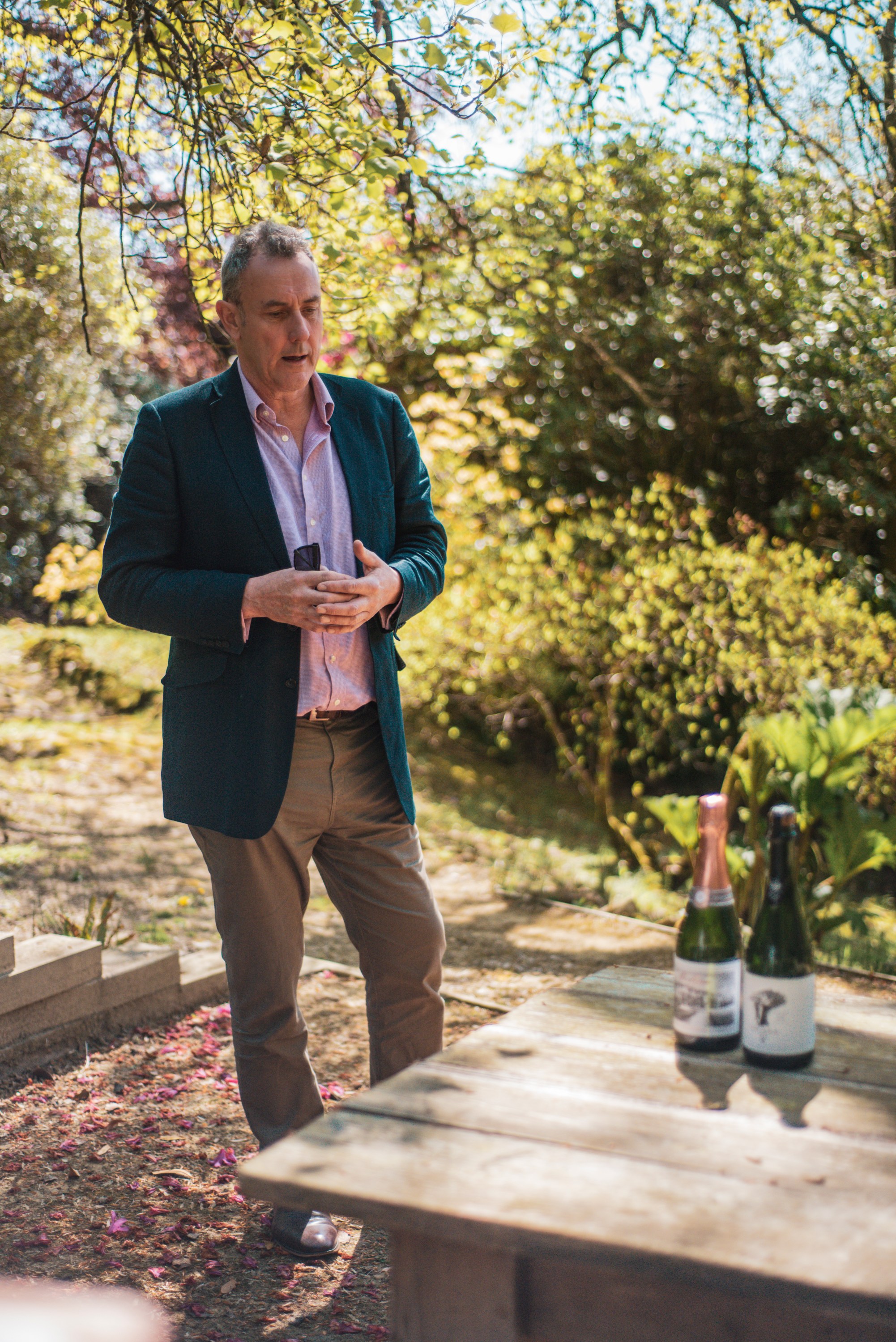
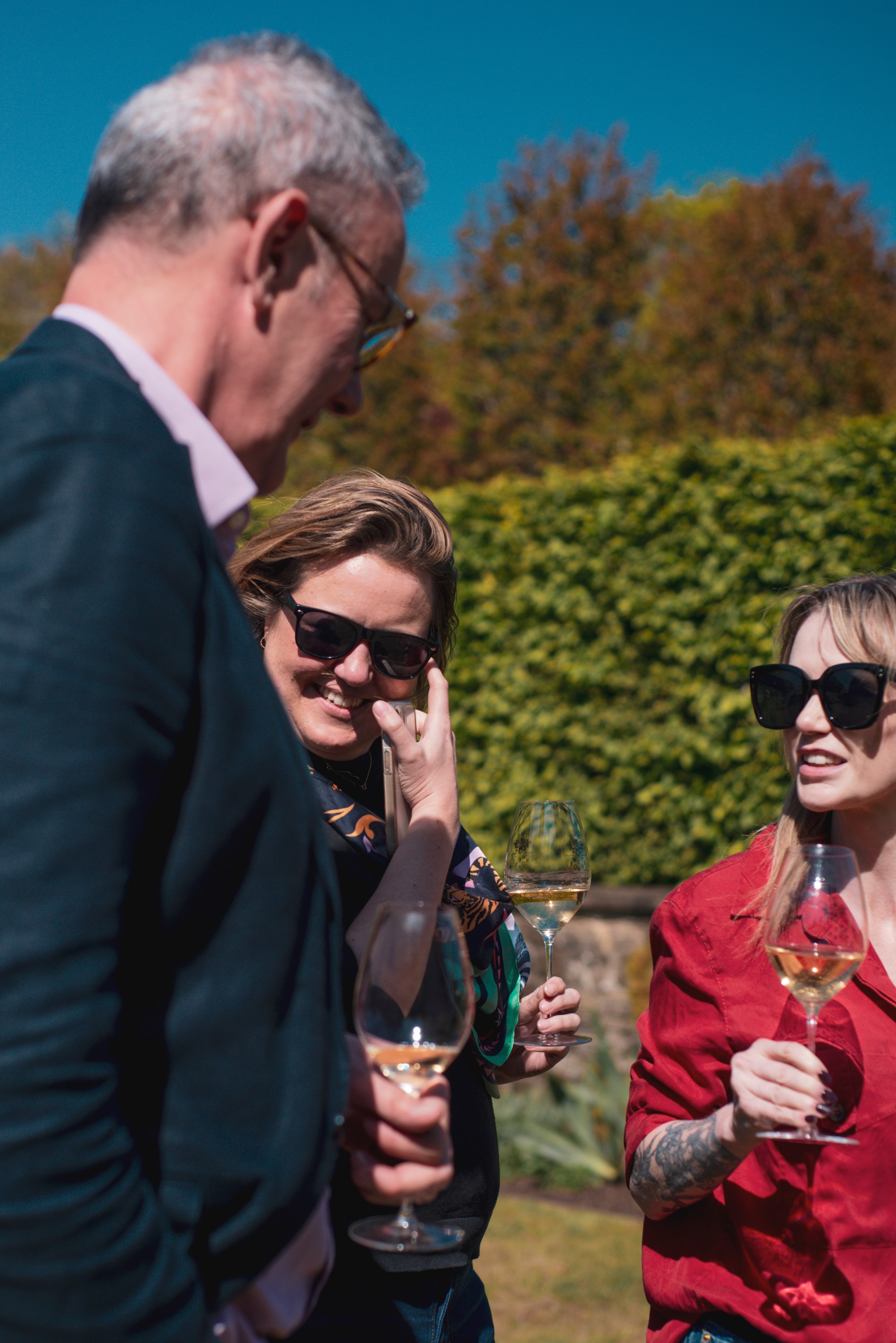
The tasting that followed was an opportunity to assess the 2025 base wines at their earliest stage, components still evolving but already demonstrating the freshness and structural precision that this site consistently delivers. With the 2022 vintage due for release later in the year, tasting the building blocks provides a useful context for understanding Weyborne’s winemaking logic. These are wines constructed for longevity, with acidity that is as much a product of altitude and terroir as of any cellar intervention.
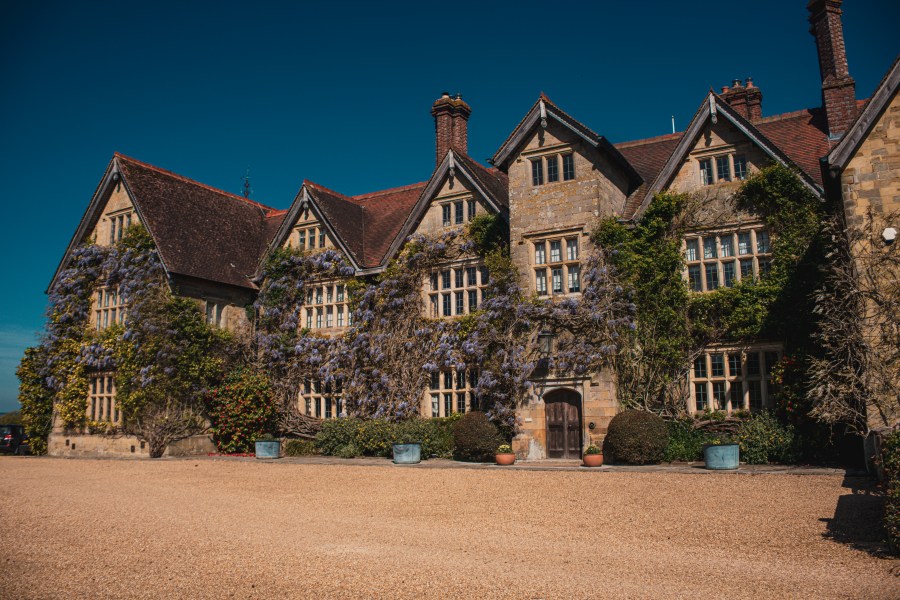
The Oriana label, named for a Tennyson poem with a direct connection to the historic Blackdown House on the estate, has secured listings at Harrods, Hedonism, Claridges and Ocado, among others. The brand is entering new markets and sustaining growth in a sector where shelf space and on-trade listings are hard won. The base wine tasting suggested the 2025 vintage will give Abric and his team further options as they continue to refine the house style.
Returning to Weyborne really allowed me to see the coherence of the operation. The site, the team, the production philosophy and the commercial strategy are all moving in the same direction. To revisit an estate and find it not only holding its ground but actively extending its reach is genuinely encouraging. Weyborne is a producer worth watching closely as the 2022 vintage approaches release and the 2026 season gets properly underway.