
Botrytis pressure has been lower than normal in most vineyards after an exceptionally warm, dry season so far, but the risk never disappears, so Hutchinsons agronomist Rob Saunders offers his advice for protecting crops through to harvest.
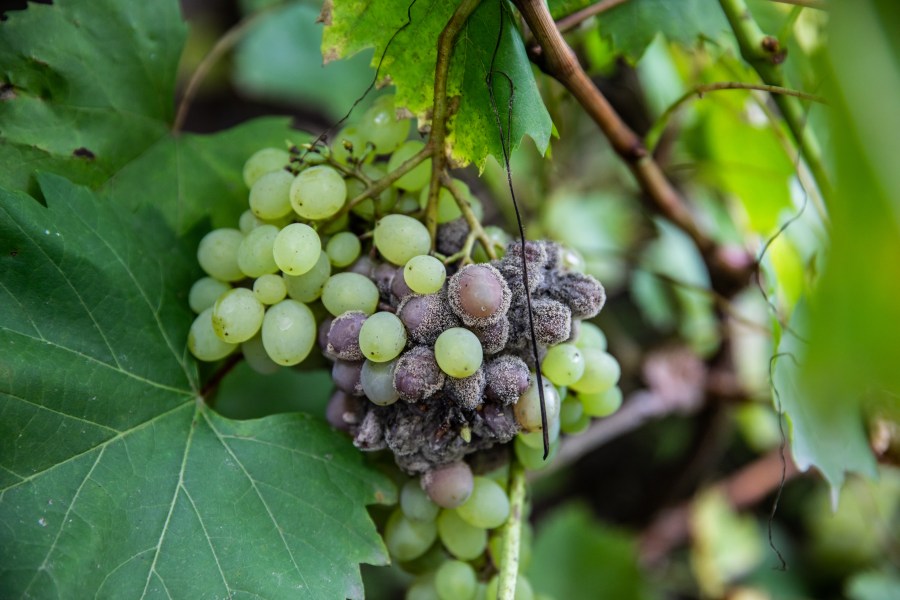
Botrytis bunch rot is an ever-present threat in UK vineyards, but fortunately this season, several factors have combined to reduce the risks as bunches ripen – at the time of writing at least.
One is the fact that flowering was completed relatively quickly in warm, dry conditions, meaning less opportunity for the latent infection that is caused when spores get into the scar tissue left when flower caps (calyptra) detach. That is not to say there is no latent infection lurking in bunches, and if conditions favour disease over the next few weeks, any that is there, could soon appear.
The optimum temperature for spore germination is around 18-21°C, although research shows some can germinate below 10°C or above 30°C. Surface moisture is essential though, which can be provided by rain, dew, mist, fog, or even just very high humidity.
Open bunches at less risk
Bunch architecture is another important driver of Botrytis pressure, as tightly packed bunches have poorer airflow and are more at risk of berries rupturing due to high turgor pressure, creating entry points for infection and releasing a sugary solution that fuels the Botrytis cinerea fungus.
By this stage in the season, there is little we can do to alter bunch architecture, which is driven by inherent varietal traits, and can be manipulated with the use of growth regulators, such as prohexadione, at flowering.
Temperatures at flowering also have an effect, with hot, dry conditions resulting in greater elongation of the rachis and more open bunches. We have seen this in some varieties this season, notably Bacchus, which could help reduce disease risk in those crops.
Management options
While some factors are beyond growers’ control, there are still a few key cultural and chemical tools we can use to help mitigate Botrytis risk late in the season, as summarised below:
- Leaf stripping around the bunch zone improves airflow, reduces humidity, and can also help ripening. Many growers want to retain some leaf cover to prevent sunburn over the main summer months, however by late August/early September, UV intensity is declining, so this should not be an issue. De-leafing can also make it easier for pickers to see the bunches, potentially improving harvest speed and efficiency too
- Controlling weeds and other vegetation in the undervine area similarly helps improve air movement and reduces the likelihood of conditions that favour disease
- Foliar calcium applications are thought to help reduce Botrytis risk, by strengthening cell walls and making berries less prone to splitting. Applications made pre-veraison are generally considered to be the most effective
- Apply a Botryticide to prevent disease spreading. There are three main options available, based on either pyrimethanil, cyprodinil + fludioxonil, or fenhexamid. In trials, we have seen they can all contribute something to Botrytis control, however the 21-day harvest intervals will preclude their use closer to picking
- Consider biological protection. With little or no harvest interval, biological products based on ‘good bacteria’ such as Aureobasidium pullulans or Bacillus amyloliquefaciens D747 can be a useful option for protecting bunches right up to harvest. The former works mainly by colonising the surface of bunches to outcompete pathogens, while the latter does the same, but also includes metabolites with anti-fungal activity. Recognise these are biological products, so applying them in the correct conditions is crucial, especially to maximise any benefits from spores colonising bunches.
Finally, it is worth noting that many vines are two to three weeks ahead of normal at the time of writing, due to the favourable conditions. There is variability across regions and within individual crops though, especially where primary, and in some cases, secondary, growth was hit by late frosts.
How growers manage any variability at harvest depends on individual decisions and winemaker requirements, but if the plan is to wait for everything to mature (rather than discarding under-ripe bunches), it will be essential to adequately protect those bunches that ripen first as acidity declines, sugar content rises, skins soften, and the natural antimicrobial compounds diminish.