
For more than three decades, integrated pest management (IPM) has been the cornerstone of sustainable vineyard protection, helping growers reduce pesticide use, preserve beneficial insect populations and make more informed crop protection decisions. But in some of the world’s leading wine regions, IPM itself is evolving.
Across Napa Valley, Oregon’s Willamette Valley and Germany’s Pfalz, vineyards are adopting a more adaptive approach built around continuous monitoring, predictive modelling and real-time environmental data. Rather than following a fixed programme, growers respond to what is happening in the vineyard as it happens. Known as Dynamic IPM, this approach is reshaping how vineyards manage pests, disease and an increasingly unpredictable climate.
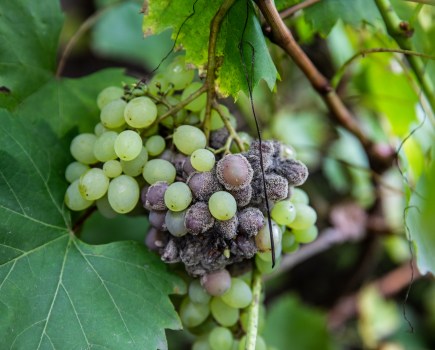
Traditional IPM has always relied on observation, but much of it remains governed by routine. Monitoring follows scheduled rounds, spray programmes are often planned weeks ahead and intervention thresholds change little during the season. Dynamic IPM replaces that rigidity with continuous feedback. Weather, vine phenology, soil moisture, canopy development, pest activity and beneficial predator populations all influence decision-making. As conditions change, recommendations change too. Disease risk is calculated from current vineyard conditions rather than the calendar, while pest thresholds rise or fall according to vine growth stage, weather and natural biological control.
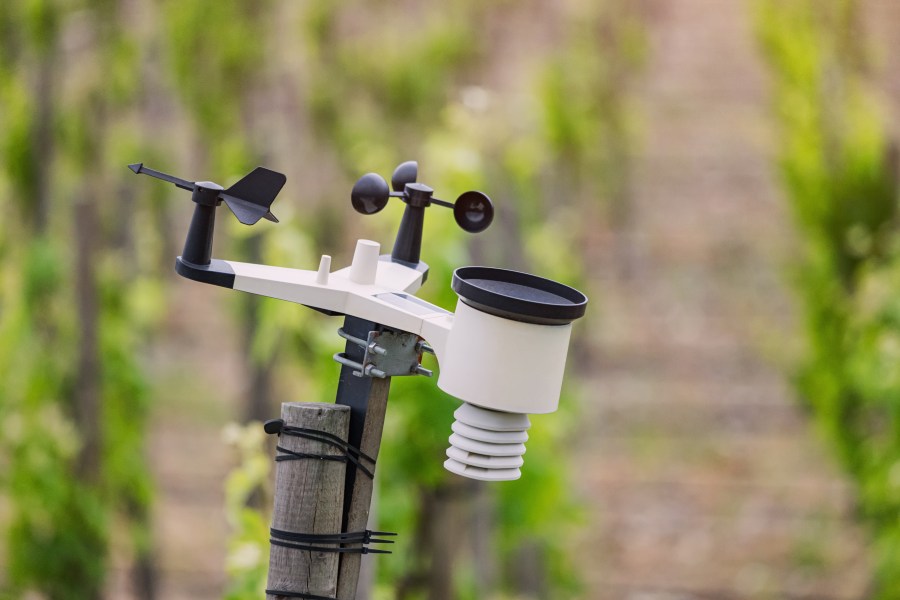
On-site digital weather stations are becoming the foundation of this approach. Modern systems continuously measure temperature, humidity, rainfall, leaf wetness, wind speed and evapotranspiration, feeding disease forecasting models throughout the day. Instead of estimating mildew risk from historical averages, growers can monitor infection pressure as it develops.
Across California and Germany, these systems allow fungicide programmes to expand or contract according to site-specific conditions, often reducing unnecessary applications without compromising disease control. UK vineyards are beginning to see similar benefits, particularly in seasons of rapidly changing weather. Soil moisture sensors provide another valuable layer of information. By influencing vine vigour, canopy growth and plant stress, soil moisture directly affects susceptibility to diseases such as downy mildew. Both digital weather stations and soil moisture probes are currently supported through the Farming Equipment Technology Fund, with 40% of eligible costs covered.
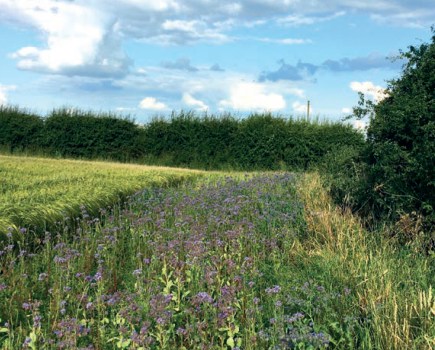
The next step is looking beyond the weather and into the canopy itself. Already established across Germany, Austria and northern Italy, canopy sensors measure leaf area index, canopy density, light penetration and canopy temperature – the microclimate where disease develops. Some vineyards now adjust spray intervals according to canopy density rather than calendar date, while the same information helps identify favourable habitat for pests such as Light Brown Apple Moth, which thrives in sheltered, humid conditions.
Perhaps the biggest shift lies in the use of adaptive thresholds. Traditional IPM relies on fixed numbers: a certain number of insects per trap or crawlers per cane triggers treatment. Dynamic IPM recognises that risk changes throughout the season.
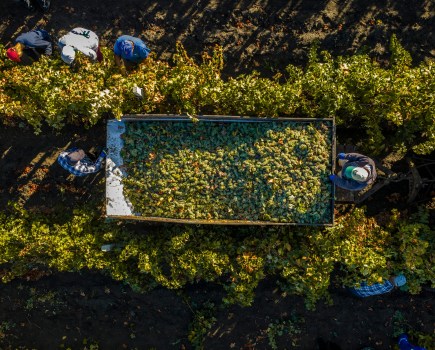
Early on, grapevine scale crawlers establishing on young tissue may justify rapid intervention. By mid-season, healthy predator populations may suppress the same pest levels below an economic threshold. As harvest approaches, thresholds tighten again to reduce fruit contamination risk. Light Brown Apple Moth follows a similar pattern, with trap thresholds changing according to vine phenology and parasitoid activity.
What makes dynamic IPM so effective is not any single sensor or forecasting model, but the integration of every available data source into one responsive system. Weather, soil moisture, canopy structure, pest monitoring, beneficial insects, vine growth and plant stress combine to create a continuously updated picture of vineyard risk.
The result is not greater complexity but greater precision: better timing, fewer unnecessary interventions, reduced reliance on crop protection products and, perhaps most importantly for UK growers, a management strategy capable of responding to whatever the season delivers. Traditional IPM tells growers what to do. Dynamic IPM tells them when to do it – and that distinction may define the future of vineyard crop protection.