

A study published in Antiquity investigated the modern use of Georgian Qvevri (large earthenware vessels used for vinification) as a way of better understanding the Roman practice of fermenting wine in dolium – a broadly comparable vessel in terms of shape and composition.
The material chosen for fermentation and maturation has a critical impact on the vinification process. The Romans understood this as well as contemporary winemakers do. By stopping, or limiting, the wine’s exposure to oxygen, or controlling the temperature of fermentation, for example, different materials offer the winemaker a direct means of making their chosen style as expressive as possible.
But how do English and Welsh winemakers choose which materials they bring into the winery? We found a range of case studies that highlight the different use cases for a range of fermenting vessels in a diversity of shapes and sizes. Wood gets plenty of mention for comparison along the way, so the focus here is stainless steel, concrete and Qvevri.
Read the full analysis of the comparative study of ancient and modern winemaking in Antiquity: https://tinyurl.com/Cambridge-antiquity
Stainless steel
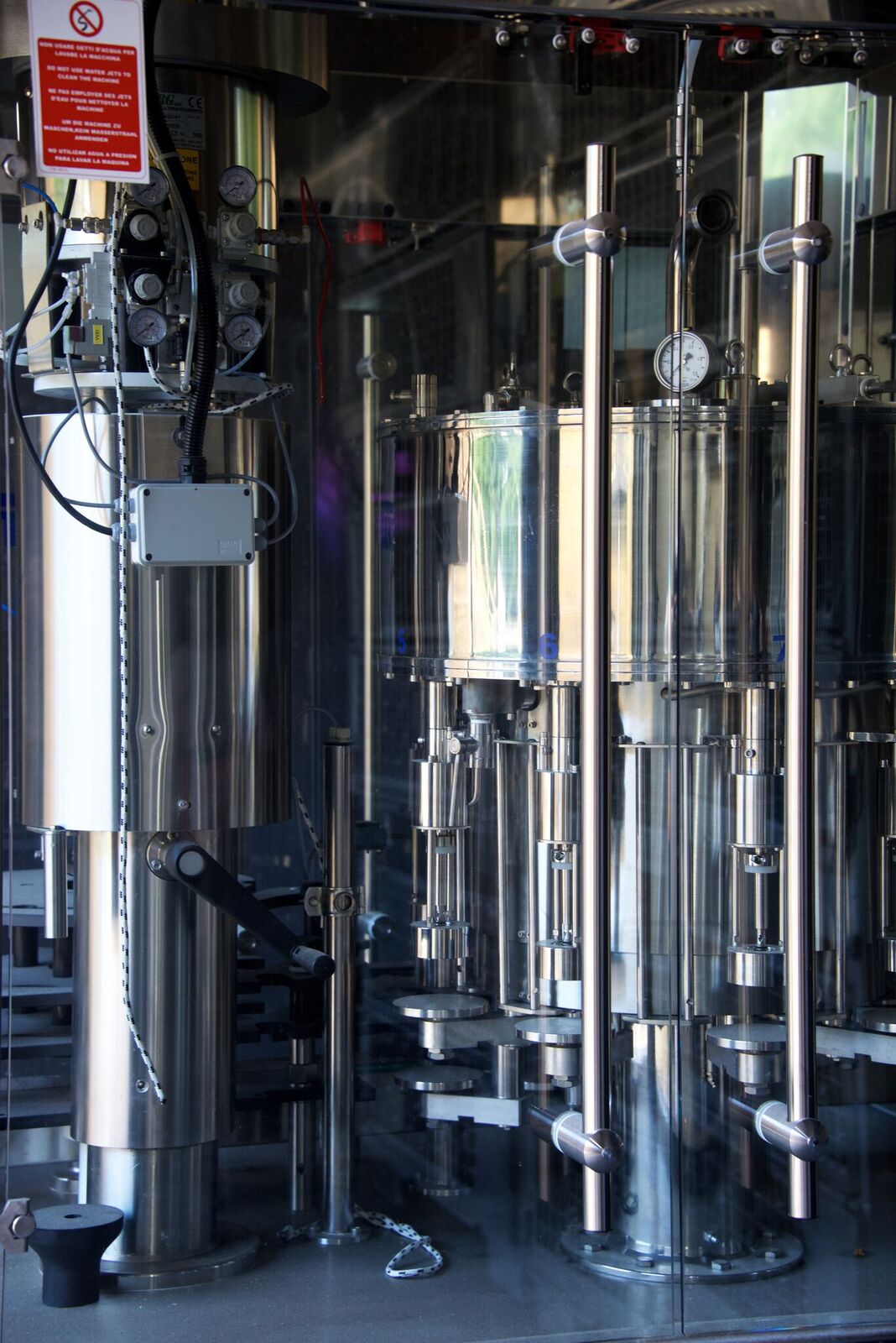
The first stainless steel vessels in winemaking were introduced in the 1950s and over the following decades, the material became ubiquitous in the winery. Tanks provide an oxygen-free environment, where the winemaker has total control. This creates the potential for maximum crisp, fresh fruit flavours to be extracted from the juice. Not to mention the fact that they are easier to use and clean, and much easier on the pocket, than wooden equivalents.
Greyfriars Vineyard, just outside Guildford in Surrey need that brilliantly true expression of their grape varieties not just for their own wines, but also for the English sparkling wines they make on behalf of Searcys, the award-winning and historic restaurateur and events caterer. Vineyard magazine spoke to Fraser Currie, the Greyfriars General Manager, about how stainless steel is employed in their winery.
Why do you choose to use stainless steel fermentation tanks?
Stainless steel helps preserve fruit versus using barrels, in our opinion, so it can be more beneficial for certain styles of wine – both still and sparkling. Some of our stills, for example, are very fruit-driven and we find stainless steel better at preserving this.
What are the benefits of stainless steel over other materials?
Fermenting in stainless steel is significantly cheaper, and easier to manage. The cost of a tank is clearly expensive but it lasts forever. Managing ferments is significantly easier as well. For example, a 90hL ferment in tank would be the equivalent of 40 barrels. So instead of checking one tank where the temperature is displayed for you, you need to check the SG and temperature manually for each barrel, which is a significant amount of time during harvest.
Also, controlling the temperature is significantly easier in tank. However, this does come at cost with regards to fuel usage and carbon footprint. Cleaning a stainless steel tank is also significantly easier compared to barrels. Barrels also need replacing – tanks don’t.
Does stainless steel have any drawbacks?
There isn’t any micro-oxidation, which can be beneficial in challenging years as it can help to take off the acidity and help with mouthfeel. You also can’t provide the oak complexity you get with barrels – you can use oak chips but they tend to be quite one dimensional versus the real thing.
Do you employ a mixture of fermentation vessels for
particular wines?
Our prestige wines tend to be fermented and aged in oak, alongside certain still wines. Our reserve wines are also often aged in oak. The prestige sparkling wines we find benefit from oak aging as it helps with the mouthfeel and adds complexity. Aging reserve wines in oak also helps with NV Cuvées as they add a softness and aged character allowing them to be drunk younger but still allowing more of a fruit character to be retained.
Some sparkling wines, for example our NV Rosé, wouldn’t necessarily benefit though as these are designed to be drunk younger with a more fruit-forward profile.
Some still wines also benefit from time in oak. For example, our still Chardonnay is typically aged in oak, after fermentation in stainless steel, as it helps with the mouthfeel and provides some added complexity. That’s more of a stylistic thing though.
We would never use brand new oak as this can often overpower the fruit. We tend to treat oak as a seasoning, as opposed to the dominant factor. Our vintage Rosé often has a blend of stainless steel and oak, meaning we are able to create a blend that gets the best of both worlds – fruit preservation and freshness vs. micro-oxidation and that oak character/seasoning.
Concrete
Concrete is not a new material in the winery, with the first example of its use dating back to the 19th century in Bordeaux. The neutral material has a similar property to stainless steel, in that it doesn’t impart any flavour to the wines fermenting within. However, the semi-porous nature of concrete also allows a degree of micro-oxygenation to take place within the vessel – one of the key draws of using wood. In this way, concrete offers a rare middle ground that is highly prized by the winemakers that use it.
Flint Vineyard in Bungay, Norfolk, has perhaps more concrete vessel capacity than any other winery in the UK, although it is by no means the only material that they deploy during fermentation. Winemaker and Director Ben Witchell spoke to Vineyard magazine about his experiences with the material.
What concrete vessels do you have in the winery?
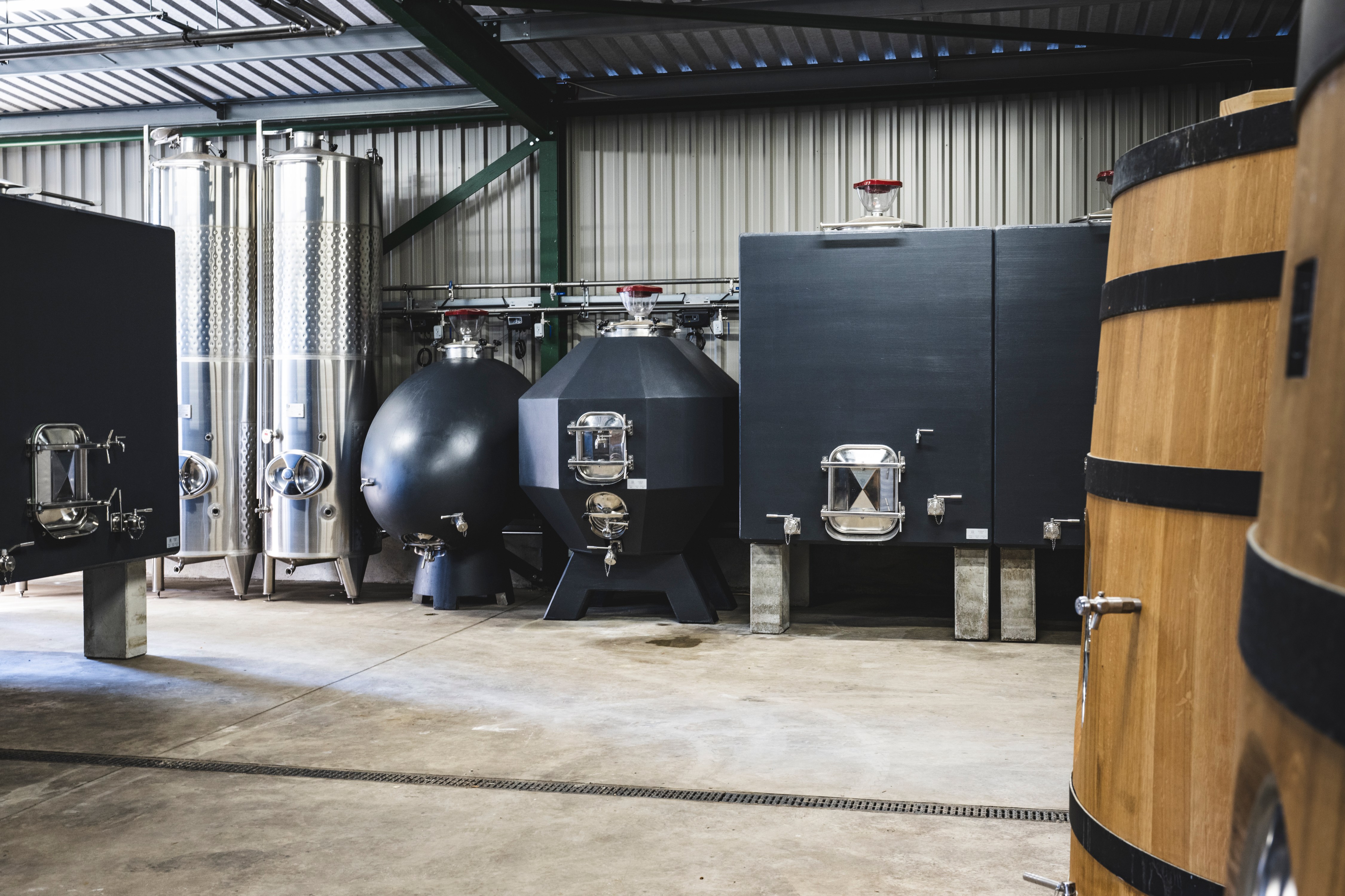
We have got mainly cubic concrete, ranging from 40 hectolitre tanks up to 80 and we use them for both red and white fermentations. And then we also have a couple of smaller eggs which are about 20 hectolitres each. They are really interesting.
We first got square tanks and the eggs around two years ago. Then we got some more square tanks because we just wanted to augment how much wine we were putting in concrete.
We will probably get some more concrete eggs in the future. At the moment we are learning a little bit more about exactly what they bring to the wine.
What prompted you to invest in concrete initially?
We have got two sides to Flint. First, we are making a Charmat method wine which is very fresh and kind of fun. That is all made in stainless steel. And then the other side is trying to make more serious, textural still wines.
For example, I have been experimenting with Bacchus in neutral oak for a Bacchus Fumé. We are not trying to make an oaky Bacchus, just trying to get something a bit different. We have done some research into Bacchus, working with Camden BRI and Geoff Taylor to look at the aromatics in Bacchus.
Working with oak we found that it really changes its character over time. The ability to let the wine breathe and develop a bit more openly in vessels of a porous nature, like wood and concrete, really works. We looked for ways that we could get development on the wine without necessarily having the oak contact all and so we started working with concrete and we do smaller batches in eggs.
We use concrete for most of our stills, except our Chardonnay-dominant wines, where we use just barriques. But we ferment all of our red – Précoce – in concrete.
I worked in Morgon, Beaujolais, as a winemaker for a couple of years and we were fermenting all of the Gamay in concrete and then putting it into barrel. At Flint we are doing very similar things to what I was doing in Beaujolais. I like the effect that the concrete has compared to stainless steel, to me it just opens up the wine a little bit quicker. I think that is particularly important for a variety like Bacchus.
What impact do the eggs have, compared to the cubic tanks?
The idea is it’s got no flat surfaces, so it doesn’t let the wine lees settle as they would do in a stainless or a concrete tank with a flat bottom. There is some science you can look up that explains how the dynamics work – but there is also a load of hocus pocus with eggs and stuff like that. But it definitely keeps the lees in suspension, so it can help with the texture.
With all of our wines, we’re really interested in texture, aromatics and letting the wine breathe. Particularly with Bacchus, which does have a tendency to show slightly reductive traits so we like to give it plenty of opportunity to interact with oxygen. And I think the concrete helps it on its journey.
If you are making wine in an egg, it gives you a different stance. You approach the wine differently. It is as much psychological as anything else. You think ‘I’m just going to let that wine be a little bit more. I’m gonna not worry about it.’ And that affects the outcome. We have had some really lovely results.
Is this a part of a wider approach to experiment with materials?
We have oak foudres, concrete squares, concrete eggs, amphorae and quite a lot of barriques as well. So all of our stills are a mixture of those. It is all about trying to give yourself options and not constraining yourself to one single massive tank where you have to put all the juice.
We ferment all the fruit separately, we respect all the different plots and vineyard areas that we are picking from and keep the fruit separate. We take different juice fractions; we split the press from the free run… We can segment it all, ferment it with different yeast strains and we end up with a real mixture of interesting things and the vessels that are used are probably one of the key influences in creating a point of interest and complexity.
What are the downsides to using concrete?
They are harder to clean because they are concrete and not stainless steel. People went to stainless steel because it is a very smooth surface, so they are easy to clean. They are also easier to work with because they are easy to drain.
Our concrete tanks are a bit more fiddly. They are harder to rack in and out of. They are not lined with epoxy or anything, so there are certain sterilising agents that you would probably want to avoid and you have got to be a bit careful with very high pressure water.
We have to cure the concrete tanks every year, with a cycle of pumping around tartaric acid to neutralise the natural alkali that is present in the concrete. If you didn’t do that the alkali in the concrete would react with the wine acids and you would end up with a very flabby wine.
They are more expensive too – about five times more expensive than the stainless steel equivalent. So they are completely impractical but it is the impractical things in wine that give you those small incremental improvements that make it worthwhile.
People associate concrete with industrial processes. What they don’t realise is that it is the opposite. It is a boutique way of making wine because it is a lot harder to do. It would be a lot easier just to use stainless steel.
Flint Vineyard sourced their vessels from the Italian supplier Concrete Dreams. Concrete Dreams supply beautiful, boutique tanks which they deliver and install for their clients. Their tanks are totally customisable in terms of shape, size and how the fittings are located.
Photos: © @sibuckphoto / Flint Vineyard
Earthenware
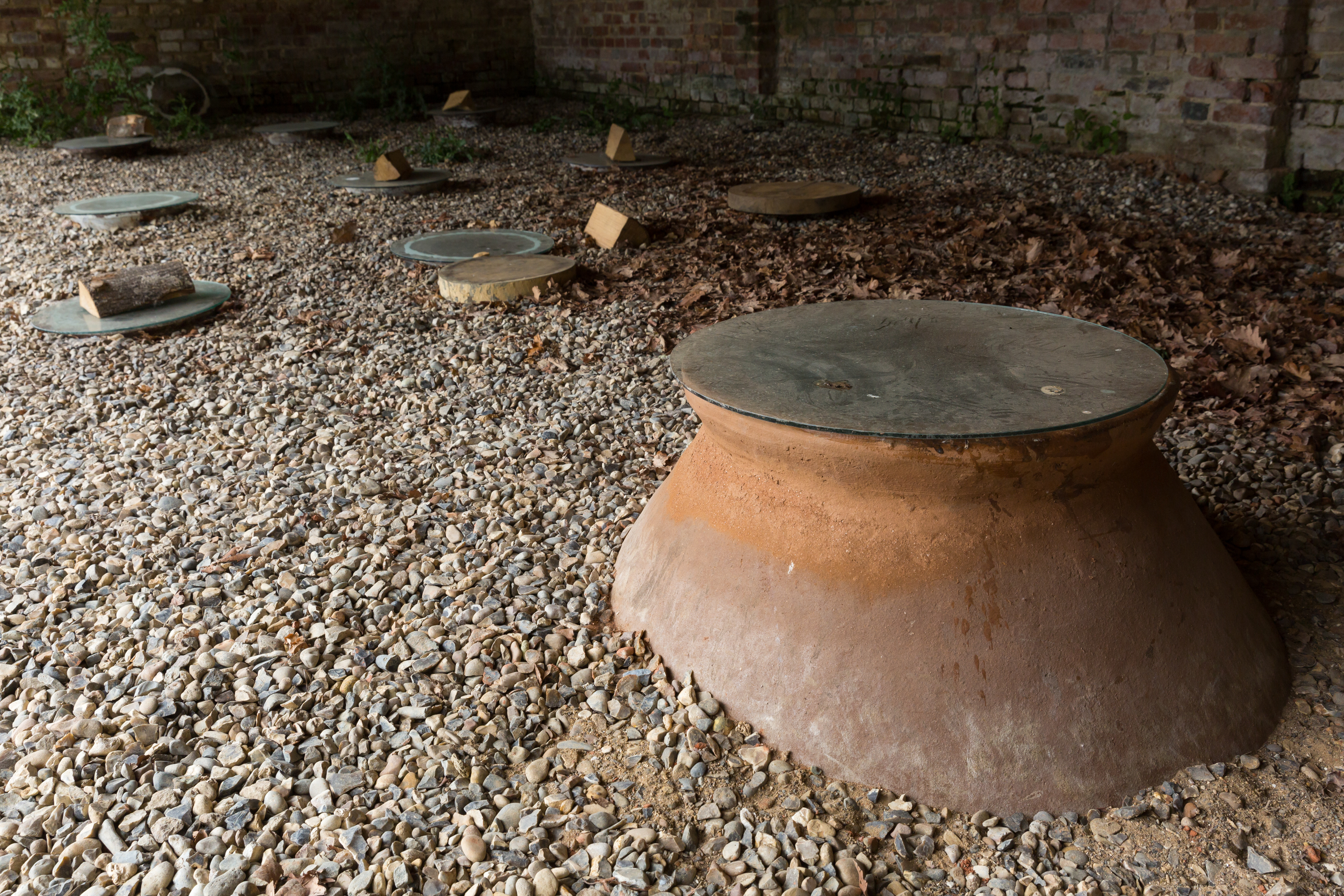
While fermentation in amphorae has become increasingly well known here in the UK, using Georgian Qvevri is perhaps less common. However, these vessels actually date back over 8000 years and therefore pre-date Greco-Roman winemaking. They were buried in the ground to give stable temperatures.
Georgia has a rich and ancient winemaking tradition with more than 400 indigenous grape varieties – and 95% of its production comes from those local grapes. Its wine industry has ebbed and flowed for millenia. Most recently plantings resumed under the Georgian Soviet Republic from 1921, before collapsing under Gorbachev’s anti-alcohol campaign in 1985.
Since independence in 1991, their vineyards have been rebuilt. The grapes are pressed and then sealed into the Qvevri with the skins and stalks for several months of quiet fermentation. These techniques are recognised on the UNESCO list of Intangible Cultural Heritage. Tierney Beames, Wine Manager at Tillingham Wines in East Sussex picks up the story about how they use theirs.
How did Tillingham come about its Qvevri?
The Qvevri have been at Tillingham from before my time here, and were brought in by the first winemaker. They are the genuine article, imported from Georgia. The company that acted as distributor for Tillingham wines works with quite a few Georgian producers, and I think they were instrumental in helping to get them over to the UK. It is all about having a diversity of vessels to offer different expressions of a wine, whether it ends up as a stand alone Qvevri wine, or is used as a blending component.
What wines do you use them for and why?
Really everything! At Tillingham there are 21 varieties, and quite a few of them have seen time in Qvevri over the years, and the same with styles. Base wines for sparkling, whites, skins, rosé, red. Their use often comes down to having a blending component to balance something else out in a finished wine, regardless of style. But when the wines are good enough standalone, it’s also nice to highlight them as a single expression of a vessel which you do see with some of our wines.
What is the impact on the finished wine?
From my perspective it is all about evolution and texture in the wines. The wines that go through fermentation in Qvevri evolve quite quickly as it is a fairly oxidative environment. They can often seem six months ahead of the same wine that has been raised only in steel.
And then the texture – a lovely fine grained earthy feel on the palate. With cool climate fruit, they are a great way to help add complexity and structure in the wines. That also has to be balanced with fruit that may have less body than that from other, warmer, places, so judging the time the wine spends in them is important.
We are starting to realise that, for our wines, they are great for initial fermentation and the earlier stages of elevage, but broadly speaking about six months in Qvevri is the sweet spot. I’m more and more drawn to wines that are made in this rudimentary way, but show in a very elegant way.
What are the downsides to using Qvevri?
It has to be the logistical/practical elements. Moving the wines, cleaning etc. They don’t have any valves to remove wine or to drain them after cleaning so all of those things are quite slow and laborious. Ours are set in sand in large boxes, so they are fairly straightforward to move around now which certainly helps.
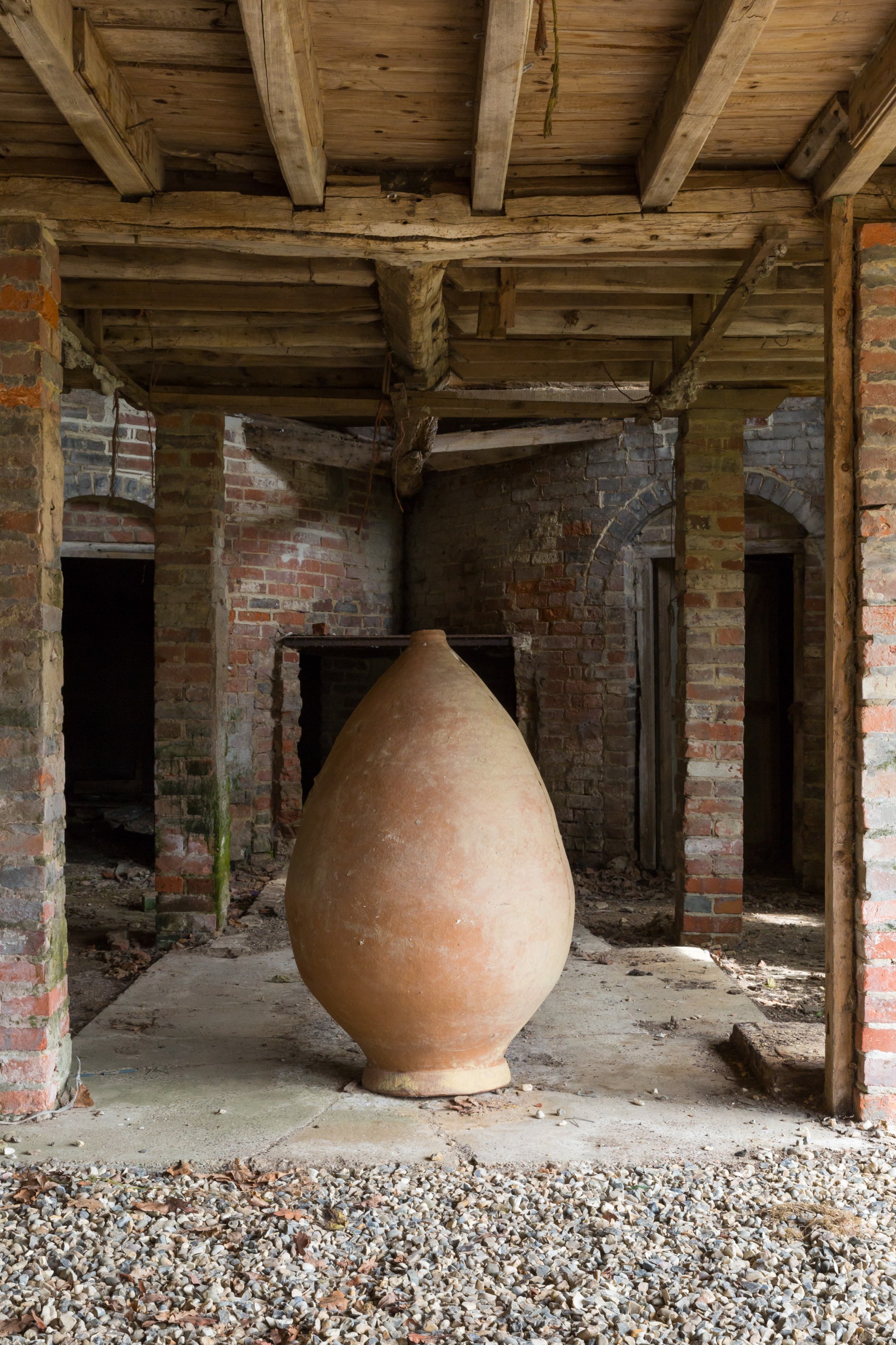
Photos: © Martin Apps, Countrywide Photographic
For more like this, sign up for the FREE Vineyard newsletter here and receive all the latest viticulture news, reviews and insight