
With fertiliser prices remaining high, many UK vineyards are taking a closer look at how nutrients are applied and where savings can be made. Organic materials such as compost and farmyard manure are increasingly being used to supplement or replace bagged fertiliser, particularly in lighter soils where maintaining structure and moisture can be a challenge.
To ensure an efficient application, it is important to be able to control both the conveyor speed and the opening of the rear door. Different materials, and even variations in moisture content within the same load, can significantly affect how compost or farmyard manure flows through the machine. Having the ability to adjust settings allows growers to match application rates to conditions, helping achieve a more even spread and avoid over-application or under-application.
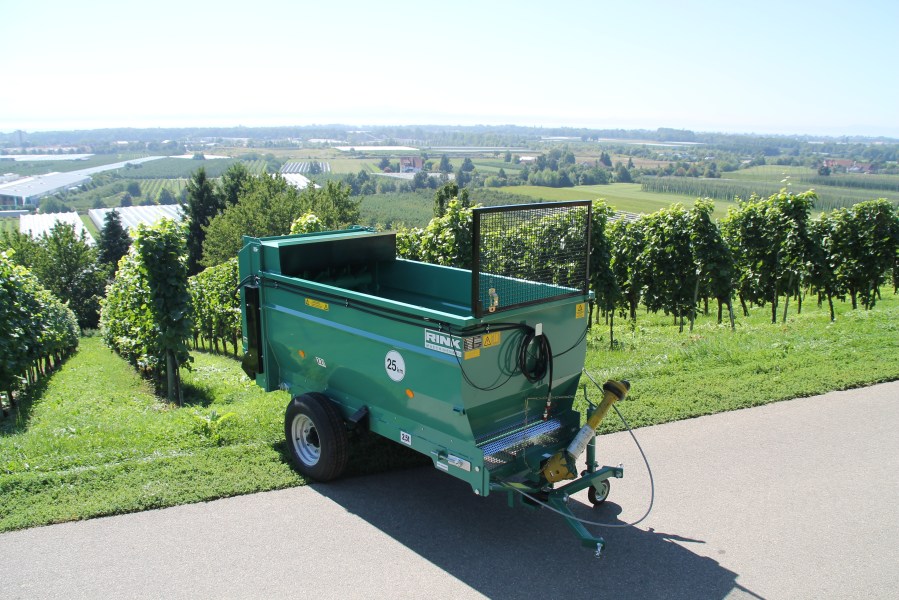
Applying these materials accurately can be difficult in vineyards, where row spacings are tight and access is limited. The Rink muckspreader is designed for this type of work, offering a great level of control making it easier to adapt to changing material and field conditions allowing growers to apply organic matter directly along the row in a controlled and consistent way.
Alongside the potential cost savings compared with traditional fertiliser use, applying organic materials can help build soil organic matter and improve soil carbon levels over time. In UK conditions, this can support better soil structure and water retention, while also encouraging stronger root development and overall vine health.
By allowing growers to apply compost and manures efficiently across larger areas, machinery such as the Rink muckspreader offers a practical way to integrate organic inputs into vineyard nutrition programmes while reducing reliance on increasingly expensive fertiliser.
Vitifruit Equipment offers these machines for sale or hire.
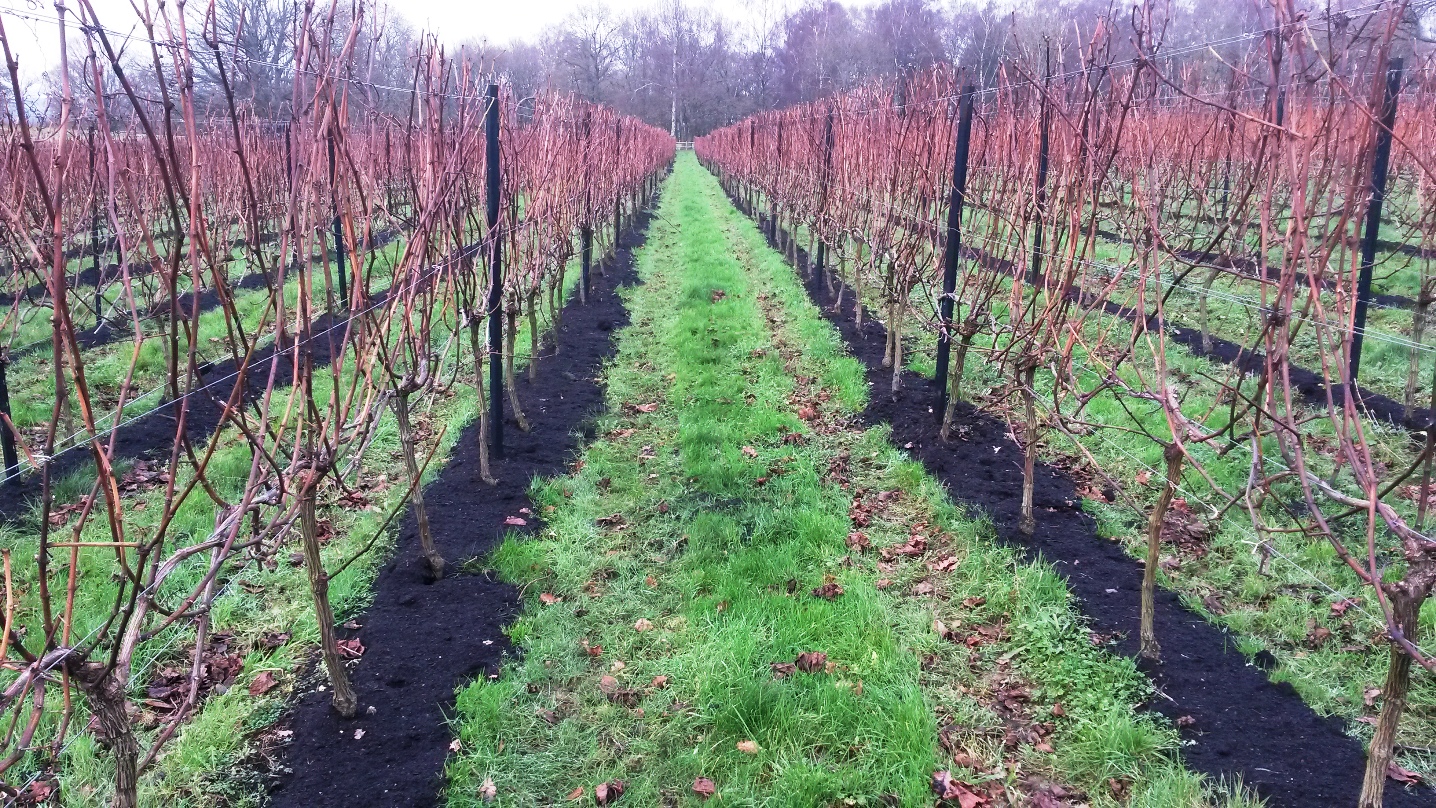
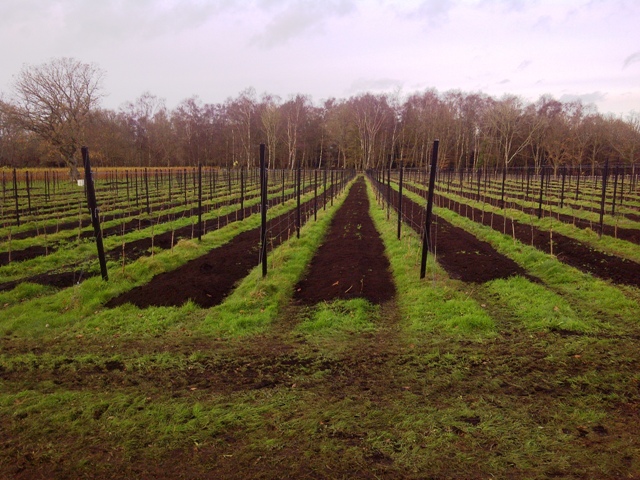
In the rows
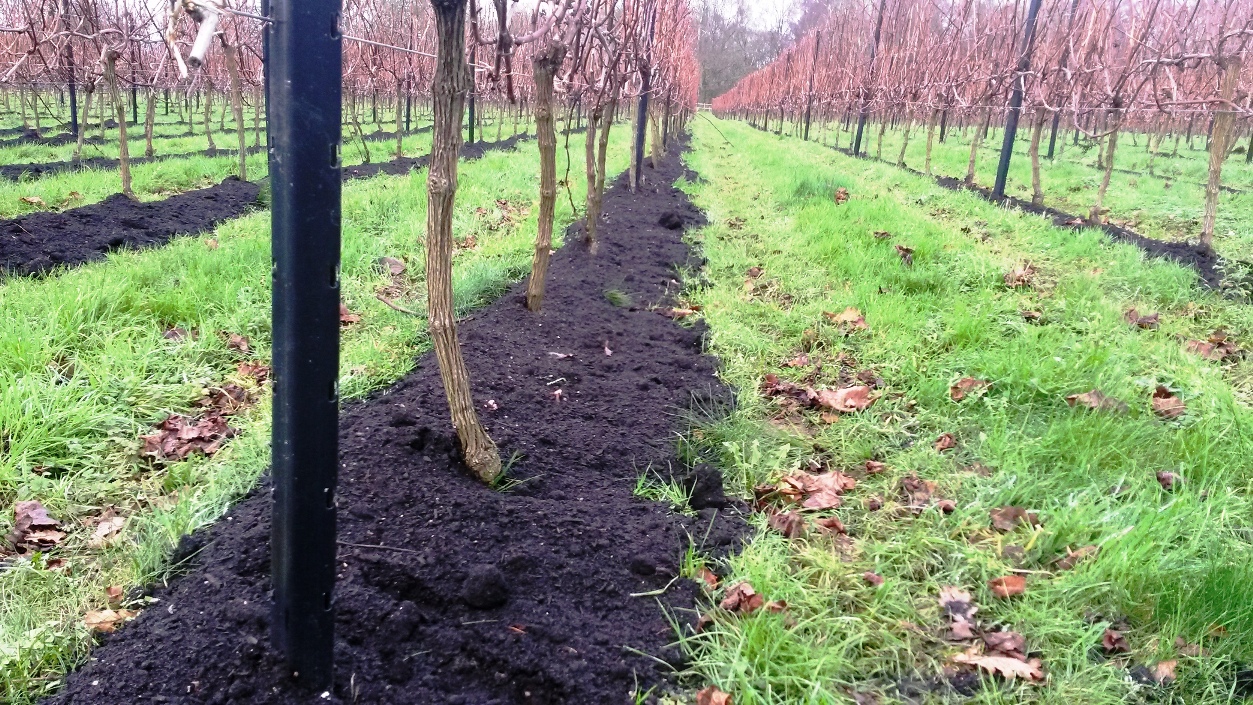
Under vine