
Receiving your vines for planting is a milestone moment. After months of planning, the vineyard is finally becoming real. But this stage also carries risk. How vines are handled in the days before and during planting has a direct impact on establishment, survival rates and early growth.
Having established over 300 vineyards and planted over five million vines, VineWorks knows that good handling at this stage makes a lasting difference.
Here are some practical tips for getting your vines ready for planting.
Plan before the vines arrive
The work starts before delivery. You need a clear plan for storage, handling and planting so that vines move efficiently from lorry to ground with minimal stress.
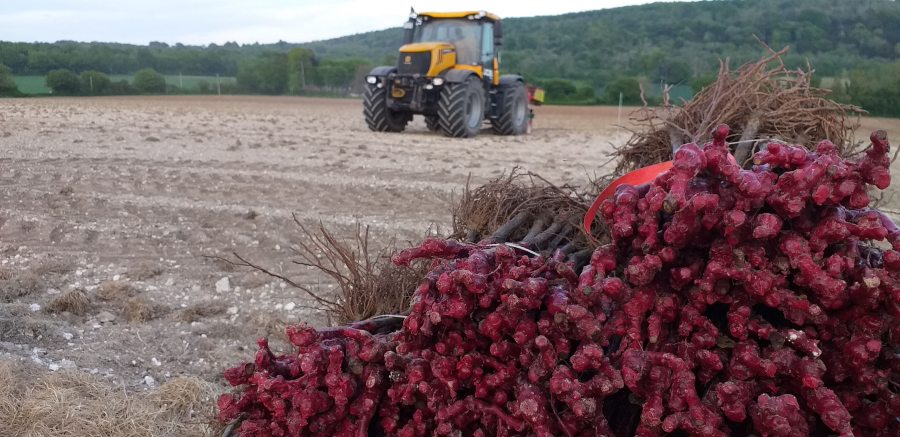
Ideally, vines should go straight into a cold store set at around 4°C. This keeps them dormant and in good condition until planting. Even a short delay can affect viability, particularly in warm or dry conditions.
Resist the temptation to open the packaging. Vines are packed to maintain humidity and protect them in transit. Opening bags too early can lead to drying out or premature activity, reducing planting success.
Keep handling to a minimum
There are various approaches to pre-planting treatments, from trimming roots to soaking or dipping.
However, advice from many European nurseries is clear: keep intervention to a minimum. Every additional step increases the risk of introducing pathogens or damaging the plant.
In most cases, the best approach is to remove vines from cold storage and plant them as soon as possible. If there’s a delay, keep them shaded, cool and out of direct sunlight.
Timing matters
Vines should ideally be planted immediately after leaving cold storage, or within 24 hours. Beyond this, the risk of dehydration and reduced vigour increases.
This means your planting operation needs to be well organised. Ground preparation, marking out, labour and machinery should all be ready in advance.
Matching planting method to the site
The choice between machine and hand planting is usually dictated by scale, but handling considerations apply to both.
Machine planting offers speed and consistency, with outputs of up to 15,000 vines per day. Vines are fed directly into the planter, reducing handling time.
Hand planting suits smaller or irregular sites but involves more handling, so care is needed to prevent roots drying out between bundles and planting positions.
Whichever method you choose, keep vines cool, covered and only bring out what you can plant within a short window.
Getting the planting right
Even with good vine handling, poor planting technique can limit success.
Roots should sit naturally, without bending or bunching. Good soil-to-root contact is essential, but avoid over-compaction.
Soil condition at planting is critical. Wet or poorly prepared ground can create smeared or polished trench walls, particularly on clay soils. These restrict root penetration and can hold water.
Open trenches are another common issue, leaving roots exposed to air pockets and reducing establishment rates.
Both problems are avoidable with the right conditions, but once planted, they are difficult to correct.
Don’t ignore the basics
It’s easy to focus on planting speed, especially on large sites, but consistency is just as important. Poorly planted vines will lag behind, creating variability across the vineyard.
Simple checks during planting (i.e., depth, alignment and firmness) pay dividends later. A well-organised team and good supervision make a significant difference.
A short window, long-term impact
Planting is a short phase in the life of a vineyard, but it has a lasting effect. Decisions made over a few days will influence vine performance for decades.
Handled well, vines establish quickly and develop strong root systems. Handled poorly, they struggle from the outset, leading to higher replacement rates and uneven growth.
There’s no shortcut here. Careful storage, minimal handling, good timing and attention to detail remain the fundamentals.
Get those right, and you give your vineyard the best possible start – one vine at a time.