

Vines require sixteen essential nutrients to ensure their normal growth. Some are obtained by the leaves from the air or absorbed through the roots from water – like carbon, hydrogen and oxygen. The rest come, in the main, from the soil.
Nutrients are split into two groups – the macronutrients that the vines use in relatively large quantities, and the micronutrients, that are only needed in very small amounts, despite being just as vital for plant development.
Within the macronutrient category, grapevines need Nitrogen, Phosphorus, Potassium, Calcium, Magnesium and Sulfur for proper growth. When it comes to micronutrients, Iron, Manganese, Copper, Zinc, Boron, Molybdenum and Chlorine are necessary in small, but nonetheless critical, amounts.
Lacking in one or more of these elements can lead any vine to deficiency symptoms visible in the leaves or reduced growth and yield.
Nutrition for young vines
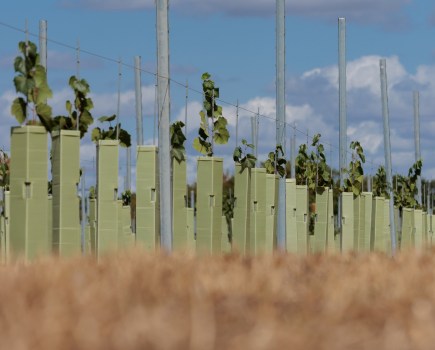
Laying a good foundation for the nutrition of immature vines begins before the plants even reach the soil. A new vineyard needs the soil to be analysed before planting to determine not just whether fertiliser needs to be added, but also to evaluate the structure and drainage of that soil to give the young plants the best possible start.
Thanks to their small root system and low levels of carbohydrate reserves, young vines are initially very slow growing. This cannot be rectified through the application of fertiliser – and indeed it can do more harm than good to apply nutrients to the grapevine in its first season. Generally speaking, given a well prepared soil with an appropriate pH level, the plants should do quite well left to their own devices for the first couple of years, nutritionally speaking.
Poor growth, in opposition to the usual slow growth, of younger vines is more likely to stem from issues with competition from weeds, lack of water, early overcropping or a lack of effective disease controls, rather than lack of access to nutrients in most soils. It is only as they come into adolescence and maturity that the application of additional nutritional support may be of tangible benefit.
Nutrients for mature vines
Once vines mature, a more cohesive programme of fertilisation may begin, if required. This should be undertaken with an evidence based approach, using visual examination of the plants coupled with soil and plant tissue analysis to identify areas and types of nutritional deficiency.
A blanket approach to the addition of nutrients can do just as much harm as the absence of fertiliser – resulting in inadequate growth or excessive vigour, poor fruit set, interruptions in the efficiency of leaf photosynthesis and reduced fruit quality. Some nutrients, like boron, can cause significantly more harm than symptoms of its deficiency causes.
Nutrition requirements
Nutrients are taken up by vines in different quantities and proportions depending on their growth stage. This reflects the needs of the physiological processes that are taking place.
From budbreak until fruit set, there is the highest demand for phosphorus and nitrogen. This helps the canopy to be properly established, while setting a good foundation for the berries to develop.
As the grapes grow and ripen, there is an increased demand for potassium. Magnesium and calcium are also vital in this stage because of their contribution to the overall quality of the fruit.
After harvest, a balanced nutritional intake is required so that the plant can store sufficient carbohydrate in preparation for the next season of growth.
The limiting factor
Total levels of nutrients don’t matter as much as how much those nutrients are actually available to the vines for use. This availability is affected by a whole host of factors. They include the composition of the soil; its pH, levels of organic matter and texture, alongside the action of moisture, light, temperature and the activity of microbes in the plants’ environment.
By impacting the chemical form of the nutrients and how well they are able to move through the soil and be absorbed by the plants’ roots, all of these factors change levels of nutrition availability. Soil pH is perhaps the most critical in terms of how soluble and readily available nutrients are.
Too much acidity and some nutrients lose their value or even become toxic. Too much alkalinity and some nutrients become harder for the plant to access them. This is why soil sampling is so important when laying down a plan for nutrition in the coming growing season.
A plant cannot grow more than the level allowed by the growth factor that is present in its lowest amount. In other words, the chain is only as strong as its weakest link. Any restriction on a key requirement for growth – be that a certain nutrient, the correct temperature or access to water – will limit the amount of growth that is possible. This is the limiting factor. It must be identified in order to enhance plant growth.
A vine could be enjoying absolutely textbook conditions but simply lack access to enough, let’s say, Manganese. Since Manganese is used in photosynthesis, the vine’s growth will still be restricted until that singular deficiency is addressed, even though all of the other growth factors are perfect for the plant.
The limiting factor is another reason why carefully planned, evidence-based nutritional strategies are important, rather than a blanket or even hands-off approach.
Soil sampling
In an established vineyard, soil analysis will provide reports about potential problems like salinity or acidity, as well as giving evidence that previously applied fertiliser has moved into the root zone as required, so that the plants are able to make use of it.
As stated above, establishing pH levels is probably the most important reason for undertaking soil tests, although they are useful for flagging any excessive concentrations of particular nutrients too. However, soil sampling has its limits. It is unlikely that representative samples across the depth of the vines’ roots can be accurately taken, and the chemical composition of soil may change dramatically over just a small area. It is important, therefore, to combine soil sampling with other methods of analysis when assessing the nutritional needs of the vineyard, to build up a more informed picture.
Visual inspection
Observing and interpreting the symptoms of nutrient deficiency in the leaves of vines can be confusing because much of the information available in the form of field guides doesn’t acknowledge the differences between cultivars or the age of the leaf itself.
That said, there are a number of general observations that can be made which would trigger further investigation in order to establish the underlying cause. For example, if vine leaves start to change colour outside of their normal autumnal process, this is a sign that there is a problem with nutrition.
The shape and hue of the discolouration gives clues as to which particular nutrient is lacking. The location of the damage is also an indicating factor – potassium and nitrogen deficiencies, for example, may show first in the older, lower leaves, as they move easily around the vine and are therefore easily moved from older plant tissues to where the need is more desperate – like the growing shoots or ripening berries.
Conversely, iron does not move around the entirety of the vine so easily. When it is lacking, it is the younger, upper areas of the vine which will start to yellow first.
Plant tissue analysis
While taking visual clues from the vines themselves is a helpful diagnostic, the sad truth is that by the time deficiencies begin to show themselves, the damage to overall growth and yield may already be well underway.
Plant tissue analysis is the best way to establish the nutrient levels in the entire plant. This may be done as a trouble shooting measure, or to monitor levels before a problem arises, but either way it is an effective way of creating a crop of data that can be used long into the future as part of the ongoing monitoring of the health and success of the vineyard.
Experts suggest that early flowering is a key time for tissue testing, a practice that may be particularly beneficial for newly established vineyards with adolescent vines to ensure that they have the support they need as their root structure develops.
Testing may also be undertaken during veraison as a back up measure, to ensure that the nutritional plans laid earlier in the year have been effective and to help fine tune plans for the application of nutrients for the best possible outcome during harvest.
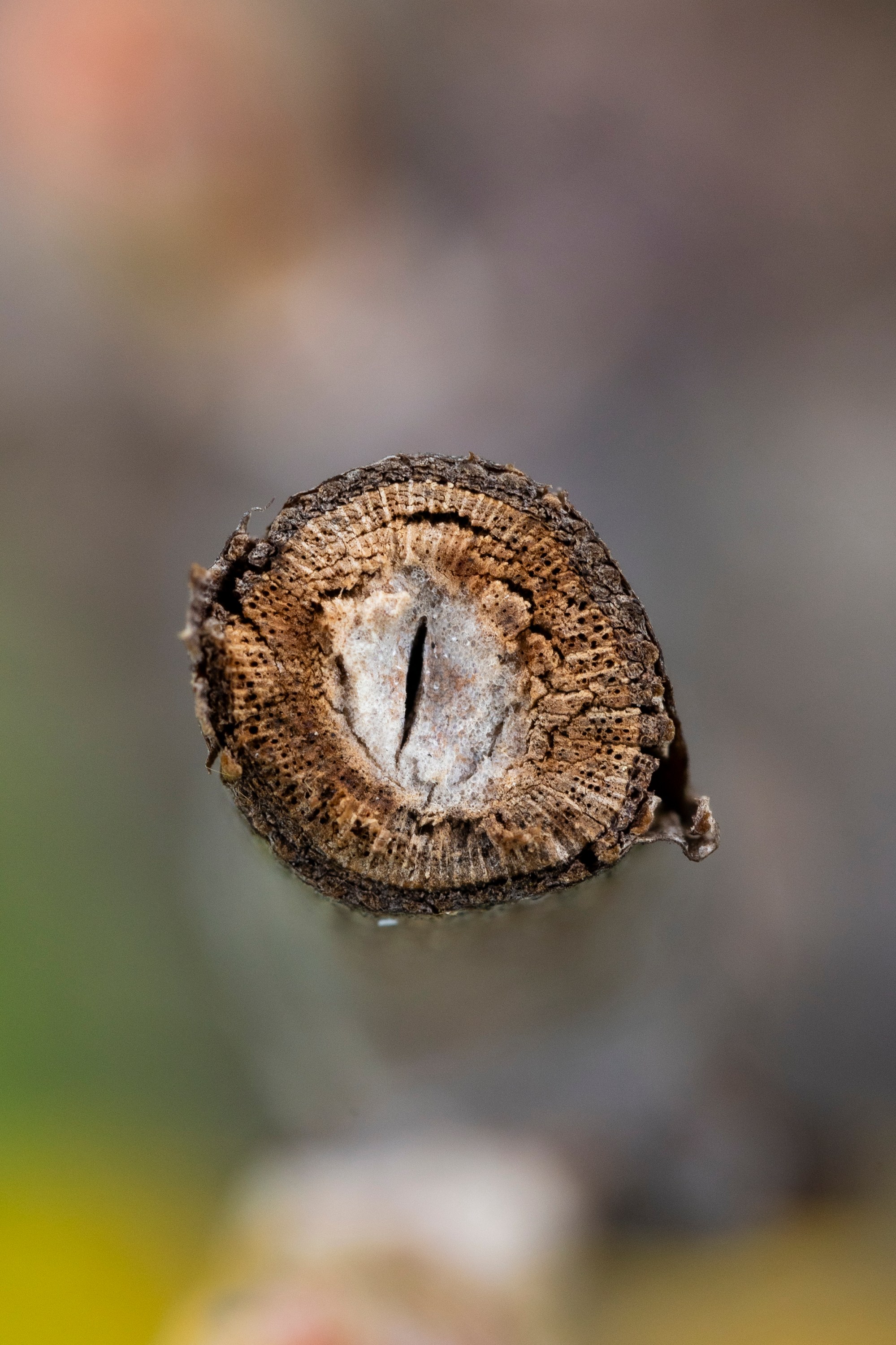
The methodology adopted for plant tissue analysis is usually petiole analysis – sampling the stem that connects the leaf to the shoot. During flowering, the results are most likely to give a more accurate reflection of the plant’s nitrogen status, as well as being early enough to make adjustments to plans that will take effect during the same growing season.
Comparative SAP analysis
While petiole analysis looks at the nutrients that are stored in the leaf, SAP analysis measures the real time nutrient availability in the vascular tissue – the xylem and phloem. It is a relatively newer form of testing that is now available on the market.
SAP analysis compares the nutritional level in both old and new leaves on the same vine, giving a basis for comparison within the same plant. The testing offers information about the levels of available nutrients – not just the levels of nutrients which may be stored, but not actually be available to the plant immediately.
The results of this form of testing will help to find those hidden hungers within the plants, but also diagnose other problems, like an excess of nitrogen, for example. Perhaps a report shows higher levels of nitrogen in the younger leaf. The plant is meeting the higher demand in that new growth at the expense of the old – suggesting that there is a lack of nitrogen overall.
The more samples that are taken over the season, the more that data can be plotted over a graph to monitor the way the vines are coping within their environment. While one comparative test a year is helpful, three or even five across the season will give a more complete picture.
Disease management
As well aiding in all the important physiological processes of growth through the year, good nutrient management allows vines to be better prepared to ward off disease. Access to calcium, potassium and silica, for example, can help vines to stand firm, to some extent, against powdery mildew because the plant uses the nutrients to strengthen itself.
Meanwhile, Boron deficiency is seen to be one of the most serious non-parasitic diseases in grapevines because it causes very few seeded berries to actually set – a condition known as millerandage, or hen and chicken. This can have a dramatic impact on yield.
Vine density and nutrition
The density of vine planting, expressed as the number of vines per hectare or acre, is just one in a myriad of factors that impact on the way a vine grows and the quality and size of its yield. Like all of these factors, planting density requires careful consideration to achieve the desired outcomes in style, quality and price in the finished wines.
The accepted wisdom suggests that having vines planted at high density will ultimately increase grape quality. Since the vines are in increased competition, their yield will be smaller. However, the lower amount of smaller grapes that are produced have a better skin to juice ratio will increase the quality of each individual grape.
The evidence to back this up has not really been scientifically proven, but is more anecdotal. Certainly, competition amongst plants does not necessarily drive roots down, as they will intermingle within a shared space.
Where soils are naturally fertile, excessive vine vigour can be a problem – bringing excessive shading, reduced airflow and a breeding ground for disease. Here, some commentators suggest that a lower vine density can be beneficial. It allows the vines to grow larger and reduces excessive vigour as the vine has to work harder to support its increased size and cropping capacity.
On the other hand, some experts suggest that where a vineyard experiences too much leaf growth, a higher density planting is going to help curb that growth to some extent. It just goes to show that balance in all things is the ultimate requirement.
Fertiliser management
A fertiliser is any compound that contains one or more chemical elements that can be placed on or within the soil, or applied directly to the plant, to support its regular growth. Those chemical elements may be inorganic or organic, natural or synthetic.
Increasing concerns about costs, but also efficiency and environmental impact have led to increasing care in the application of fertilisers of all kinds. While broadcasting a fertiliser across the soil surface may be a fast, and therefore financially efficient, method of applying chemical elements across a wide area, its effectiveness may be limited by the type of soil.
Foliar application is therefore usually preferred to give a more targeted approach to applying micronutrients. Direct absorption of nutrients through the leaves can offer a more immediate way of correcting any nutritional deficits. These applications tend to be scheduled when the plants are in active growth and their nutritional demands are at the highest point within the annual cycle.
The efficiency of the uptake of foliar applications can be impacted by environmental conditions – if the leaf stomatas are closed, the efficiency of the nutrient absorption will be reduced. Having moderate temperatures, low wind conditions and high humidity levels at the time of spraying will all contribute to the effectiveness of the treatment.
Vine health directory
For more advice and support with vine nutrition, the following companies offer comprehensive services for commercial vineyards:
- Agrii
Gloucestershire
www.agrii.co.uk - Agronomic Services Ltd
North Yorkshire
www.agronomics.co.uk - Hutchinsons
UK-wide, based in Cambridgeshire
www.hutchinsons.co.uk - ICL Growing Solutions
Suffolk
www.icl-growingsolutions.com - Vinecare UK
East Sussex
www.vinecareuk.com - VineWorks
East Sussex
www.vine-works.com
For more like this, sign up for the FREE Vineyard newsletter here and receive all the latest viticulture news, reviews and insight