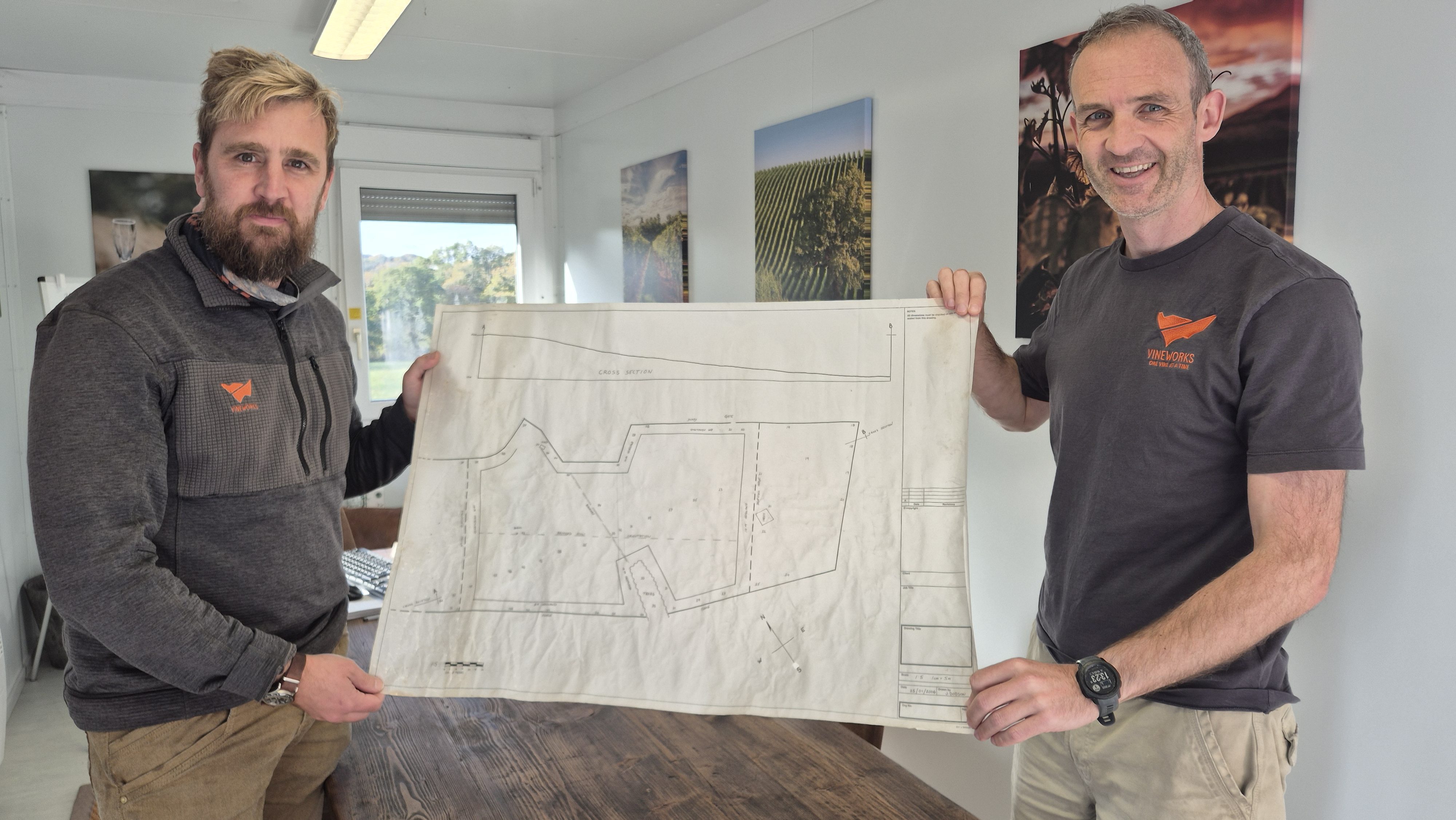

After two decades of remarkable growth, the UK wine industry is entering a new chapter. But with new opportunities and challenges ahead, is the appetite for planting vineyards still there? Drawing on 20 years of experience, VineWorks’ James Dodson and Will Mower reflect on how the industry has changed and what the future might hold.
Take us back 20 years. What was vineyard establishment like when VineWorks started?
James: It was a very different industry back then. There were around 350 registered vineyards, most of them fairly small, with only a handful operating commercially on a larger scale. English sparkling wine was starting to make its mark internationally, and more people were becoming interested in planting vines.
Our first project was a 3.5-hectare vineyard in Sussex, planted with Pinot Noir and Chardonnay. In those days, you could have several different contractors involved, and most materials came from Europe. Wooden trellis posts were common, and vineyard layouts were designed around standard agricultural tractors.
What has changed most in vineyard design?
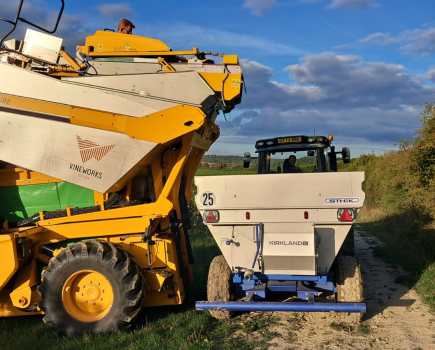
James: Machinery has made a huge difference. Twenty years ago, we needed wider rows for conventional tractors. Now, specialist vineyard machinery allows us to plant at higher densities.
We have also moved from wooden to metal trellising and increased headlands from eight to twelve metres to give machinery more room.
It is not just about equipment. We have learned to think about how a vineyard will actually operate. Access, infrastructure, running costs and what happens to the grapes all matter from day one.
What does establishing a vineyard look like today?
Will: For me, it all starts with the soil. You can have a fantastic vision for a vineyard, but you need to understand what is happening beneath your feet first. We look at soil depth, structure, organic matter, pH and nutrient levels before deciding on rootstocks or ground preparation. Every site is different, and sometimes doing less is actually better.
In 2024, we introduced strip cultivation for mechanical planting using our VitiTill. It means we can plant vines while leaving more than half the field uncultivated, helping to protect soil structure where possible.
Are today’s vineyard owners approaching things differently?
Will: Definitely. People come to us much better informed, often with a clear idea of the wines they want to make. That is great, but we also have to be realistic about what their land can deliver.
Sometimes that means saying a particular variety isn’t the right choice, even with our warming climate.
It is also important to think beyond the vines. Water, power, storage and machinery access might not be the exciting bits, but they are essential.
What is the biggest lesson you have learned?
James: Getting the site selection right. In the early days, there was sometimes a tendency to plant simply because the land was available.
We have learned just how important those early decisions are. Soil preparation, drainage, rootstocks and layout can affect a vineyard for decades. It is better to get things right at the start than try to fix problems later.
And looking ahead, what excites you about the next twenty years?
Will: There is plenty to be excited about. A changing climate could open up new sites and opportunities for different varieties. Rootstock selection will become even more important, particularly as we think about drought resilience and maintaining fruit quality.
James: We are also seeing growing interest in still wines, particularly Chardonnay and Pinot Noir. There is real potential, although we know how much one vintage can differ from the next. And with advances in machinery and vineyard technology, the way we establish and manage vineyards will keep evolving.
Will: Ultimately, it is about creating vineyards that can adapt, produce great fruit and remain commercially viable for years to come.
Finally, what advice would you give someone thinking about planting?
James: Think twenty years ahead!
Will: Plant to make wines you believe in, wines you’re proud of and, importantly, wines people want to buy. Get to know your land, take good advice and build something you will still be proud of in twenty years’ time.
As the UK wine industry continues to grow and evolve, VineWorks looks forward to playing its part in shaping the next chapter, one vine at a time.