

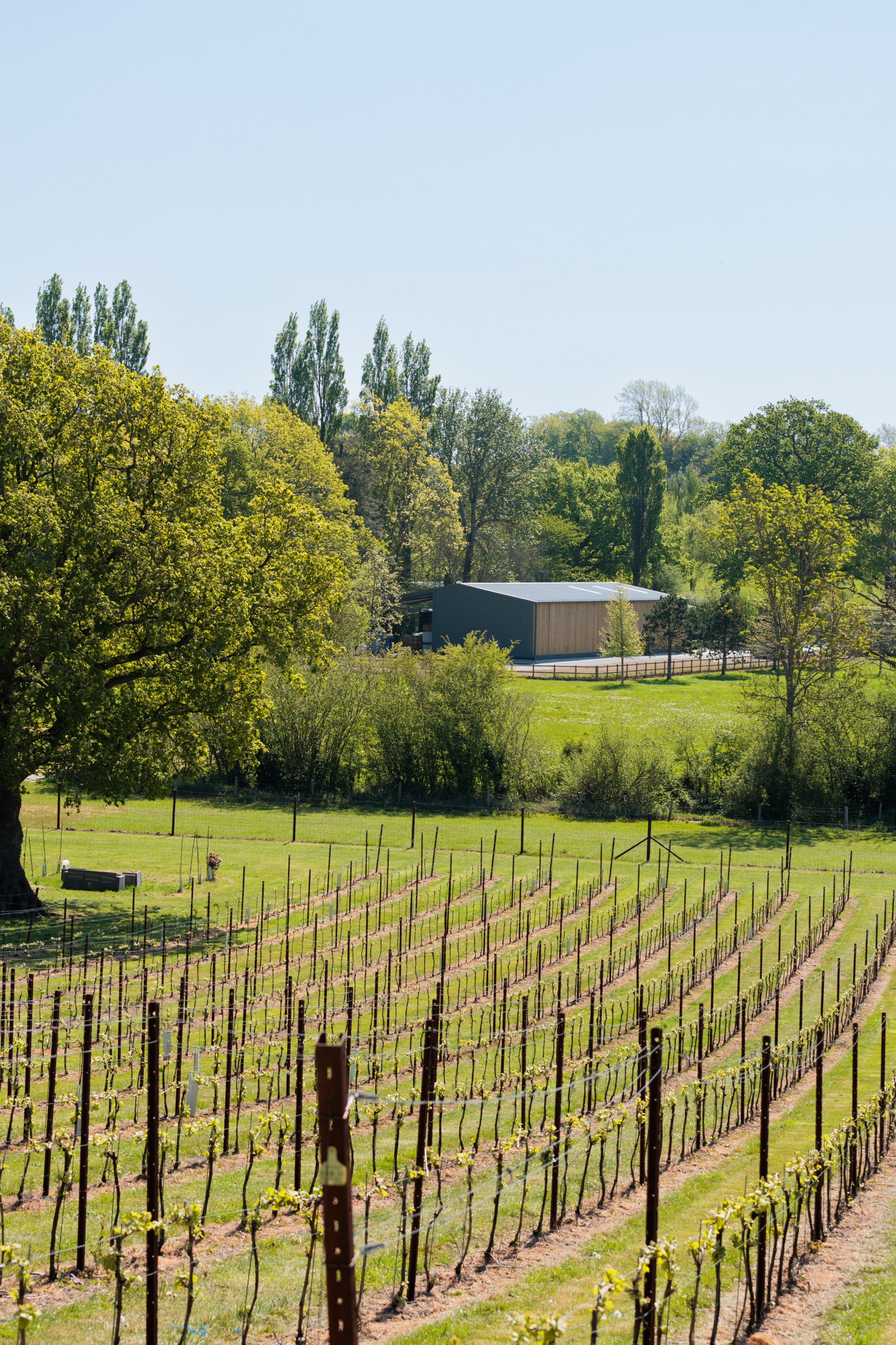
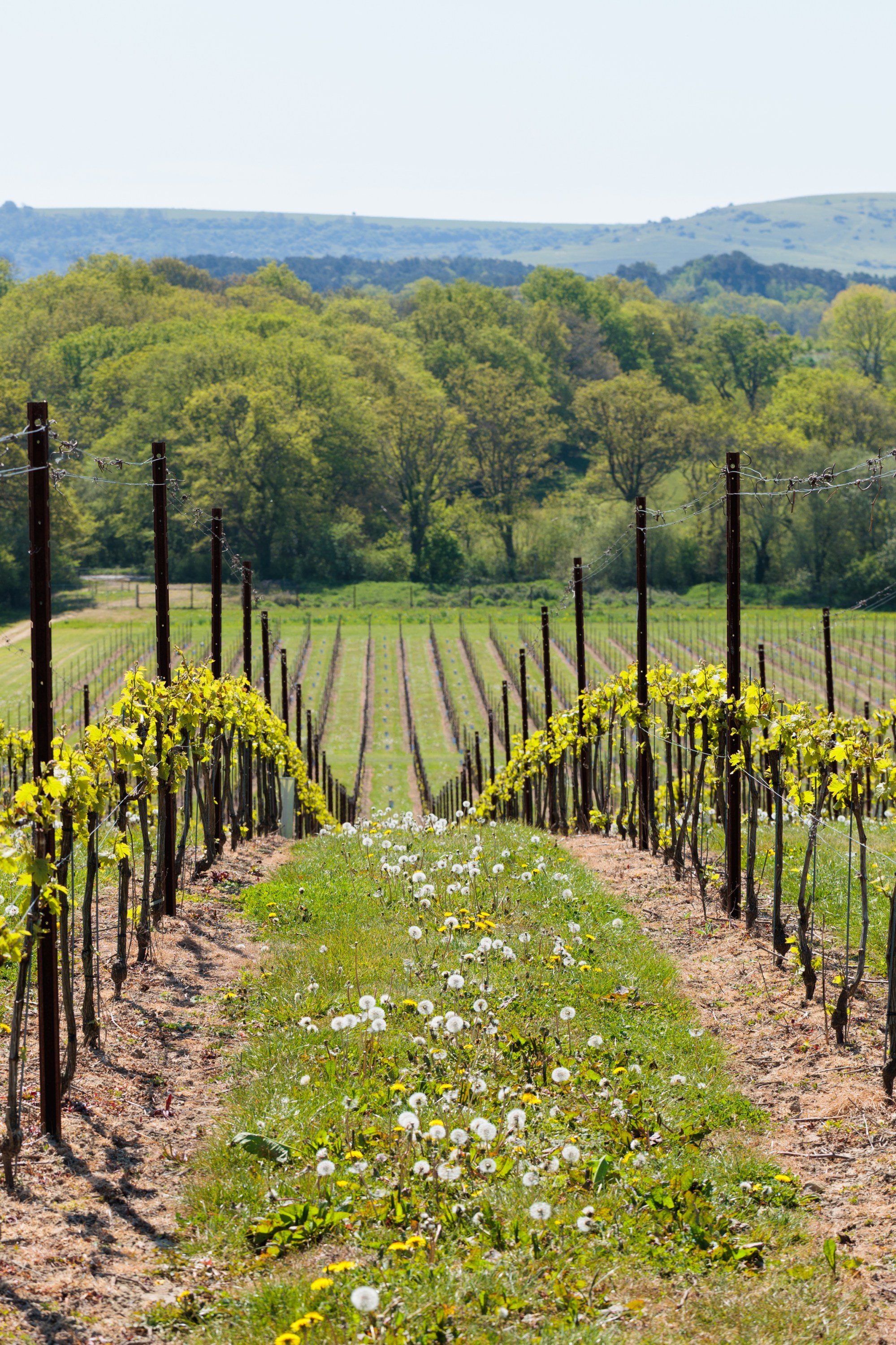
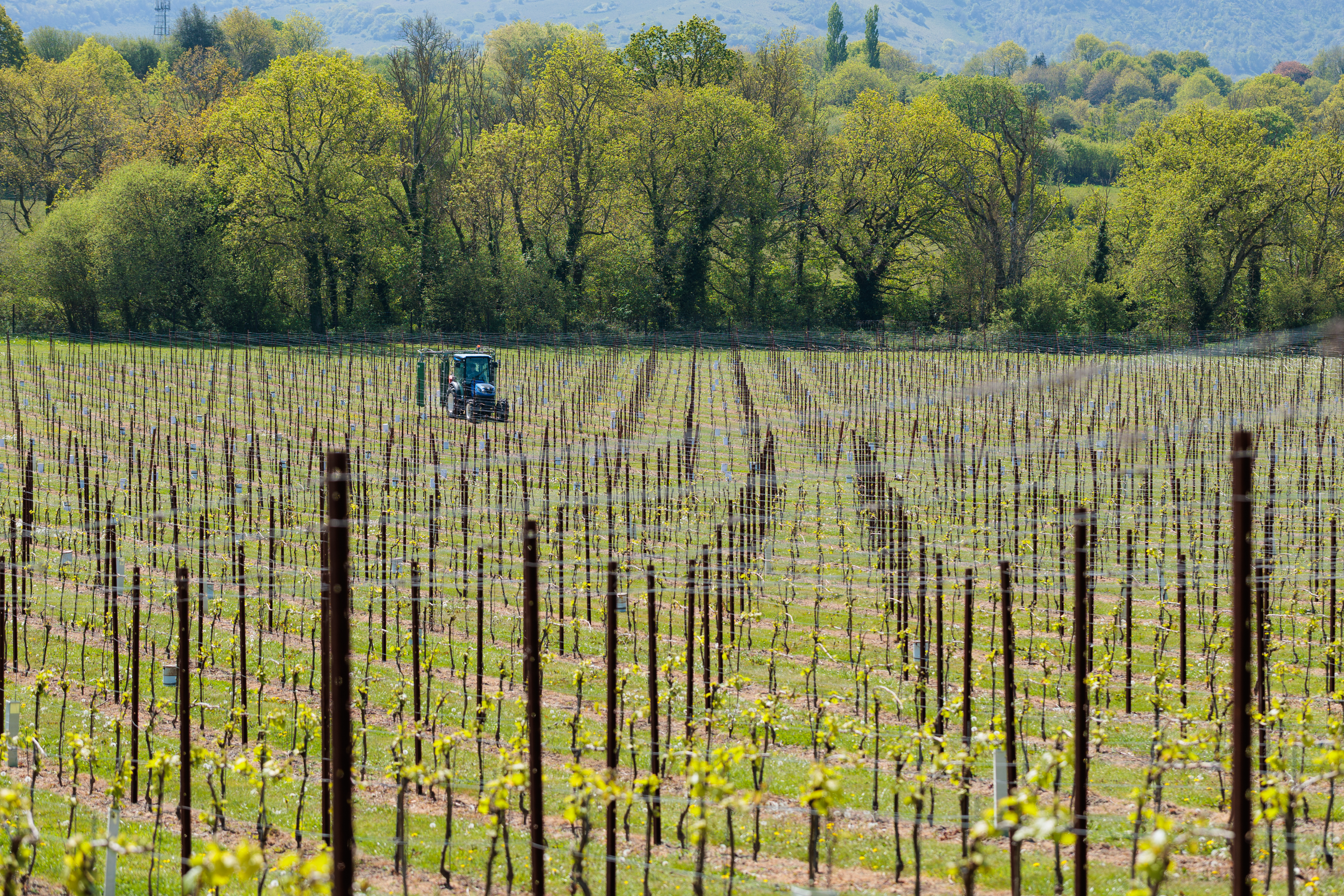
Beyond a tree lined road Abingworth Vineyard occupies a picturesque spot at the foot of the South Downs in the idyllic village of Thakeham. Spectacular views across Sussex open up to visitors as soon as they arrive at the converted winery building.
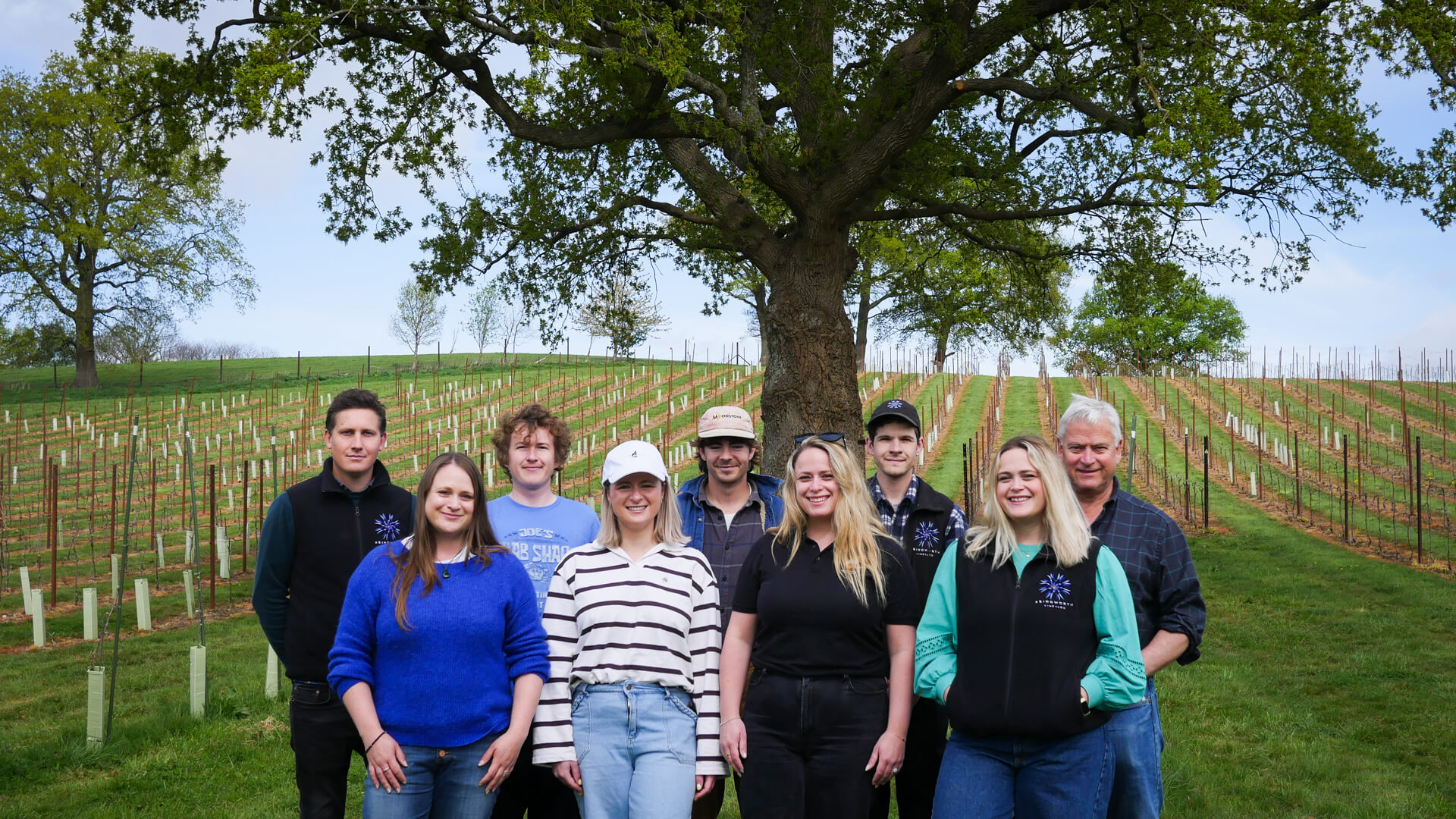
Abingworth Vineyard sits within the borders of the historic Champions Farm which, for three centuries was the home of the Shelley Family and is now home to Chris and Caroline Stedman and their family business. Chris and Caroline have four daughters Annie, Juliet, Katie and Georgie and all are part of the family team.
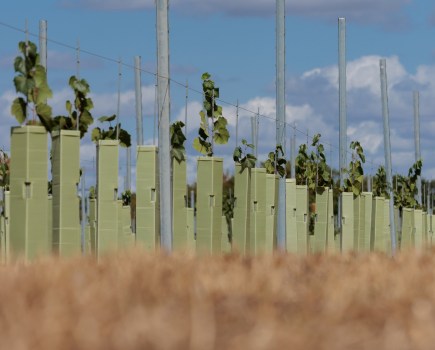
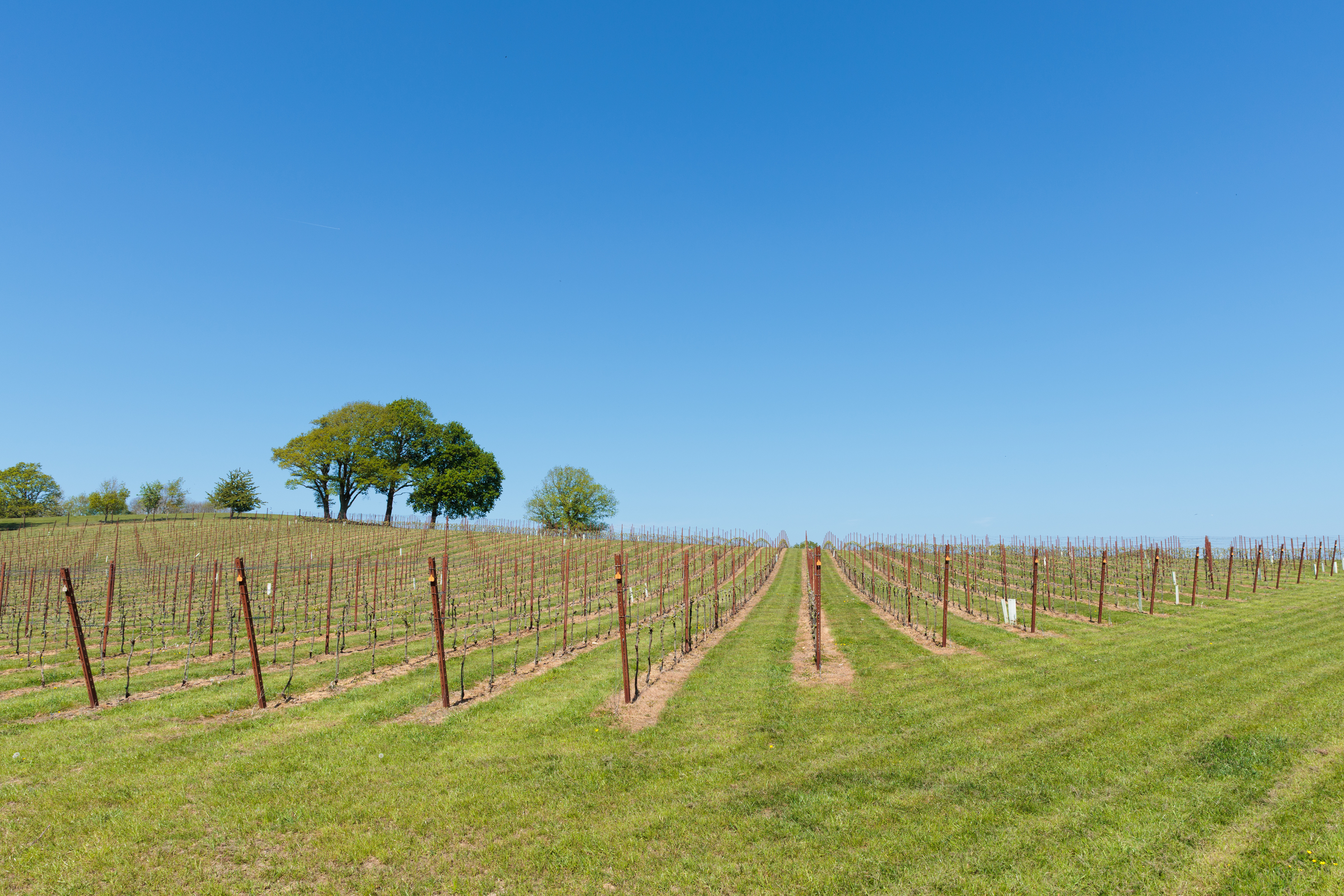
The first vines were planted in 2022 and the vineyard has now developed to cover nine hectares. Alongside four hectares of Chardonnay and 1.8 hectares of Pinot Noir are plantings of Pinot Gris, Sauvingnon Blanc and Cabaret Noir. “Originally we wanted to plant Divico vines but these were unavailable so we opted to plant Cabaret Noir and now I am really pleased because we are really happy with the Cabaret Noir,” said Chris Stedman.
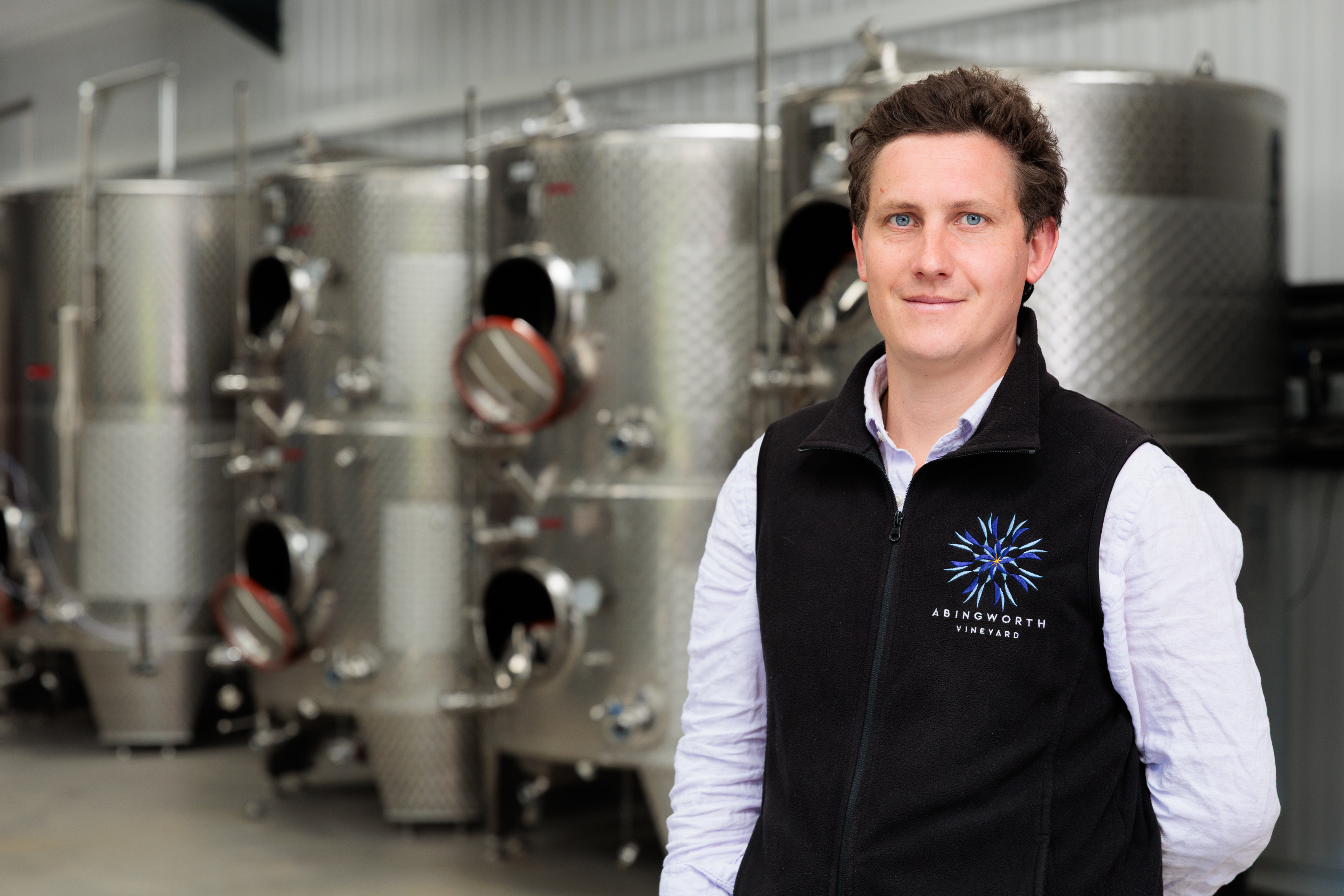
Noting the differences between the varieties Vineyard Manager Dominic Travers explained: “After harvest the Cabaret Noir leaves stay green for much longer than the other varieties.” This observation highlights just how much connection Dominic has with the vines. As winemaker and Vineyard manager Dominic has a connection to the whole process from ground to glass. “The best wines are definitely made in the vineyard,” he declared with a smile.
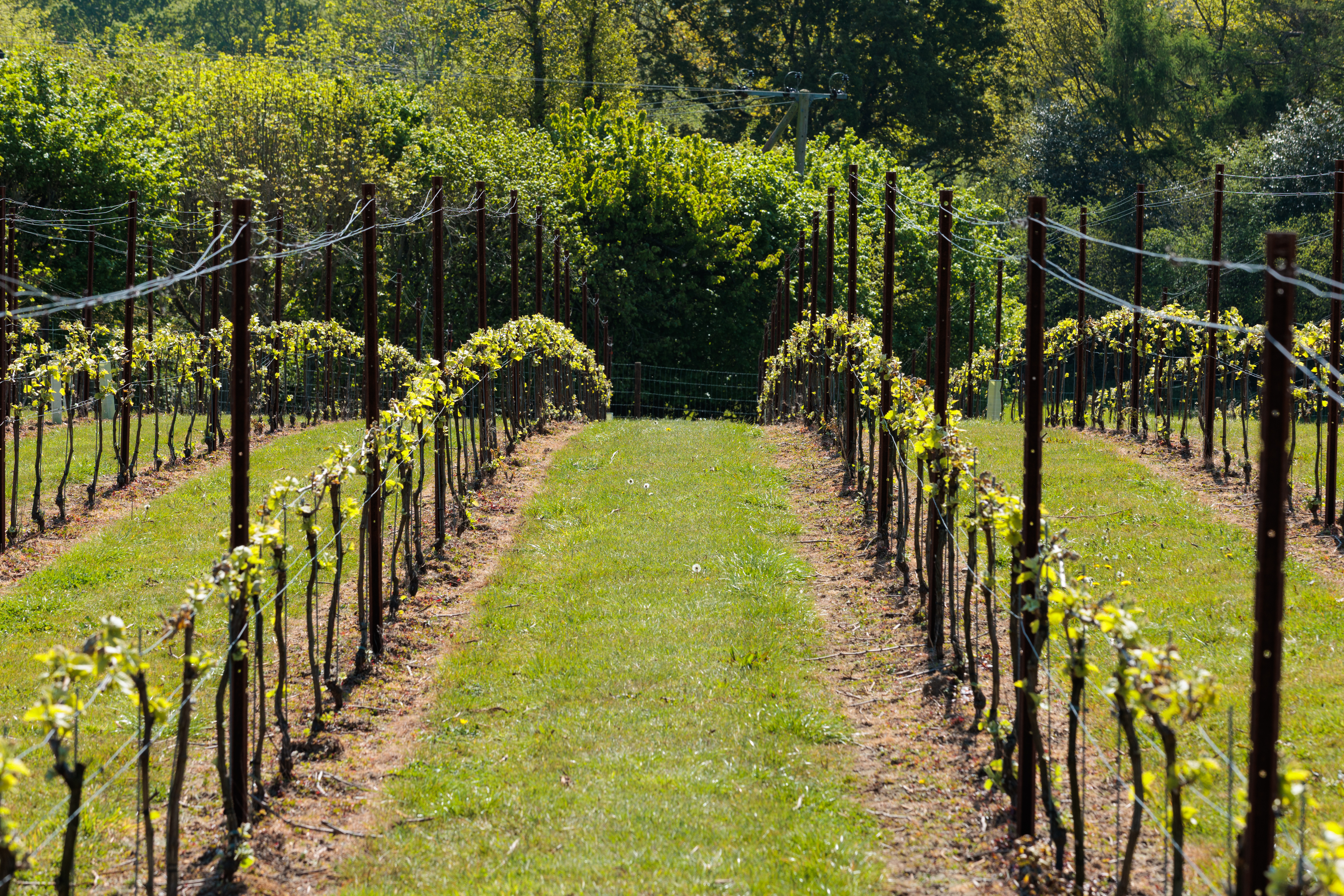
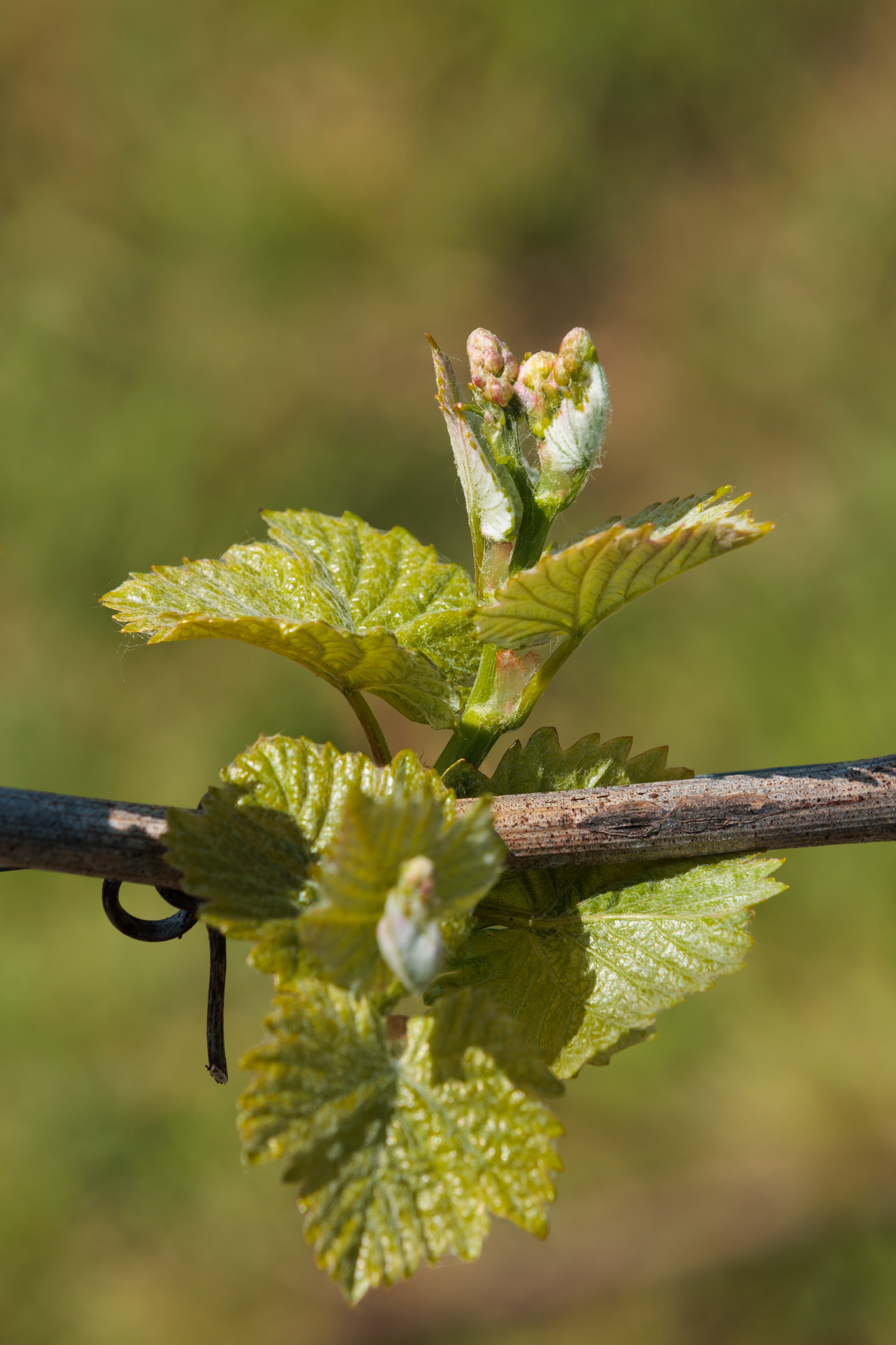
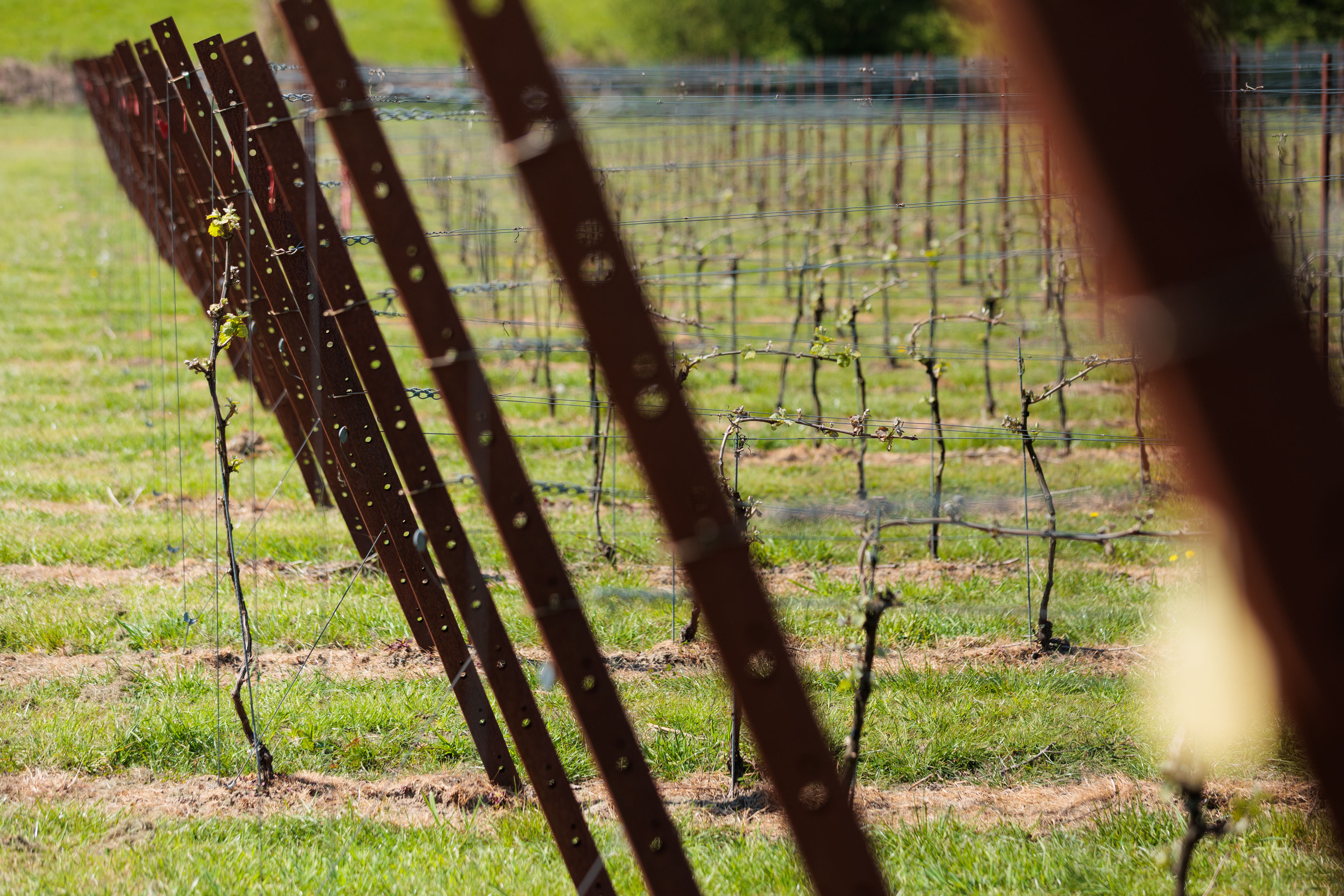
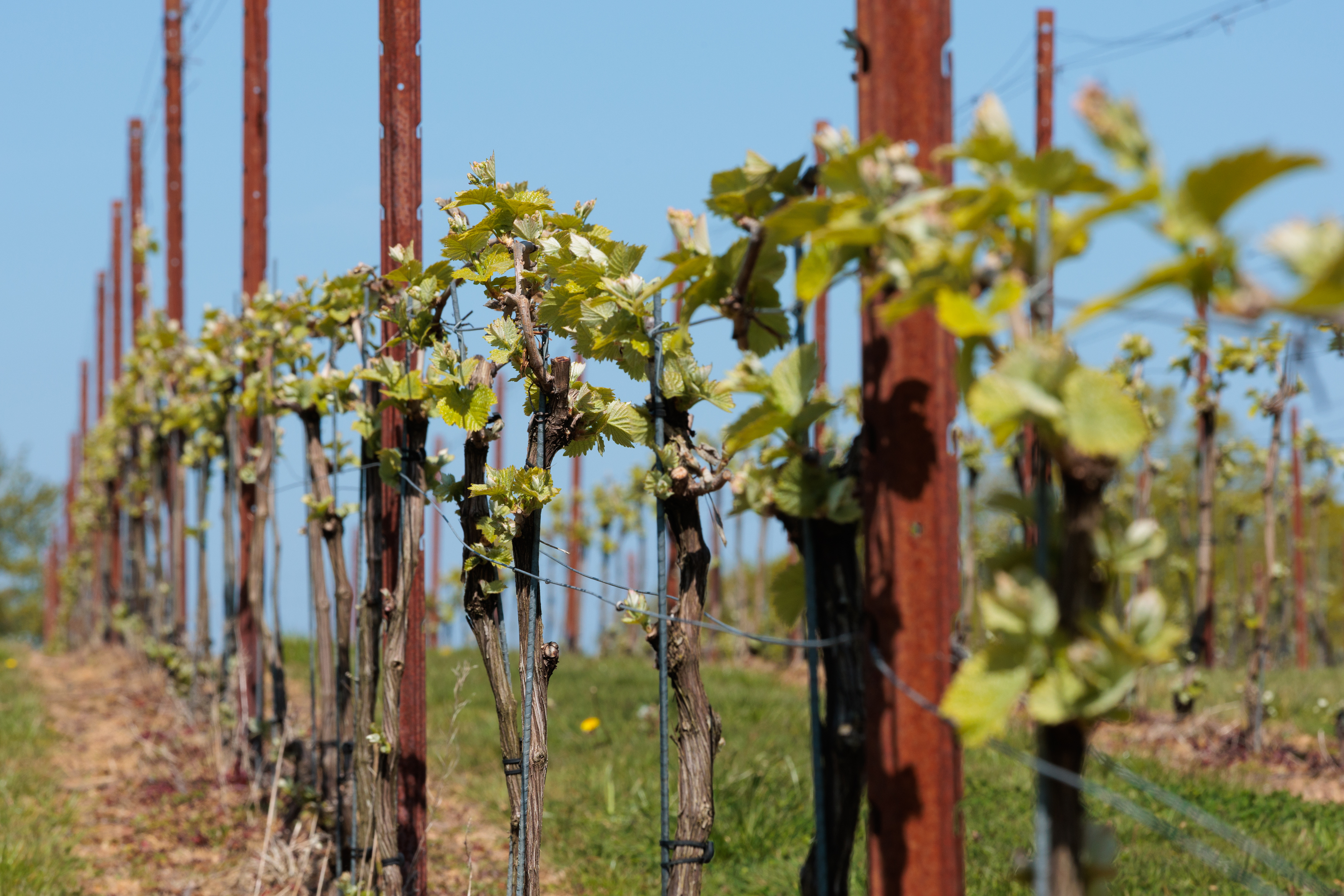
“If winter comes can spring be far behind,” these lines from the famous poet who may have once walked these fields come to mind as we stroll amongst the vines in the late April sunshine and see the evidence of new life in every vine. The April sunshine is deceptive however and both Chris and Dominic pointed out that the vineyard has suffered some frost damage.
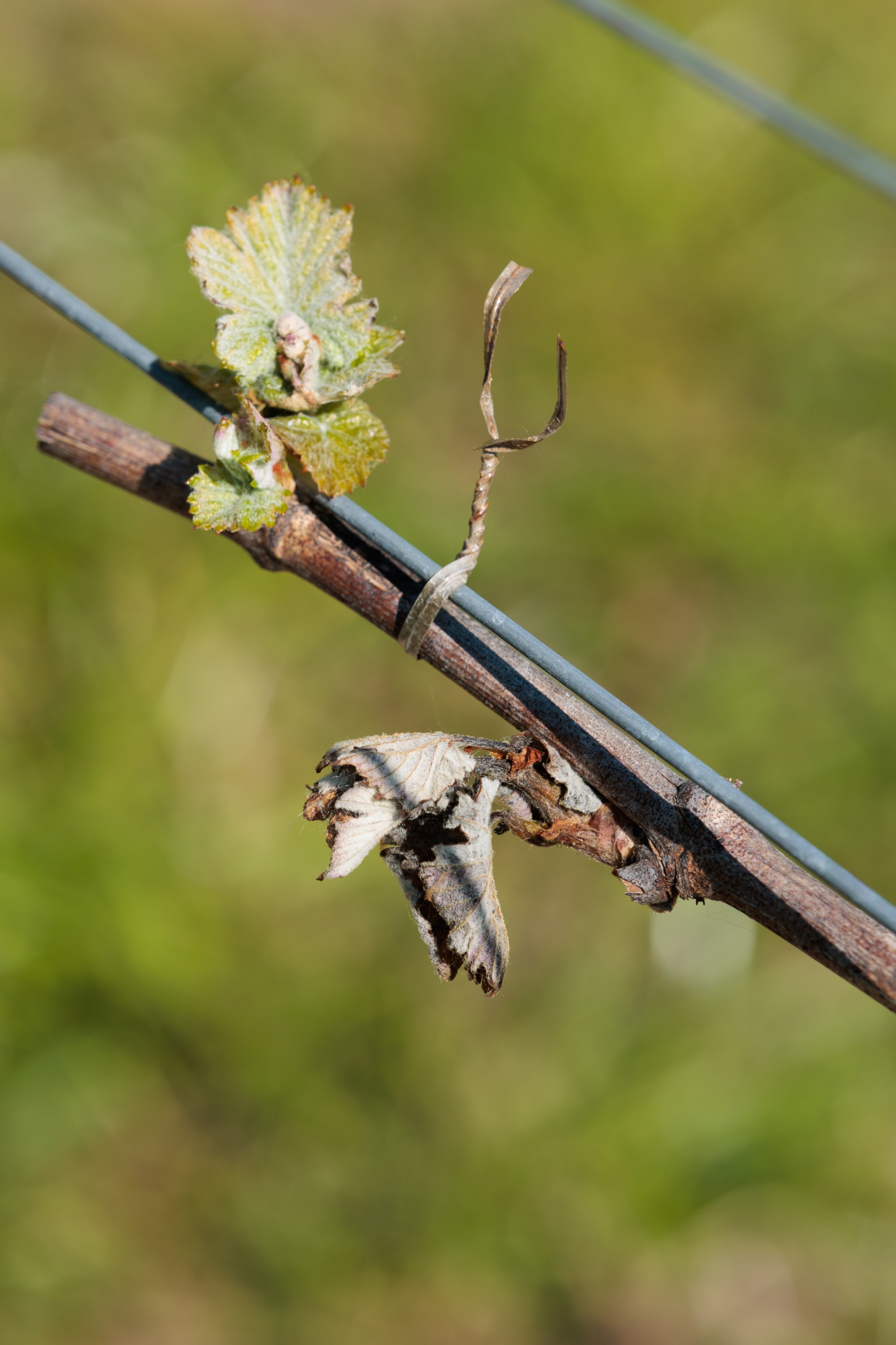
The team at Abingworth Vineyard are trying to find the most appropriate frost protection on the site. “Bud burst is happening very early right across Europe so frost is a concern for many vineyards. At Abingworth this is the first season we have had significant threat from frost and we have suffered some damage.” Dominic pointed to some Pinot Noir vines (at the bottom of a block affectionately named Tumbledown Hill by the family) which he described as “slightly crispy”. The temperature dropped in this area to -2°C a few days prior to the visit. “The temperature variation across the whole vineyard can be as much as 4°C,” said Dominic.
With sacrificial canes, Bougies and Frolight all being utilised across various aspects of the site, Dominic and the team are well placed to decide which of these methods has worked the best and which of these methods will be taken forward into future seasons. This frost season has been challenging for many vineyards and finding the right protection sometimes on a block by block basis is essential to protect both yield and quality.
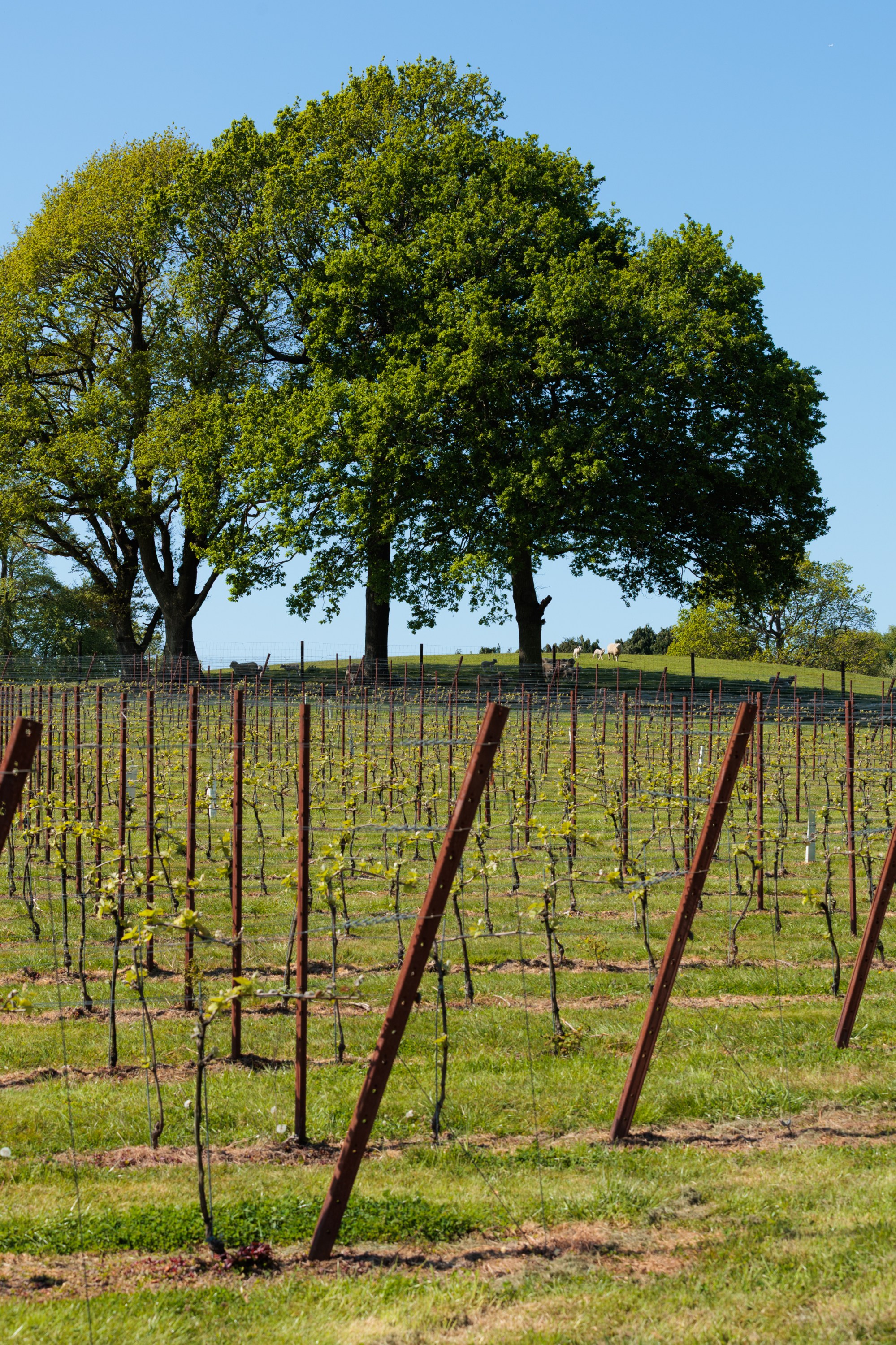
Frost is not the only threat the vineyard faces; bird predation is another issue. “There are plenty of old oak trees and starlings and pigeons sit there and then swoop on the ripe grapes, especially the Pinot Noir,” said Dominic. Again the team at Abingworth have implemented several deterrent measures including a bird detector which plays targeted predator sounds relevant to the species of birds detected. Scarers were considered but Chris pointed out that the vineyard does have neighbours and that they want to work within the community so would not want to choose options that could disturb the village. The team deploy nets in the most susceptible block and it takes three days to cover the 1.8 hectares. “The most difficult part is bringing the nets in again,” said Dominic.
The 2025 season also saw the vineyard suffer from SWD. “The damage was visible by mid-September and now we have established areas to place traps such as the cherry trees that are in the surrounding fields,” said Dominic.
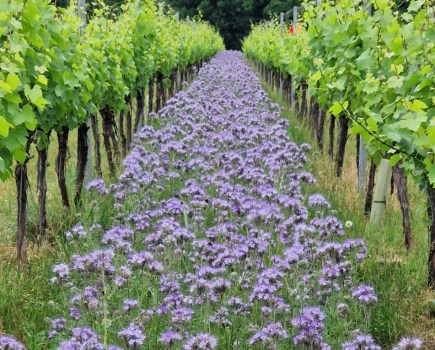
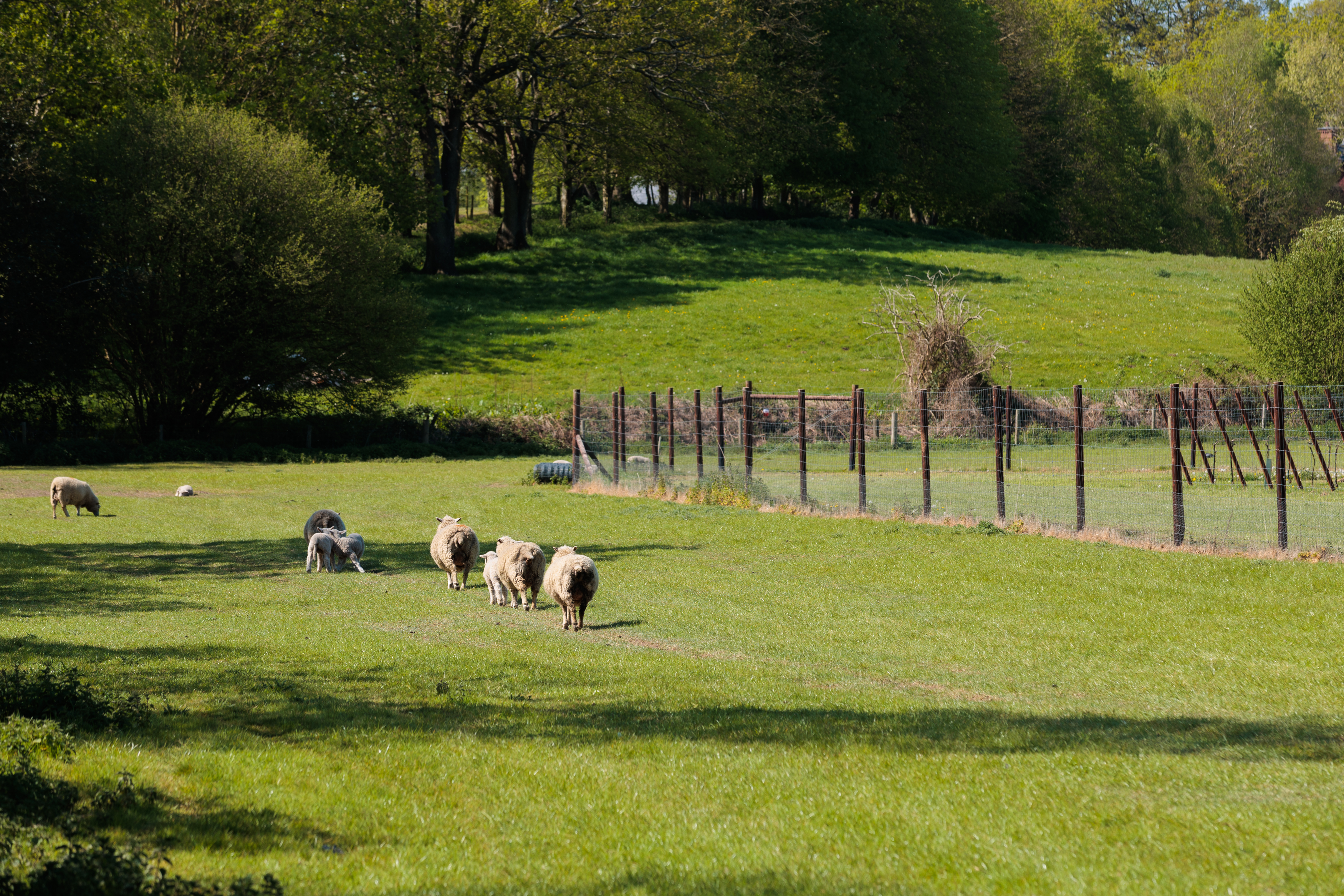
The Abingworth team work very hard to maintain the principles of sustainable viticulture but in order to maintain consistency and quality control have opted not to enter any specific certification meaning they are free to incorporate organic, biodynamic and regenerative practices without having to sacrifice a harvest season if there is particular pressure from pests or disease. There are enough solar panels to run the winery throughout the summer and prior to pruning sheep can be seen grazing in the vineyard. “We have also planted a wildflower meadow,” said Chris. In areas that are not heavily used the grass has been left in an attempt to maximise the naturally existing seedbank and increase species diversity. Next year an onsite composting system is planned which will aim to improve soil health and maximise vine accessible nutrients.
At nine hectares the size of the vineyard allows Dominic and his team to be truly aware of the vines and their individual growing patterns. As an example, Dominic pointed to the Chardonnay vines. “We have some Chardonnay vines that are the Burgundian clone 95 planted on both SO4 and 3309 rootstock. It has been interesting to observe that on the SO4 rootstock this clone produces big juicy bunches but on the 3309 the bunches are loose and golden giving lots of versatility in the winery,” noted Dominic. “The Chardonnay Clones 809 and 548 produce large bunches suited to still wine production on our sandy, loam soil,” he added.
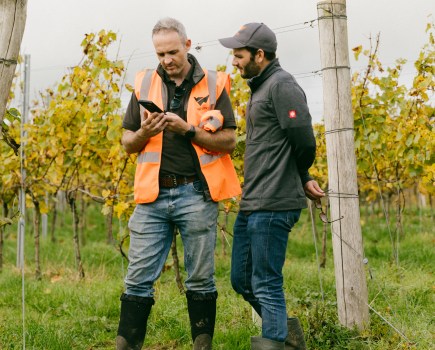
Dominic is not alone in the vineyard and during the visit we were introduced to Joe Whitehouse who had been assessing frost impact in the vineyard and sorting the Bougies for reuse. Joe is newly graduated from the Plumpton Apprenticeship scheme having received his results the same week as our visit. It is great to see enthusiastic young people training for a career in viticulture and it was great to see Abingworth supporting Joe in his studies. The team all agreed that working with an employee on the apprenticeship scheme has been a great experience. The ethos of the vineyard is very much centred around continually moving forward and working with the apprenticeship scheme is a part of that.
Canopy management is a big part of the vineyard routine and leaf stripping and fruit thinning are often combined. “This site is more vigorous than the previous English vineyard that I worked at so it has been an interesting learning experience,” explained Dominic. Mechanical leaf stripping can reach between 50%-80% to allow for ripening and airflow but on occasions the vineyard has seen high temperatures of over 40°C for several days, so now in some areas leaf stripping is undertaken in every other row to preserve cover and prevent sun damage to berries. In order to preserve quality the vineyard team aim to produce an average of five tonnes per hectare. This means that the team will green harvest at least once a season. “The Pinot Noir 521 clone produces very heavy bunches so this fruit receives the most thinning,” explained Dominic. “To preserve quality is the main aim and so in some years we will green harvest twice and we will allow the fruit as much hangtime as is possible. The ripest and cleanest fruit leads to less intervention in the winery,” he added with a smile.
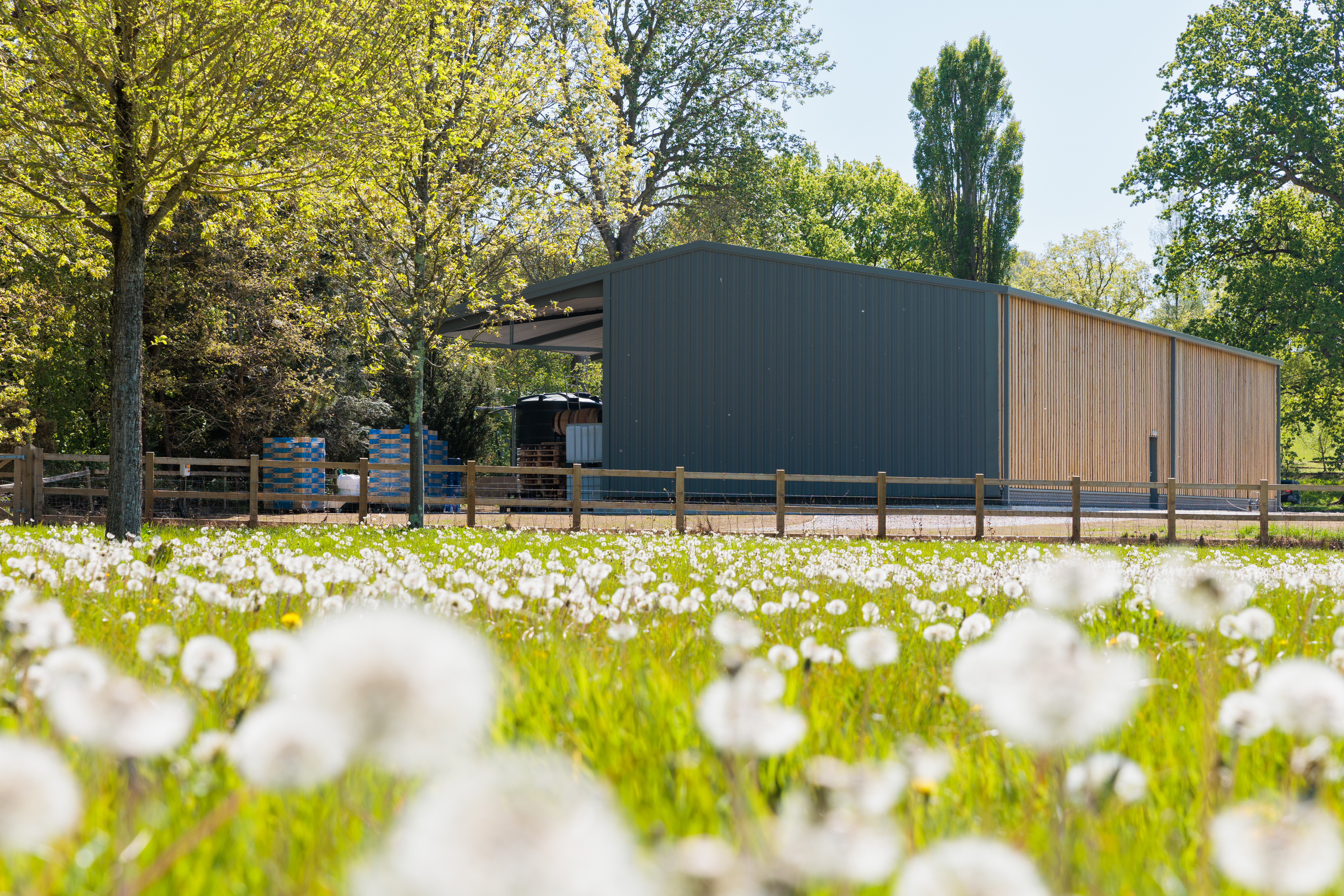
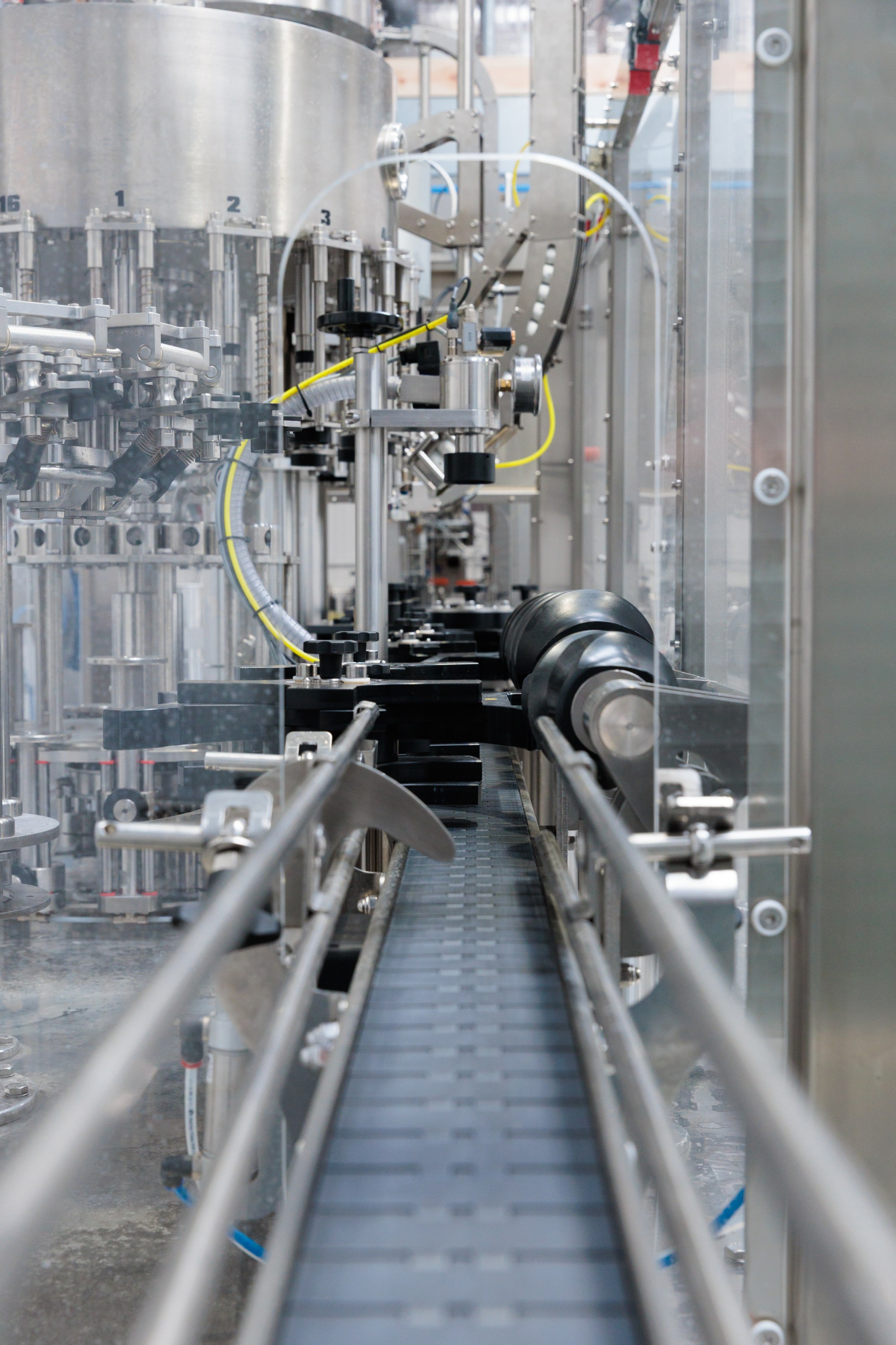
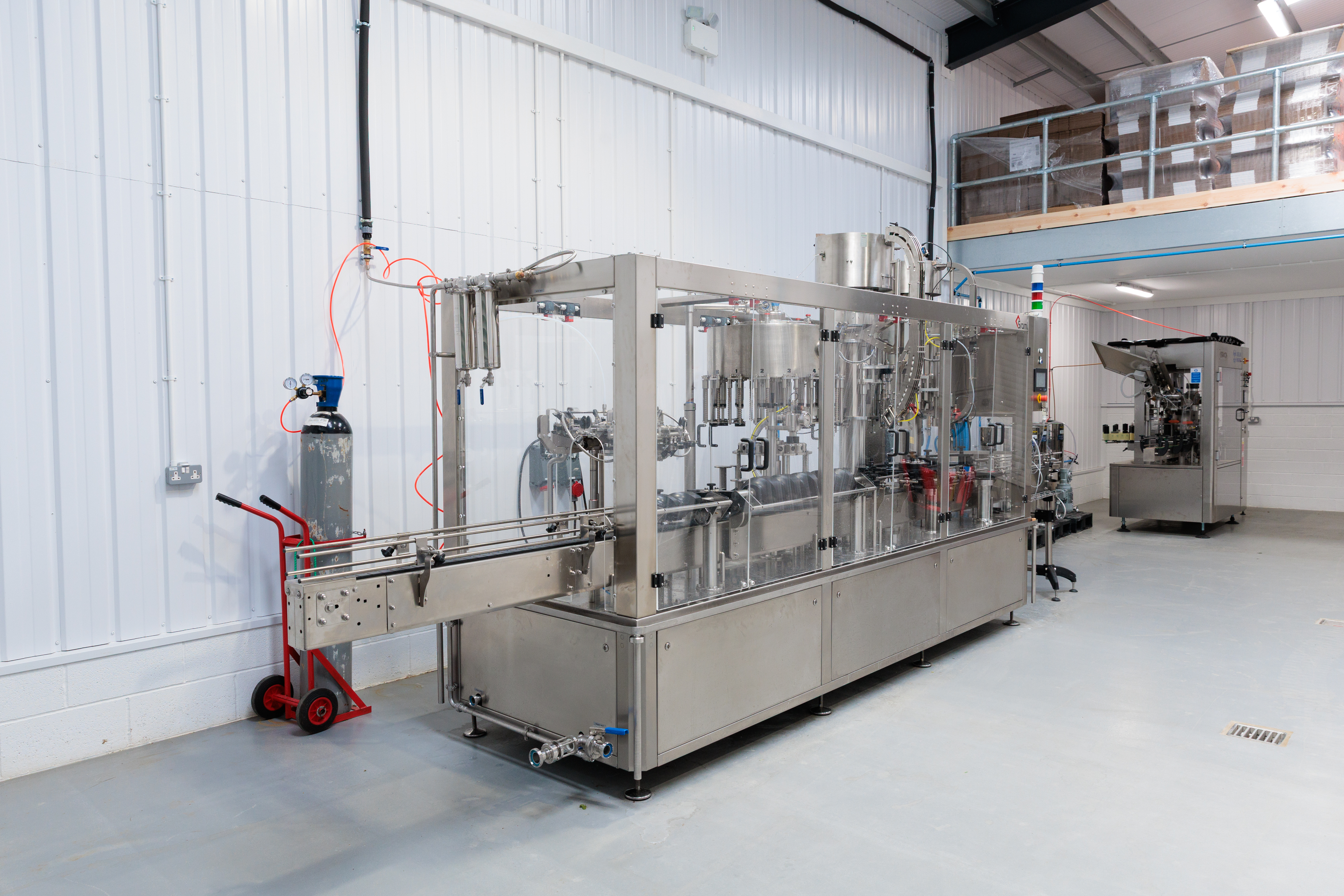
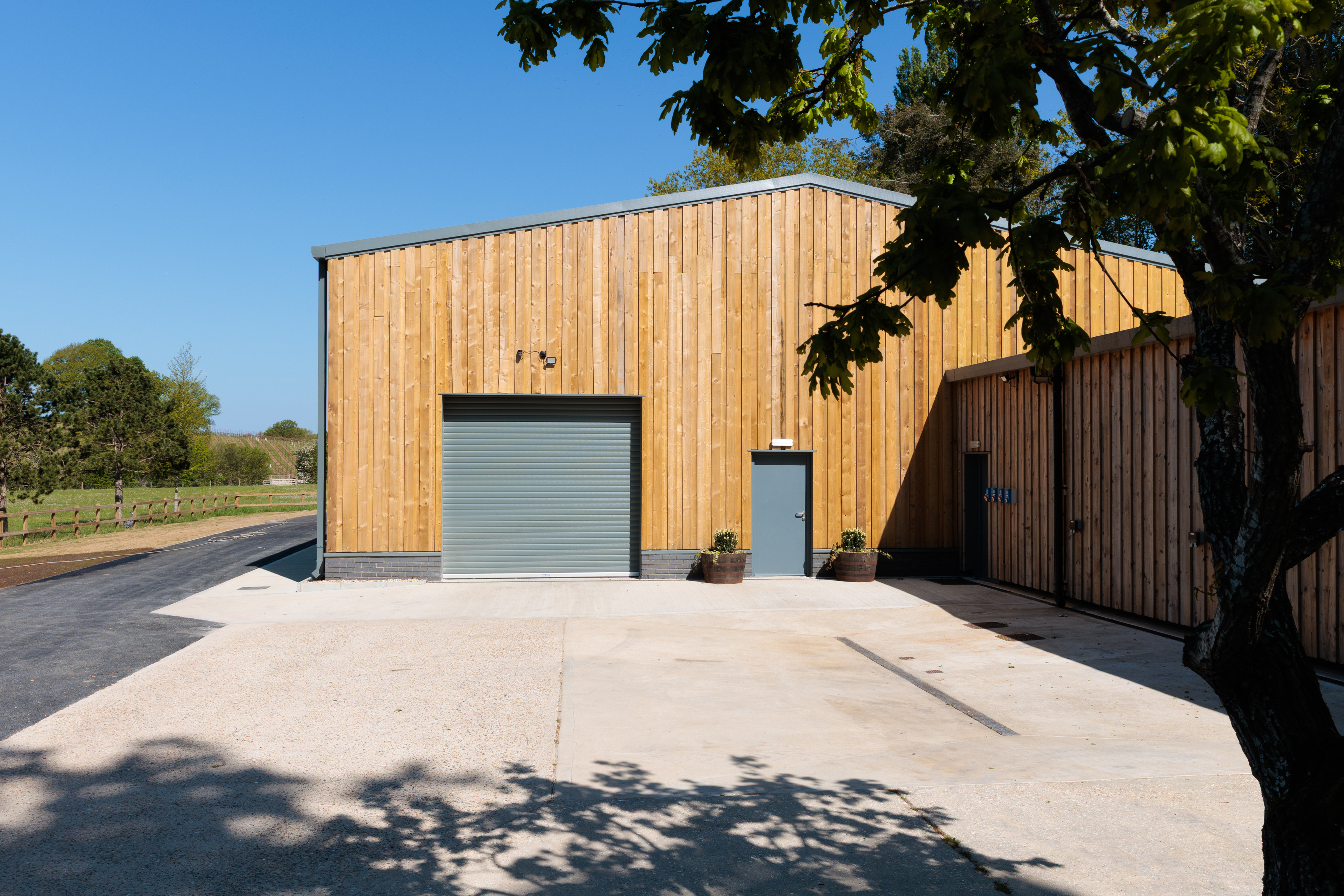
It is clear that the decisions made at Abingworth are designed to maximise fruit potential and wine quality so an onsite winery was a natural step in this ongoing process. The winery was completed in time for the 2024 harvest and at the beginning of April 2026 a new bottling line was added, giving total autonomy over the winemaking process. “We have just bottled some of the 2024 harvest,” said Chris with pleasure in his voice.
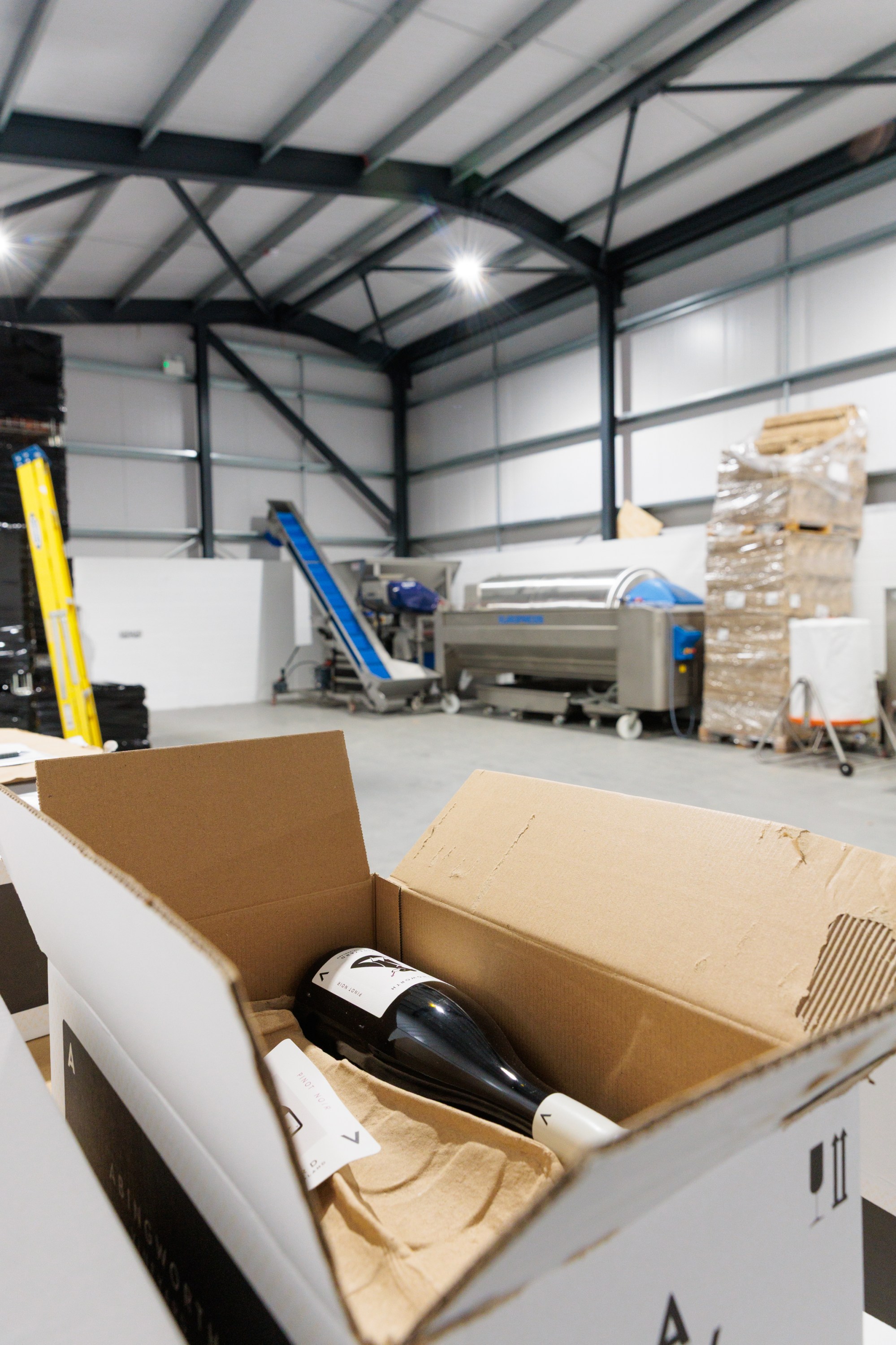
The winery looks custom built but is in fact an existing farm building that has been expertly converted and extended to ensure that winery flow is at the heart of the design. “At bottling a few weeks ago everything worked exactly as we thought it would,” said Dominic with a mixture of pride and relief in his voice.
Inside, the winery is equipped with a small basket press made by Europress and supplied by Itasca, believed to be the first of its kind in the UK. “We are really pleased with this press it allows gentle pressing of red grapes off their skins in small batches resulting in a friendly tannin structure,” said Chris.
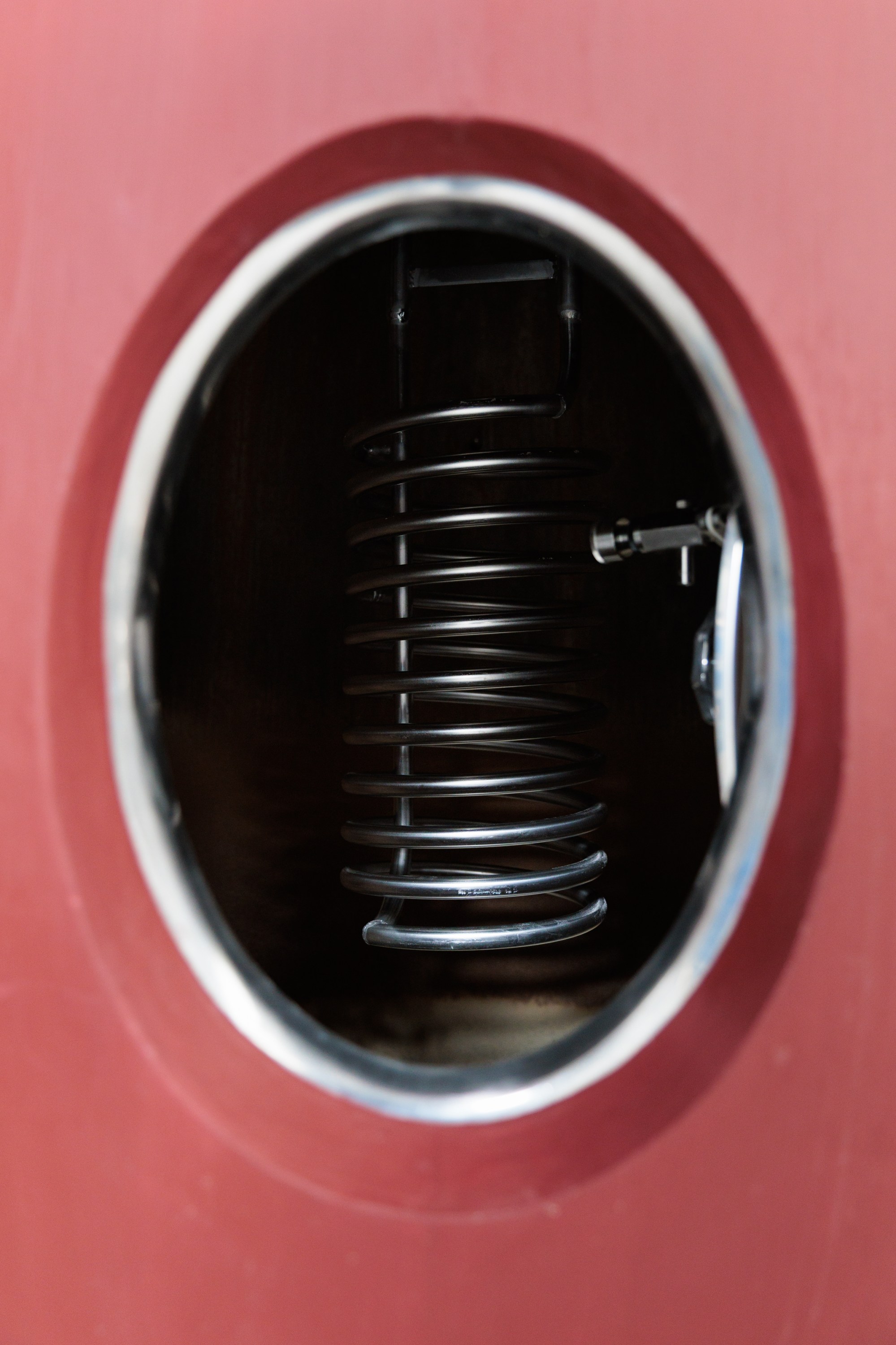
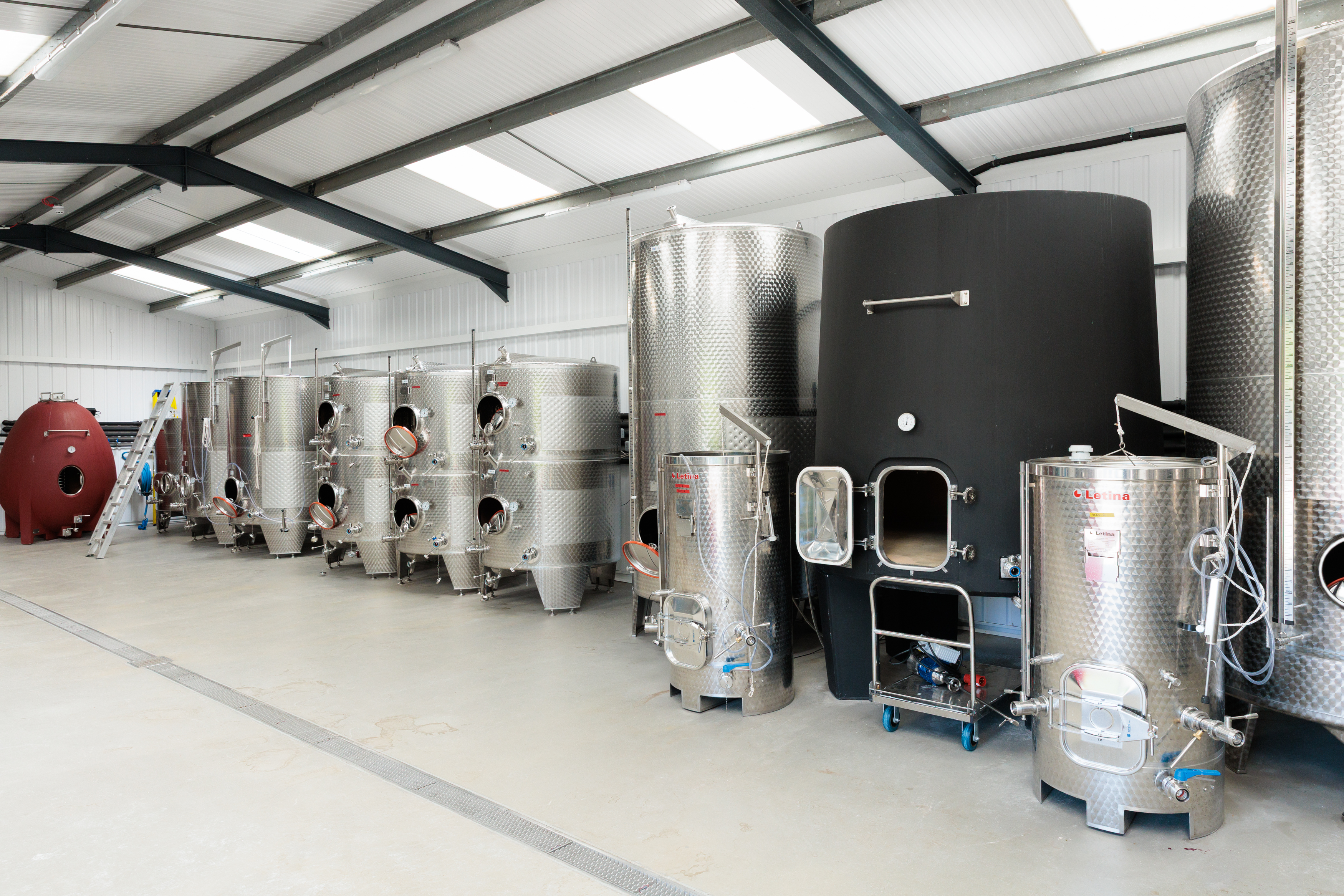
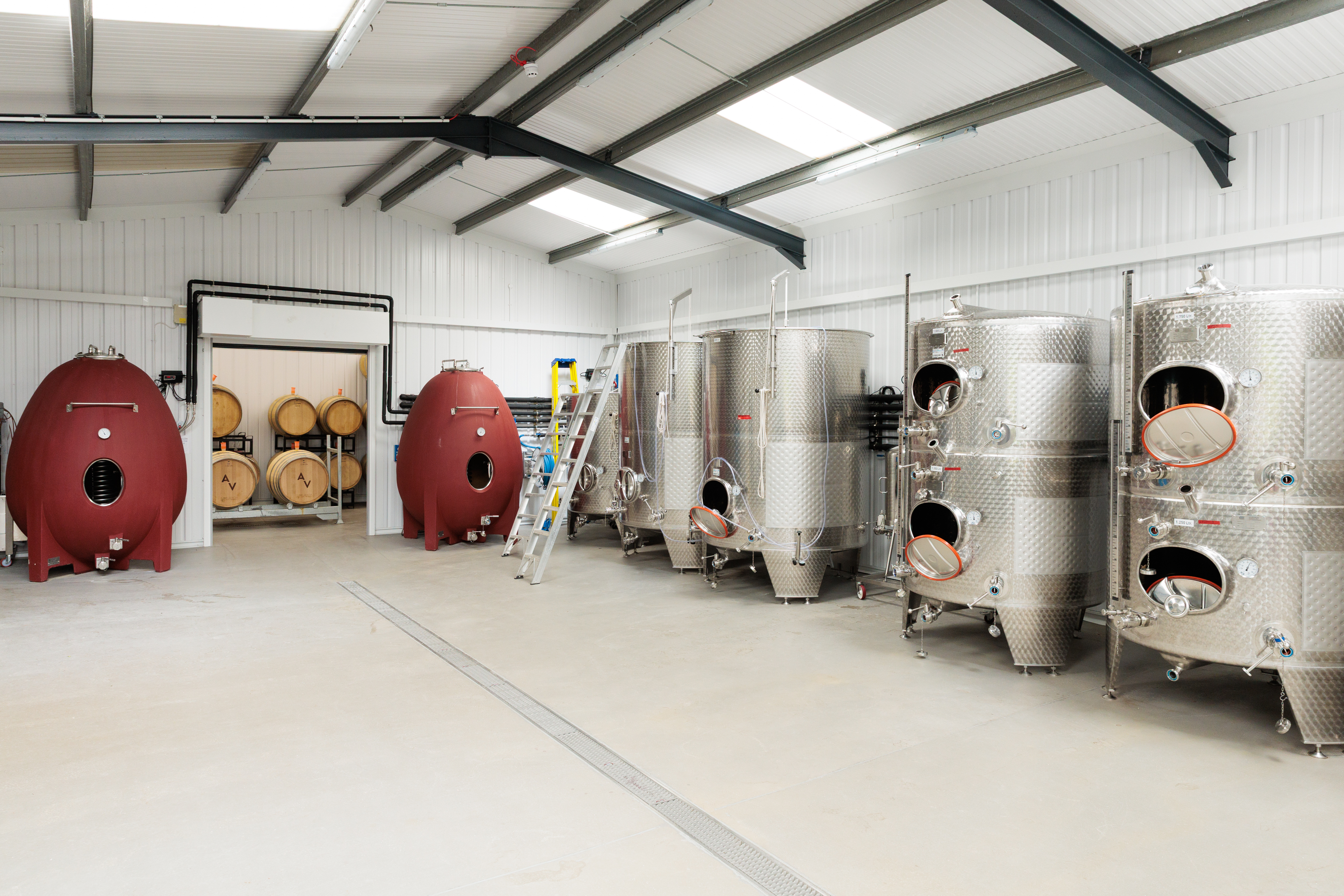
Traditional stainless-steel tanks sit alongside concrete tanks, some of which are egg shaped and designed to bring unique qualities to the wines. “The eggs allow for oxygenation of the wines adding texture but also lees movement occurs in a vortex motion which adds unique properties to the wines,” said Dominic.
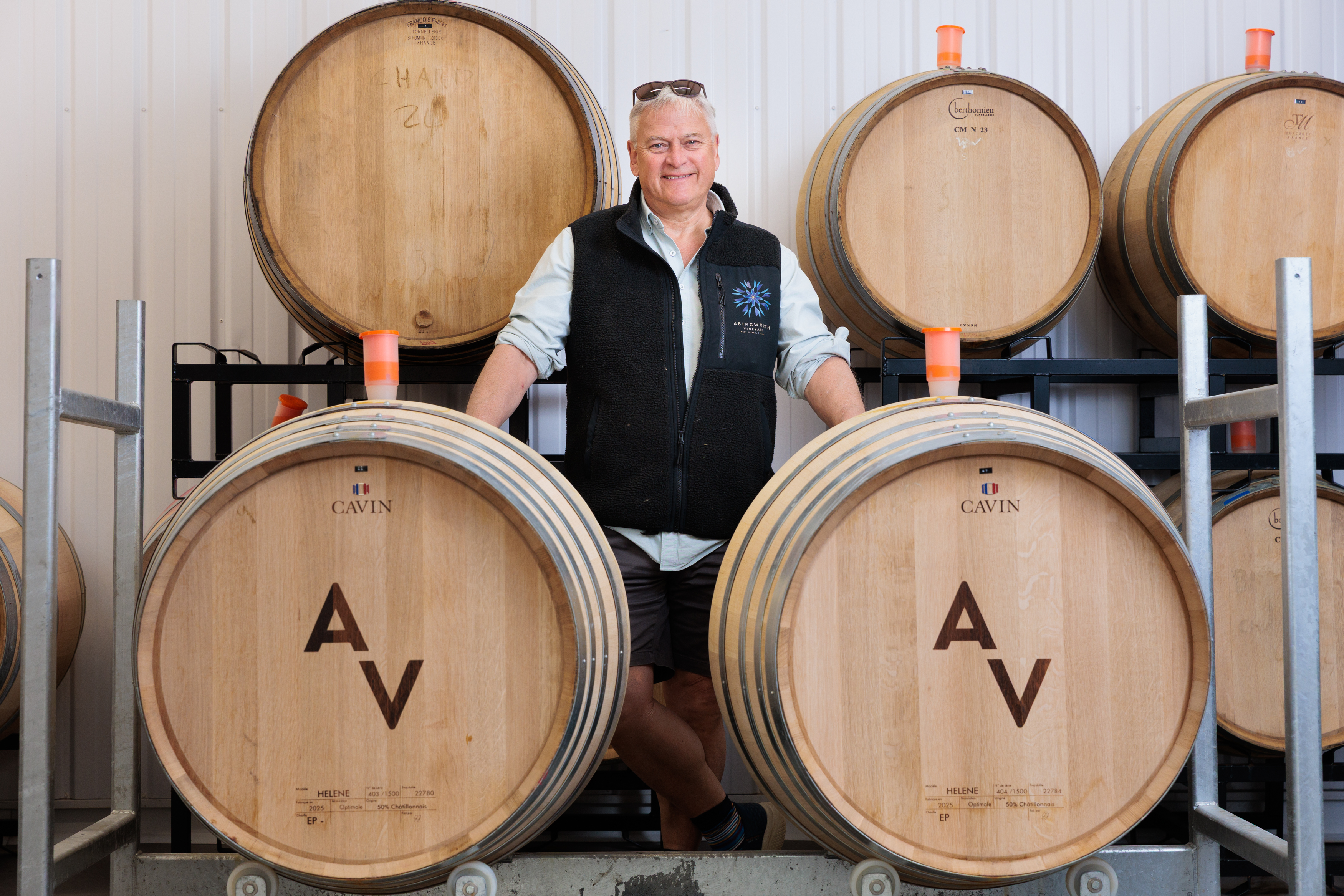
The winery houses a barrel room and Chris explained that the team had taken a trip to the cooperages of Burgundy to really investigate this part of the winemaking process. With Barrels from Tonnellerie Cavin, Tonnellerie Mercurey and François Frères it is clear that the team feel exploration is the key to excellence. “It is a really important part of our style and we are fine tuning the barrel programme,” agreed Dominic and Chris.
One interesting addition to the barrel room is a 320 litre cigar shaped barrel. The shape allows for a greater portion of the wine to be in contact with the barrel. This has been used to enhance the mid palate of the Sauvignon Blanc.
This premium wine is made using 50% whole bunch pressing and 50% destemmed grapes with under 4,000 bottles currently produced the wine has a fresh acidity and a unique quality that will make it an excellent choice for a wide range of food pairings. “My aim is for the wines to be of a comparative or higher quality to wines from other countries at a similar price point,” said Chris with feeling.
The Chardonnay is fermented in concrete, then moved to stainless steel tanks and finally finished in barrel allowing for the best use of winery space and adding layers to this wine style. The wines are not fined and so filtration is very important “with the Chardonnay we do not want it to be too tight and lose complexity so we don’t filter down to 0.4 microns rather we are aiming for closer to 0.6 microns,” said Dominic.
The Pinot Gris however, utilises Acacia barrels which encourage expressive floral notes and allows the variety to express itself preserving the fruit forward qualities which make this wine exceptionally easy to drink. The fruit is noticeable from the moment the bottle is opened and will have consumers reaching for a second glass and then a second bottle when it is released later this year.
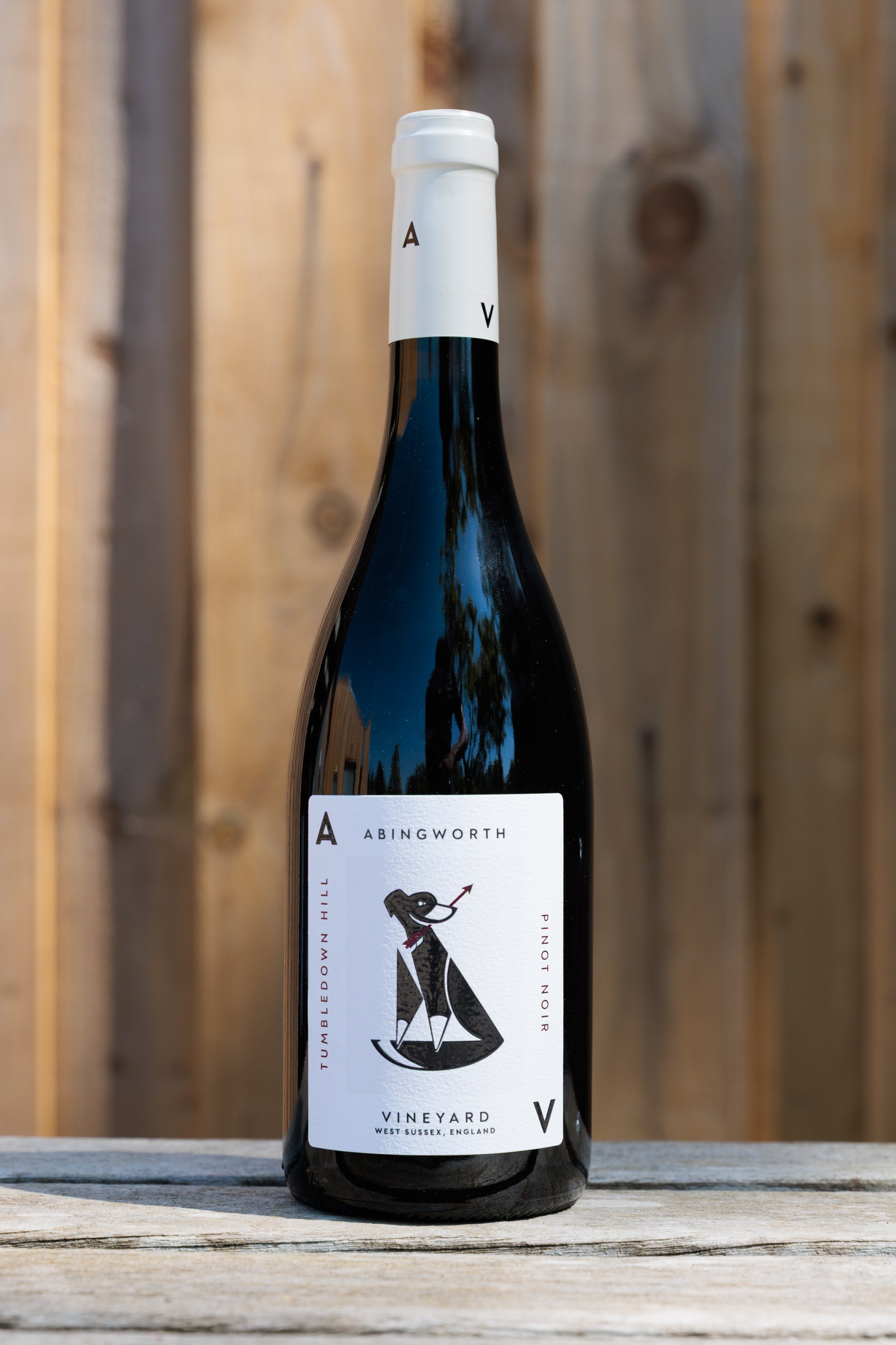
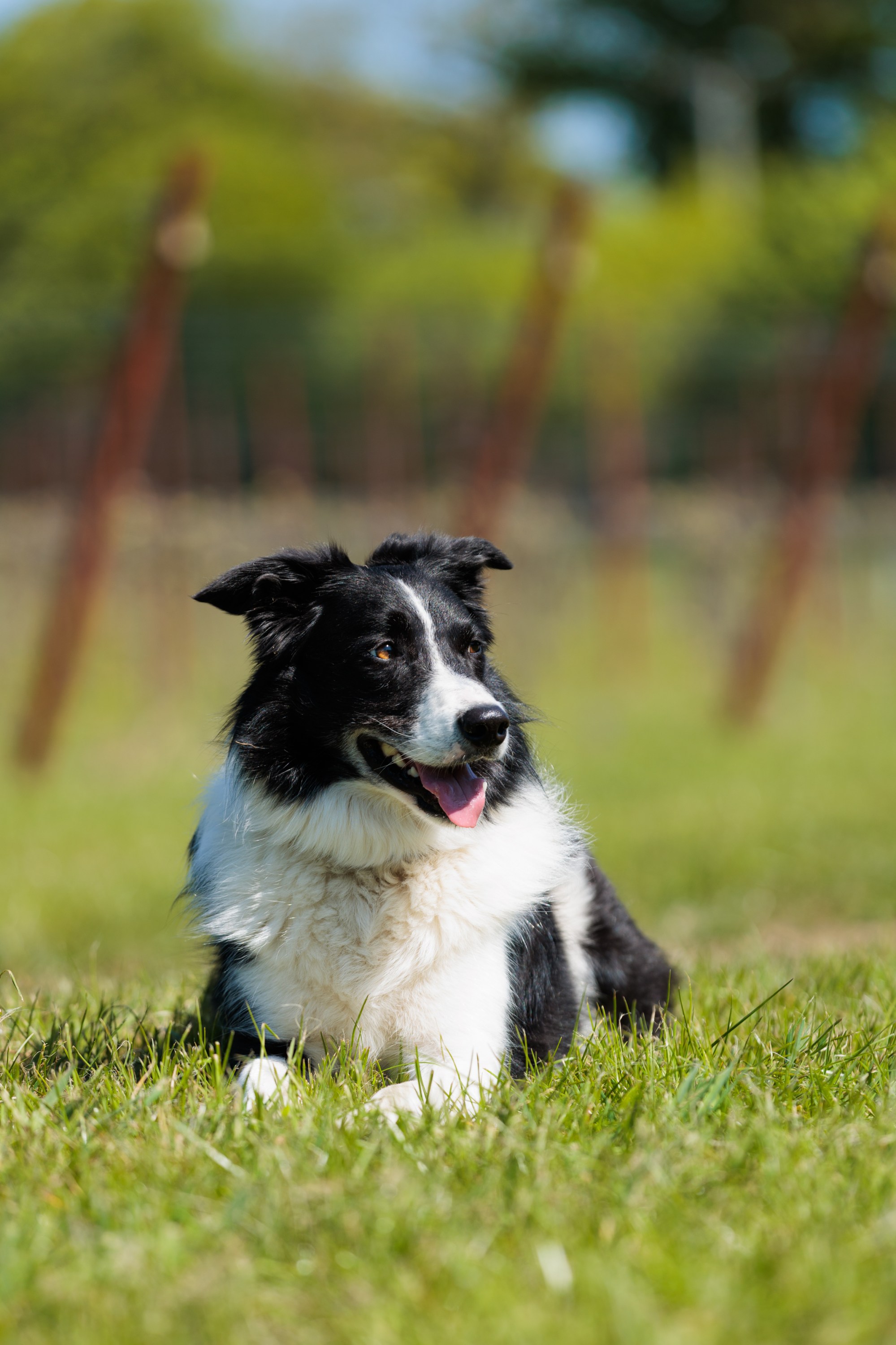
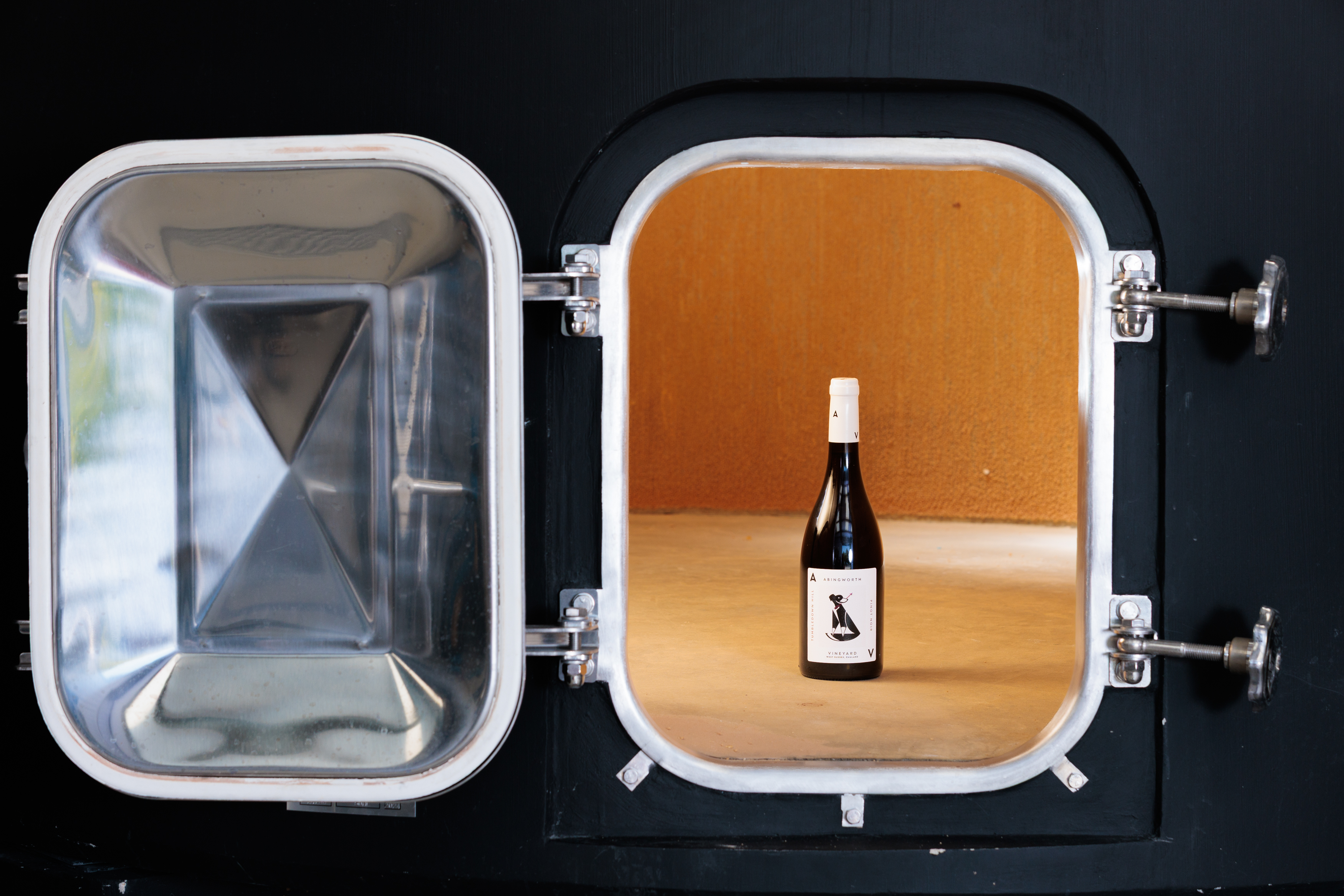
The artwork for the labels has been designed by Chris and Caroline’s daughter Juliet. All the labels tell some part of the vineyard story from the Cabaret Noir which incorporates the Skylark (a nod to the vineyard’s links to the famous poet) to the Pinot Noir label depicting Arlo the family’s rescue dog, ensuring the family connection to the wines is clear.
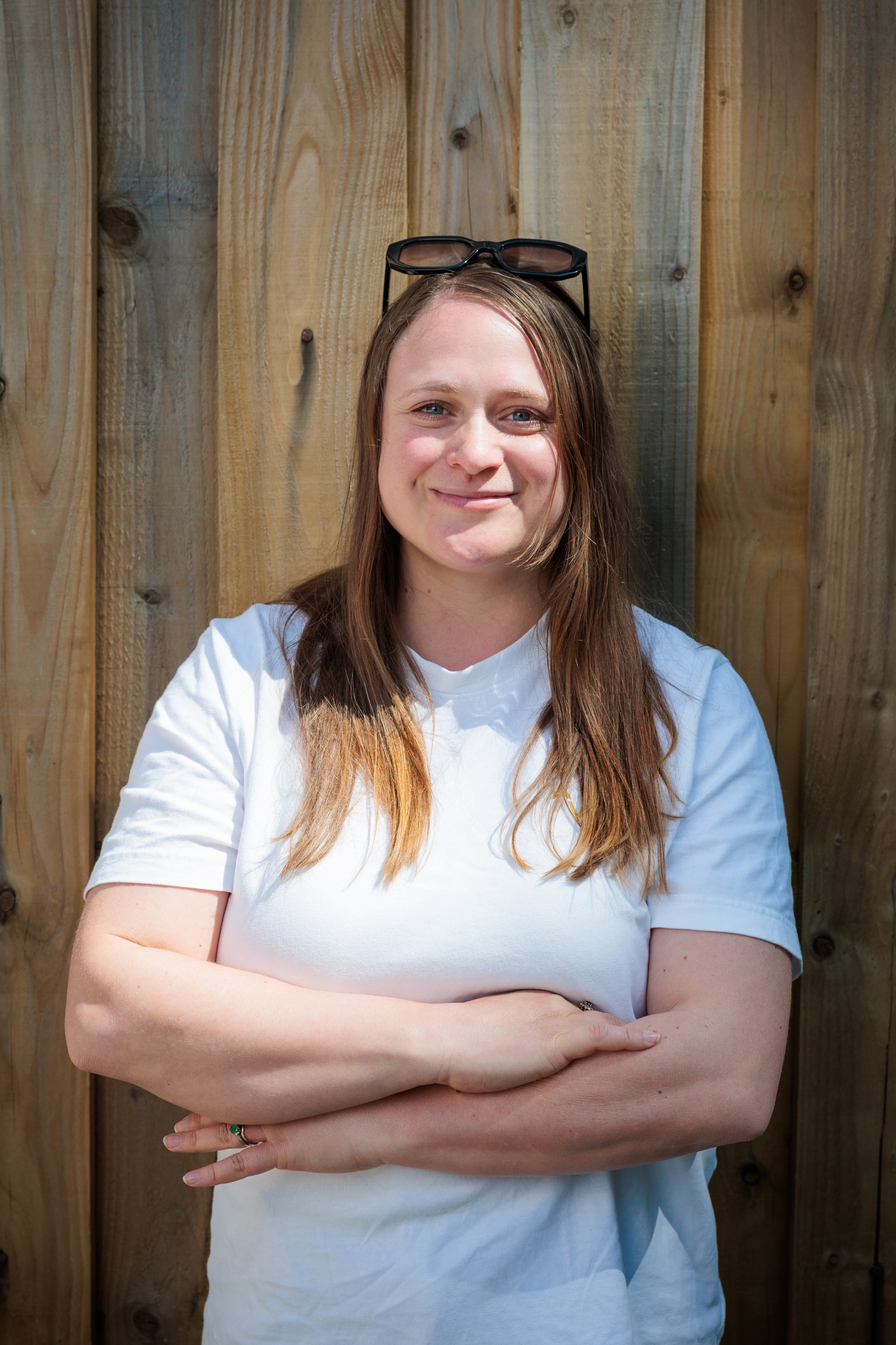
Annie is the Marketing Manager for the vineyard and will be launching a wine club in the near future. “We want the wine club to include people in the Abingworth family. Wine club members will be able to experience unique events and new releases making them feel part of this family vineyard,” she said. “As a family we picked the first harvest of the Tumbledown Hill block of Pinot Noir. Even though I was heavily pregnant it brought us all together and gave us all a deep affection for the vineyard and that lasting feeling is what we want our wine club to bring to the members,” she added with warmth in her voice.
In the future the vineyard and winery will be a wonderful wine tourism destination. Chris explained how the family had already selected a site for a tasting room with a fantastic view across the downs. The proposed wine tour will be a circular route around the vineyard and winery finishing with a structured tasting of the wines. A wine tasting in this space on a summer afternoon is certainly going to draw a host of visitors and hopefully will introduce the nuances of English winemaking to an ever growing audience.
The striking aspect of Abingworth Vineyard is the feeling of moving forward steadily with consideration and purpose. The atmosphere is full of energy and enthusiasm but it is balanced with a desire to explore all options and make good decisions based on evidence in both the vineyard and the winery. It is an ethos that will allow the business to continue to grow in every direction with excellent wine as the ultimate evidence.
Photos: © Martin Apps, Countrywide Photographic