
If the 2026 growing season demonstrated anything, it is that UK viticulture is increasingly a game of extremes. From damaging spring frosts to prolonged summer heat and drought, growers faced a season that tested both vineyard management strategies and the resilience of the vines themselves. Yet, amongst the challenges, there were also encouraging signs.
May delivered a particularly difficult start. Severe frost events affected vineyards across the country, with losses of 40-50% of primary buds not uncommon in some locations. What followed was almost the complete opposite. Extended periods of exceptional heat and limited rainfall created a very different set of challenges. The standout statistics tell the story: the South East and central England recorded just 0.7mm of rainfall during July, equivalent to around 1% of the long term average, while sunshine hours reached 258.7 hours compared with a typical July average of around 220 hours.
Disease pressure remained relatively low throughout much of the season, although powdery and downy mildew was still evident in some vineyards. Instead, heat and water stress became the dominant concerns. Berry scorch and shrivelling were widely reported, in some cases affecting fruit that remained beneath the canopy and was not exposed to direct sunlight. This suggests that thermal stress, rather than sun exposure alone, was a significant contributor to fruit damage.
The season also exposed underlying weaknesses within vineyards. Nutritional deficiencies became increasingly evident as drought conditions restricted nutrient availability and uptake, highlighting areas where vine performance was already under pressure. Despite the difficult start, fruit development and sugar accumulation were encouraging in many vineyards. Biddenden Vineyard recorded its earliest ever Ortega harvest, reflecting the extraordinary pace of ripening driven by prolonged warmth and sunshine. The season served as a timely reminder that challenging weather does not always result in a disappointing vintage.
Looking after the soil in 2027
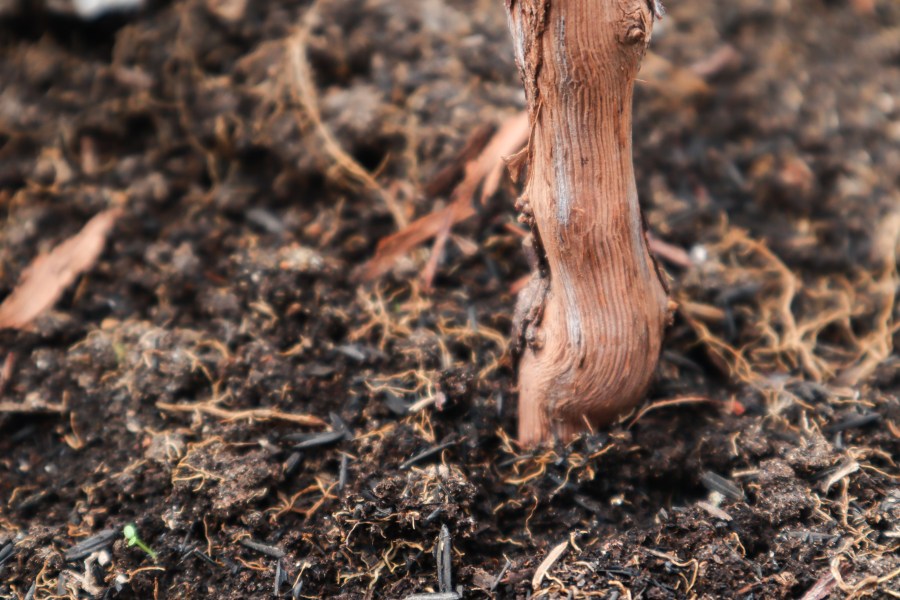
If there is one area deserving greater attention ahead of 2027, and I have said it in this column before and will probably say it again, it’s the soil. No amount of intervention above ground can fully compensate for weak foundations below it.
Rather than relying solely on a standard soil analysis this winter, there may be significant value in investing in soil scanning technology. A soil scan maps spatial variability across a vineyard, producing detailed nutrient maps that highlight areas of differing fertility and nutritional status. Nutrient requirements can vary considerably within a single block and, while there is a clear economic benefit in avoiding unnecessary fertiliser applications, there is also an agronomic reason for doing so.
Excess nutrient applications can contribute to nutrient antagonism, where an overabundance of one nutrient restricts the uptake or utilisation of another. In some cases, applying more fertiliser can actually exacerbate existing imbalances rather than correct them. The objective should not be to apply more nutrients, but to apply the right nutrients, in the right place, at the right rate.
Once soil variability has been identified, fertiliser applications can be tailored accordingly through variable rate technology. Funding support is available through the Farming Equipment and Technology Fund (FETF), which contributes towards equipment such as variable rate fertiliser spreaders and camera guided variable rate systems, helping growers improve nutrient use efficiency, reduce unnecessary inputs and support long term soil health.
Innovation and opportunity in 2027
There is plenty to look forward to in 2027. New frost protection initiatives and trials will continue to explore how growers can better protect vulnerable sites, while advances in AI powered weather prediction are opening up opportunities for more localised, vineyard specific forecasting.
Regenerative viticulture will also move further into practical research, including trials work exploring how to establish a regenerative vineyard protocol from pre-planting, rather than trying to retrofit regenerative principles into established conventional systems.
Funding will continue. The ADOPT Fund offers farmer led projects the chance to turn practical challenges and innovative ideas into funded research, with eligible projects able to access up to £200,000 over a two year trial period. With applications closing on 31st March 2027, growers should be considering where collaboration could help address the challenges facing their own businesses.
Through collaboration, smarter technology, practical research and a renewed focus on soil health, 2027 offers an opportunity to move beyond simply surviving difficult seasons and start building vineyards that are equipped to thrive in them.