
For yeast, the end of fermentation is just the beginning.
It is during this stage that wine begins to take shape, gaining structure, finesse, and its character is defined. Let’s begin at the end of the fermentation when yeast is exhausted (in every sense!) and undergoes a process called autolysis.
Autolysis is the enzymatic breakdown of yeast cells during which a variety of compounds are released into the wine: proteins, mannoproteins, amino acids and more. When carefully managed, these elements can significantly enhance the final product, adding body and structure, stabilising colour, and offering protection against oxidation.
What types of lees are found after fermentation?
After fermentation not all lees are created equal. Understanding their composition and behaviour is essential for guiding the wine towards quality and longevity.
Gross lees
This consists of grape skin residues, seeds, possibly fining agents, and other heavy residues. Gross lees is microbiologically unstable and can lead to undesirable aromatic changes if left in contact with wine for too long. That’s why prompt racking is crucial immediately after fermentation.
Fine Lees
This primarily consists of intact yeast cells or those undergoing autolysis. During autolysis, enzymes such as betaglucanase break down yeast cell walls, releasing beneficial compounds such as mannoproteins and glutathione. Mannoproteins contribute to a smoother mouthfeel and enhance the perception of volume and softness. Glutathione acts as a powerful antioxidant, helping preserve the wine’s aromatic integrity by preventing oxidation of its volatile compounds, ultimately supporting greater ageing potential.
Clearly, the compounds released during autolysis can offer significant benefits to wine, but only if the process is carefully managed under controlled conditions. When done right, this quiet phase can elevate the wine’s texture, stability, and aromatic finesse.
Lees management
For white wines, prompt racking of the gross lees at the end of fermentation is essential for preserving sensory cleanliness. For structured reds and whites destined for longer aging, extended contact with healthy fine lees can significantly enhance complexity. In this context, batonnage becomes a key technique. By periodically stirring to keep the fine lees in suspension, batonnage promotes the release of antioxidants while minimizing oxygen exposure. This helps maintain freshness during ageing and prevents the development of oxidative aromas. It also inhibits the formation of anaerobic zones which could otherwise lead to emergence of undesirable reductive notes.
However, working with fermentation lees is a slow process, often misaligned with production timelines. Moreover, yeast cells may have undergone stress during fermentation compromising lees quality and releasing unwanted compounds such as acidic acid, volatile phenols, or biogenic amines, all which can negatively impact wine aroma and taste. A common issue is reduction, caused by the activity of sulfite reductase, an enzyme naturally present in yeast. This enzyme catalyses the formation of volatile sulfur compounds such as mercaptans which can severely impair a wine’s aromatic potential. In these situations, it is necessary to turn to controllable alternatives.
Enartis lees management tools
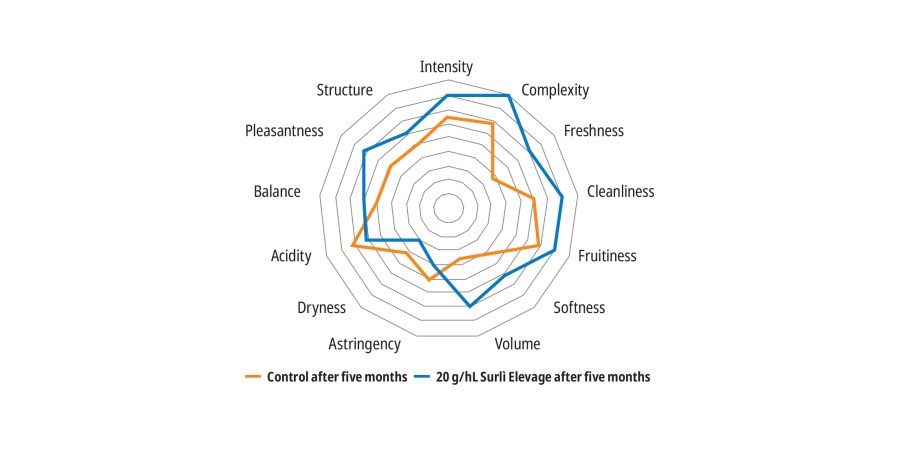
When traditional lees aging is too slow or unpredictable, targeted technical solutions such as Surlì Elevage and EnartisZym EZ Filter offer a precise and efficient alternative. Surlì Elevage is an inactivated yeast with an exceptionally high concentration of free mannoproteins. Unlike traditional lees, it releases its active compounds within just 24-28 hours. Wines treated with Surlì Elevage show enhanced stability, aromatic complexity and persistence on the nose. On the palate, mannoproteins contribute to a creamy texture, adding softness and roundness. It has also been shown to significantly reduce the copper content further protecting wines from oxidation reactions. When used in conjunction with EnartisZym EZ Filter, an enzyme with high betaglucanase activity, you will release more polysaccharides in a shorter period.
Pictured: Comparison between control wine and wine with 20 g/hL Surlì Elevage. Five months after treatment, wine is more balanaced and has greated aromatic complexity
More information can be found on our website. Looking for further technical support?
Reach out to Jennifer Lincoln at Enartis. Products are locally available through Itasca Wines.