
Andrea Ontiveros Flores, a sommelier and marketing & communications specialist from Alicante, Spain asks can Albariño redefine English wine? When Mediterranean grapes become a branding strategy.
It is not new to see expanding viticultural opportunities in England and Wales as climate change reshapes growing conditions, encouraging producers to trial non-traditional varieties including Iberian and other Mediterranean grapes, while diversifying beyond the classic sparkling trio (Pinot Noir, Chardonnay, and Pinot Meunier).
Although commercial-scale plantings of many Mediterranean varieties remain limited, their presence is steadily increasing. In this context, planting grapes such as Albariño in southern England is no longer merely a viticultural experiment. Rather, it represents a strategic move to travel beyond the “English sparkling only” narrative. For some producers, these varieties offer a branding shortcut and a positioning tool, allowing them to tap into existing consumer recognition and established stylistic associations while signalling confidence in England’s evolving wine identity.
Albariño already comes with strong built-in associations: coastal freshness, bright acidity, seafood pairings, and the sunny yet Atlantic character of north-west Spain. It is most closely linked to Rías Baixas in coastal Galicia, a region known for crisp, saline white wines. In the UK, Albariño’s popularity has been growing steadily – it was even mentioned by The Telegraph last year as the white grape to look out for in spring and summer, reflecting increasing consumer awareness.
For UK producers, planting Mediterranean varieties such as Albariño serves several purposes. It signals innovation and confidence, fits naturally with Britain’s seafood-focused cuisine, and appeals to consumers who already recognise and trust the name. Unlike lesser-known varieties, Albariño does not require much explanation, which reduces marketing barriers. This leads to a broader question: Are English and Welsh producers borrowing existing global brand equity? As climate shifts create new viticultural possibilities, are England and Wales leveraging these conditions to appropriate elements of Mediterranean identity to accelerate the evolution of its own wine brand?
Mediterranean moves north
In recent years, attention has expanded beyond the Galician grape Albariño. Tempranillo, for example, is now being trialled in Wessex, where experimental plantings are attracting increasing interest. As an early-ripening to mid-ripening variety that performs well on chalky, well-drained soils, Tempranillo is a logical candidate for parts of southern England, where chalk and limestone subsoils are common. As growing seasons become warmer and more reliable, some producers are beginning to explore Spanish red styles once considered unrealistic in the UK.
Another trial Mediterranean variety is Portugal’s Arinto. Valued for its ability to retain high acidity even in warm climates, Arinto appeals to English growers preparing for hotter summers while aiming to preserve freshness and balance, indicating genuine commercial curiosity.
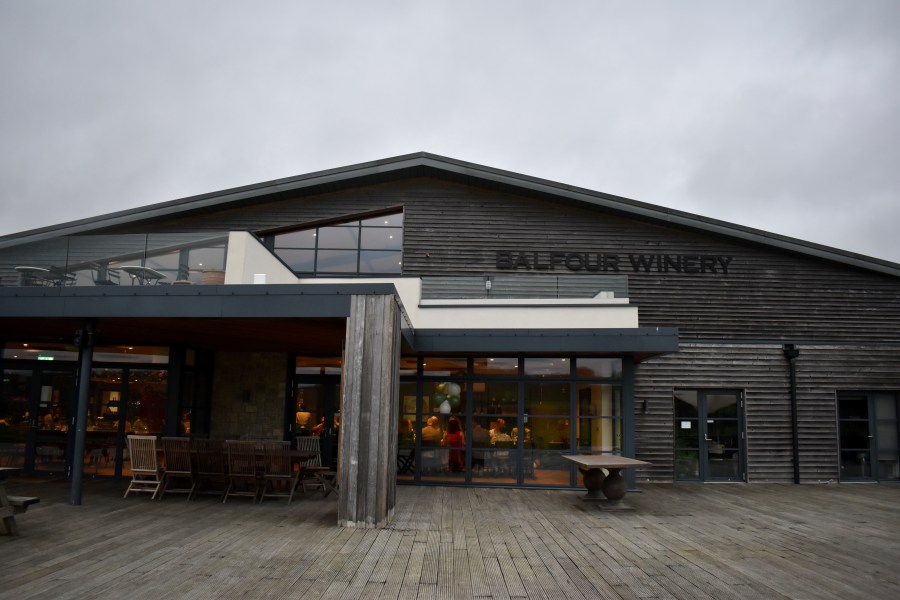
However, the most convincing candidate currently is Albariño. Its thick skins, naturally high acidity, and relatively good disease resistance make it well suited to England’s cooler, changeable conditions. It can ripen fully while maintaining freshness. Commercial plantings remain limited but are no longer purely experimental. In Kent, producers such as Balfour Winery and Four Daughters have worked with Albariño, while Ancre Hill Estates in Wales, a biodynamic estate, is also cultivating the variety. Although Albariño is still rare in England and Wales, these producers provide important proof of concept for its future potential.
Consumer psychology: recognition sells
From a behavioural economics standpoint, consumers are more likely to purchase a familiar grape in an unfamiliar region than an unfamiliar grape in an unfamiliar region. In that sense, English Albariño may have a commercial advantage over lesser-known varieties such as Ortega, Solaris, or Seyval Blanc, even when the quality is comparable.
The name “Albariño” reduces uncertainty and lowers the perceived risk of purchase, making a subtle play on cognitive bias. Research on competitive advantage in the wine sector highlights that wine is particularly suited to differentiation strategies because it relies heavily on intangible factors: regional identity, terroir, heritage, and consumer perceptions of quality. In this case, perceived quality may be positively influenced by Albariño’s strong association with Galicia and its established international reputation.
Brand building in wine is often strengthened by linking a product to a recognised country or region, a well-known grape variety, and a desirable lifestyle image. By using Albariño, English and Welsh producers can tap into these existing associations, enhancing brand appeal and consumer choice.
Business strategy and opportunity: beyond the sparkling trio
England’s brand has been largely built on traditional-method sparkling, competing indirectly with Champagne and other established sparkling regions. However, sparkling production requires extended ageing, ties up working capital for several years, involves relatively high production costs, and increases inventory risk.
Still wines made from Mediterranean varieties, by contrast, can reach the market more quickly. They improve cash-flow cycles, allow for broader price segmentation, and can be produced at lower cost. In this context, Albariño has the potential to become, strategically, what Marlborough Sauvignon Blanc is to New Zealand: a clear and recognisable varietal identity for a national category.
The opportunity here is not simply climatic but competitive. It is about repositioning England as innovative rather than imitative and demonstrating adaptability in response to climate change. As parts of Essex and Kent begin to experience conditions increasingly comparable to those once found in Galicia, the shift is not just about warmer weather, it is about strategic repositioning within the global wine market, presenting Northern Europe as a viable new canvas for traditionally southern varieties.
Kent has the largest plantings of Albariño in England and Wales, and one of the producers focusing on the grape is Balfour Winery in Tonbridge. During my visit to its stunning vineyard, I was lucky to find Nuria, Balfour’s single-varietal Albariño, following the Balfour-Lynn estate’s tradition of naming wines after family members. Most of the first 2022 vintage was sold prior to its official release, showing strong early demand for English Albariño. The wine is available at the estate’s Cellar Door restaurant in Kent, through the winery’s wine club, and at Balfour at Bow, its London venue. At the time of release, Fergus Elias said they “knew they were on to something exciting,” describing it as just the beginning of Albariño’s future in the UK. Plantings are now increasing in response to this interest, reflecting confidence in the grape’s long-term potential.
Balfour’s Albariño is featured at the prestigious three-Michelin-starred Sketch in Mayfair. Listed by wine director Frédéric Brugués, this aromatic, cool-climate white wine is paired with the restaurant’s fresh, seasonal and creative menu. It replaces some traditional Spanish and Uruguayan options to showcase the potential of English Wine and to appeal to London’s globally curious wine drinkers.
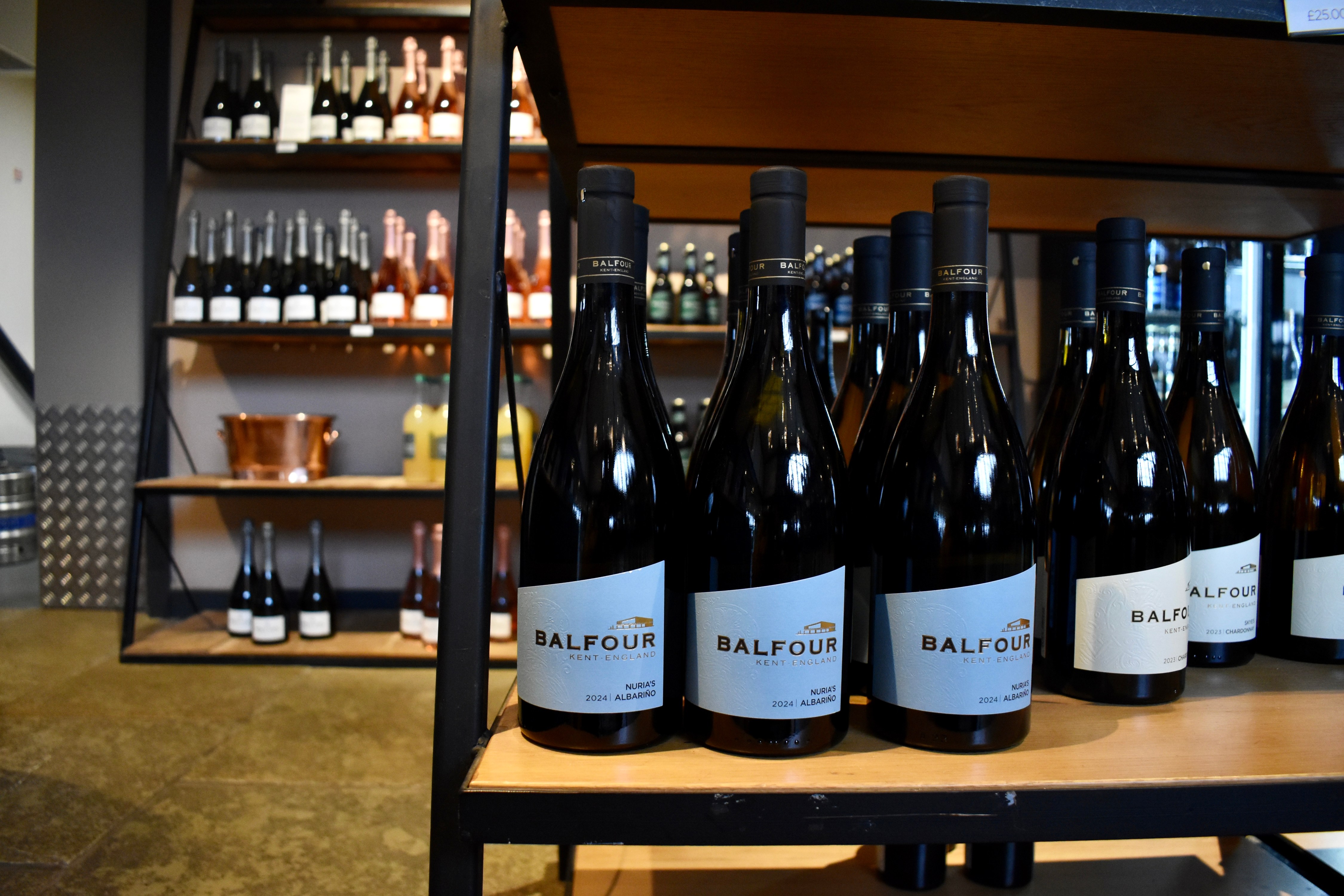
In terms of style and notes, as Balfour Winery puts it, Albariño provides “a unique glimpse into the future of English wine.” The UK’s maritime climate – especially in southern regions such as Kent – shares similarities with Galicia, Albariño’s homeland, creating a natural bridge between the two. The idea of “English Albariño” brings together Britain’s strong seafood culture with the image of coastal vineyards, making the Mediterranean influence feel both aspirational and locally grounded. It can feel like Cornwall meeting Galicia, or Whitstable oysters without the airfare. That is a powerful repositioning: combining the familiarity and reputation of a well-known Mediterranean grape with the innovation and distinctiveness of England’s evolving wine landscape.
In England, Albariño is usually made in a fresh, zesty style with citrus flavours, light stone-fruit notes, and little or no oak to keep it crisp. Because the UK has a cooler and shorter ripening season, the wines tend to have lower alcohol and brighter acidity, with less ripe fruit character than examples from Rías Baixas in Spain. In Rías Baixas, warmer and longer ripening conditions allow for rounder fruit, more texture, and often a stronger sense of salinity from the coastal vineyards. As a result, Spanish Albariño is commonly paired with oysters, seafood, and dishes like paella, while English Albariño works especially well with shellfish, light white fish, and fresh salads. Overall, UK versions are typically leaner and more acid-driven, while Spanish originals are fuller and slightly riper in style.
Export possibility
Albariño could offer clear strategic advantages in export markets such as the United States and Canada, where the grape name already has recognition. In these markets, English provenance adds a sense of novelty, while the pricing can sit comfortably in the premium-but-accessible segment. However, there are potential risks in terms of consumer perception. If too many producers plant Albariño, does England risk losing its distinctiveness, or does it gain greater stylistic flexibility? The move could dilute a carefully built cool-climate identity, appear trend-driven, or create confusion in export messaging. Ultimately, the outcome depends on how producers position the wine abroad – through tasting profiles, production narratives, and a clear, consistent branding strategy.
Redefining English uniqueness
England and Wales do not carry centuries of red wine heritage like Bordeaux or Rioja, and that may be an advantage. In branding terms, England and Wales are still start-up nations in wine. Start-ups experiment, adapt, and iterate. Albariño fits that mindset. It is not only a response to changing growing conditions, but also a strategic move in a shifting trade landscape, where factors such as EU tariffs, export dynamics, and even sustainable considerations encourage diversification and flexibility.
That said, challenges remain. With only a handful of vintages produced so far, English Albariño has a limited track record. Consistency and stylistic clarity will take time to develop. Consumer recognition is another hurdle: while the grape name is familiar, the idea of “English Albariño” is new. Building trust and awareness will require careful positioning and compelling storytelling.
More importantly, there are strong reasons for optimism. Albariño represents not only a climate experiment, but a branding strategy in motion. It offers a rare combination of familiarity and novelty, allowing England to move beyond the sparkling-only narrative without abandoning its cool-climate identity. If handled thoughtfully, it could evolve into a defining still-wine category. The real question is not whether Albariño can grow in England, but whether England can make it distinctly its own with clear storytelling and positioning. In that sense, this is ultimately a test of strategic agility, where climate adaptation meets brand evolution.

For more like this, sign up for the FREE Vineyard newsletter here and receive all the latest viticulture news, reviews and insight