
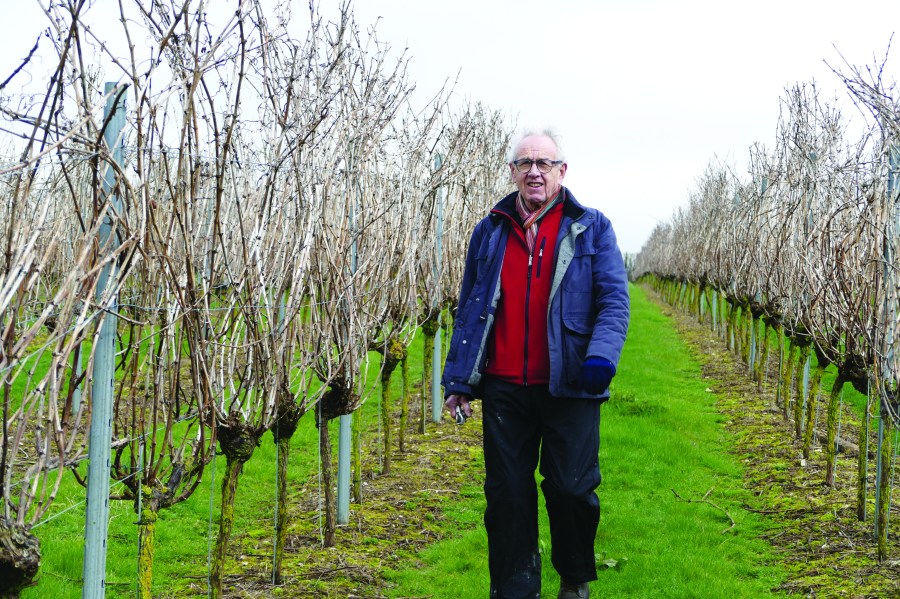
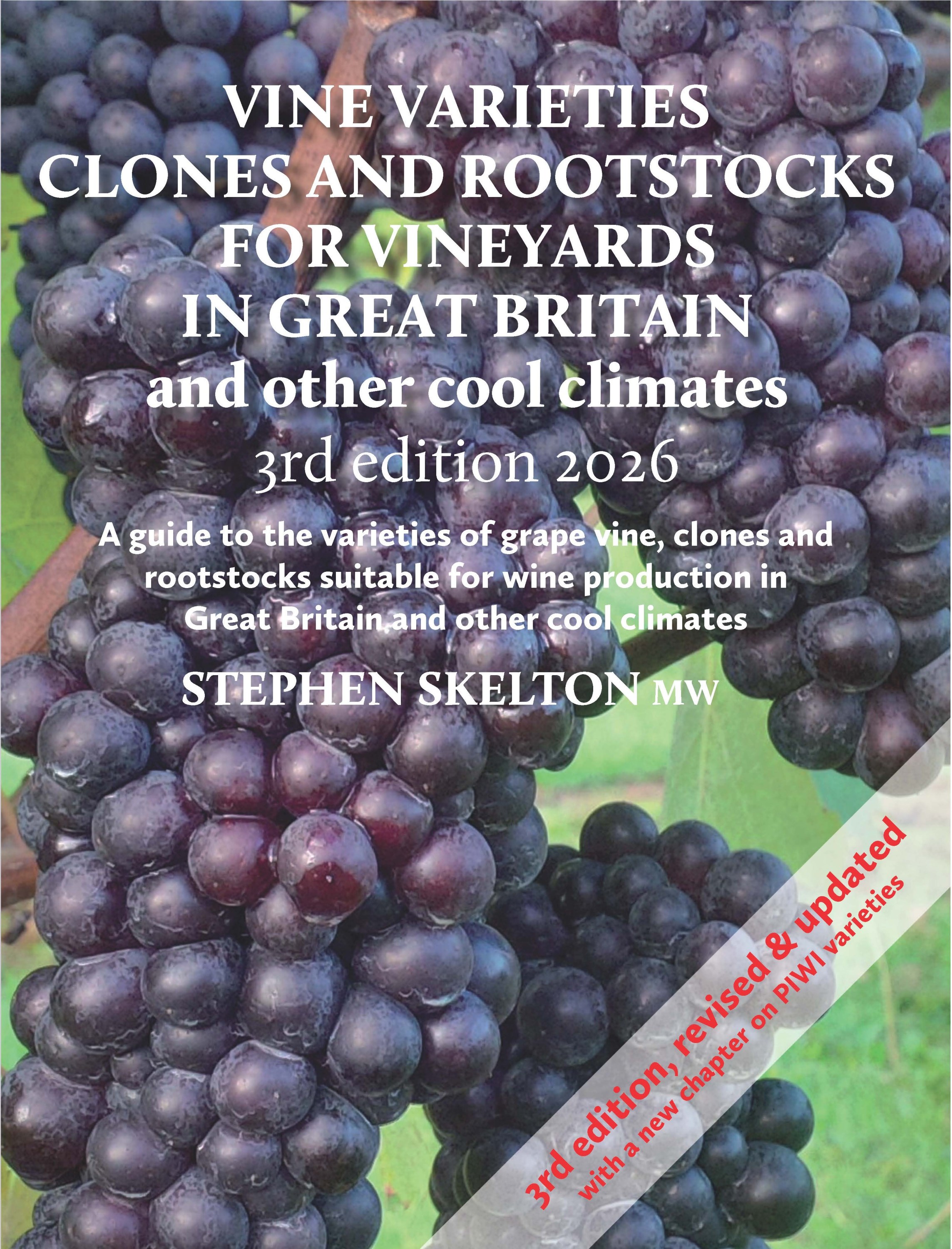
Vineyard Magazine caught up with Stephen Skelton MW to discuss the release of his newly updated book, Vine Varieties Clones and Rootstocks for Vineyards in Great Britain and other cool climates.
In the third edition of this book Stephen aims to arm those planting new vineyards with all the information they need to make their own informed decisions about the vines that will suit their site and the vines that will produce grapes that will make the style of wine they want to produce. A personal process that Stephen describes as simple but crucial. “These are decisions that are made in the very beginning around the figurative kitchen table but once the vines are ordered and planted these decisions cannot be changed and last the lifetime of the vines,” said Stephen with emphasis.
This edition of the book is poignantly dedicated to the memory of Peter Hall a great pioneer of the English Wine Industry and Stephen’s friend who sadly passed away in 2025. “I wanted to include this in the book because he was my friend and I appreciate all the hard work he put into viticulture in England. In the 1970s we were all planting Seyval on 3309C rootstock sourced from an exceptional block by the vine breeder Couderc, this variety was and still is very successful and we both agreed on its suitability for English wine,” explained Stephen.
It is clear that this book is a way for Stephen to help individual growers create their own traditions based on well informed decisions. “I have really enjoyed the research for this book and really enjoyed the writing process,” he explained with emotion in his voice.
In the introduction Stephen explained why this book has been released. The second edition was published in 2020 and since then “the area under vine has increased from around 3,500 hectares to at least 5,000 hectares.” This is only one of the many staggering facts that Vine Varieties Clones and Rootstocks for Vineyards in Great Britain and other cool climates places before the reader. The book has useful tables that show how yields have increased and even predicts how this trend will continue in the coming years. One such table in the book highlights that 10.67 million bottles were produced in England and Wales in 2024 but with 982 hectares of vines three years of age or younger this figure could well reach 21.5 million bottles by 2029. “There are now an increasing number of vineyards with longer histories and as growers gain experience of several vintages both yield and quality will increase,” explained Stephen.
An industry that is expanding at such speed needs advice that will keep pace with this changing landscape and in this edition Stephen has dedicated an entire chapter to PIWI varieties. Giving an honest appraisal Stephen points out that “there are no vine varieties PIWI or otherwise that have been bred specifically for UK conditions which means there is not one superstar grape that should be planted everywhere.” This is a message that carries throughout the book with the research leading to the inescapable conclusion that growers in England and Wales have choices. “This is not a winegrowing region where a specific variety is required or expected,” he said.
Vine Varieties Clones and Rootstocks for Vineyards in Great Britain and other cool climates carries the very clear message that when it comes to clone selection “Finding THE clone for your vineyard, one that will produce the perfect wine year in and year out is probably not possible so play safe and use a sensible range for the size of your vineyard.” The book has an entire chapter relating to clone selection with detailed information relating to clonal variations that have proved successful and what particular wine styles they will suit, whilst recognising that regenerative agriculture has pushed forward the development of PIWI varieties and that this trend will need to develop further for the sake of the planet. “Sticking to the varieties we know and the consumer knows has environmental costs so PIWIs will become increasingly important,” he said.
The book makes some striking revelations about the adoption of PIWI varieties for example in 2024 there were over 14 hectares of both Cabaret Noir and Divico with Cabernet Cortis over six hectares. Another table highlights that Solaris stands at 117 hectares and is listed as the sixth most planted vine variety. The book also puts the adoption of PIWI varieties into a global context showing their growing significance in Europe.
With new varieties Stephen advises growers to develop a business plan that recognises that some of the varieties have unknown names. “In other areas of agriculture consumers are not overly concerned by variety. I doubt many consumers can name the blueberry variety they buy but wine is different and consumers are often directed by variety. There are ways to deal with this and there are some good examples of labels that do not put too much emphasis on variety but still appeal to the consumer,” he said.
Vine Varieties Clones and Rootstocks for Vineyards in Great Britain and other cool climates is one of those books that each time it is used reveals another important point. Creating a fabulous conversation around the essence of every bottle of wine, it is a book that will help those planting vines to clearly see the wood and the trees making the best decisions for their individual businesses.
A SPECIAL DISCOUNTED PRICE
Vine Varieties Clones and Rootstocks for Vineyards in Great Britain and other cool climates will be available at the special discounted price of £20 plus postage and packing (normal price £30) from 24 January until 14 of February
Purchase the book at this special price
With Fifty years of experience in the world of viticulture and winemaking Stephen Skelton MW has seen many developments and advised many entrants to the English and Welsh wine sector. In 1989 he published his first book Vineyards of England which included an advisory chapter on vine varieties. The rapid expansion of vine growing in England and Wales led to the publication of a book dedicated to this subject. In 2014 Stephen published Vine Varieties Clones and Rootstocks for Vineyards in Great Britain and other cool climates as a book that would be dedicated to helping new vineyards that were ready to plant or those vineyards looking to expand. The third edition of this book has now been significantly updated for 2026.