

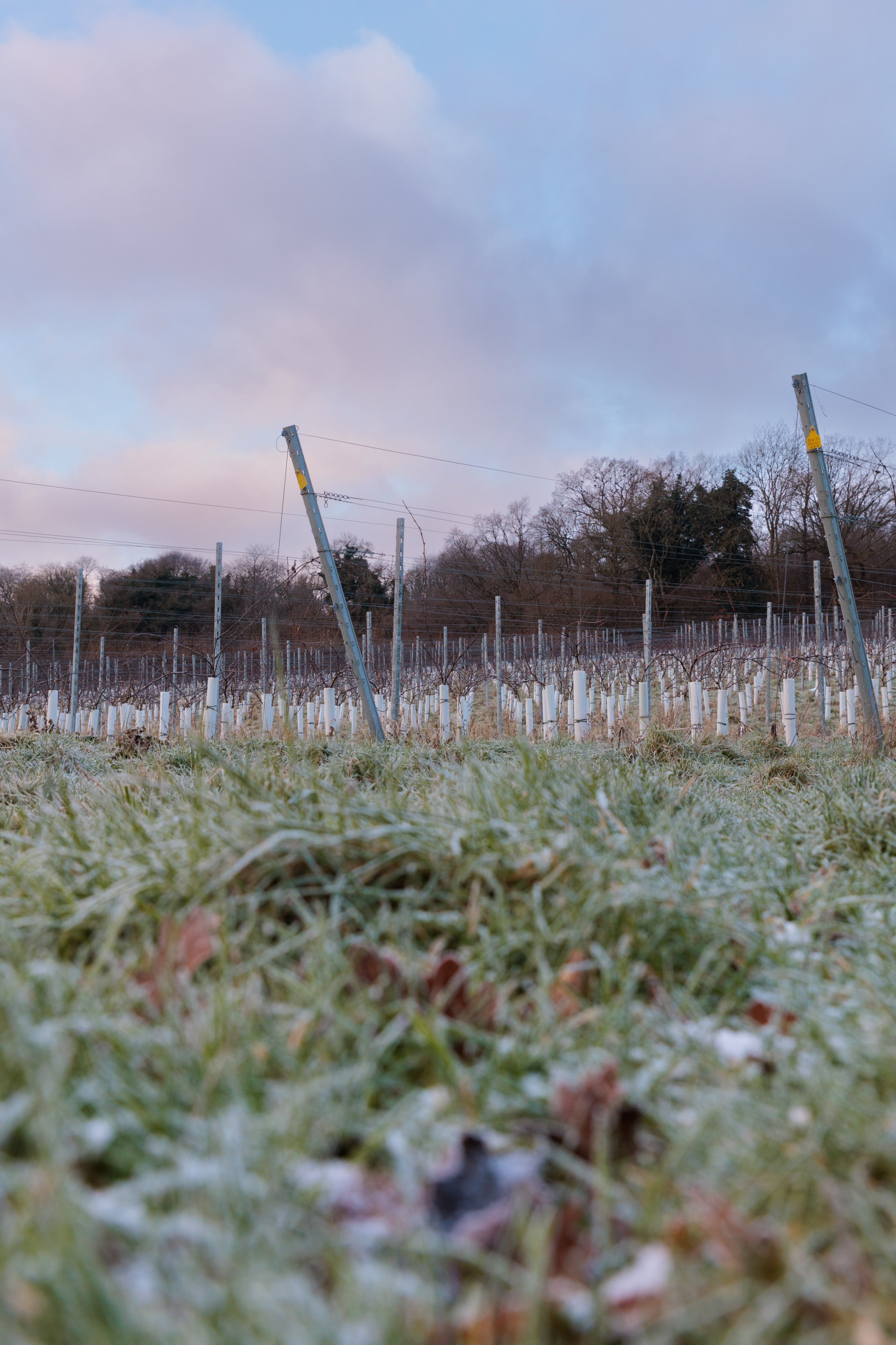
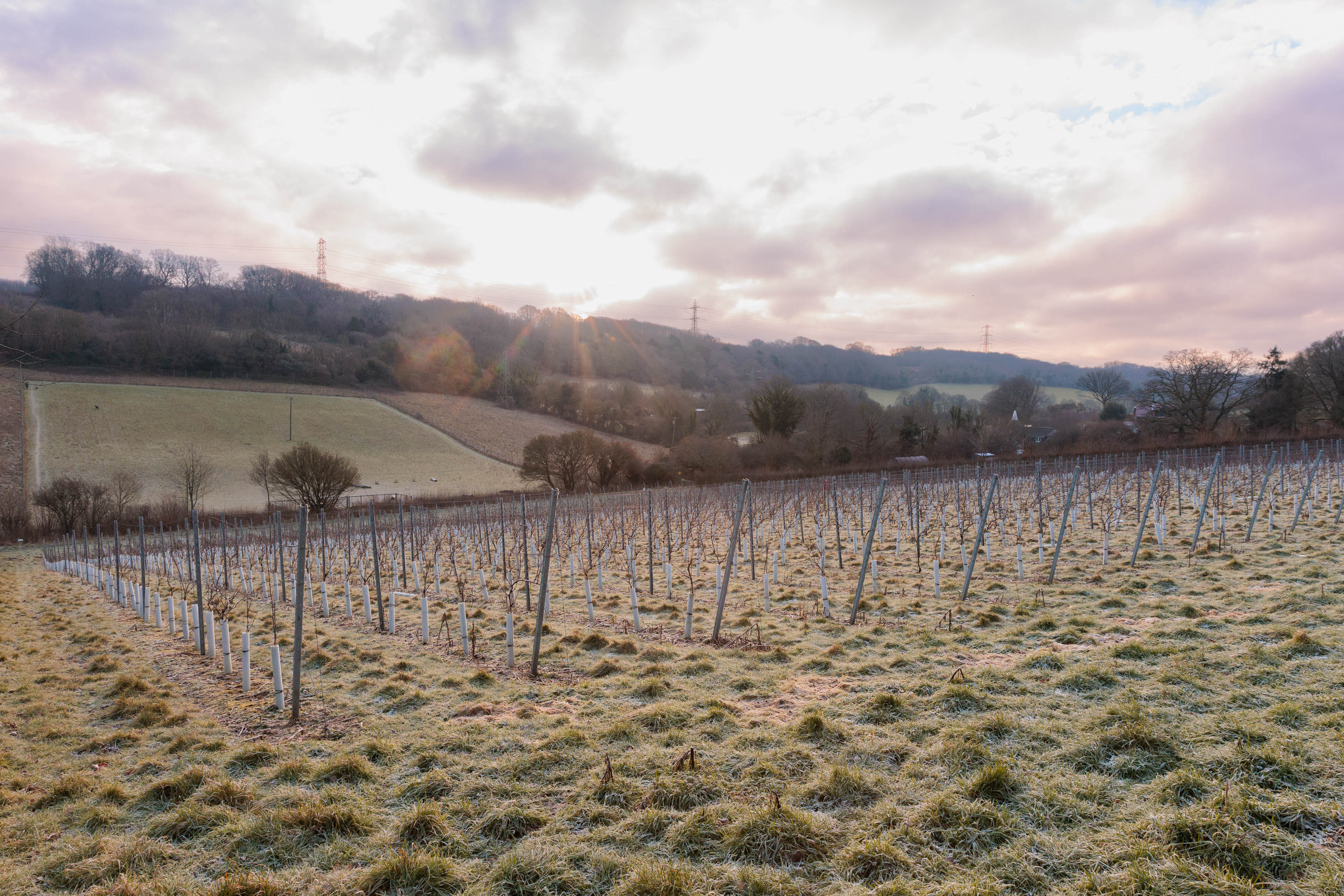
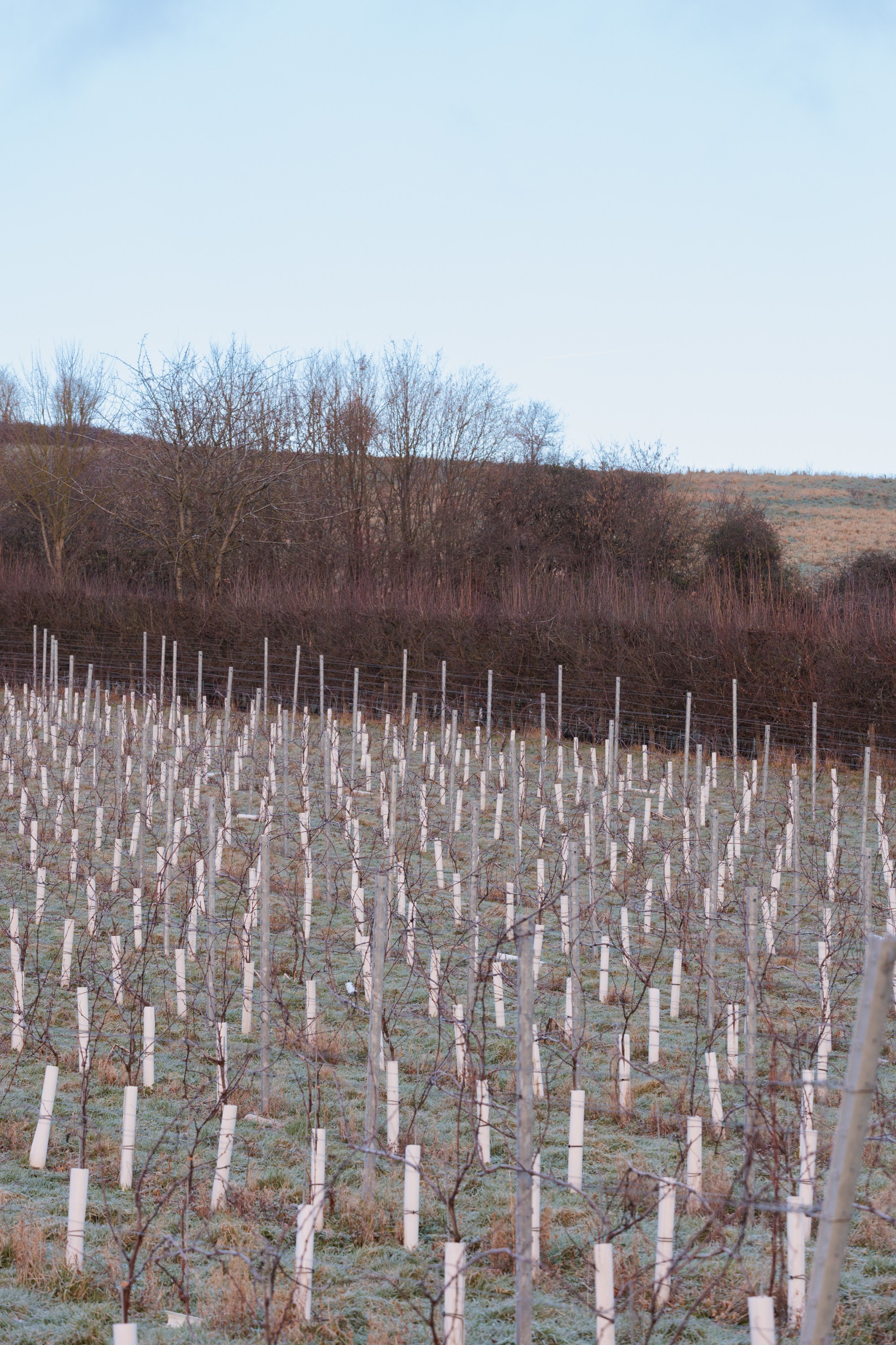
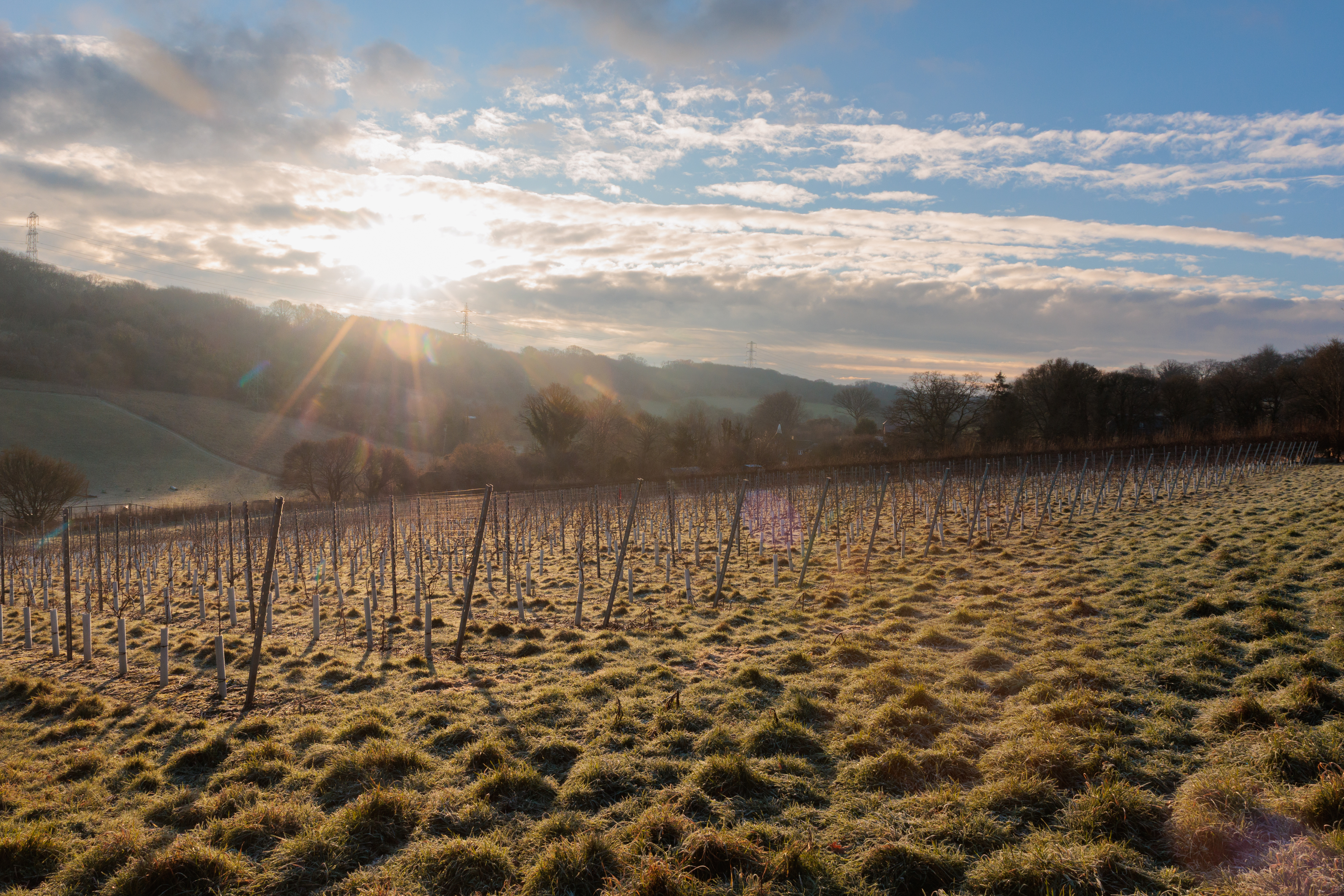
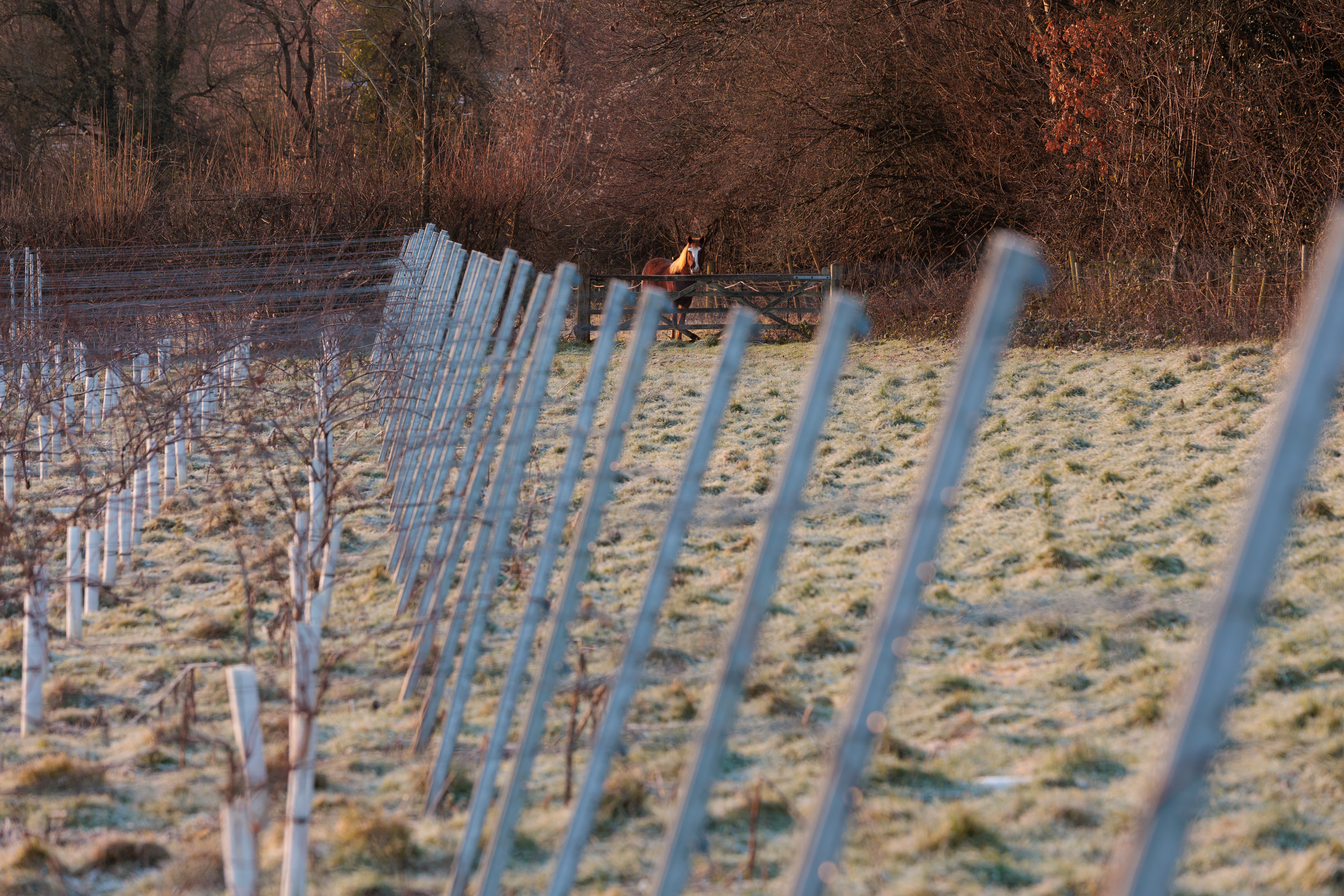
On an extremely frosty morning with the temperature well below zero a journey into the hamlet of Pett Bottom, Canterbury at first seemed a lonely prospect, but not only was Little Bursted Vineyard in an idyllic and beautiful location it is far from lonely.
Remote vineyards can sometimes be difficult to find but “You can’t miss the vineyard it is on the only road through Pett Bottom heading toward Lynsore Bottom,” said Tim Sarson the owner of this unique Kentish vineyard, with warmth in his voice. Whilst Pett Bottom may be a small hamlet in Kent it has an interesting history and Ian Fleming chose Pett Bottom as the childhood home of fictional spy James Bond.
It was however the history of the formation of land at Pett Bottom that attracted Tim. Tim purchased the land at Pett Bottom in 2020 but he is quick to point out that this was not related to the Covid-19 pandemic as he had been looking for the right location to plant vines for several years.
Tim finds it difficult to put into words why he chose to plant a vineyard in Kent and it becomes obvious that for Tim the connection to the vines and the land that supports them is deeper than words. He has been growing hobby vines including Chardonnay in his garden in South London for many years and has experimented with winemaking taking inspiration from wine regions in other parts of the world. Tim has also undertaken the intensive viticulture course at Plumpton College and with a large degree of patience has ensured he was in the premium position to take advantage when the opportunity finally arose for him to plant a commercial vineyard.
With a background in geography Tim explained that he had looked at other places with interesting soil types such as the Isle of Sheppey in Kent which is famous for its fossil finds but it was the head deposits, Marl and Clay with Flints that have formed in this valley that he found fascinating. This soil has formed during the freeze melt process of the ancient cold climate landscape called solifluction. “This soil has neutral pH despite sitting on top of chalk bedrock which was very suitable for vines,” explained Tim. “The soil is also similar to that found in the wine region of the Marne Valley and the land is not too far above sea level,” he continued.
The geology of the site has created its own particular problems. “When I initially soil sampled at Little Bursted Vineyard I made a slight mistake, because the vineyard is small I took average soil samples across the area but there is one part of the vineyard in the top corner that is a completely different soil, it has chalk right at the surface. The vines in this area should have a Fercal rootstock but instead have SO4,” said Tim in a matter of fact manner. It becomes obvious that Tim is one of those rare people who accept that life will not always be perfect instead of fighting or lamenting what cannot be changed.
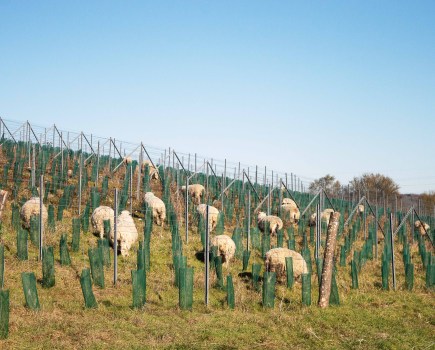
“The land on this side of the Pett Valley Bottom has a big diurnal range which makes it very attractive as a vineyard,” Tim explained. It is clear throughout the visit that Tim has an abundance of patience. Having bought the land in 2020 Tim did not plant vines until 2022. “The lead time for the vines was significant so in 2021 I planted cover crops and that allowed enough time to source the 5300 vines and also ensured the soil was in great condition when the vines were planted.”
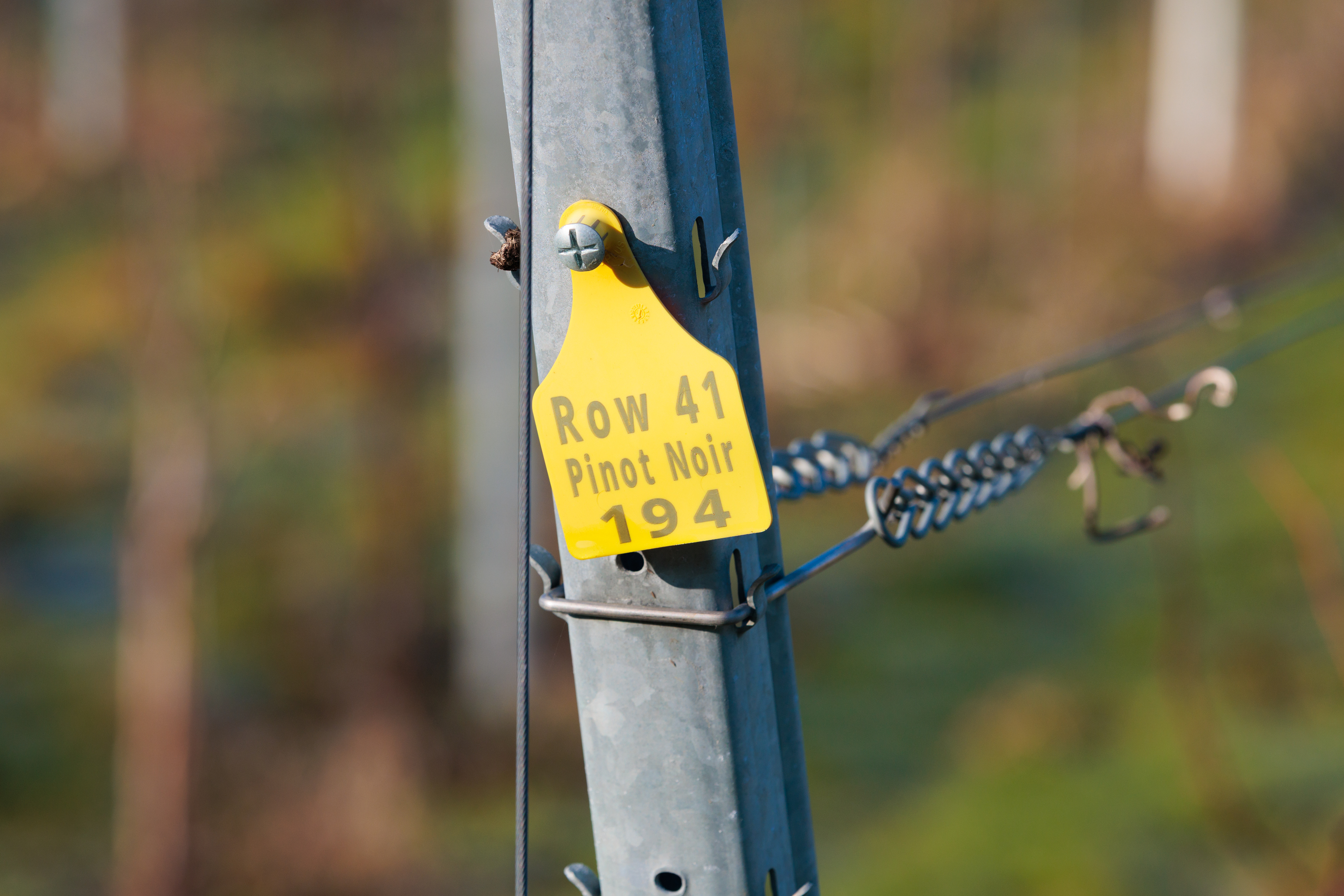
The vines consist of Pinot Noir, Pinot Meunier and Melon de Bourgogne (Melon B). “I decided against planting Chardonnay because of the soil type,” explained Tim. “I considered various other grapes because I really wanted to plant something different, but I needed a grape variety that would also do well here. I considered both Chasselas and Aligote but was not sure either would really shine so settled on Melon B.”
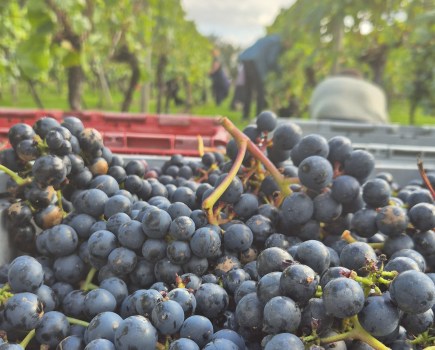
There are not many plantings of Melon de Bourgogne in the UK and the vines were sourced from a nursery in the Loire Valley. When the wines are released, they will be some of the first commercial wines of this variety grown and made in the UK. The Melon de Bourgogne is one third of the total vines on the site and was picked on 18 October 2025 with a brix of 17.5 and a TA of 10.9. The winemaker Defined, situated in Canterbury, is only a few miles from the vineyard meaning the wines will have a very local feel.”
The wines will be marketed under the brand Quiet Land, a name which really captures the sentiment of this vineyard where you can literally hear the peace and your thoughts are only interrupted by the plethora of birds who are sharing this corner of Kent. “Quiet Land will be the brand name going forward. One reason for this is because I noticed that there is a village in Essex near Billericay with the name Little Burstead. Whilst the spelling is slightly different it is important that the wines I produce should be distinct and easily found in an internet search and Quiet Land seemed so appropriate.”
Tim had intended to release some still wines in 2026 but with his customary patience he has instead decided to wait and release the first wines as Sparkling wines. Whilst this decision means it will delay the release of the first wines from Quiet Land Tim is adamant that quality will be the defining factor for the wines so there is currently no definitive release dates because they will only be released when they are ready. “I will be taking the wines to local food markets where I can interact with the public and hear their feedback,” he added.
Having had hobby vines for many years Tim has found that making wine from these grapes is a challenging but rewarding process. He decided that he would save a small amount of the Melon de Bourgogne grapes from the vineyard and “I got my 12 year old daughter, Verity, to stomp the grapes (I washed her feet beforehand) she wasn’t sure at first but we ended up having a great time”, said Tim with a laugh and it was a privilege to be a given a tasting of this wine that Tim has produced for his personal collection. Tasting the wine highlighted the potential of the Melon de Bourgogne variety showing amazing fruit characteristics from the moment he opened the bottle. This fruit is balanced by the distinct salinity with which the variety is synonymous. He is keen to point out that it is not just his daughter who is involved in the vineyard his 18 year old son James also helps and harvest has been completed with the help of willing volunteers.
Alongside the Melon de Bourgogne, there are two clones of Pinot Noir and nearly 50% of the vineyard is planted with Pinot Meunier. “The Meunier has performed the best of all the three varieties,” explained Tim. “Pinot Meunier is a grape that is overlooked. For many years it has been considered as a minor addition to a blend but in the climate here in Pett Bottom it will make really interesting and unique wines,” he added. “We had a base wine tasting at Defined in December and the wines tasted Meunier dominant,” he said with a smile. In recent years many wine writers and critics have also sensed that Meunier could be a shining light of English wine production and wines that highlight this grape are making great strides in competitions. Matthew Jukes named Meunier a “secret weapon” in his Vineyard Magazine column of October 2022.
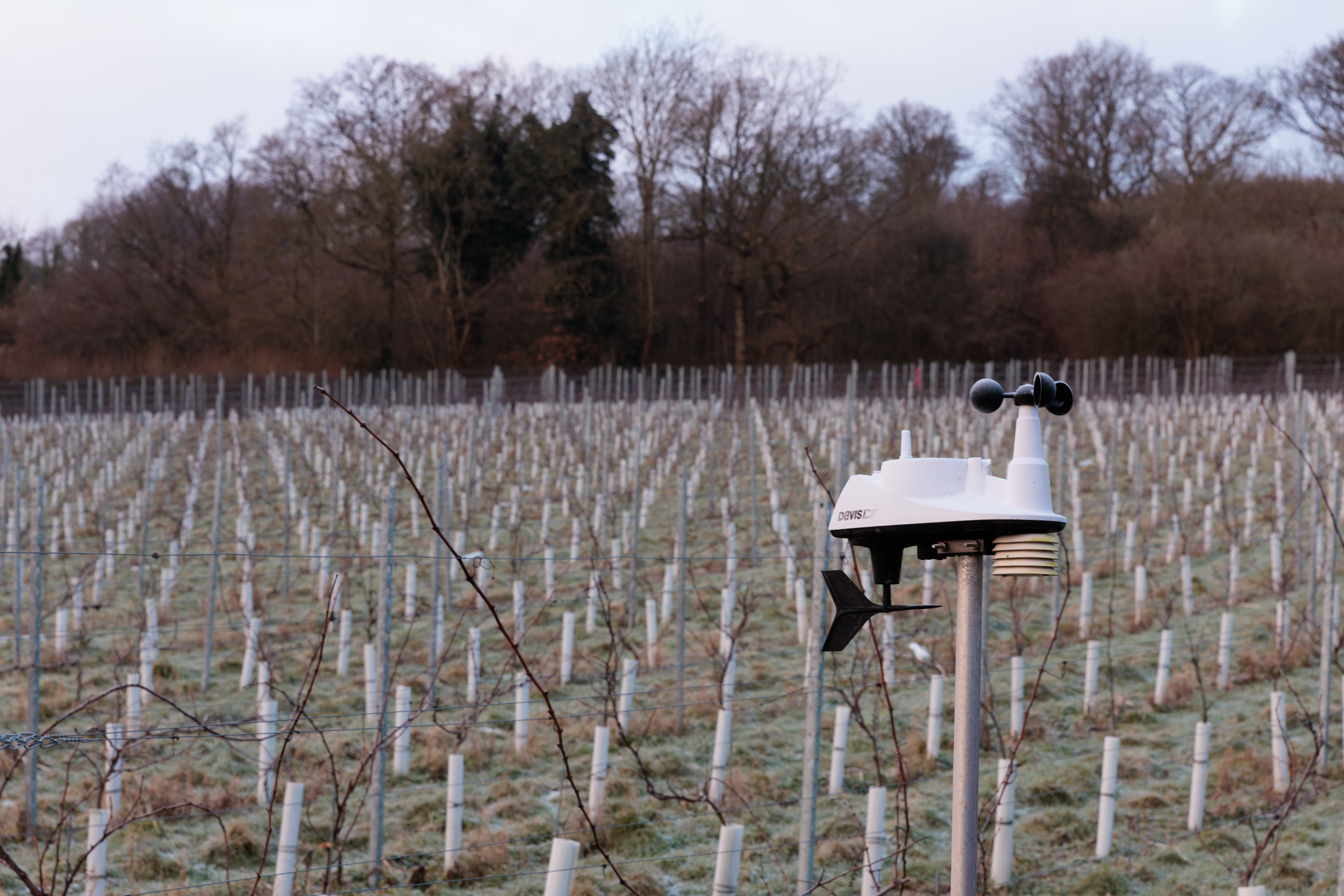
The vineyard has a weather station and the data has highlighted several unique points about the vineyard. The highest temperature that has been recorded since planting is over 39°C and surprisingly the wettest month since planting came in July 2025. Putting that into context the county of Dorset in the South West recorded under 50% of the average rainfall for the same month in 2025. Despite the wet July, 2025 was still a year with low disease pressure at the site.
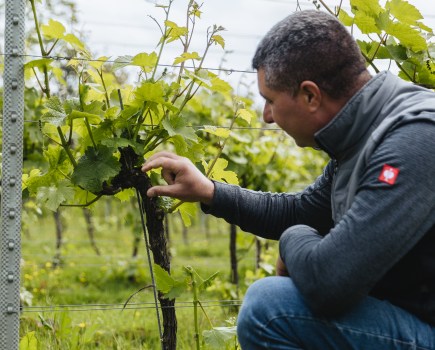
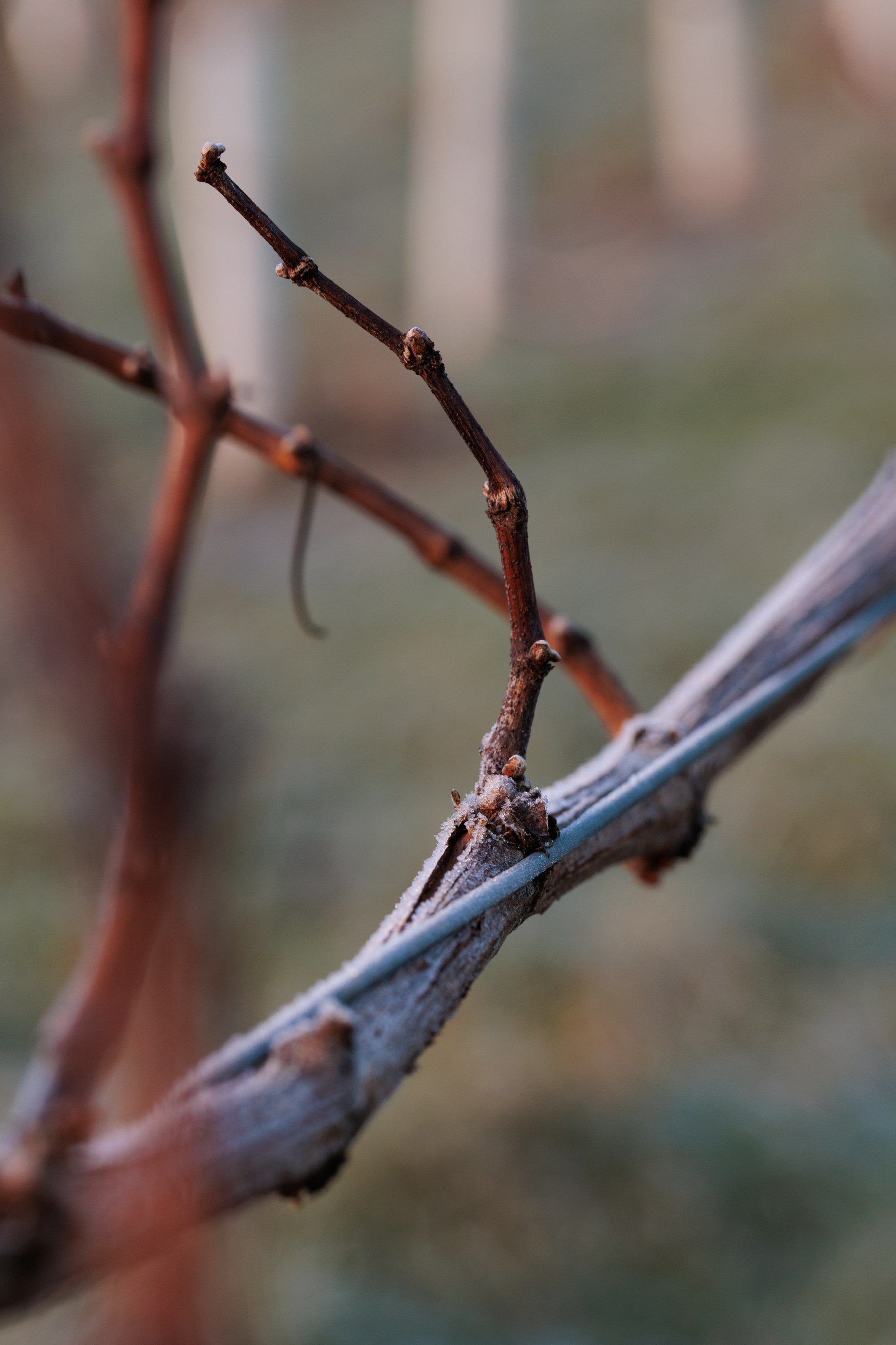
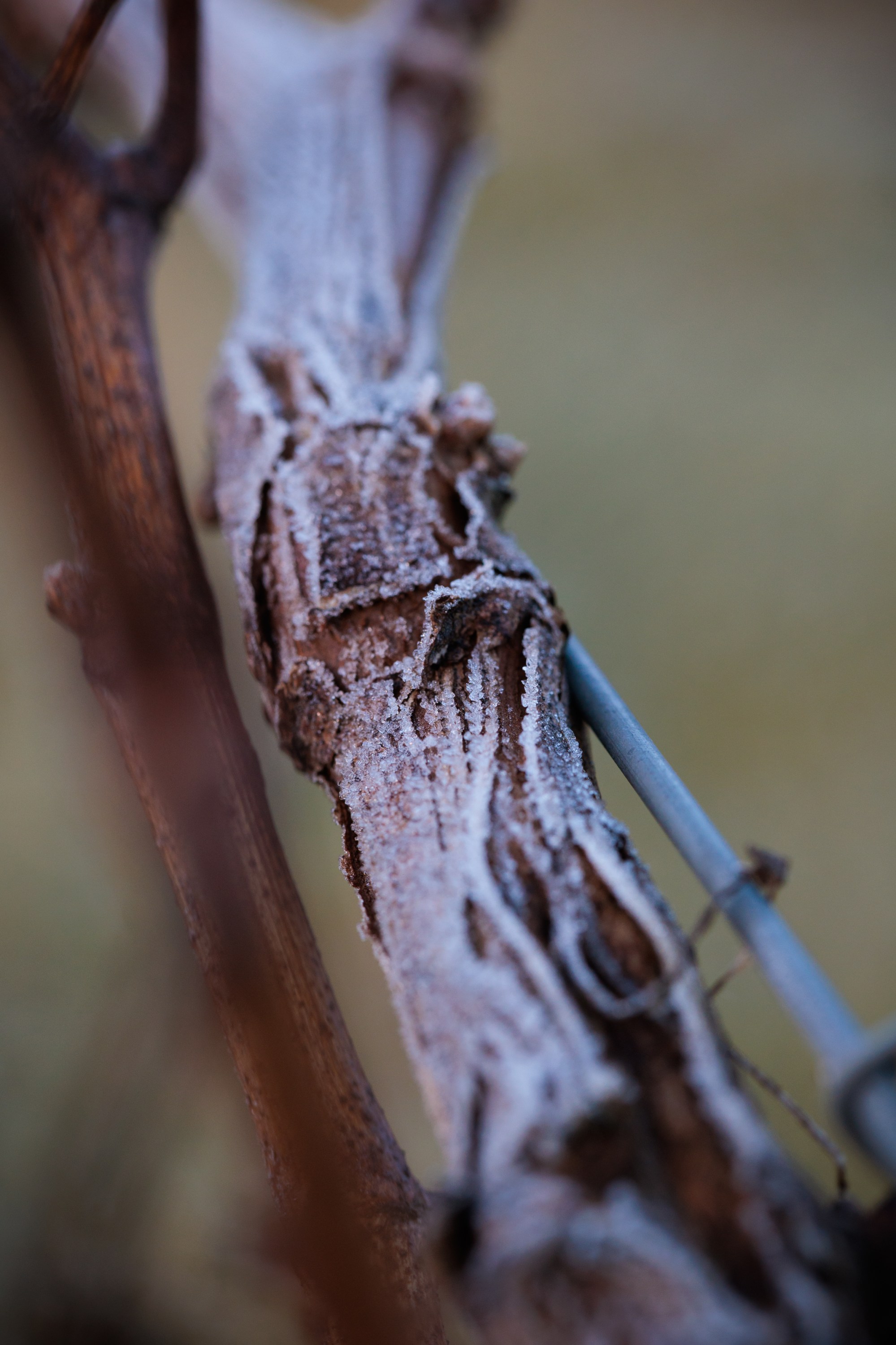
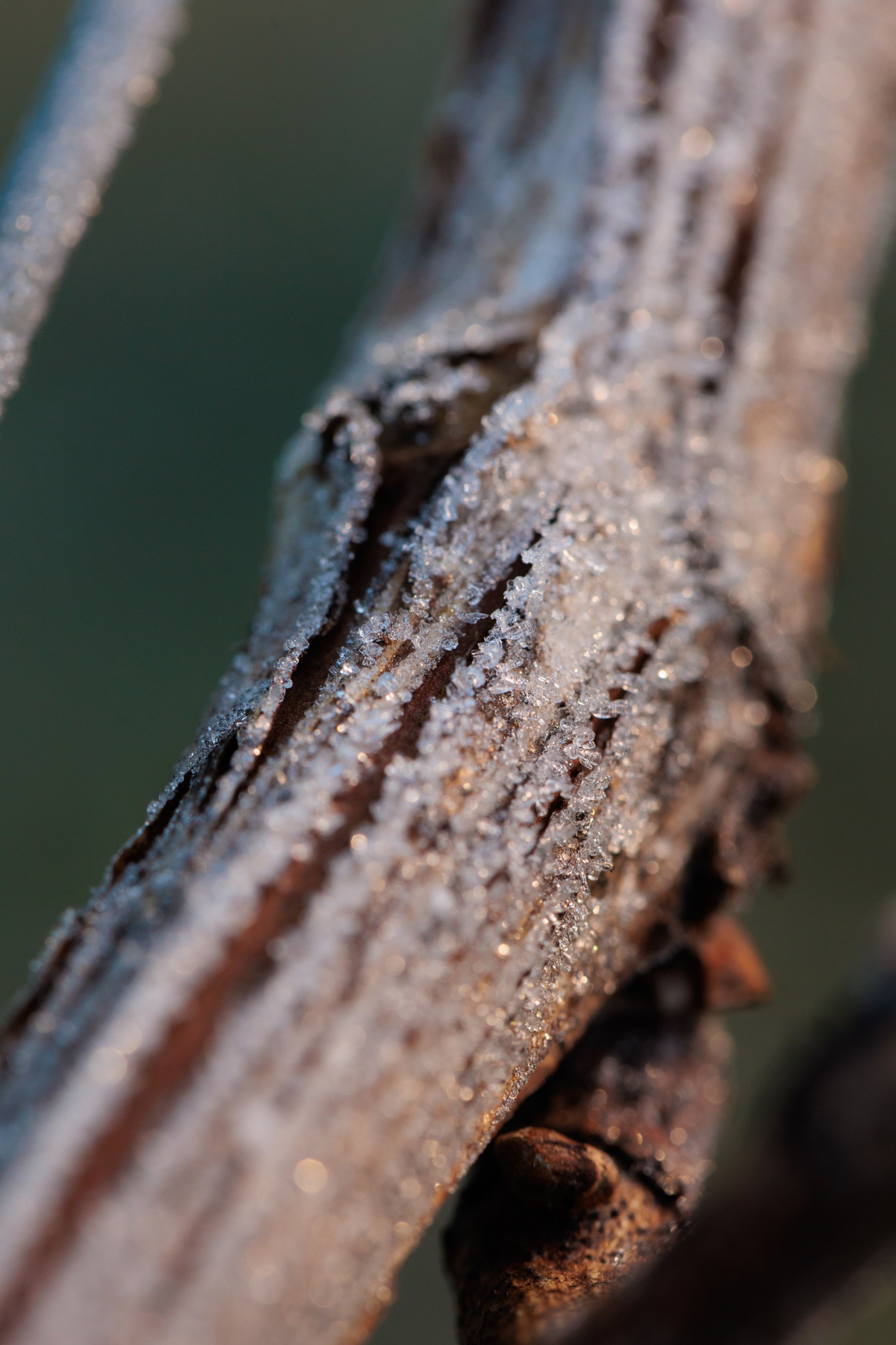
“The site here is frost prone and we prune late in order to help delay bud burst. The site is colder in winter than the surrounding area and this is also an important factor in late bud burst which will help to prevent frost impacting yield,” he explained.
When we talk about pests on the site Tim highlights that the pheasants from the surrounding area are incredibly fond of the red grapes. The losses to the vineyard are significant and in 2025 half the vineyard was netted. Netting the vineyard was a very difficult process and took several weeks “and once the nets are out and have served their purpose they have to be gathered in again,” said Tim with a sigh. The process was successful however and reduced losses so the entire section of red grapes will be netted in the 2026 growing season. Tim explained that he had initially used other bird deterrent techniques such as bird scarers but it was important to him that he was considerate of those living near the vineyard so these have been removed, after all it is called Quiet Land.”
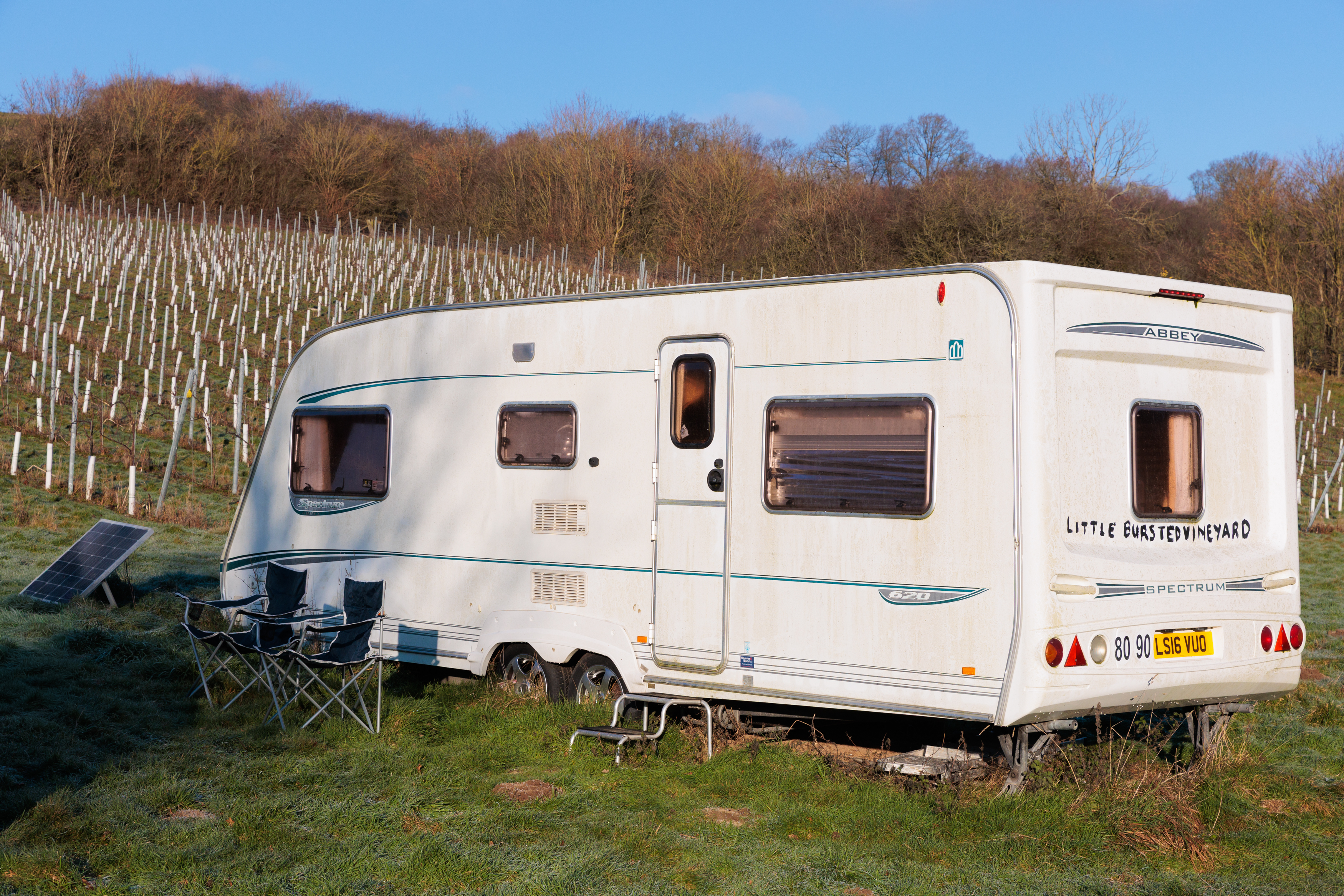
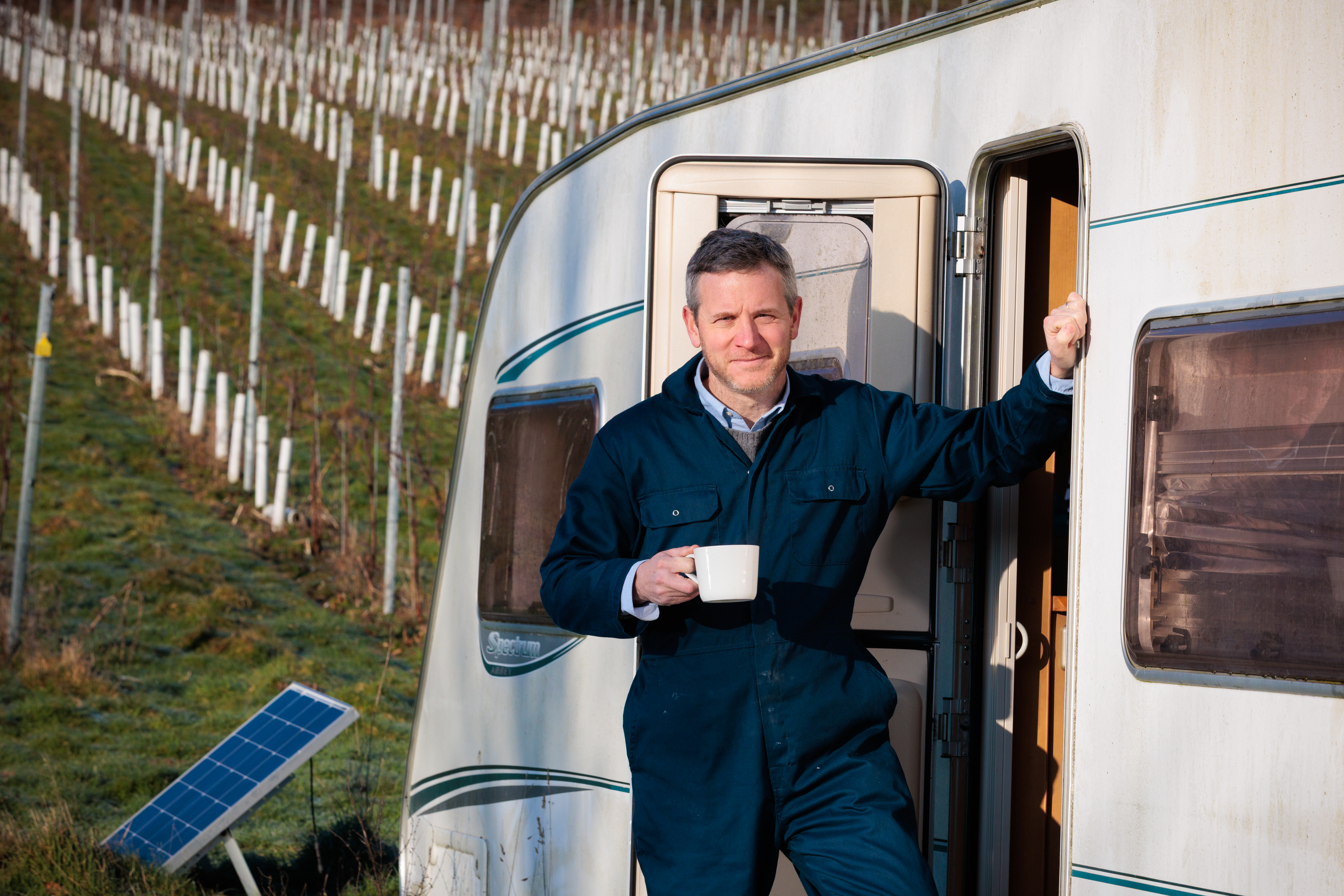
The vineyard has a small caravan on site but there are no other structures, so this caravan is an essential part of vineyard life providing all the essential facilities needed during a full day working with the vines. The caravan is right in amongst the vines giving anyone who sits there a sense of peace, but, continuing the conversation about vineyard pests he explained that this sense of peace was threatened: “The first caravan I had was stolen very soon after it reached the site. It was essential to have a caravan on site so when I replaced it, I looked for a caravan that was less appealing visually, a little moss with a worn look and I let the grass grow around it in order to ensure the thieves would not want it.” This conversation led to discussions about rural crime and the damage that can be done from this kind of predatory human behaviour. A caravan in a lovely quiet valley near Canterbury was an essential part of the running of the vineyard. Rural crime targets the very foundation of agricultural businesses. Tim explained that at some point he may decide that a wooden shed is even less appealing to thieves and more in keeping with the idyllic setting but as with every decision he makes he will exercise his customary patience.
Quiet Land at Pett Bottom Canterbury is a haven of calm with a hint of rebellion. The vines stretch out on the steep slope regally overlooking the valley bottom and it is clear that Quiet Land will soon be making its mark in the world of wine. There is a real excitement about the prospect of entirely different wines being produced at Quiet Land and although Tim himself has shown incredible patience in the entire development of the vineyard and the wines I personally cannot wait to see and taste the results.
Photos: © Martin Apps, Countrywide Photographic
For more like this, sign up for the FREE Vineyard newsletter here and receive all the latest viticulture news, reviews and insight