

Making wine in a way that respects the environment is not just a laudable ethical approach, but also one that makes good financial sense. A sustainable vineyard seeks longevity in all things – not just in the soil where the vine roots grow, but also in the long-term viability of its commercial operations.
Vineyard Magazine talked to Emma Rix, the Sustainability and Creative Manager for WineGB to find out more about the Sustainable Wines of Great Britain (SWGB) scheme and to understand more about what it can offer to vineyards which make them great.
How did the scheme come into being?
SWGB was created as a stand-alone certification scheme by Chris Foss around 2019/2020 to help wine producers benchmark sustainability and align with global standards. SWGB was not originally integrated with WineGB but was brought into the organisation under Simon Thorpe MW a few years later and managed under Laura Tattam.
The scheme is supported and improved in collaboration with the members of SWGB through working groups and a sustainability council, it is very much a scheme for its members, by its members.
Who can join the SWGB?
Any wine-making or grape-growing member of WineGB is eligible to go through the SWGB certification. Members are provided with an account on the SWGB platform where they provide proof to a series of criteria varying from minimum standard (compulsory) to best practice (optional). Alongside this, they have to create a full carbon report based on their operations in the vineyard or winery through the carbon calculator (created with Farm Carbon Toolkit).
Once all the standards have been satisfied, the members’ data is audited by a third-party auditor via online/desk audit. They are then reaudited every three years, with improvements required at each audit, including meeting targets. Members’ desk audits are followed up by ‘spot check’ in person audits by the scheme manager once throughout their three-year audited period. The manager will go to the site with recommendations from the third party auditors as an extra layer of validation and a report is produced – this report is then moderated by the external auditors.
What sort of criteria is the certification assessed against?
The scheme has guidelines for each module (vineyard and winery). These cover a myriad of environmental sustainability topics such as energy use, water use, packaging, spraying, biodiversity, and vineyard maintenance. A new people section will be introduced this year which will support members in their social sustainability efforts.
What are the benefits for businesses who achieve the certification?
Benefits for those who complete the scheme includes access to markets – The scheme is continually working with supermarkets as well as export markets to ensure SWGB is recognised as a credible certification to allow members to gain entry to these markets with certification as proof of their sustainability efforts.
As with most certifications, it is also about climate mitigation – making sure that members are still able to make wine in years to come. Additionally, it is about communicating members sustainability work, so it is recognised by trade and consumers alike.
How are vineyards who aspire to join the list, but don’t yet meet the criteria, supported on their journey?
WineGB provides ample resources throughout the year to support members to engage with and be successful in their accreditation.
For example, there are toolkits focussing on specific environmental and social sustainability areas of the business such as packaging and hiring. These toolkits help members with research and resources. They are especially useful for smaller members who don’t necessarily have the resources to do this work themselves.
There is a great community of SWGB certified members who support each other, a webinar programme, and annual sustainability reports which spotlight best practice and highlight support materials (including partners and patrons of WineGB who can provide assistance in one way or another, such as Knight Frank, or The Regenerative Viticulture Foundation).
The Sustainability and Scheme manager also provides 1-1 support throughout the auditing process from sign up to reaudit. Ensuring SWGB is an accessible certification is important to WineGB – some of members have less than five hectares and others have over 100 so it is important the scheme is adaptable to both ends of the spectrum.
Find out more about the Sustainable Wines of Great Britain scheme, including a full list of current certification holders on the WineGB website at: www.winegb.co.uk/wines/sustainable-wines
Sustainability in practice
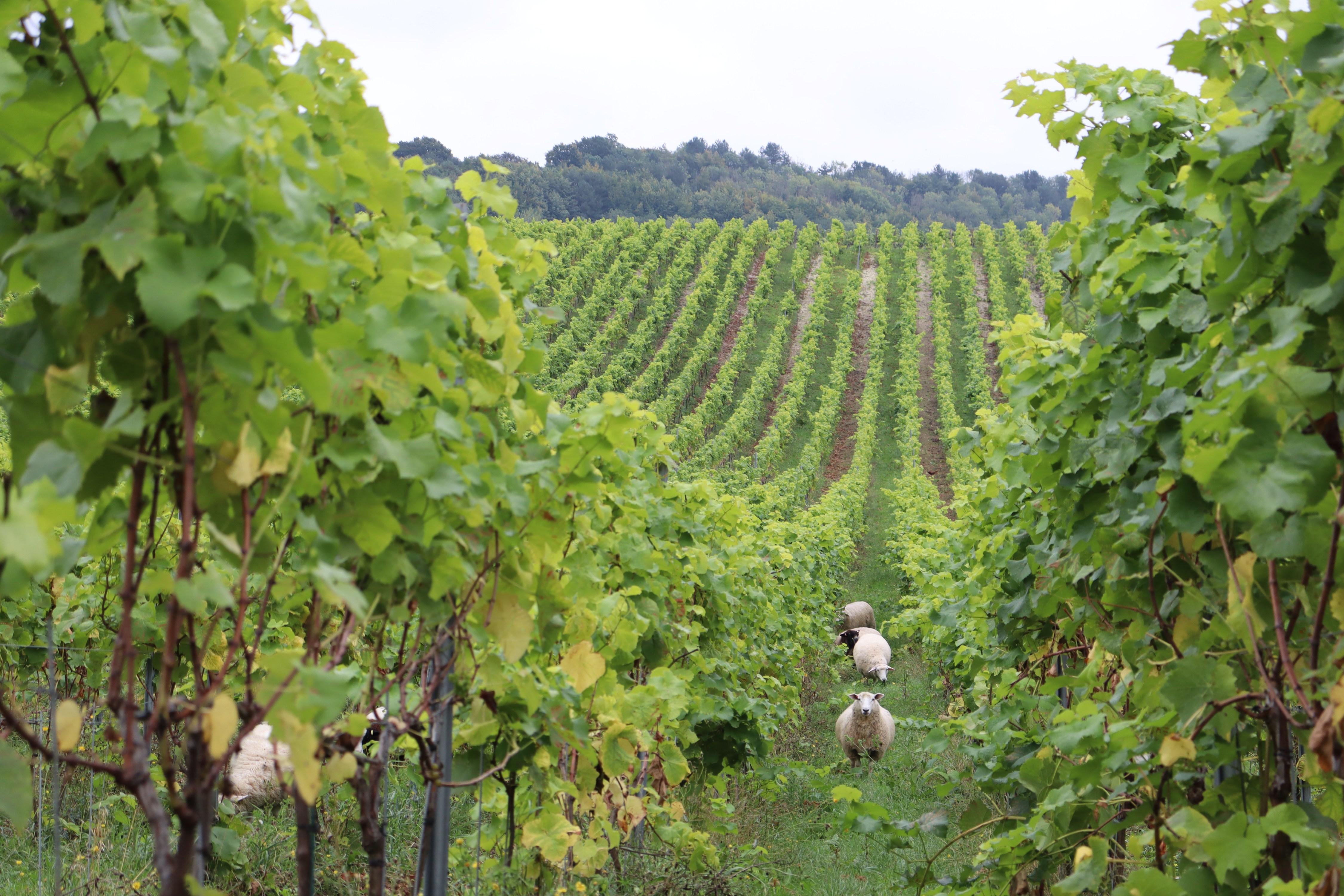
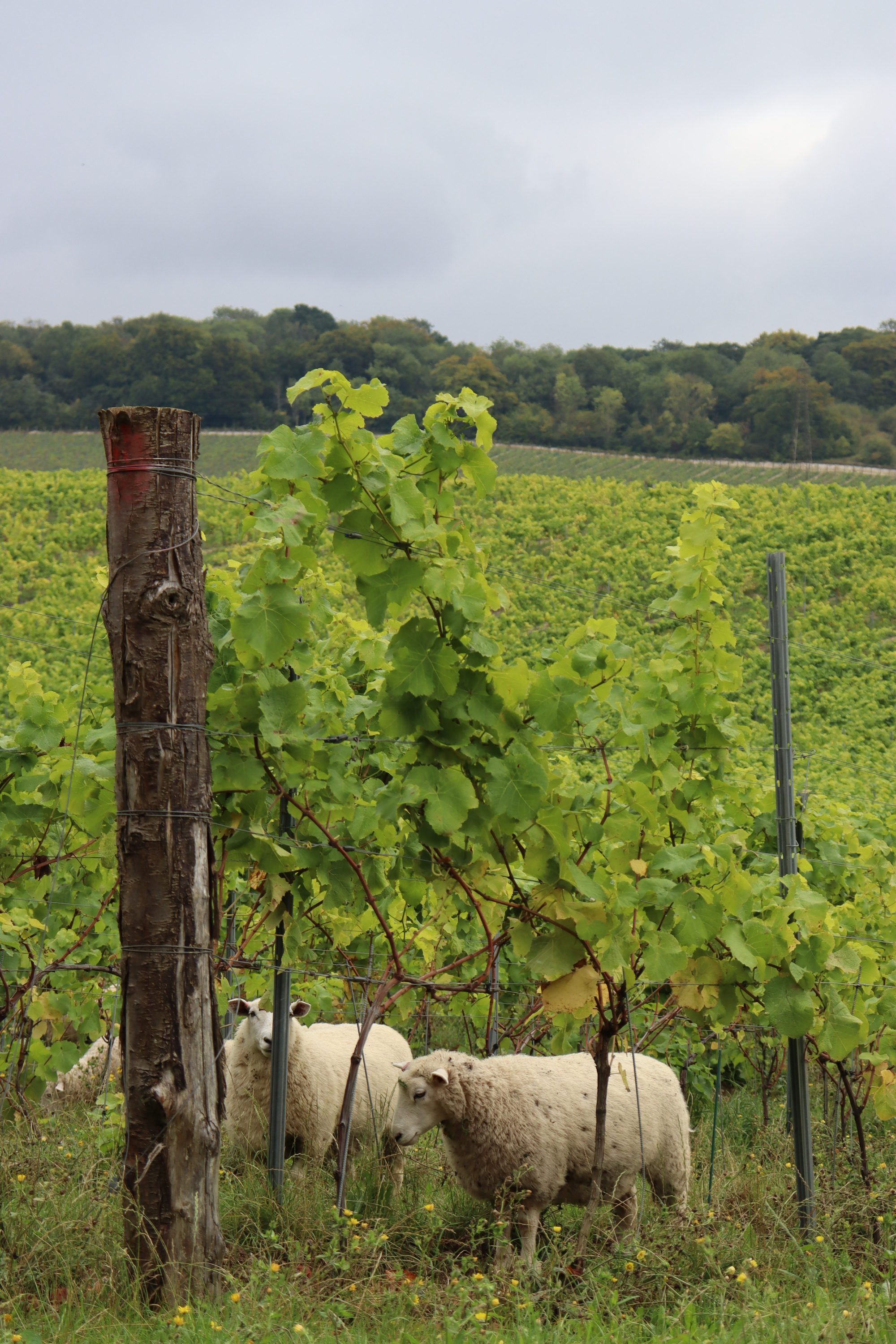
The Silverhand Estate near Gravesend in Kent has a very straightforward philosophy: “Drink English, drink local and drink sustainable.” Their model incorporates sustainable and organic practices, which has allowed them to become the first UK vineyard to reach carbon-negative status, without the use of any carbon offsetting. Vineyard Magazine caught up with CEO Gary Smith to find out more.
Please tell us a little about the history of the estate and why you chose to go down the route of sustainable production
We are very fortunate in that our estate was an organic cattle farm before we purchased it in 2018. That was very much part of the appeal and allowed us to continue to farm in this way.
However, we wanted to do more to ensure our land was at its absolute optimum. That meant going one step further and educating ourselves on regenerative farming. The sustainability aspect plays a huge part in this because through the work we do across both the vineyard and our arable lands we are acutely conscious of the impact each has upon the other.
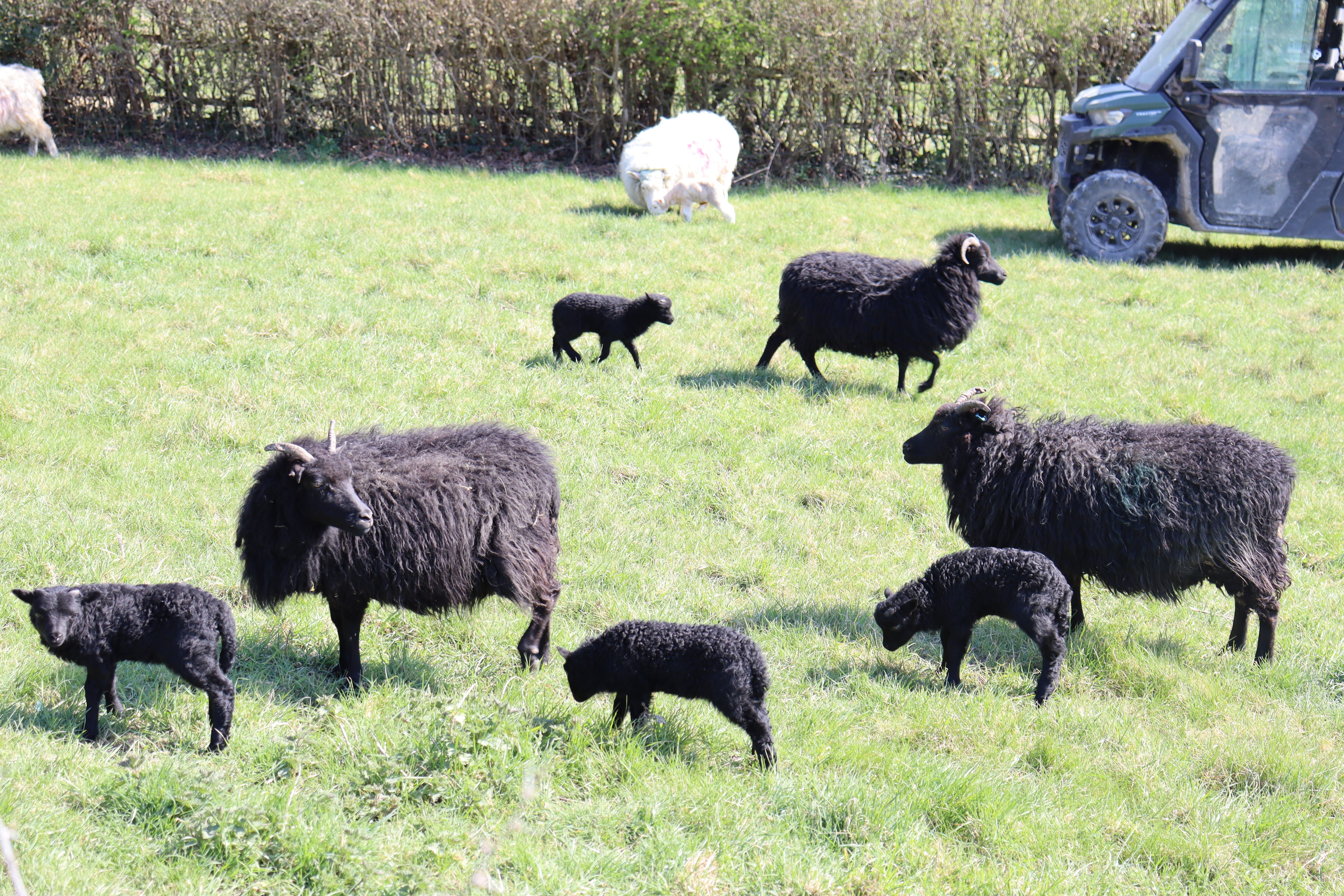
Learning how to work both business and land harmoniously has seen a huge benefit to our estate’s ecosystem. As a result the quality of all of our produce has improved – not just grapes, but our lamb, beef and estate-grown fruit and vegetables from our kitchen garden.
We started with a vision to create an immersive experience that encourages and welcomes visitors to come and see what we do, all the aspects of a working farm, enjoy the great produce and be really proud of English wine!
What role do organic and regenerative farming play in production?
They go hand in hand and underpin our whole business ethos and what we are achieving on a daily basis. We continue to learn, grow and improve our methods and technology to ensure we are leaving this land in the best possible condition for people to enjoy for generations to come. Sustainability is the first crucial step but working towards being fully regenerative is the goal.
How was Silverhand able to become the UK’s first carbon-negative vineyard?
Through the tireless hard work and effort of the whole team. We were all driven to ensure this estate is mindful of its impact on the land and community. Our dedicated conservation and vineyard teams work closely together throughout the year ensuring the work each does is harmonious with the surrounding land.
The whole business is incredibly mindful of what it does. From sourcing lighter weight packaging, utilising water-based biodegradable inks on our labels through to the dedicated recycling composting zone that ensures all parts of the grape growing and winemaking waste come full circle and are used again within the vineyards for the following year.
We were fully committed as a team to delivering on achieving carbon neutrality but as we progressed through our audit we were delighted to realise that the hard work had delivered a carbon negative status, and all without offsetting. It’s a huge achievement that we are incredibly proud of.
What advice would you offer to vineyards who are setting off on the journey to become more sustainable?
For us, being sustainable isn’t enough. You need to be looking at regenerative farming and really consider the future of the land you are working and of which you are a custodian. Sustainability is just the start – it is regenerative farming and embracing a drive to actively improve and restore what you have that will ensure protection of the vineyards or farming lands for generations to come.
If you are serious about being sustainable, the best thing is to plan for it really well. Research every aspect, ask questions and learn from those who have gone before and ensure you can be as effective and efficient as possible. Simple things like ensuring rows aren’t too narrow, trellising is high enough, having the infrastructure to ensure fencing around blocks is possible. These are things that are easily overlooked initially but once you are further down the line it makes it much harder to rectify.



Further funding sources
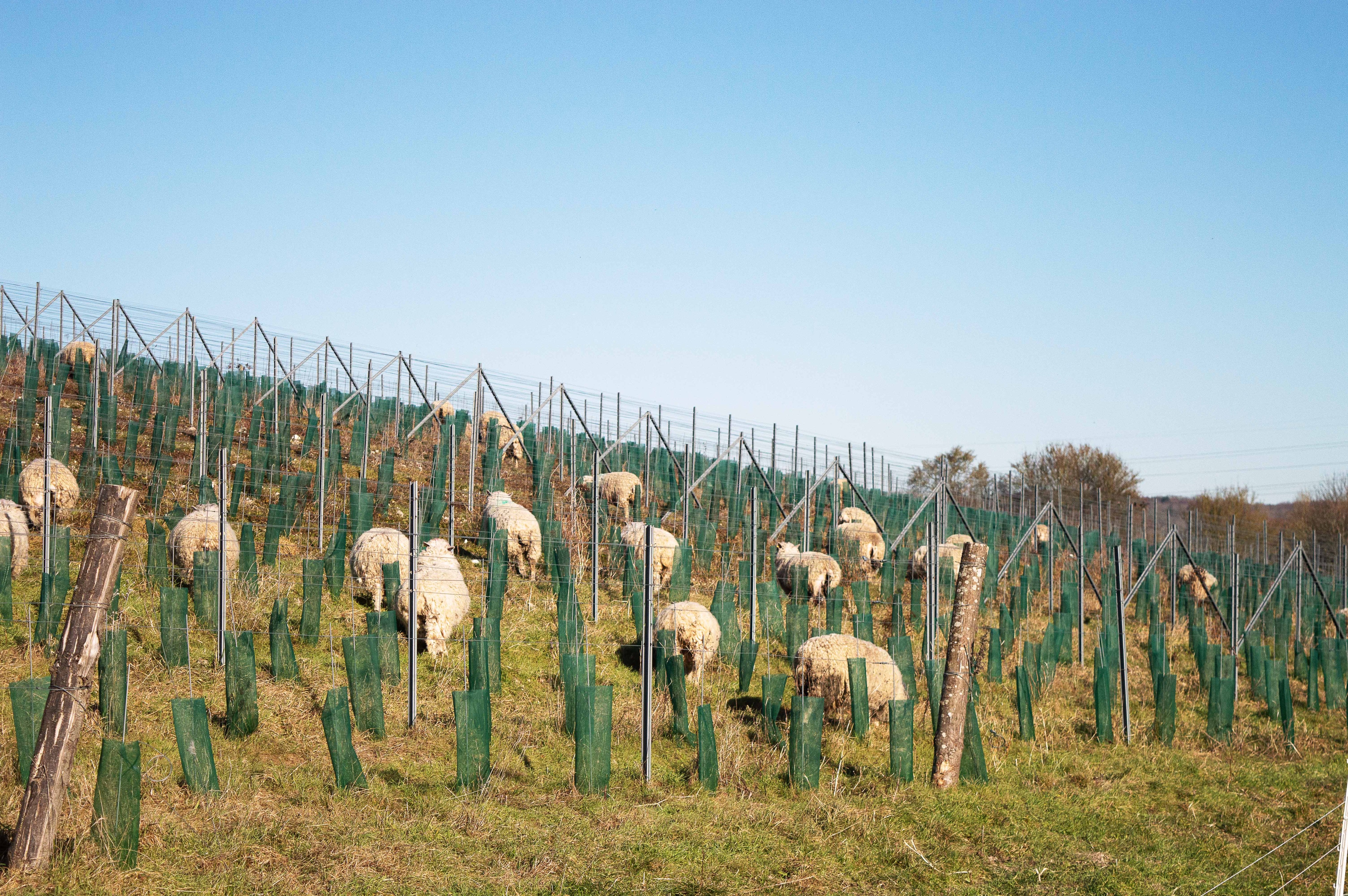
There has also been confirmation from DEFRA that the Farming in Protected Landscapes Programme will be extended for a further three years, with £30m confirmed for the next year.
“Partnership lies at the heart of the programme,” a statement from DEFRA said. “Bringing farmers, protected landscape organisations and local communities together to deliver change at a scale that no single holding could achieve alone.
“This extension will enable more farmers to deliver meaningful benefits for nature, the climate and local communities across England’s National Parks and National Landscapes.”
Full details of the programme, what it will pay for and who can apply are available on the gov.uk website. Funding is open to farmers and land managers in National Landscapes (previously known as Areas of Outstanding Natural Beauty.) Schemes that deliver climate, nature, people or place outcomes without commercial gain can receive up to 100% of their funding. Those which also offer a commercial gain may be funded proportionately.
DEFRA advises discussing ideas for projects with the protected landscape body in advance of making an application to receive advice and guidance. Applications will be open until March 2029 – although the sooner the better as that month is also the final date for project delivery. The application portal will also close sooner if all funding is allocated.
Read full guidance on the scheme: www.gov.uk/guidance/funding-for-farmers-in-protected-landscapes
Energy efficiency – electric and hybrid tractors
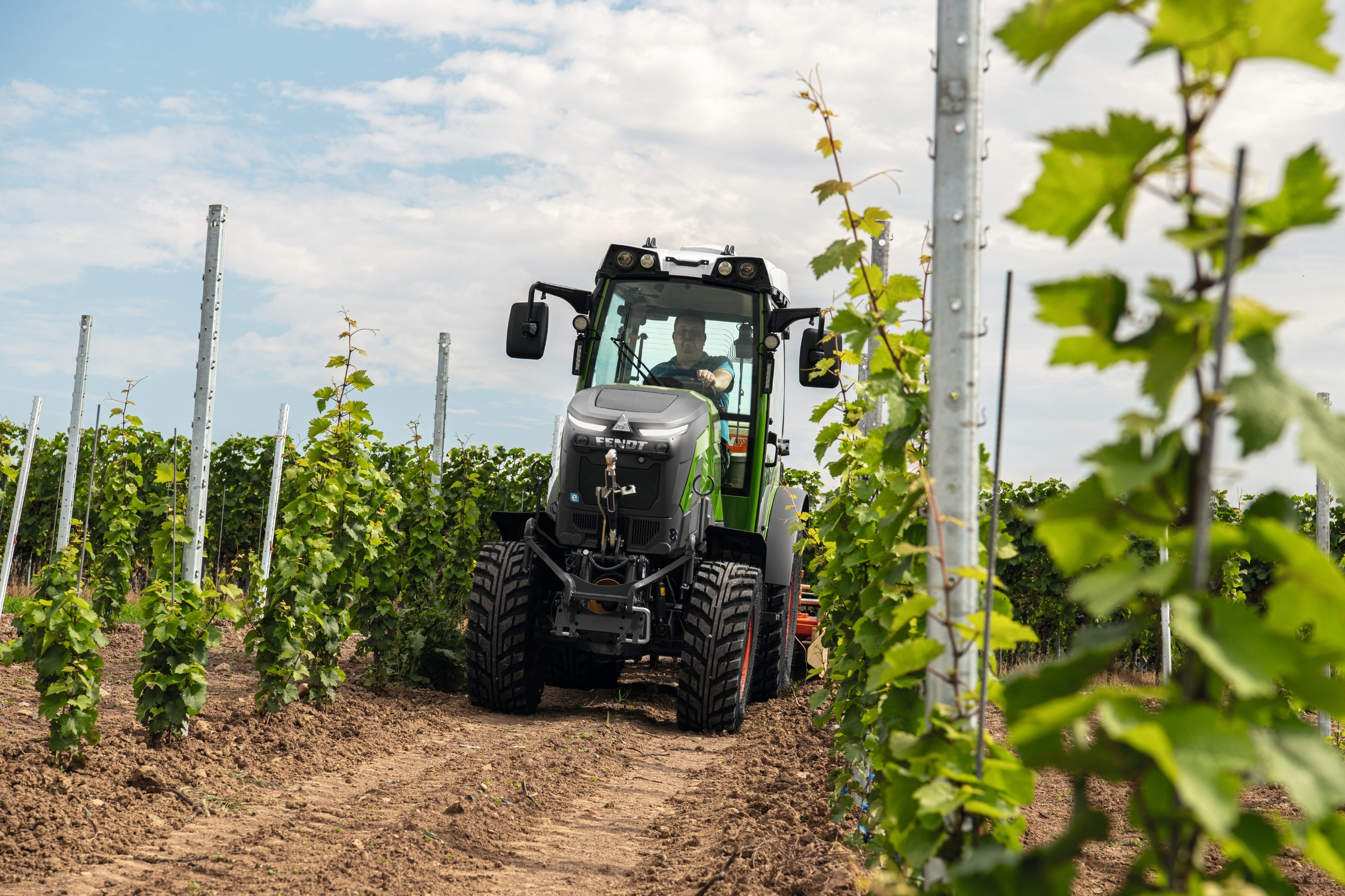
In recent years, the launch of electric and hybrid tractors have given agricultural businesses a new opportunity to cut their emissions.
Fendt and Monarch already have electric tractors on the market. To buy one, prices for a basic specification model come in around the £200,000 mark for a full size plug-in electric tractor. Narrow models, like the Fendt V model, are 1.28m wide, making them a more vineyard friendly model.
One of the key benefits of these electric vehicles, beyond their lack of emissions, is the significant reduction in noise they make, compared to diesel versions, which can be an important consideration for businesses with a focus on agro-tourism.
Depending on the model, run times may vary, but operators can expect something like four to seven hours when using eco modes and assuming a partial load. Depending on the plug available, charge times can take one to five hours. Installing an appropriate wallbox kit for a 22kW AC charger adds over £800 to the installation costs, but is the best option for speed of charging balanced against the longevity of the cells.
However, the batteries are an important consideration when it comes to weighing up the true environmental cost of these machines. Fendt estimates that due to the heavy carbon emissions created by the production of their batteries, their electric tractors need around 2,500 hours of use before “earning out” their lifetime emissions and representing a lower-emission choice than a comparable diesel model.
Voltrac made the headlines last year when they raised €7m in seed funding to help scale up the production of their fully autonomous electric tractor. This device, Thor, is aimed at solving labour shortages in agriculture by making autonomous machines that can be controlled remotely by their operator and have a high degree of compatibility with existing equipment thanks to their standard tow hitch.
The manufacturer is also claiming to have reached price parity with comparable diesel alternatives and are hoping to use their significant RND money to undercut them in the future.
The new Voltrac machine has already proved its worth in a surprising arena – frontline resupply missions in Ukraine. Its carrying capacity and ability to cope with rough terrain allows it to move ammunition around without any risk to human life, resulting in a reduction in lives lost in non-combat situations.

Sustainable Farming Incentive update
The Sustainable Farming Incentive was introduced to replace the EU’s Common Agricultural Policy approach. It is a key part of the government’s post-Brexit farmer payment packages and provides incentives for the maintenance and improvement of soil and water quality as well as food production.
The government’s sudden cap on the SFI scheme in March 2025 was disheartening for many agricultural businesses. The Department for Food, the Environment and Rural Affairs (DEFRA) said that the applications portal was closed as the maximum limit for farms that could be supported within the scheme’s annual budget had been reached. The National Farmers’ Union threatened a legal challenge and DEFRA later allowed farmers who were mid-way through the application process to complete it. Many small vineyards had only just become eligible for support – being too small to have received post-Brexit subsidies – only to have the door quickly closed on them again.
The vineyards who were able to secure an agreement under the scheme will see their payments continue into 2026. However, the data from WineGBs sustainability report suggests that fewer than one in five UK vineyards were able to access the funding, despite the high levels of interest. Commentators have pointed to difficulties within the administration and application processes as the reason behind the low takeup.
In response to widespread criticism from across the agricultural sector, the Environment Secretary, Emma Reynolds, told the Oxford Farming Conference in January that the SFI would be reformed this year.
Two rounds of simplified SFI applications have been confirmed for this year. Smaller businesses and those without an existing agreement will be able to apply in June, while a wider cohort will get the opportunity to apply in September.
DEFRA claims that SFI reform in 2026 will “simplify the scheme, level the playing field, and provide stable, predictable delivery”.
Read the full text of Ms Reynolds statement: https://questions-statements.parliament.uk/written-statements/detail/2026-01-08/hlws1229
There is more information about DEFRA’s plans on their blog. Access the detail: https://defrafarming.blog.gov.uk/2026/01/08/the-new-sfi-offer-for-2026/