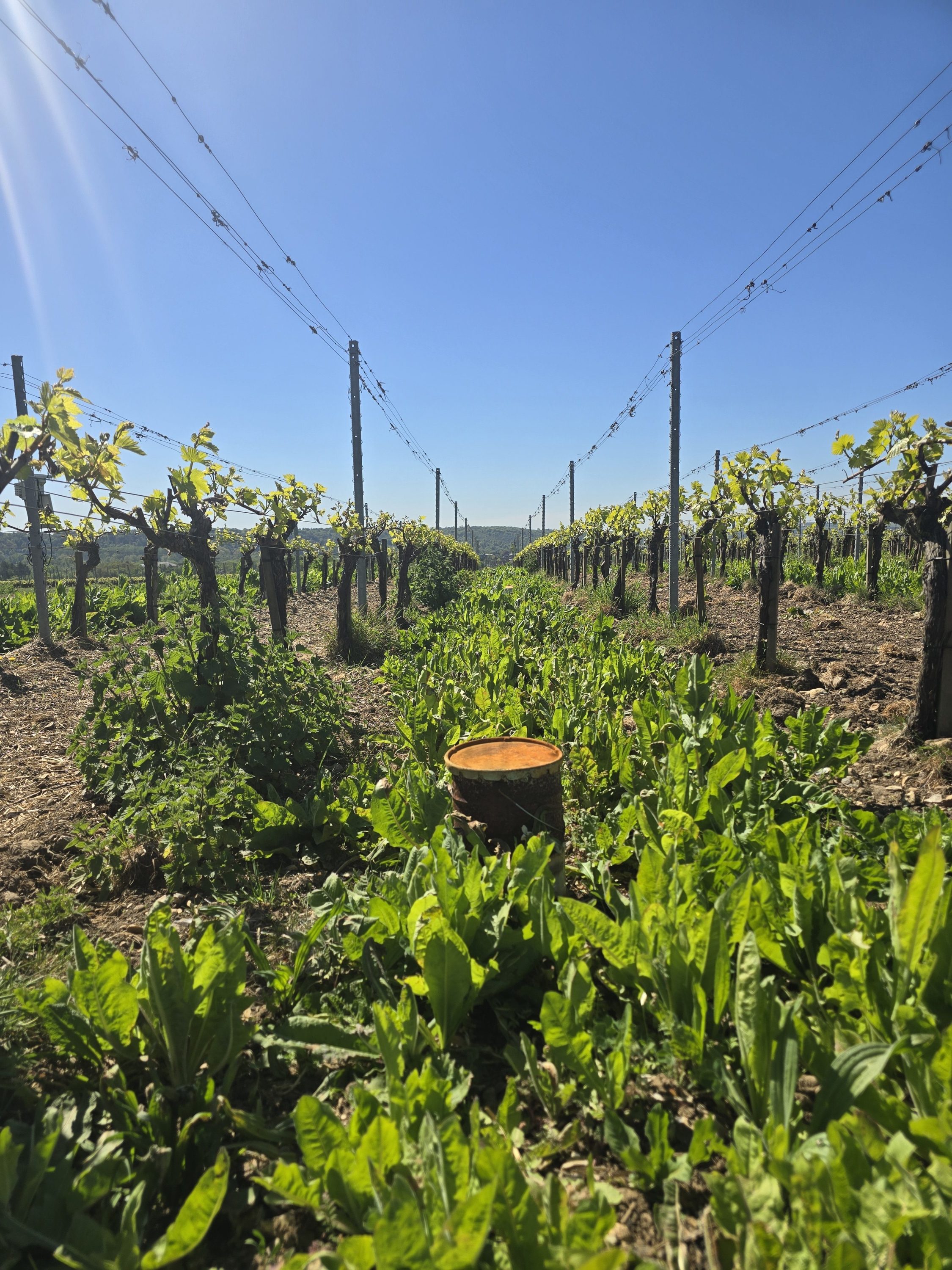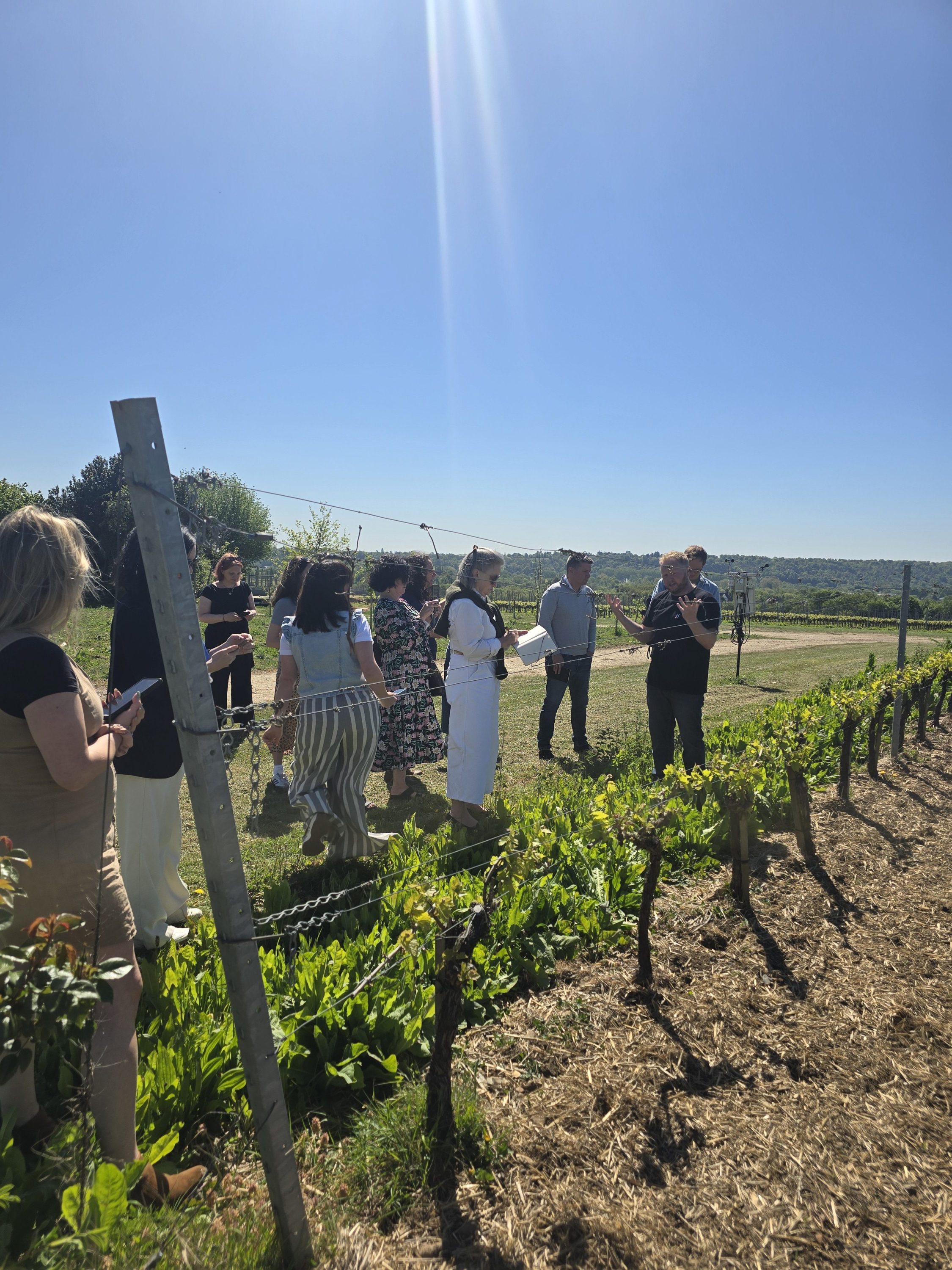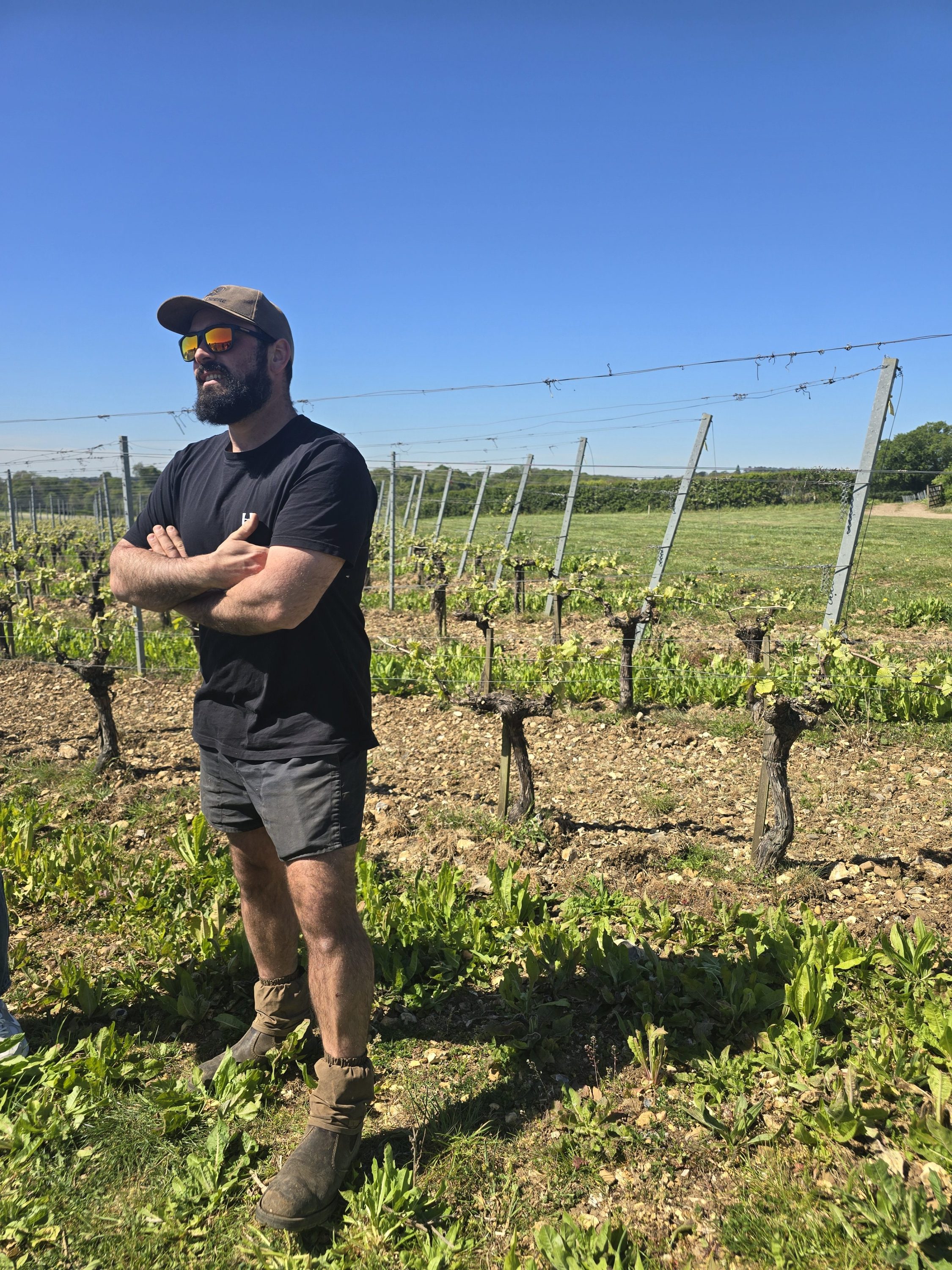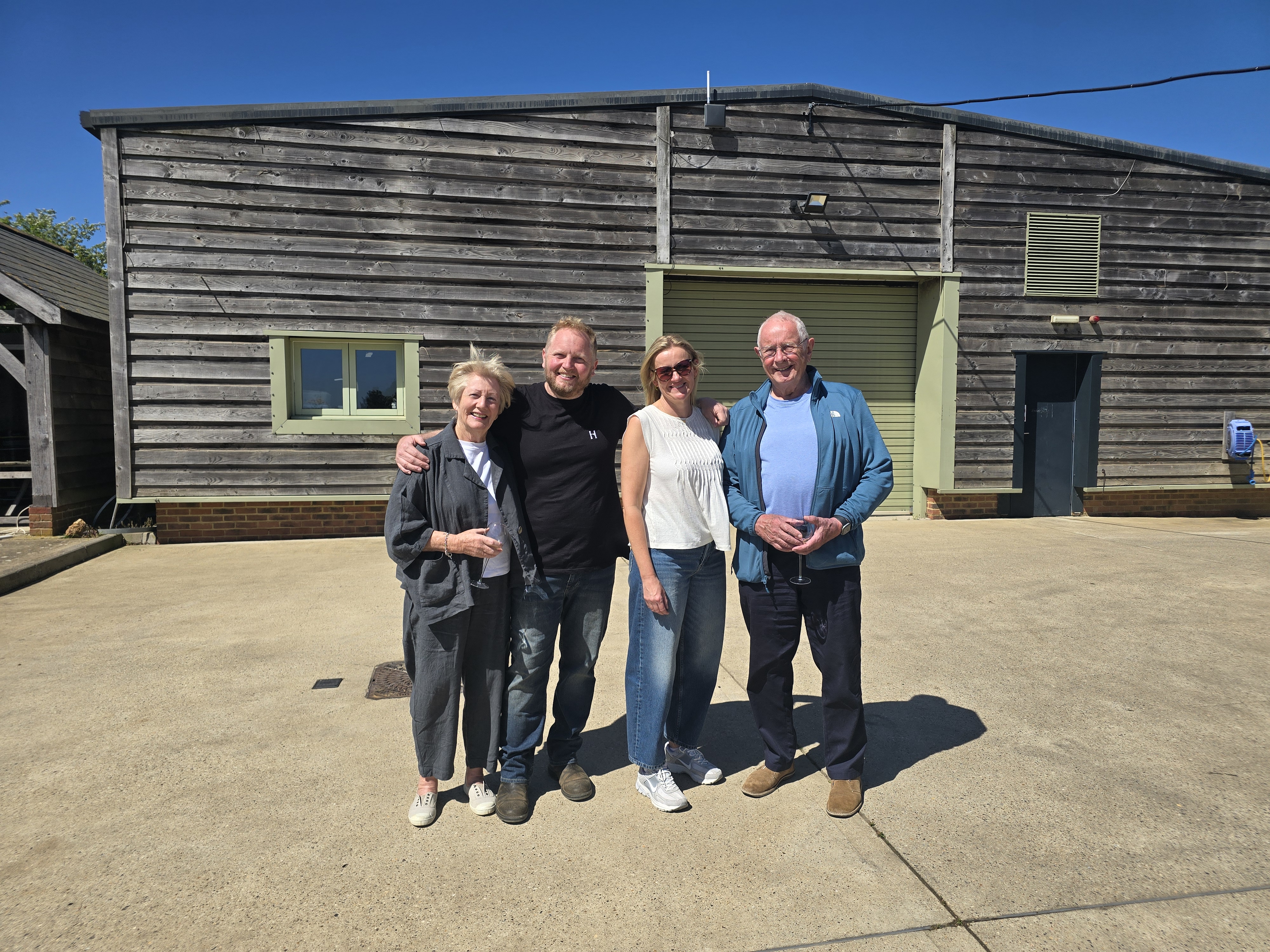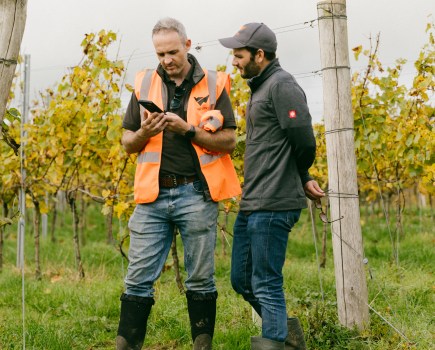


Harrow & Hope sits perched on a Thames gravel terrace above Marlow, looking out across the town’s church spire, with the gastronomic offerings of one of the Thames Valley’s most celebrated towns spread below. It is a fitting setting for a brand that carries an undeniably luxurious feel. I was there as part of a press day, joining a group of esteemed journalists and educators, arriving during budburst with the first signs of the season just beginning to show across the vines.
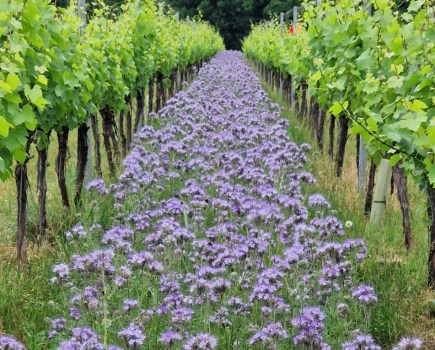
The vineyard covers 6.5 hectares of ancient Thames terroir, the river having cut into the Chilterns chalk around 450,000 years ago and left behind a complex layering of clay, flint and gravel giving way to pure chalk further down the slope. Henry Laithwaite planted the site in 2010 with his wife Kaye, after time in France and Australia confirmed that great sparkling wine begins in the ground. Certified organic since 2023, the estate now practises regenerative farming, using no synthetic pesticides, herbicides or artificial fertilisers, with as much attention given to building the soil biome as to any other part of production.
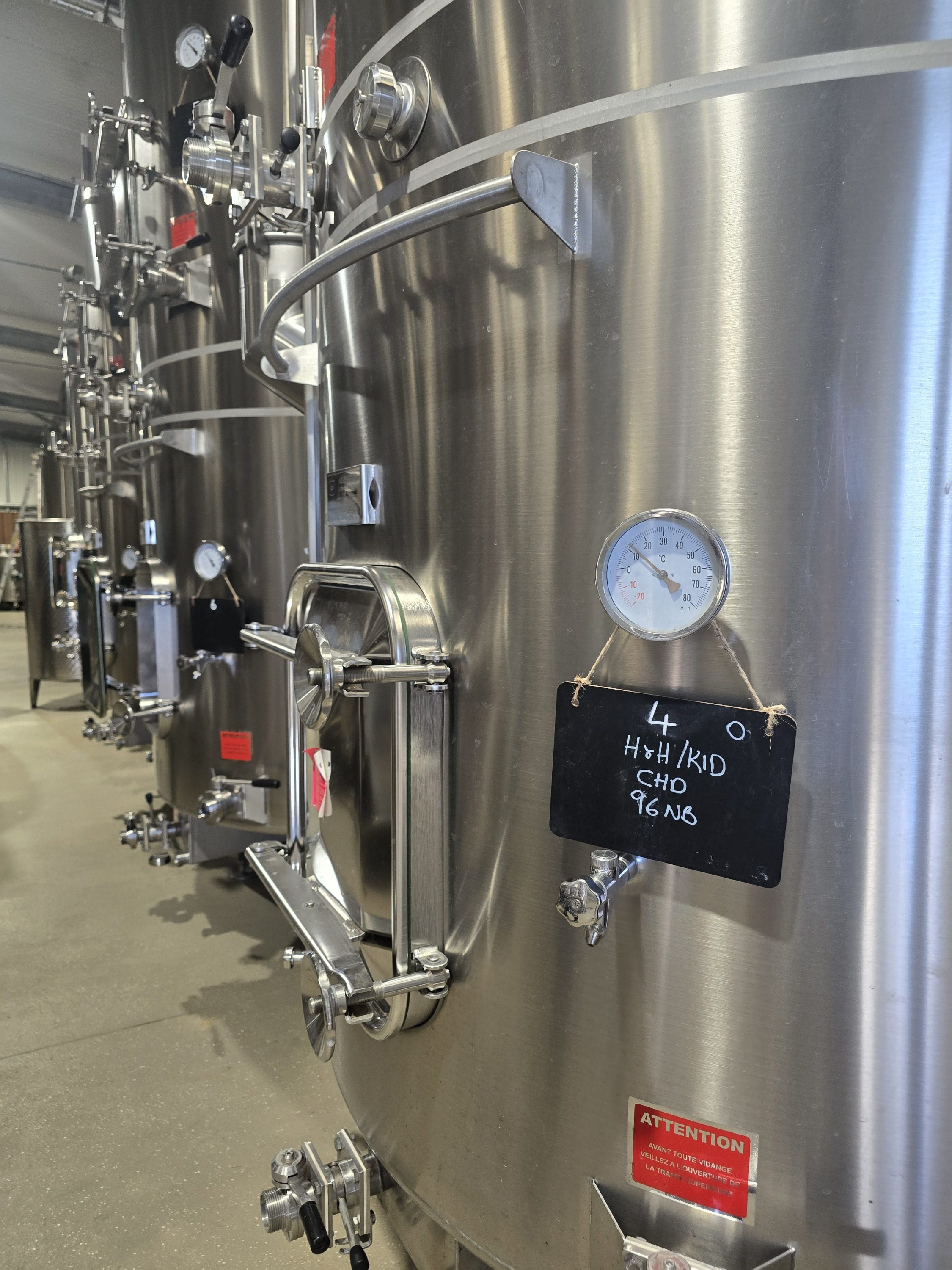
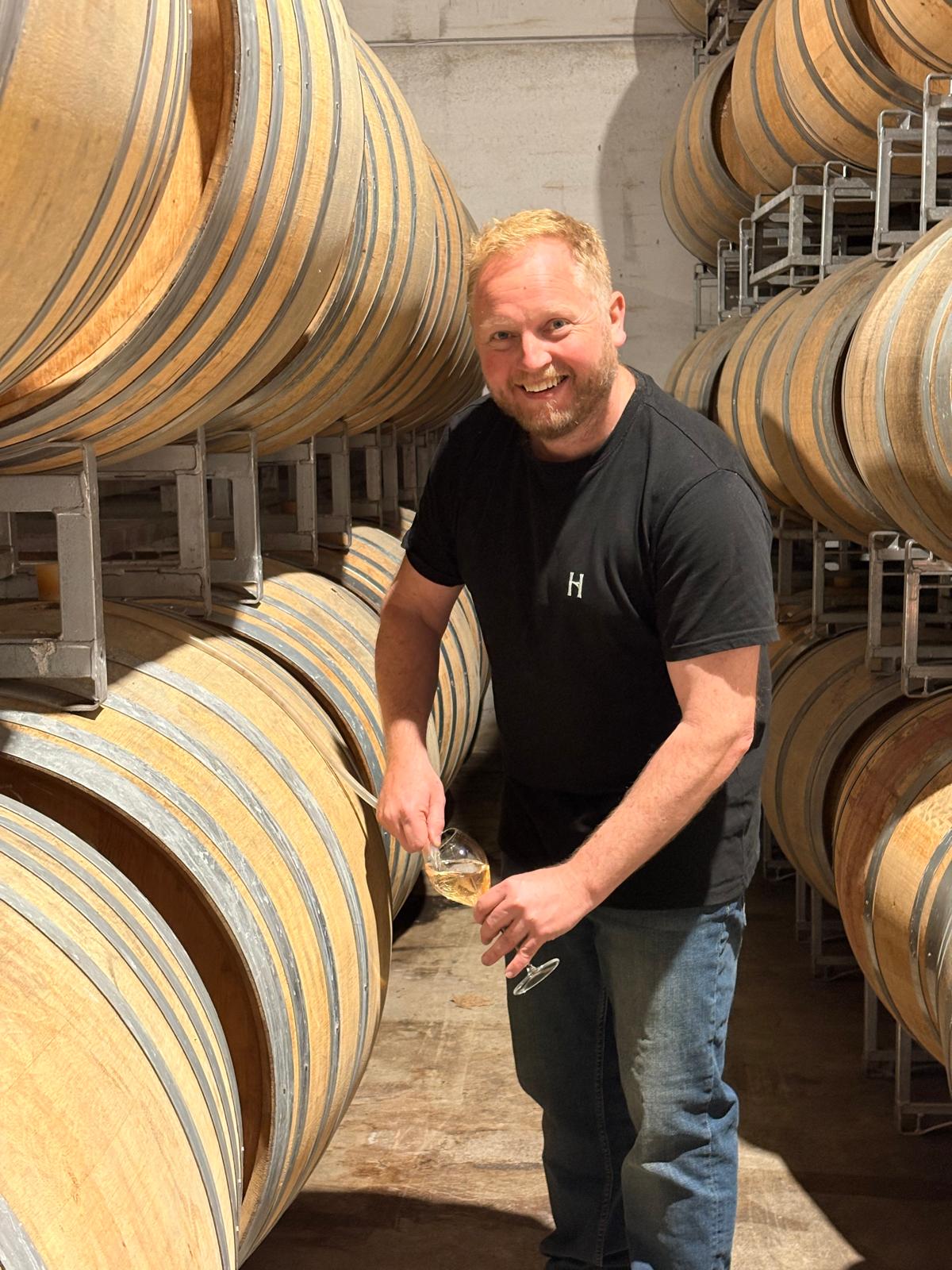
From the vineyard, we moved into the winery before sitting down to a full portfolio tasting in the bright, airy tasting room with views back across the vines. Every wine in the Harrow & Hope range is traditional method sparkling, made exclusively from Chardonnay, Pinot Noir and Pinot Meunier. Fermentation takes place across a combination of stainless steel tanks and oak barrels of varying sizes, with native yeasts increasingly driving the process as the team’s plot-by-plot knowledge has grown.
The range itself maps the full spectrum of English sparkling. Multi-vintage blends, built using a perpetual reserve system, sit at the core of the range, though there is an open question around whether Henry will restart that reserve system as the estate moves fully into organic production, given that pre-2023 reserve wines fall outside organic certification. Alongside the blends, the portfolio moves into vintage-specific, parcel-driven wines: Blanc de Noirs, rosés and single-varietal bottlings that speak more directly to individual harvests and what the site can produce at its most expressive. It is a range of genuine evolution. When I asked Henry whether still wines might ever enter the picture, his answer was measured: not on the cards right now, but in an industry moving as quickly as English wine, the longer term options remain open. It is the kind of response that reflects both the focus that has defined the estate so far and an awareness of just how much the category continues to change.
Tours and tastings at Harrow & Hope are deliberately limited in number, offering a more in-depth experience than a standard cellar door visit. They book well in advance, which indicates something about the appetite for access to what the estate produces.
To understand Harrow & Hope fully, you need to understand the family behind it. Henry is the son of Tony and Barbara Laithwaite, who built Laithwaites Wine from a van load of Bordeaux in 1969 into one of the UK’s largest independent wine merchants. What is perhaps less widely appreciated is how fully the family has committed to English wine production itself, not just its sale.
Barbara Laithwaite CBE tends her own two-hectare vineyard at Wyfold, near Henley-on-Thames, a high, south-facing slope of flinty gravel and chalk planted with the same classic trio of varieties. What began as a hobby in 2003 became a full-time enterprise, winning three trophies including Best English Sparkling Rosé at the IWC. Barbara grows the grapes; Henry makes the wine, at the Harrow & Hope winery in Marlow. Wyfold is sold almost exclusively through Laithwaites via the Vineyard Partners subscription scheme.
Then there is Windsor Great Park Vineyard. Tony Laithwaite, who grew up in Windsor and played in the Park as a boy, was instrumental in establishing three hectares of Champagne varieties there in 2011 – a chance conversation between a Laithwaites employee and the Park’s Deputy Ranger opened the door to a collaboration with the Crown Estate. Records show a vineyard at Windsor as far back as the twelfth century. Henry makes that wine too, bringing the grapes to Marlow, producing a traditional method blend that has collected 94 points from Decanter, a Mundus Vini Gold medal and a string of other accolades. Like Wyfold, Windsor Great Park is sold exclusively through Laithwaites.
For Laithwaites, the three estates represent something relatively rare in the UK wine trade: a portfolio of genuinely exclusive English sparkling wines, two of which are available nowhere else. As English wine matures and buyer confidence grows, the family’s position as both producer and merchant places them in a compelling position to capitalise on that momentum, with three distinct vineyards, three distinct stories and a single consistent standard of quality running through all of them.