
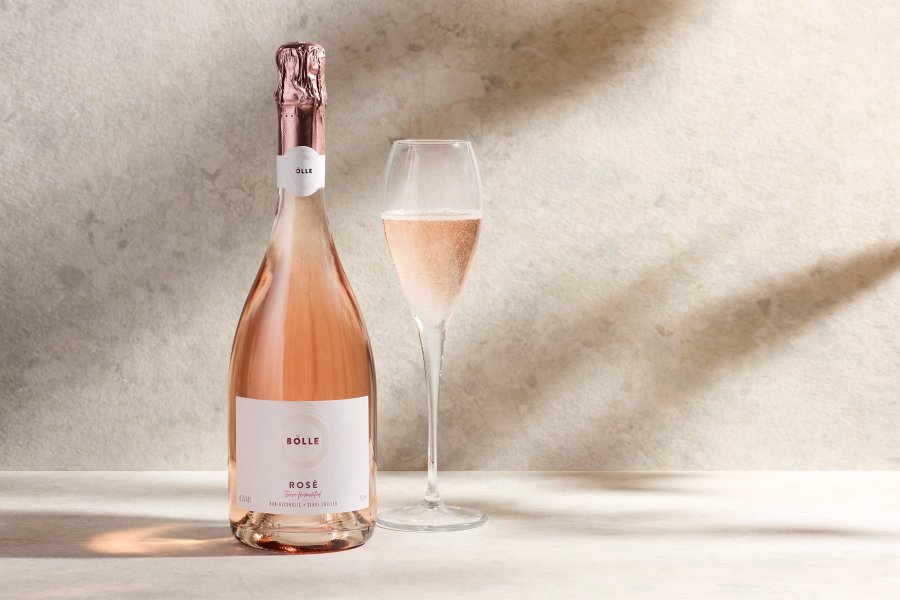
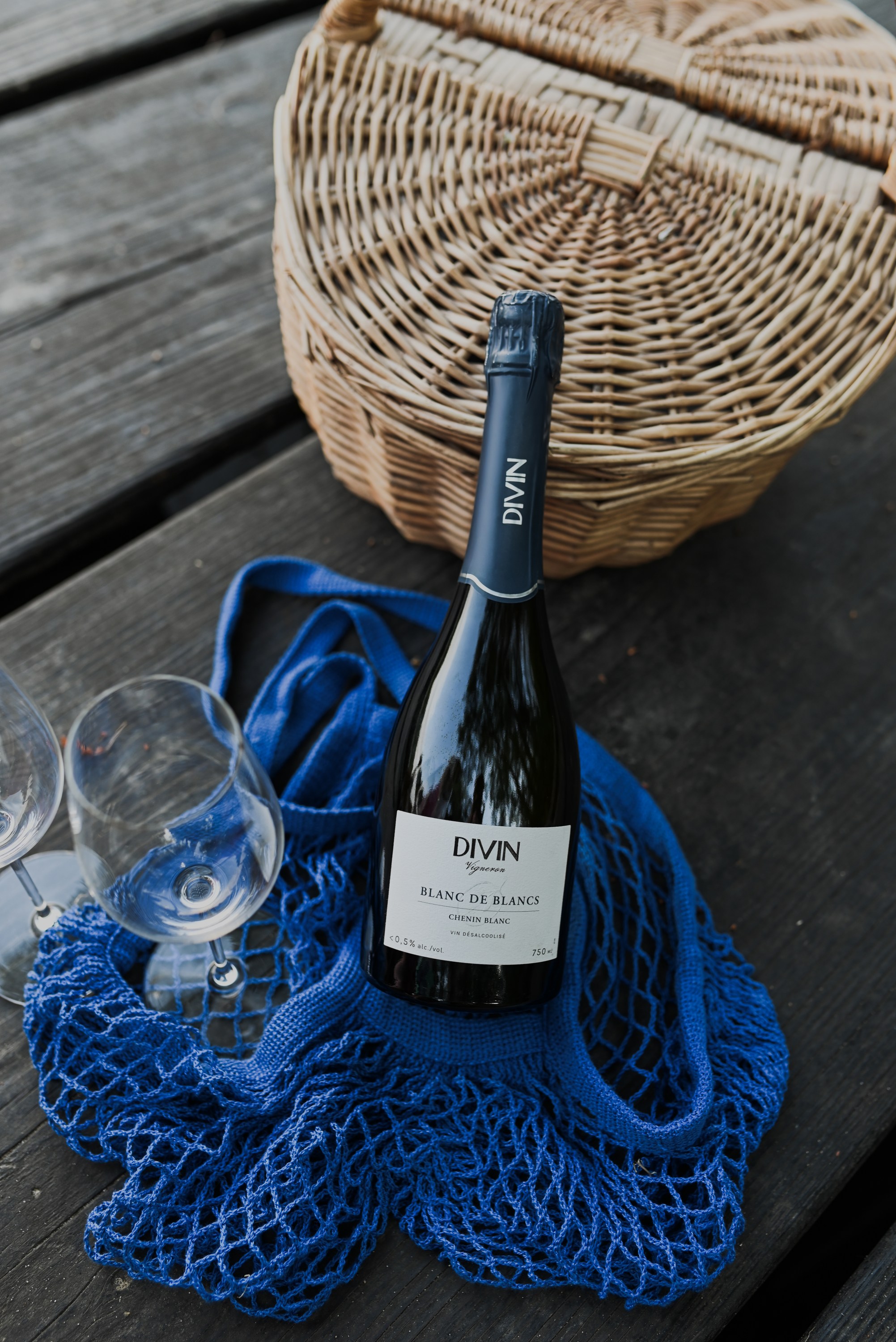
Interest in non-alcoholic alternatives to wine and sparkling wine has increased significantly in recent years. De-alcoholised wine and aerated de-alcoholised sparkling wine (dealcoholised wine that is carbonated) are still a niche product, at least in terms of sales. The number of suppliers of such products is increasing and many companies are including these products in their range, demonstrating the level of innovation in the wine industry.
The consumers of dealcoholised wines are often not the well-known and loyal wine customers, but rather companies that were previously unknown to many companies in the wine industry.
The market for non-alcoholic/de-alcoholised alternatives is currently (still) heavily dominated by non-alcoholic beer. In addition, non-alcoholic products based on spirits such as gin, whisky, herbal spirits or similar are offered. These drinks are merely aqueous extracts of spices or fruits, or an aqueous solution is mixed directly with flavors based on the original. These products have little or nothing to do with the original spirit that they are trying to copy.
Sparkling tea is also becoming increasingly important in this market. These drinks are usually produced on the basis of a tea extract and other additives such as flavourings and fruit and vegetable juices. Sweetening and acidification are achieved by adding various additives. The carbon dioxide that characterizes the product is technically added to such a drink. Some of these sparkling teas undergo alternative fermentation processes based on bacteria or different yeast strains. So that sometimes more than 0.5% vol. alcohol is formed.
What these products have in common is that they take on the image and packaging of the sparkling wine bottle. These drinks have nothing in common with the classic original product, sparkling wine, apart from the sparkling wine features.
The production of dealcoholised wine, or what used to be called alcohol-free wine, is different. Here, the wine is the original product and no foreign aromas may be added before or after treatment.
With the addition of foreign aromas, this is a different product category, the so-called aromatised beverage made from dealcoholised wine.
The dealcoholisation of wine is not a technical innovation of recent years. Alcohol-free wine has been produced in Germany for over 110 years by distillation under vacuum. Under normal conditions (normal pressure), the boiling point of ethanol is approx. 78.3°C. By applying a vacuum of around 100-120 mbar, the wine can be de-alcoholised relatively gently at 30°C-40°C.
Vacuum rectification has established itself as the standard process for dealcoholising wine and other beverages such as beer or cider. Rectification, also known as countercurrent distillation, is a continuous distillation method. The wine is fed into the upper part of the column and runs downwards. A product vapour from dealcoholised wine, the so-called vapour, is directed towards the descending wine in the counterflow. The rising vapour absorbs the volatile components, mainly alcohol (ethanol). In the upper part of the column, this vapour then leaves the system and is cooled in the condenser and thus liquefied. The dealcoholized wine leaves the system in the lower part with less than 0.5% vol. at a moderate temperature of approx. 30°C-40°C.
With appropriate parameters (retention time and temperature) in the column, alcohol contents of less than 0.05 % vol. are also possible.
The wine is then usually cooled down further directly via a downstream heat exchanger. The constant vacuum inside the column allows these relatively low process temperatures to be achieved. The continuous operation of the distillation in countercurrent allows very short treatment times of one to two minutes, meaning that the alcohol is separated at a low temperature in a very short time. Adverse thermal effects on the end product are thus avoided.
The resulting distillate usually has an alcohol content of between 70%-80% vol.
These high alcohol contents in the distillate fraction are made possible by the gradual purification using sieve, valve or bell trays inside the column. The alcohol content of the product vapour rising in the column (vapours) is increased by condensing some of the volatile components on the surface of these trays and allowing them to flow back into the lower part of the column. This significantly increases the alcohol content of the remaining vapour. The same principle is used for the distillation of wine and fruit in many small distilleries.
The spinning cone column is also to be seen as a vacuum rectification process. A few years ago, this technology was the subject of much controversy due to concerns about the targeted fractionation of aromas in the wine.
These fears were proven to be unjustified, as the Spinning Cone Column only separates the aromas according to their volatility and not according to sensory characteristics or the user’s wishes. Depending on the grape variety and production process, the wine can sometimes contain over 1000-1200 aroma components. Separating individual aroma components from such a large number selectively according to their sensory characteristics does not work with such a system.
The dealcoholisation of wine using the spinning cone column is based on two successively coupled passes. The process parameters in terms of treatment temperature and vacuum are comparable to those of vacuum rectification.
In the first run, a fraction of very volatile aromas is separated from the wine. As with conventional distillation, this fraction also contains a certain amount of ethanol in addition to the very volatile aroma substances and can be compared with the “pre-run” in conventional distillation.
In a second pass, the wine is passed through the column at a slightly higher treatment temperature to remove almost all the alcohol.
This dealcoholised fraction, which is present after the second run, is blended back with the “pre-run” from the first run in order to partially compensate for the aroma losses caused by dealcoholisation. However, the final alcohol content must not exceed the legally permissible maximum value of 0.5% vol. for dealcoholised wine.
Due to the fact that the spinning cone column has no column trays or similar internals to reinforce the distillate, the alcohol fraction in the spinning cone column has a lower alcohol content than in conventional vacuum rectification.
Further distillation of this fraction helps to increase the alcohol content. The resulting alcohol-free fraction from the distillate can be blended back into the dealcoholised wine and thus help to reduce the amount lost through treatment.
Growing demand
“At Vino Zero, we work with wholesalers, on-trade, and off-trade accounts, as well as e-commerce partners across the country – and they all ask the same question: when will we see a great English non-alcoholic wine? With demand for alcohol-free options growing fast – the global non-alcoholic wine market expanding by around 7% each year – people are looking for something that celebrates local craft, provenance, and real flavour. The English wine scene has proven its quality; now consumers want that same authenticity in a non-alcoholic glass,” said Fiona Graham, Co-Founder of Vino Zero.
Membrane process
In recent years, modern membrane processes have been increasingly used in the wine industry. In addition to gas management, membrane contactors have proven to be suitable for the partial dealcoholisation of wine. These membrane contactors are hydrophobic membranes that only allow volatile substances in the gas phase to pass through the membrane. If this membrane is used for dealcoholisation, water is passed against the wine on the opposite side of the membrane in countercurrent until the target alcohol content is reached. The driving force here is the so-called vapour pressure difference of the respective volatile substances. This means that the volatile substances from the wine pass through the membrane until equilibrium is reached on both sides.
For the dealcoholisation of wine below 0.5% vol. this would involve very intensive treatment times as well as very high aroma losses.
Reverse osmosis is a membrane process that is often mentioned in the context of dealcoholisation. The reverse osmosis separates according to molecule size. By treating the wine with reverse osmosis, a so-called permeate of water is separated from the wine. Due to the smaller molecular size of the water, this aqueous solution always contains more water than ethanol.
The initial wine is therefore first concentrated in alcohol content. In the second step, the alcohol content must then be removed from the aqueous solution before it is returned to the wine concentrate. Because most wine aromas do not pass through reverse osmosis, the aqueous permeate is hardly characterised by aromas. Accordingly, the subsequent removal of alcohol from this fraction is accompanied by fewer aroma losses. Here it is conceivable to remove the approx. 8-12% vol. from the separated part using distillation or a membrane contactor. Because only a certain proportion passes through the membrane at any one time, around 8 staggered treatments of the wine are necessary. Even if a gentle dealcoholisation (<0.5% vol.) seems possible in the first step with a view to the aromas, the multiple passages of the wine through the reverse osmosis are sometimes a strenuous treatment. In this context, reference must also be made to nanofiltration. In terms of the separation limit, this is the next largest membrane process. Conventional reverse osmosis has a separation limit of 100 Daltons and below. Nanofiltration is set above this. Although slightly more wine components pass through, the performance of the membrane in terms of permeate separation per surface area is increased.
However, the membrane processes mentioned enable small and compact systems, which means that smaller volumes (<1000l) can also be dealcoholised.
Market research has not yet sufficiently clarified whether customers are satisfied with the designation <0.5% vol. for dealcoholised wines, or whether it should be products that are well below the legal limit and can be advertised as 0.0%. In order to avoid misleading the consumer, the alcohol content should be below 0.05% vol. for the designation 0.0%.
If you look at the beer industry, you can see that this issue does not seem to have been fully clarified here either, as many companies offer both (0.5 and 0.05 % vol.).
In terms of product quality, however, it should be noted that the further the product is dealcoholised below 0.5% vol. the greater the loss of aroma. Therefore, if the customer request is not explicitly halal or labeled 0.0, one should be satisfied with an alcohol content of just under 0.5% vol. in terms of product quality. If the alcohol content in the finished product is above 0.5% vol., the product should be described as partially dealcoholised.
The separation of alcohol from the wine is always accompanied by a greater or lesser loss of aroma. The highly volatile aromas are lost more than the less volatile ones.
Many commercial systems based on vacuum rectification have always had built-in components for partial aroma recovery by means of condensation.
Aroma recovery from the distillate using adsorber resins is an interesting new option for improving product quality. Some service providers for the dealcoholisation of wine offer this technology to their customers.
Studies from Geisenheim show that some of the aromas can be recovered from the resulting distillate. This fraction is returned to the corresponding dealcoholised wine. This downstream treatment of the distillate can further improve the product quality to a certain extent.
Further utilization of the distillate fraction, also as brandy or raw material for other spirits, is possible.
During osmotic distillation, the wine moves on one side of the membrane and degasses water on the other. Volatile substances, such as ethanol, migrate from the wine into the water until both sides are balanced. Some manufacturers combine these membranes with reverse osmosis. This reduces the loss of aroma in the wine and extends the life of the expensive membranes. These devices can process small quantities of wine and can be used for tests. But due to the slow separation, it takes a long time to reduce the alcohol content to below 0.5% vol. Other membrane methods, such as the combination of reverse osmosis with distillation, could also be used for targeted dealcoholisation in the future. This would make smaller plants possible that can treat small quantities of wine. Various separation techniques used together could help to minimize aroma losses.
During dealcoholisation a total of 15-20% of the original volume is “lost” as a distillate fraction as a result of dealcoholisation. These losses should be considered in the pricing of non-alcoholic wines. A market survey of 200 dealcoholised wines in Germany showed that the average bottle cost 8 euros in 2022. De-alcoholised sparkling wine with added carbon dioxide cost an average of 10 euros per bottle at that time. It should be noted that the sparkling wine tax in Germany only applies from 1.2% vol. in Germany. Accordingly, higher prices can be realized with a better margin. The sensory changes in the wine caused by the dealcoholisation process are beyond doubt.
Regardless of the technology used, the removal of alcohol always results in the aroma of the wine being lost to a greater or lesser extent. In addition, the almost complete removal of alcohol clearly shows the influence of ethanol on the sensory properties of wine.
After dealcoholisation, the perceived acidity is much higher than that of the original wine. In addition to the approx. 15-20% concentration effect, the loss of alcohol also significantly increases the perceived acidity. This parameter must be taken into account when specifically selecting wines for dealcoholisation.
The total acidity should be 1-2 g/l below the generally considered ideal value of the respective wine.
When adjusting the acidity, legal restrictions regarding the range and timing of wine production must be taken into account.
Dealcoholisation is associated with a very significant reduction in the body and fullness attribute.
This clearly detrimental change can be partially offset by targeted oenological strategies.
One of the most common methods is to give non-alcoholic wines a higher residual sweetness. A residual sugar content of 40 g/l or more is actually the rule.
As ethanol also makes a certain contribution to the perception of sweetness in wine, the targeted sweetness of the wine is also an important adjustment to create a certain harmony in non-alcoholic products.
Targeted sweetening can therefore also compensate for the sensory loss of sweetness caused by alcohol separation.
In general, the type of sweetening plays a certain “style-forming role”.
A sweet reserve of muscat varieties can give the dealcoholised wine a certain muscat aroma or primary aromas. Sweetening with unfermented must is also very useful because it can compensate for the loss in volume of around 15% of the original quantity caused by reducing the alcohol content of non-alcoholic wines at relatively low cost. Depending on the desired residual sugar content and the sugar content of the sweet reserve, 20% or more blending quantity may be necessary.
However, extensive comparative tests have shown that most tasters prefer the variants sweetened with sucrose to those with a high-quality sweet reserve (Seitz-Böch method). The variants that were blended with sweet reserve were generally described as musty and less typical of wine in aroma.
However, from 2023 and the introduction of non-alcoholic wine into wine law, sweetening with sucrose will no longer be possible.
RTK should be used instead, as it is less likely to affect the aromatic character of dealcoholised wines.
The use of mannoproteins in higher doses can also help to optimize the sensory impression of body and fullness to a lesser extent.
However, specific studies have only been able to demonstrate a slight increase in mouthfeel from 30 g/L of added mannoprotein. Accordingly, preliminary tests are recommended to evaluate whether the preparations used have a verifiable and positive effect on the product.
The targeted addition of CO2 to dealcoholised wine can not only achieve more freshness, but also more “mouthfeel”. Many white and rosé wines are therefore filled with up to 1.6g/L CO(2).
Alcohol and wine sensory analysis
Alcohol, or more precisely ethyl alcohol or ethanol, is the most important volatile component in wine in terms of quantity. The effects of alcohol on the sensory properties of wine are far-reaching, complex and sometimes controversial. It influences the taste, smell and the so-called trigeminal stimulating properties (such as astringent, biting, burning, warmth sensation…).
Alcohol also has a direct influence on the perceived sweetness in wine. An increase in the alcohol content leads to a stronger perception of sweetness in the wine. Targeted dealcoholisation therefore significantly reduces the perceived sweetness. The adjustment of the residual sugar in the dealcoholised wines therefore initially serves to restore a familiar taste in terms of sweetness. The dealcoholisation of the wine is thus accompanied by a reduction in sweetness that corresponds to approximately 25g/L of residual sugar. A study from Geisenheim in 2022 showed an average residual sugar content of 40g/l in dealcoholised wines. This has since been confirmed by a corresponding study from France.
The perception of acidity in wine decreases as the alcohol content increases. Dealcoholisation makes acidity stand out more. It is therefore advisable to select base wines with a lower acidity for dealcoholisation or to reduce the acidity by around 1 to 1.5 g/l before dealcoholisation. To a certain extent, alcohol creates a feeling of warmth in the wine, which can go as far as a burning sensation. Consequently, dealcoholised wines lack this typical sensory stimulus. This is described as a deficiency in dealcoholised red wines. However, perhaps this must be accepted as an effect of dealcoholization and other wine styles must be chosen for dealcoholisation.
Alcohol also enhances the sensory parameters “body and fullness” in the wine. How strong this effect is depends on the matrix of the individual wines. However, an increased perception of “body and fullness” in wine is predominantly viewed positively by consumers and leads to an increased preference and willingness to pay. To a certain extent, this can be at least partially buffered by additives such as mannoproteins or oenological tannins.
In terms of sales figures in Germany, 80% of sales are characterized by carbonated products (3g/l and more). Tests have shown that the targeted carbonation of dealcoholised wines increases the mouthfeel and in some cases enhances the perception of aromas.
On the other hand, a higher alcohol content leads to an increased perception of bitterness in the wine. Consequently, higher phenol contents can be tolerated in dealcoholised wines without being perceived as negative.
In summary, it can be said that dealcoholisation of wine reduces the perception of sweetness and increases the perception of acidity, the wines lose body and fullness and the bitterness decreases.
In order to counteract these sometimes very strong sensory changes caused by dealcoholisation, oenological strategies can help to replace the alcohol and to cushion and balance the resulting shifts in the various sensory parameters in order to improve the quality and acceptance of the dealcoholised wines.
Conclusion
Dealcoholised products based on wine are certainly an interesting addition to the product range of wineries. In addition to the production costs, high volume losses of approx. 15-20% due to dealcoholisation should be factored into the pricing in order to avoid a loss-making business. The specific legal requirements should also be carefully checked in advance. Experience has shown that the established service providers for dealcoholisation can help here. The selection of the wines and the subsequent sensory adjustment after dealcoholization are also essential for the quality of the products. The service providers on the market generally only allow dealcoholisation for larger quantities of 1,000 litres and more. This makes it difficult for many traditional family businesses to gain their own experience with these products on a smaller scale. Hochschule Geisenheim University is therefore investing in its own dealcoholisation plant, which will be able to dealcoholize small batches under practical conditions from 2025. The aim is to further consolidate this topic for teaching, research and practice at the location.