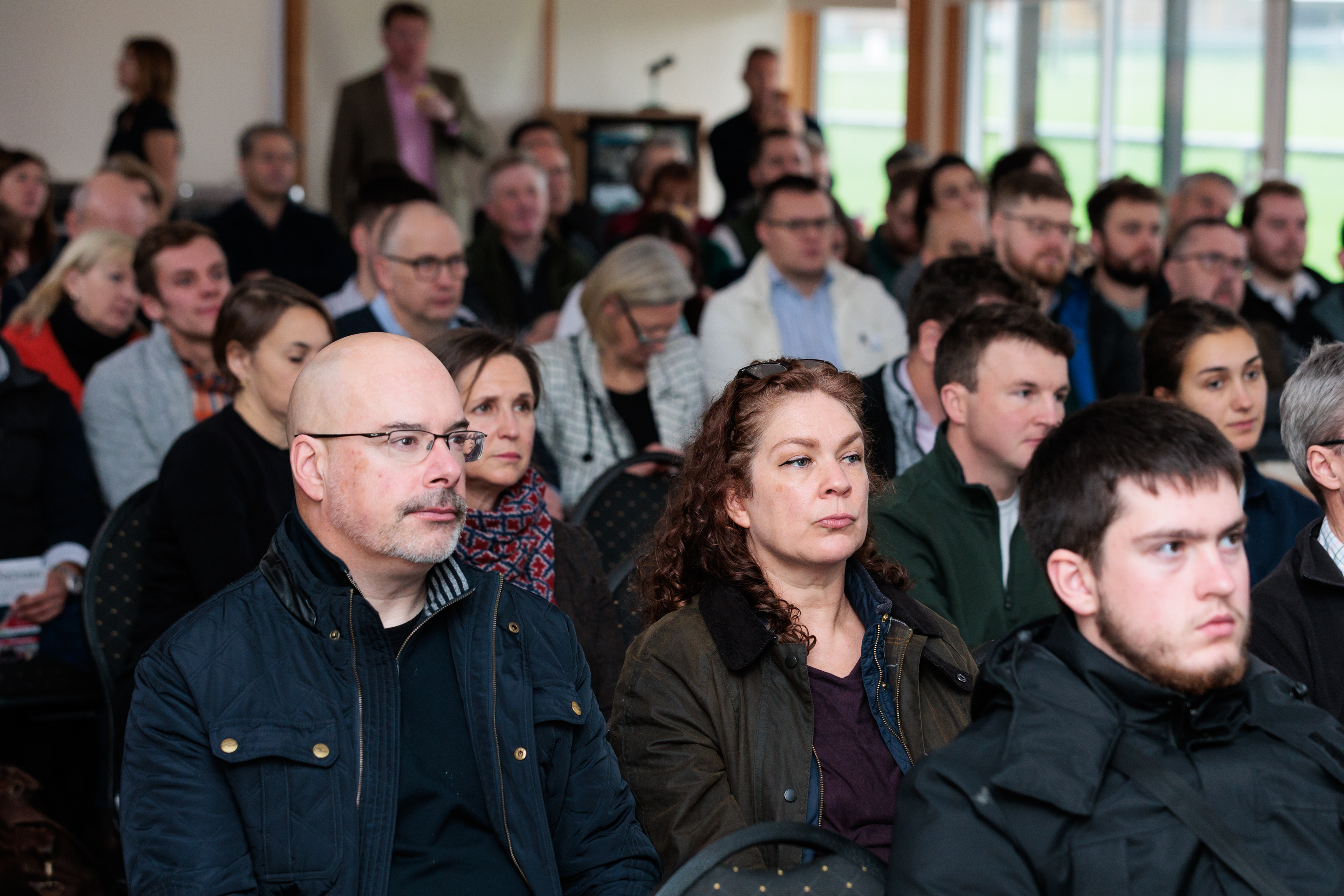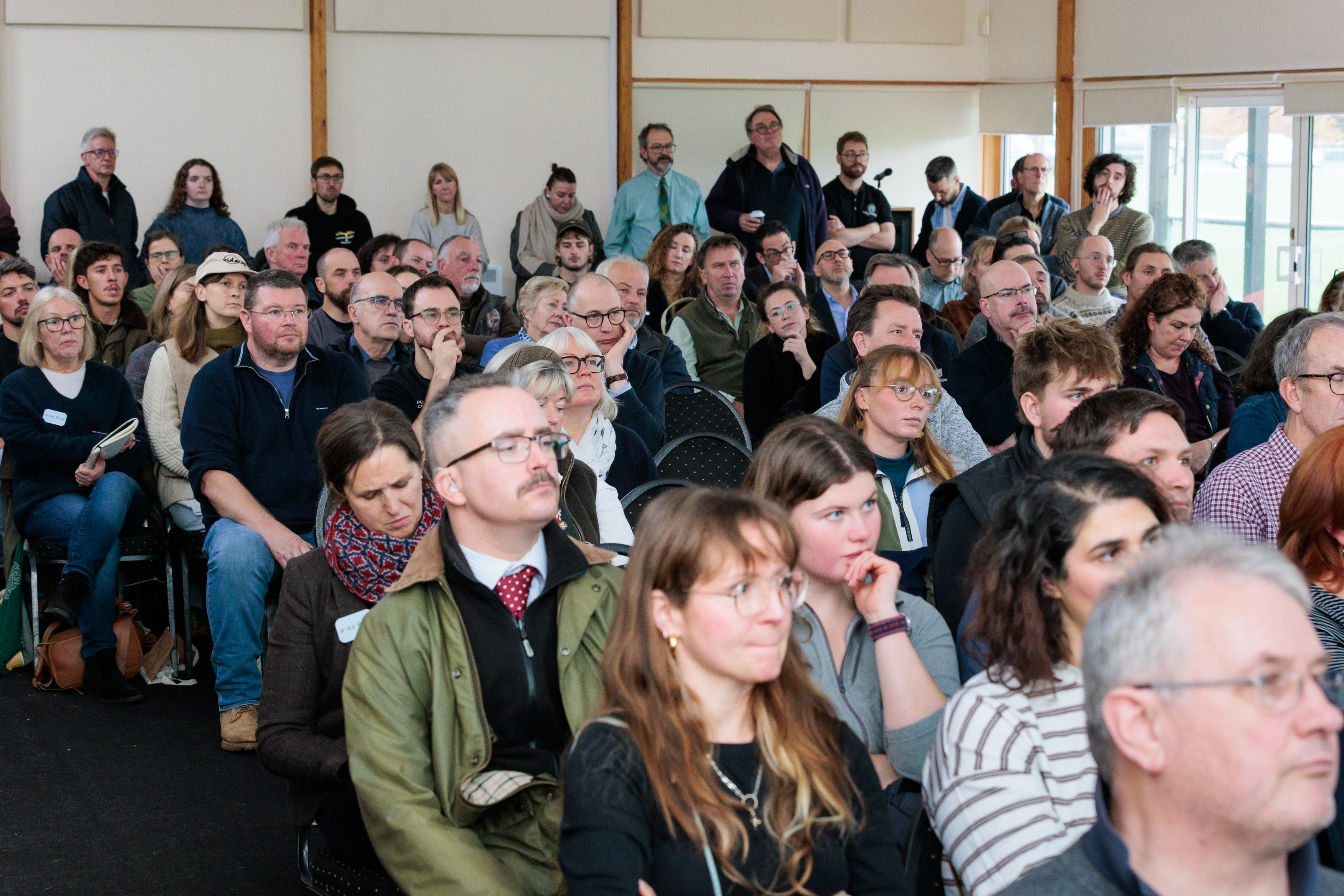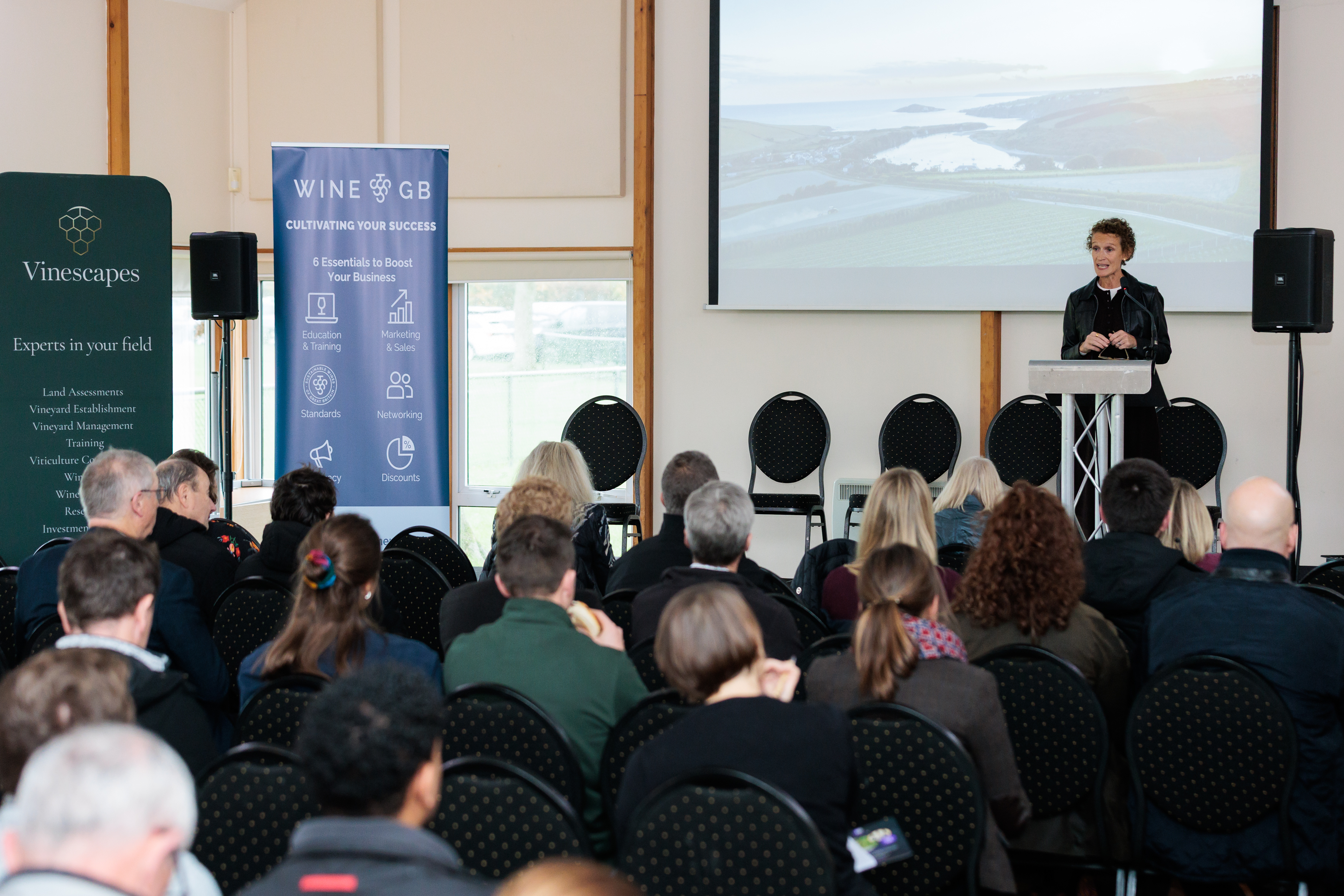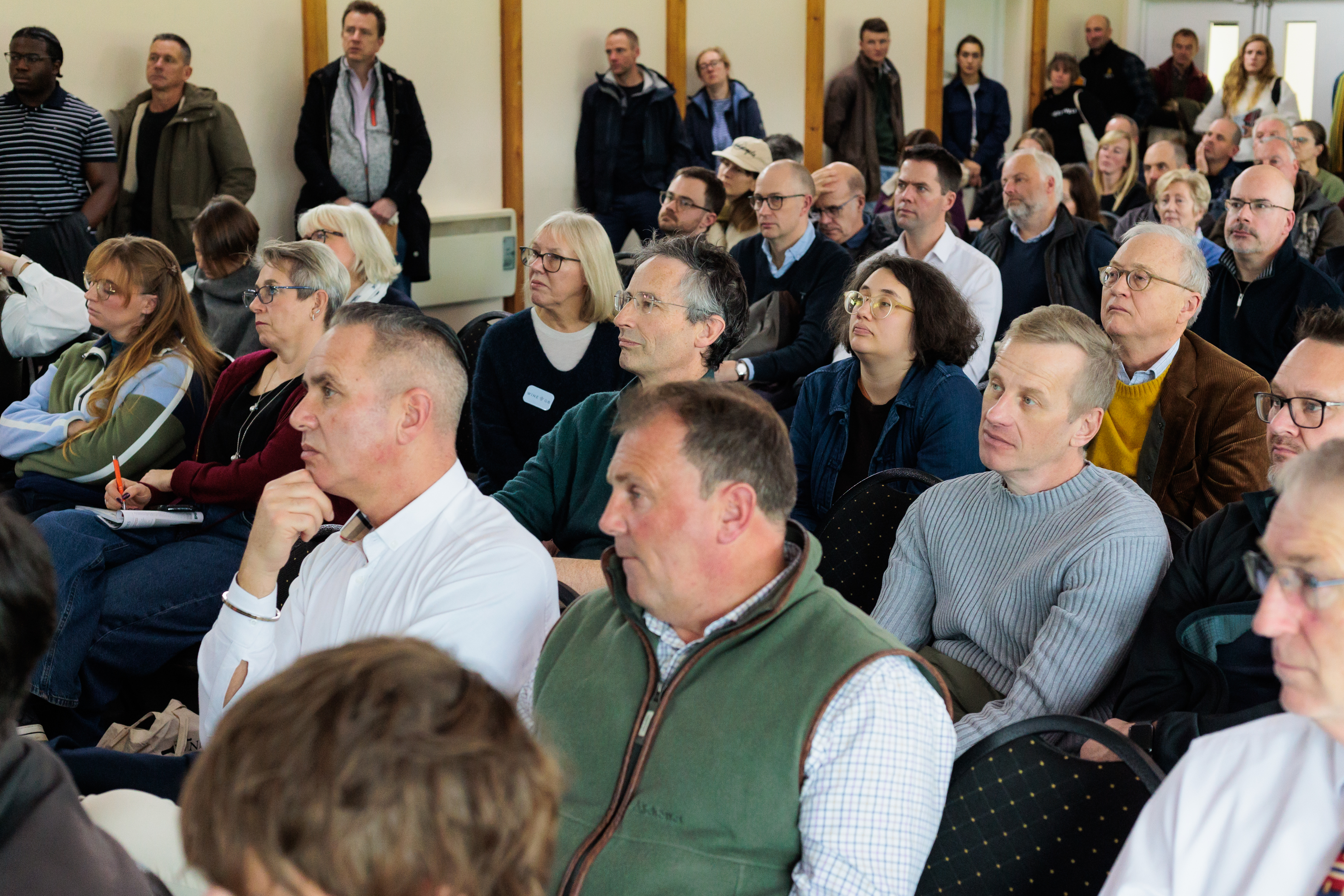

The seminar programme at the Vineyard & Winery Show was once again hosted by WineGB and sponsored for the first time by Reflex labels.
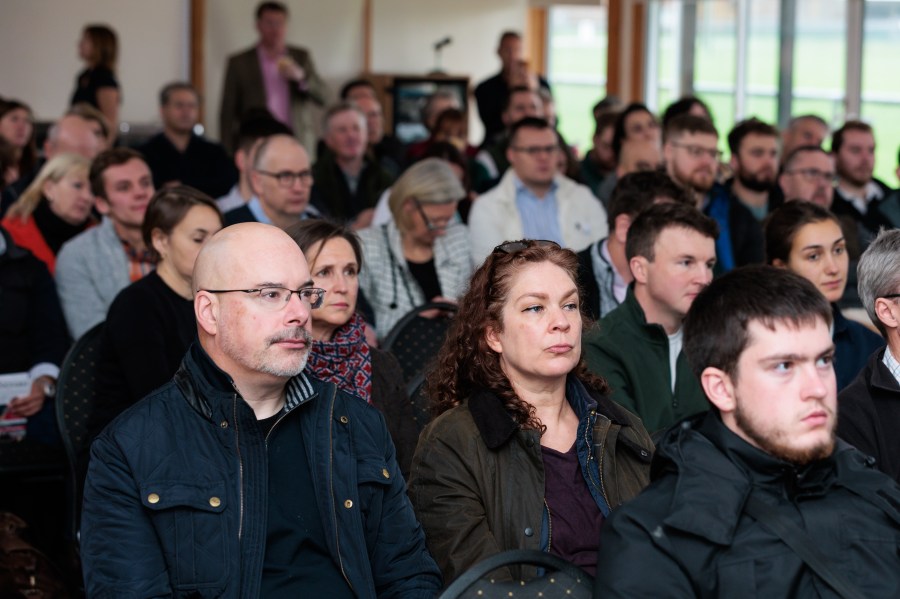
With topics ranging from frost protection to technology the packed audience was welcomed by WineGB Deputy Chair Ruth Simpson.
As the co founder of Simpsons Wine Estate in Barham, near Canterbury in Kent, Ruth explained some of the achievements of WineGB over the last twelve months and said: “As a Kent Grower it is a privilege to welcome you to Kent and to thank you for your ongoing support.”
Ruth provided an update on the three-year strategy which she explained is designed to help make wine, market wine and tell the story of wine. One of the major undertakings that has occurred since the 2024 event has been a redesign of the WineGB website along with many updated toolkits and guidance packs such as alcohol duty reporting. Of special note was also the celebration of skills that have happened throughout the year. Ruth highlighted the WineGB pruning competition alongside the Vintners apprenticeship programme, wine careers week and the most successful English Wine Week which had the tagline ‘create new traditions’. This resulted in significant media interest with in excess of 500 mentions across different media outlets.
Innovation – past, present, future from an emerging talent/young winemaker’s personal perspective
Ruth handed over to Tommy Grimshaw of Langham Wine Estate who she described as a “multi award winning star young winemaker.”
Tommy addressed the topic of innovation in English and Welsh winemaking. Appointed as head winemaker at Langham in December 2019, Tommy explained why innovation is important to him. Defining innovation as “the process of implementing new ideas, products or processes that create value which can be achieved through invention or adaptation,” Tommy explained that adaptation is they key point “we really need to make sure that in the UK we are creating our own path,” he said.
“Innovation will help us improve our wines and the livelihoods of all those within the industry and the environment in which we are working, and there are so many in the industry that are working hard to improve every single day” he said. Tommy humbly paid tribute to those who had shaped modern viticulture in England and Wales including Hambledon with the first commercial vineyard, the late great Peter Hall at Breaky Bottom and Nyetimber planting the Chardonnay Pinot Meunier and Pinot Noir varieties. “These pioneers are the reason we are all sat here in Kent,” said Tommy.
Having started in the wine industry at the age of 17 Tommy had his head turned by the idea of Grower Champagne taking inspiration from the techniques of renowned French winemaker Anselm Selosse who wanted to make site specific, single vineyard champagne which had not been done before. “For me the biggest thing I have taken away is lowering the pressure of sparkling wines. The higher the pressure of the wine the more the acidity is accentuated. Acid is a hallmark of our wines so how can we take these techniques and integrate them into what we do? Our wines now sit at 4.5 bar pressure. This lower pressure integrates the acidity and works with it so we can lower the dosage,” explained Tommy.
The Langham Perpetual is the first wine to receive 99 points at the WineGB awards and Tommy explained that he wanted to have a multi vintage wine that nullified vintage variation (again taking inspiration from Anselm Selosse) so in a 2000 litre Slovenia oak foudre, there are now the best parcels of every vintage since 2017. “We bottle 800 litres and then we top the barrel up with the best parcels each year and we will keep that going perpetually,” he said.
Tommy explained that Langham have produced a Col Fondo Sparkling Wine working with Key Keg which was inspired from an experience during lockdown where he saw prosecco with 2 bar pressure being served on tap at a large pub chain. “I thought a low pressure cloudy wine would be great for a keg format. I tried to contact companies to make that style of wine and the answer was no but we went ahead and made a base wine with Madeline Angevine and Chardonnay and a small amount of sugar and we ended up with a fun experimental wine in a format that has really taken off this year proving that inspiration really can come from anywhere,” said Tommy sharing a laugh with the packed audience.
“As wine makers we are often alone in a shed,” said Tommy with his trademark humour and honesty, “but for new ideas we need to work together. It takes community and this year we did a grape swap. We swapped two tonnes of Chardonnay with a Kent vineyard. I am used to cool climate Dorset chalk soils and I have never worked with anything grown on clay so currently in our winery we have Kent juice that has been grown on clay that is really ripe and the Kent vineyard has a tank with slightly higher acidity than they are used to. We will come together in the spring and exchange ideas.”
“Innovation is a chance to create and there is a responsibility on winemakers and winemaking teams to push each other to show individuality and to try something new. Don’t be afraid to fail because sometimes things go right and take you in a new direction. I feel so privileged to be part of the winemaking scene,” he concluded.
The new face of regenerative viticulture
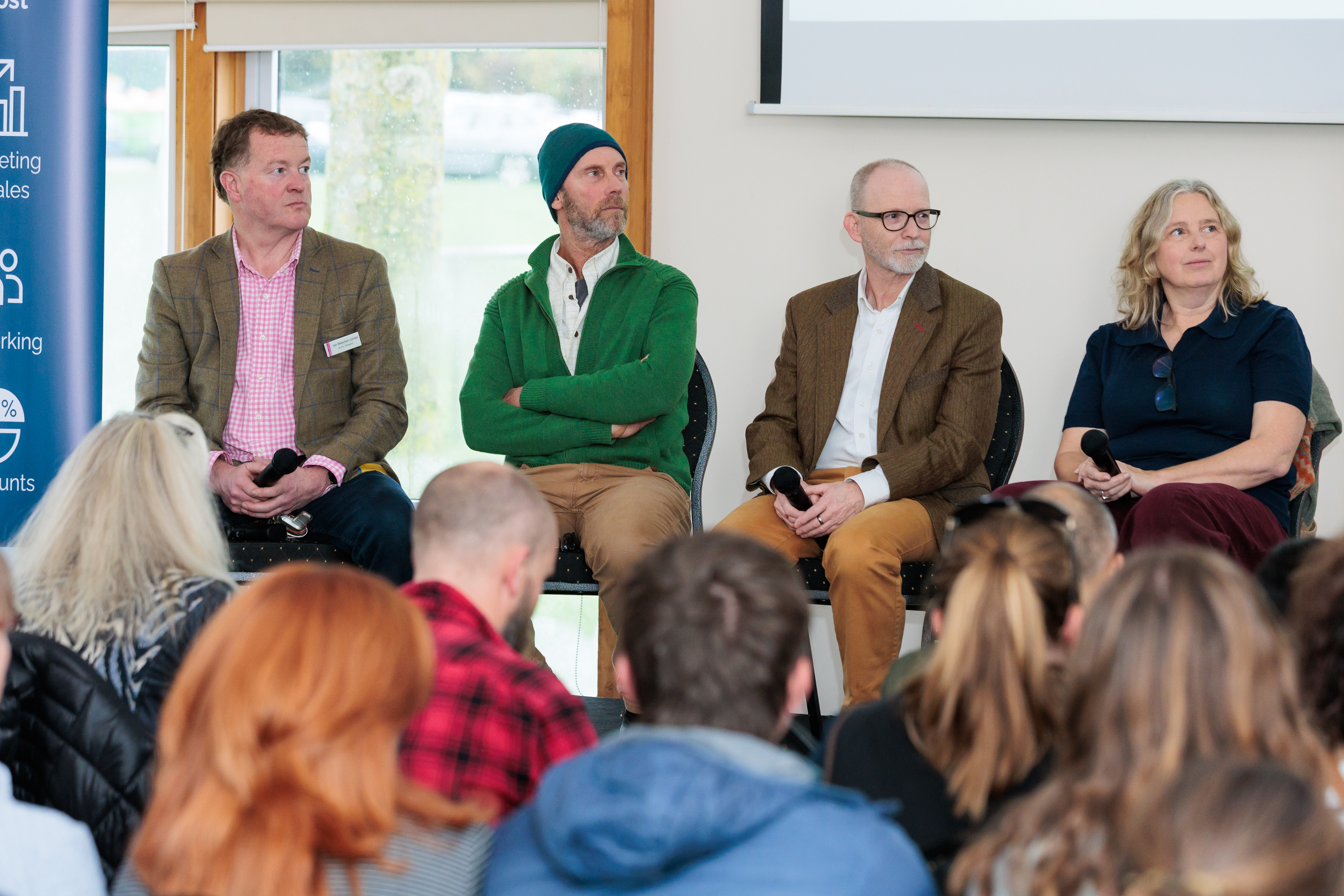
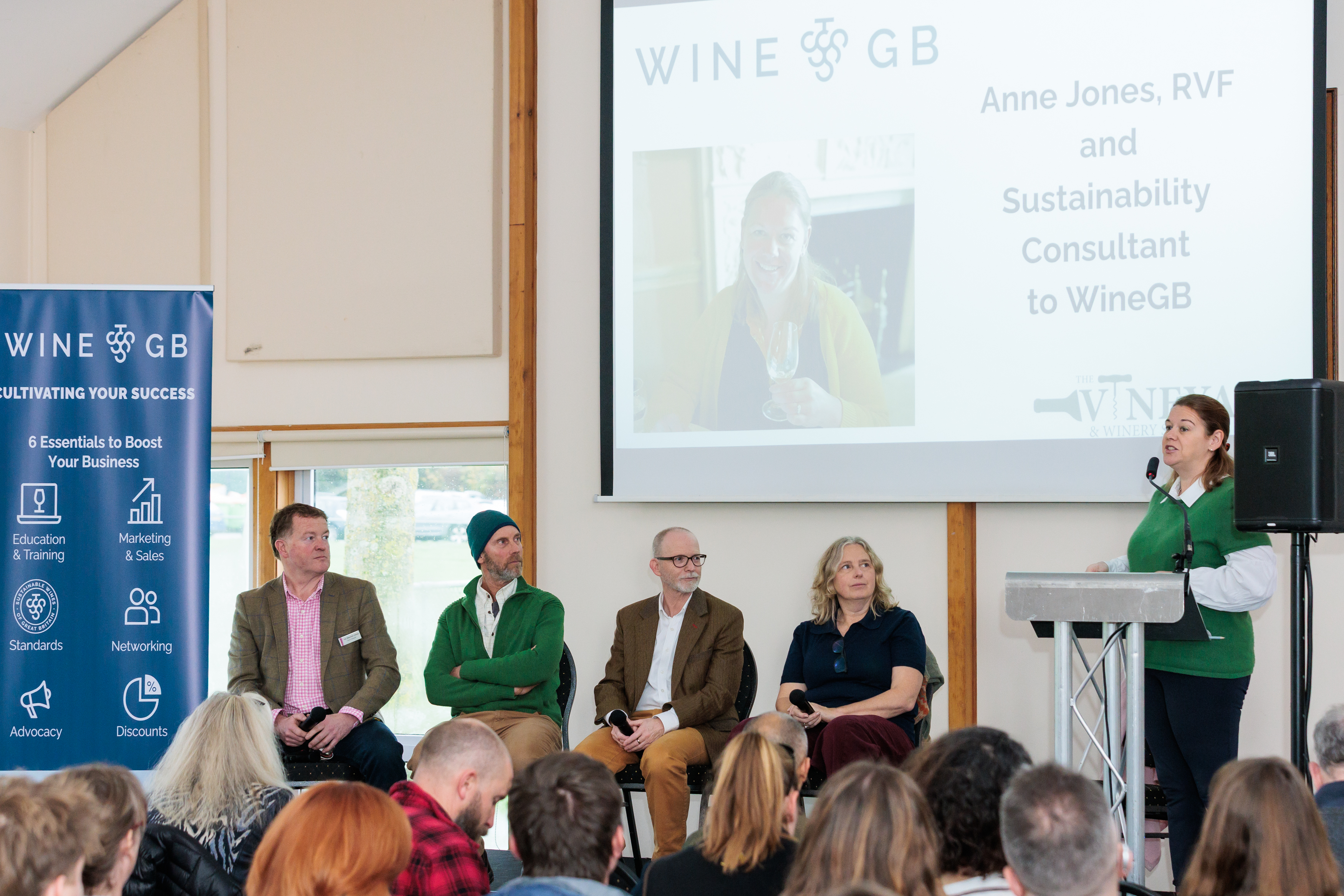
An update on The Frost project (see report by UK Agritech Centre on page 63) was followed by a significant number of questions from the audience before a discussion entitled The New Face of Regenerative Viticulture saw Anne Jones of the RVF joined by a panel of experts.
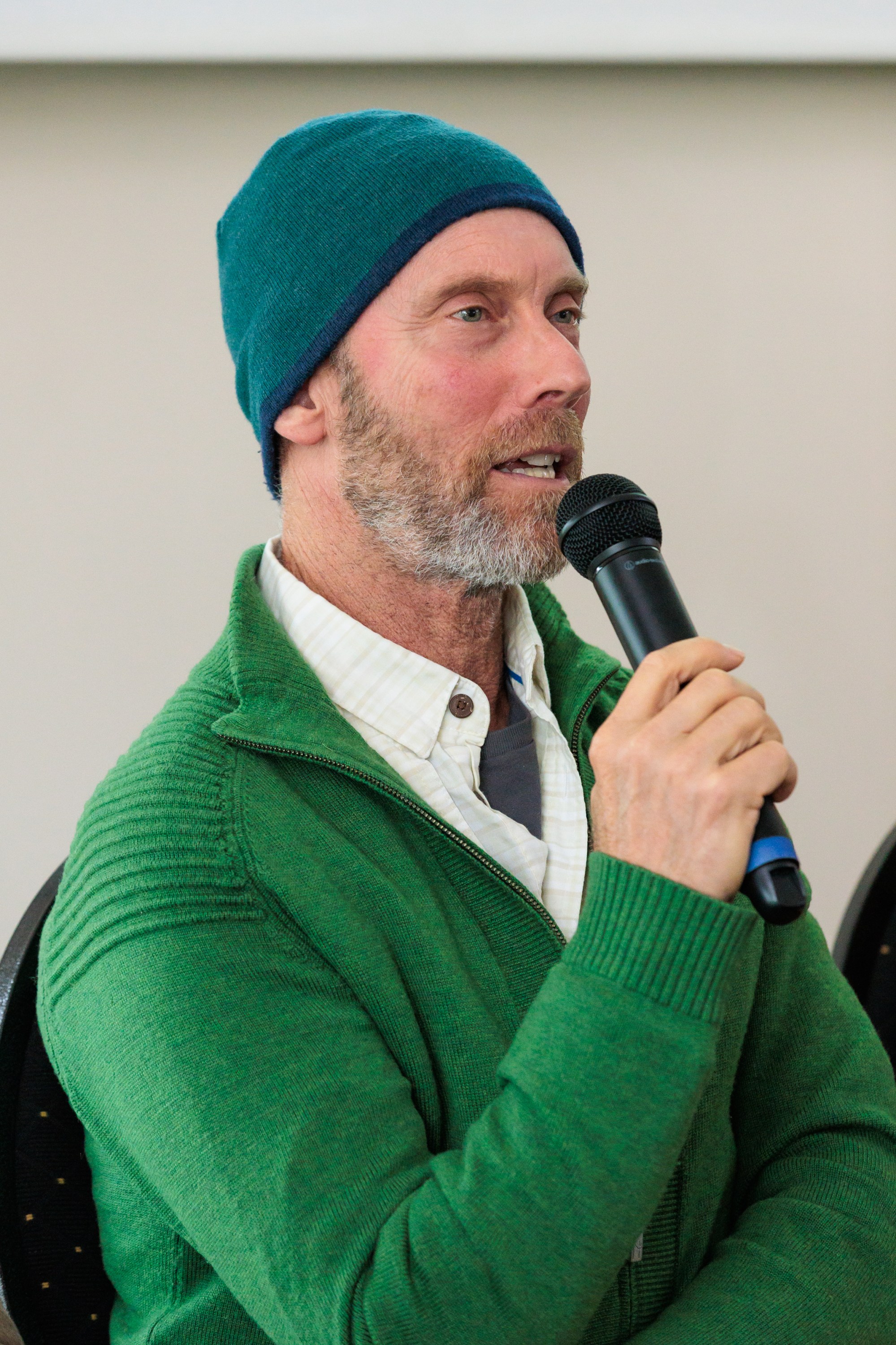
Becky Sykes started by asking the controversial question “Why are we talking about regenerative viticulture, what is wrong with traditional viticulture?” The answer started with pointing out that “conventional farming has caused soil degradation, most famously the 1930s dust bowl in America. Kelly Mulville started with a quote from American ecologist Aldo Leopold “A thing is right when it attempts to preserve the integrity, stability and beauty of the biotic community. It is wrong when it tends otherwise.”
Pointing out that the ecosystem also includes humans, Kelly made it clear that a better future is something that we should all be working toward. Ian Beecher Jones pointed out that we have more technology than ever before. Ian pointed to a device that he described as a fitness tracker for a plant. “I can connect this to a leaf and it will give details on the status of 15 different nutrients within that plant but I have to know how to apply that knowledge.”
Ian also pointed out that it takes time to know how new techniques and practices will affect the life of the vineyard and what works will vary from county to county. Ian finished with the important point “you can’t be green if you are in the red” highlighting that it is important for vineyards to still be profitable.
Andrew Baker, co-founder of Soil Acoustics has spent a career monitoring biodiversity. “Acoustics are a very easy way to measure how many creatures there are in a particular area. We can listen to birds, bats, crickets… anything that makes a sound. A few years ago, we had the idea to use this long-established technique to measure soil biodiversity. There is plenty of scientific evidence that points out that the more biodiversity in the soil the more productive your soil will be economically. So linking with Ian’s point it increases the profitability of an agricultural enterprise.
Every agricultural system takes an ecosystem out of balance because we are trying to grow more of one crop than anything else, but we don’t want to take it too far, the more in balance our systems are the closer we are to an equilibrium where we can provide the crops that we need but not destroy the basic fundamentals that will undermine our agricultural productivity,” concluded Andrew.
Becky Sykes pointed to a new initiative for the UK called the one block challenge which encourages growers to dedicate a block of vines which can be as small as two rows or as large as half a hectare for one year as an initial starting point to implement a couple of regenerative practices. “A good starting point is cover crops because we already see cover in the inter row area, we are going to encourage people to stop using herbicide under vine in this dedicated block and then there are other things that can be added such as bringing animals or compost.” This challenge is a way to explore regenerative practices without making wholescale changes supported by a knowledge sharing community. The challenge has already seen significant results for growers in the Paso Robles, California. The Challenge has also launched in Sonoma and South Africa.
Ian Beecher Jones of Jo Jo’s vineyard asked for any growers who may be interested in being part of a New WineGB Technology Group. Ian pointed out that as an industry it is important to think about how technology can benefit growers and working together in a non-commercial way will ensure that growers can find the tools that they really need and that they are aware of the latest technology from around the world and how it could be implemented.
Nicola Bates concluded by thanking Reflex labels for sponsoring the seminar programme and the speakers who took part and also the small team at WineGB who worked so hard to put together the wide variety of topics covered. “We have seen throughout the programme that together we are stronger,” Nicola concluded.