
Andrea Ontiveros Flores, a sommelier and marketing & communications specialist from Alicante, Spain looks at how London’s top restaurants are selling the story of English wine.
English wine is becoming an increasingly popular feature on wine lists in restaurants, bars, luxury hotels, and fine-dining venues, particularly those focused on local cuisine. As quality continues to improve and gain recognition, and as production grows year after year, the hospitality sector remains one of the most important channels for raising the profile of English and Welsh producers, building visibility and positioning as a premium product.
A place on the right wine list can be worth more than many marketing campaigns. Restaurants not only introduce consumers to the category, but also influence how it is perceived. But how are London’s leading restaurants helping shape the future of English wine? Which venues have become champions of the category, and which producers are appearing most often on their listings? Why are they being selected, how are customers responding, and what styles are gaining traction beyond sparkling?
According to Wine Lister’s latest report, Breaking New Ground: The Rise of English Sparkling Wine, which includes insights from more than 20 sommeliers and industry professionals, English wine – particularly sparkling wine – is now a common feature across the UK’s restaurant scene and premium hospitality venues. However, many respondents believe there is still room for greater representation, noting that some establishments include only one English wine as a token listing. Overall, the broad sentiment is that having at least one local wine on a wine list is now considered essential across much of the hospitality sector.
Most sommeliers and wine buyers discover new English wines through tasting events, distributors, wine publications and reviews, direct contact with producers, as well as through word of mouth, social media and advertising. When it comes to deciding whether a label earns a place on a wine list, pricing, sustainability credentials and exclusivity are among the most important factors. Brand reputation, the level of support provided by producers, and ultimately quality and consumer demand also play a significant role in the decision-making process.
The report also explores the reasons behind this growing presence. Many cite local pride and a desire to support British produce as key reasons, while others point to the growing reputation of the category, with wineries now producing high-quality wines that are increasingly seen as a credible alternative to Champagne. Only a small minority reported not listing English labels, mainly due to a lack of consumer demand or because the category did not align with their venue’s concept.
To gain further insight, I analysed the wine lists of 10 leading London restaurants and hospitality venues and reviewed their current selections. The aim was to understand what has changed since previous reports and identify which producers are securing placements, particularly at a time when wine bars and specialist establishments are constantly evolving and refreshing their offerings. The sample includes restaurants and hospitality businesses that have demonstrated sustained relevance and influence over time.
For instance, Hide in Mayfair features an impressive collection of English wines. Thanks to its luxury sister wine shop, Hedonism Wines, Hide has access to massive cellars that offer one of the most comprehensive selections of both sparkling and still wines in London. Claridge’s showcases a carefully curated range of premium English sparkling wines, while Noble Rot stands out for its diversity of styles, featuring not only sparkling but also a strong presence of still expressions, particularly Pinot Noir.
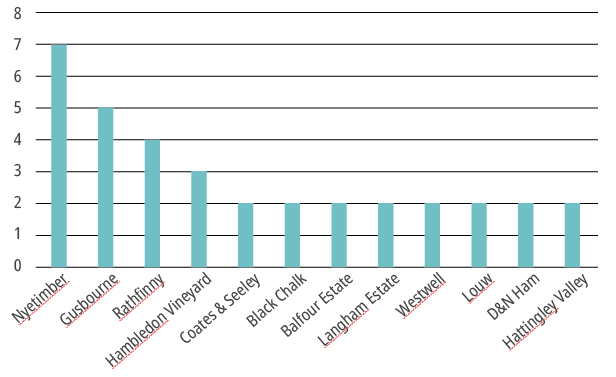
In terms of the estates winning the listings race, the results were broadly in line with previous reports, particularly among the top five producers. Nyetimber came out on top with the highest number of appearances across the sampled venues. This is perhaps unsurprising given its strong brand recognition, premium positioning and extensive presence across the hospitality sector. Nyetimber is also frequently available by the glass, giving it a significant visibility advantage.
Gusbourne was another frequent feature, benefiting from a strong reputation among sommeliers and a portfolio that spans both still and sparkling wines. Rathfinny also had a notable presence, particularly in Michelin-starred and premium hospitality venues, supported by a strong sustainability narrative. Hambledon Vineyard, one of England’s oldest commercial wineries, continues to secure listings across high-end restaurants, while Coates & Seely maintains a regular presence on premium wine lists and within luxury hotel programmes.
The results suggest that wine buyers continue to favour established brands with strong trade relationships, recognisable names and consistent supply. While English wine production continues to diversify, listings at influential venues remain concentrated among a limited group of producers, suggesting there is still room for a wider range of wineries to secure placements.
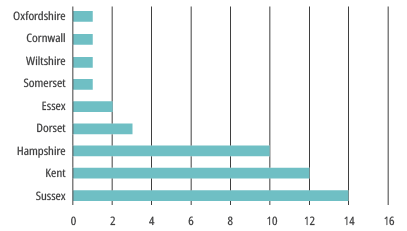
Sussex was the most represented English wine region across the sampled venues, followed by Kent and Hampshire. The dominance of these regions reflects not only the concentration of leading producers, but also the importance of provenance in the English wine story. Many of the country’s best-known estates are based in the south east, where favourable growing conditions and long-term investment have helped establish a strong reputation among sommeliers and wine buyers.
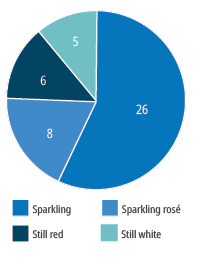
Based on the wine lists reviewed, still wines – particularly reds – appear to be gaining ground. Sparkling continues to dominate, but venues such as The Ritz and Noble Rot are increasingly featuring still wines alongside their sparkling selections, reflecting growing confidence in England’s still wine offering. Examples include Camel Valley’s Bacchus and Louw’s Elham Valley Chardonnay, as well as a range of Pinot Noirs from producers such as Gusbourne, Lyme Bay, D&N Ham and Louw. 67 Pall Mall also lists Westwell Ortega and a still white from Hattingley Valley, while The Ledbury currently offers Danbury Ridge Pinot Noir, one of England’s most highly regarded still red wines.
This is a clear example of how introducing a growing category into influential hospitality venues can benefit not only awareness, but also potentially drive retail sales. Restaurants remain one of the most important routes to market for premium wines, offering producers visibility, credibility and direct exposure to consumers. In a setting where the overall experience matters, the wines served can leave a lasting impression on guests. Discovering a wine in a well-known restaurant can definitely influence future purchasing decisions.
But are guests proactively ordering English wine? How often do consumers follow a sommelier’s recommendation? And what trends are emerging? Guests rarely order English wine blind. Instead, many are influenced by factors such as local sourcing, sustainability and British produce, while more engaged wine drinkers may also be attracted by innovation, exclusivity and the opportunity to discover something new.
One wine director interviewed by Wine Lister highlighted consumers’ desire to drink local wines as the strongest driver, particularly when English options are recommended by hospitality staff. As one respondent noted: “If offered, the UK consumer will choose a UK sparkling over a Crémant or Cava on a by-the-glass list.” This reflects decades of work in building the reputation of English wine, as producers have increasingly positioned their bottles alongside Champagne on premium wine lists. The trend is clear: more consumers want to drink local wines, and interest in premium and sustainable options is growing.
And what does this mean for producers? Restaurants are not simply another sales channel. They act as brand builders, consumer educators, premium validators and even tourism drivers. How leading restaurants choose, present and position wines may be just as important as the labels themselves. A good example is English’s of Brighton, which remains relevant despite not being part of the London scene, following its move to an almost all-local wine list, replacing imported wines with domestic producers, particularly those from Sussex. It is a clear example of how a restaurant can act as both a curator and a champion of English wine within the hospitality sector.
However, there are still barriers to wider adoption. Perhaps the main challenge remains perceived value in terms of pricing and consumer expectations, especially when English wines are positioned next to regions such as Champagne and Burgundy. Educating customers about the UK’s unique terroir could help drive demand, while the way sommeliers present and recommend these wines continues to influence consumer trial. The category could also benefit from a clear and recognisable classification and appellation structure.
There is still work to be done, but the growing presence of English wines on some of the most influential wine lists suggests the category is moving in the right direction. For producers, securing a place in leading restaurants is not only about sales, but also visibility, credibility, market positioning and endorsement. If current trends continue, English wine could become not only a local choice on restaurant wine lists, but a defining part of the British hospitality experience.
|
Fine dining |
|
Core by Clare Smyth |
|
The Ledbury |
|
Hide |
|
Restaurant Story |
|
Luxury hospitality |
|
The Ritz |
|
Claridge’s |
|
Wine-led |
|
Noble Rot |
|
67 Pall Mall |
|
Les 100 de Taillevent |
|
British gastronomy |
|
Corrigan’s Mayfair |