
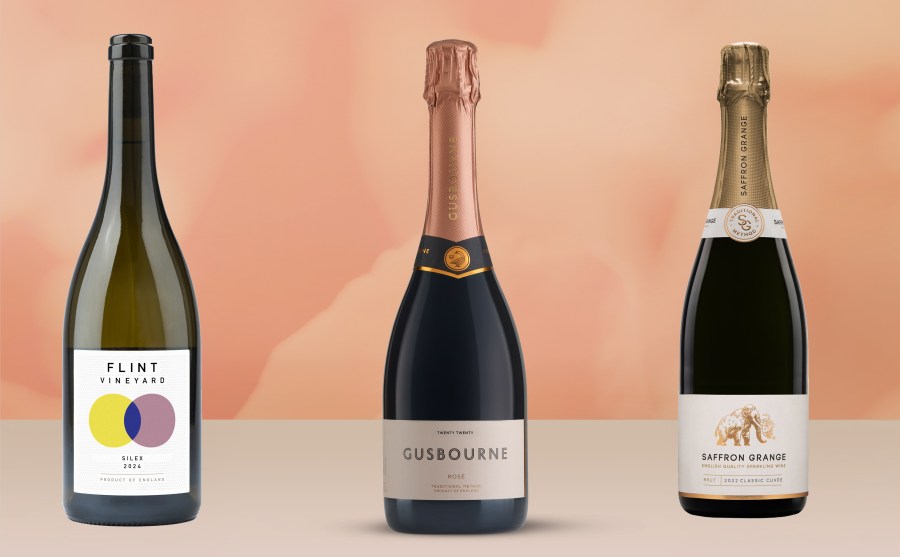
There were three expressions we were taught on a recent break with the kids in Zanzibar. The Swahili “Hakuna Matata” (yes, it’s not just a Disney ditty) is used with extraordinary regularity, and it means chill out. “Jambo” (or more accurately “Mambo” for locals) means hello, and most frustratingly “Pole Pole”, which means gently does it, take your time, or slowly slowly, is a quaint expression when you say it to a child, but incendiary when a barman casually delivers it when I have been waiting far too long for him to pour me a cold beer!
However, Pole Pole, the principle of patience and gradual progress, is essential and often unrecognised in the wine world’s success. One of the most quietly influential people in the on-trade, both here and overseas, is Vincent Pastorello.
I first met Vincent when he was the wine director at the Dorchester, working closely with Alain Ducasse. He also worked with Gordon Ramsay in Melbourne and London. Back in the day, he was one of the most talented sommeliers on Earth. Eight years ago, he became global wine manager at Dream International, overseeing restaurants such as Zuma, Roka, Amazonica and Coya, among others. He has also, more recently, collaborated with a couple of highfalutin’ winemakers, making a couple of wines, and the results are staggering.
His Vinya dell Col, a Xarel-lo which he makes alongside legendary Penedès Spanish winemaker Pepe Raventós, is nothing short of epic and has become more refined with each vintage, illustrating how patience allows a wine’s complexity to deepen.
A couple of years ago, he afforded me a sneak preview of the inaugural 2021, and last year, it was the majestic 2022. Last month, the newly released, and spectacularly beautiful 2023 was joined by a fascinating preview of the 2024, which is still in tank. This series of vintages shows how Pole Pole has allowed flavours and aromas to develop significant intricacy over time.
And we come to the point of this month’s article: Pole Pole. Or in Vincent’s own words, “nature leads the way”, “it takes years to learn to unlock delicacy and detail in one’s wines”. He is a wise chap, and his wines tell this tale perfectly, as his gradual augmentation of flavour and intricacy is unmissable.
Funnily enough, I tasted Domaine Evremond’s spectacular ‘Edition 2’, which in itself is a stunning, expansive and unmistakably grand wine. It is hard to believe, but it builds considerably on the first release, and I can’t explain why or how it has gathered so much finesse – I will ask next time I see Mr McGrath! I suspect Pole Pole is the reason. So, to celebrate this month’s curious theme, I have found three wines that have already appeared in my column over the last eight years, each one illustrating, through gradual evolution and refinement, how consciously or unconsciously employing the art of Pole Pole leads to noticeable improvement.
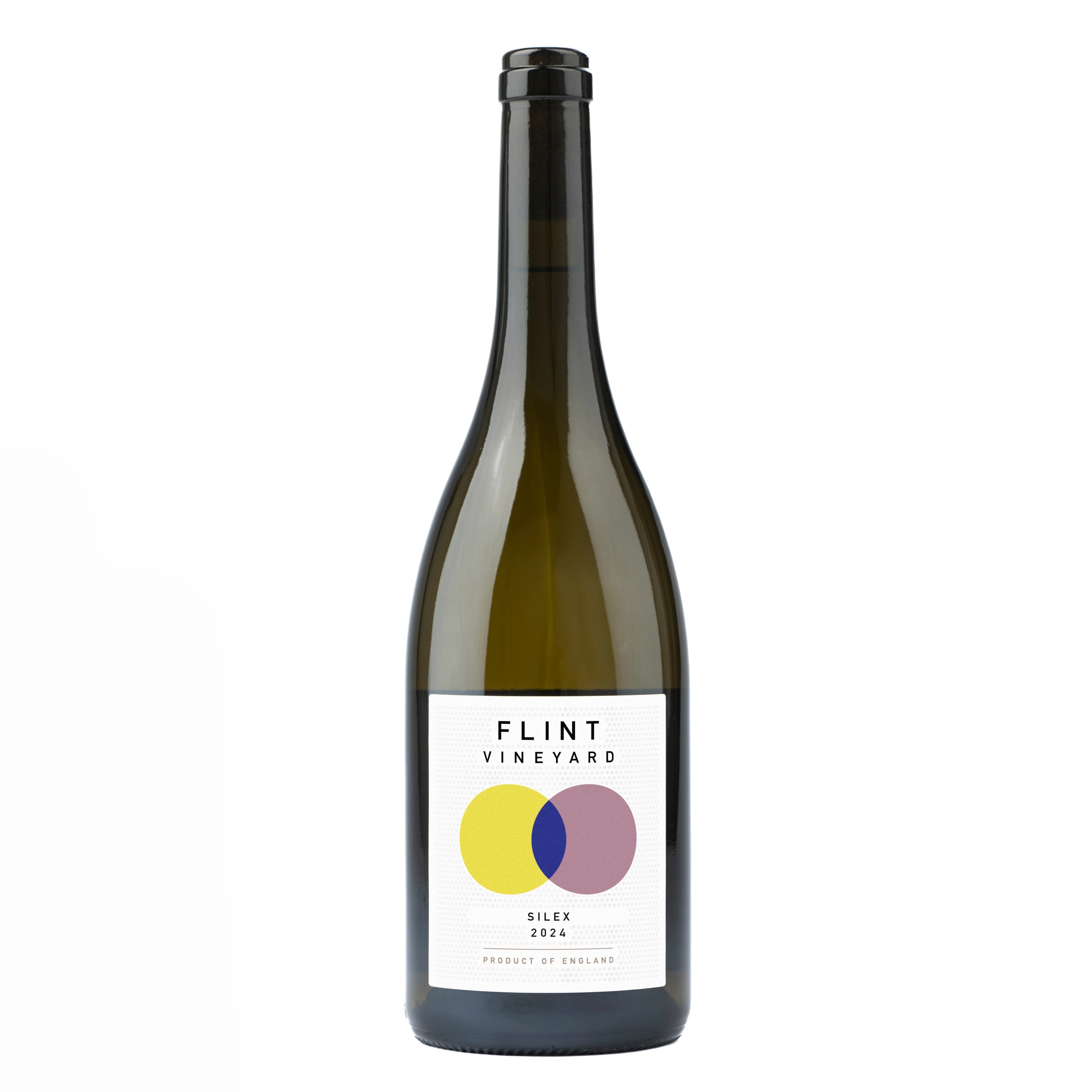
2024 Flint Vineyard, Silex
£25.00
www.flintvineyard.com and coming soon to Virgin Wines, Fortnum & Mason and Berry Bros. & Rudd
I wrote up the 2020 vintage of this wine back in September 2021, noting it ‘was the most extroverted in oak impact’, ‘made from a blend of 50% Pinot Noir, 20% Pinot Blanc, 20% Bacchus and 10% Pinot Gris’, and ‘some Bacchus is held back from the 2019 harvest and used here, bringing a more mellow tone’.
And we fast-forward a couple of vintages to find that 2024 is not only another example of Ben Witchell’s epic blending skills, but it surpasses the intricacy and class of the 2020 by a mile!
The gradual evolution of Silex has meant it reflects the ever-evolving vineyards that contribute to it, through the prism of its increasingly experienced makers. Silex is today a 66% Chardonnay, 24% Pinot Blanc, 6% Pinot Noir and 4% Pinot Gris blend. The Chardonnay portion comes from both Whitewolfe and Martin’s Lane vineyards, and the Pinots from Flint’s own parcels. The fermentations are carried out in neutral oak and concrete, and the ‘refreshing addition’, from the preceding vintage, is, this time, Chardonnay. The result is a leaner, more energetic wine with a super complex, super layered, clean, and spicy palate that manages to inject the briefest moments of exotic pith and skin without ever overstepping the mark!
It is mesmerising and a classic example of the evolution of a style that could never have been achieved in a rush!
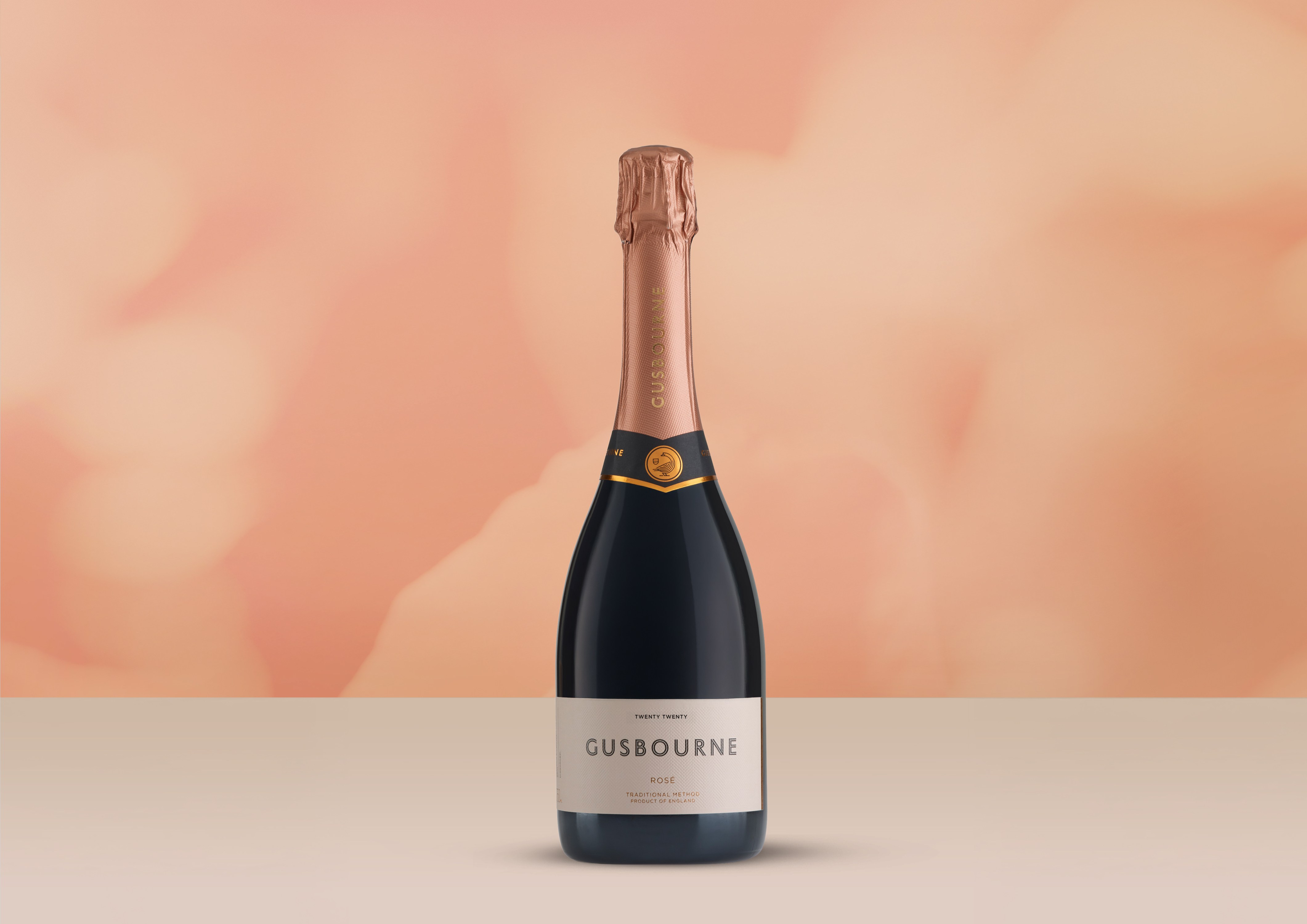
2020 Gusbourne, Brut Rosé
£55.00 reduced to £45.00 for members
I have not written this wine up since its 2014 incarnation, which made the grade back in June 2018’s issue. Back then, this wine was a cunning blend of 53% Pinot Noir, 41% Chardonnay and 6% Pinot Meunier, topped with an eyedropper of red wine with a natural alcohol of 12.5%!
Today’s newly released TwentyTwenty turns this recipe on its head, favouring 59% Chardonnay, 29% Pinot Noir and 12% Pinot Meunier, sourced entirely from Gusbourne’s own south-facing vineyards on ancient escarpments in Appledore.
The 2014 was a bold wine, and I remember using the word ‘determined’ about its demeanour. This 2020 is more elegant, musical, pink-fruited, not red-fruited and extraordinarily appealing. There is no sense of tannin or suspension, just limpid pomegranate notes and seamless fruit, which is perhaps not surprising because 2020 was another wonderfully ripe vintage. And yet, the tension pounces on the finish, with a thrilling kiss of acidity which sends you immediately back for another sip. 56 months on its lees has brought with it calmness, erudition and a comprehensive sense of Pole Pole!
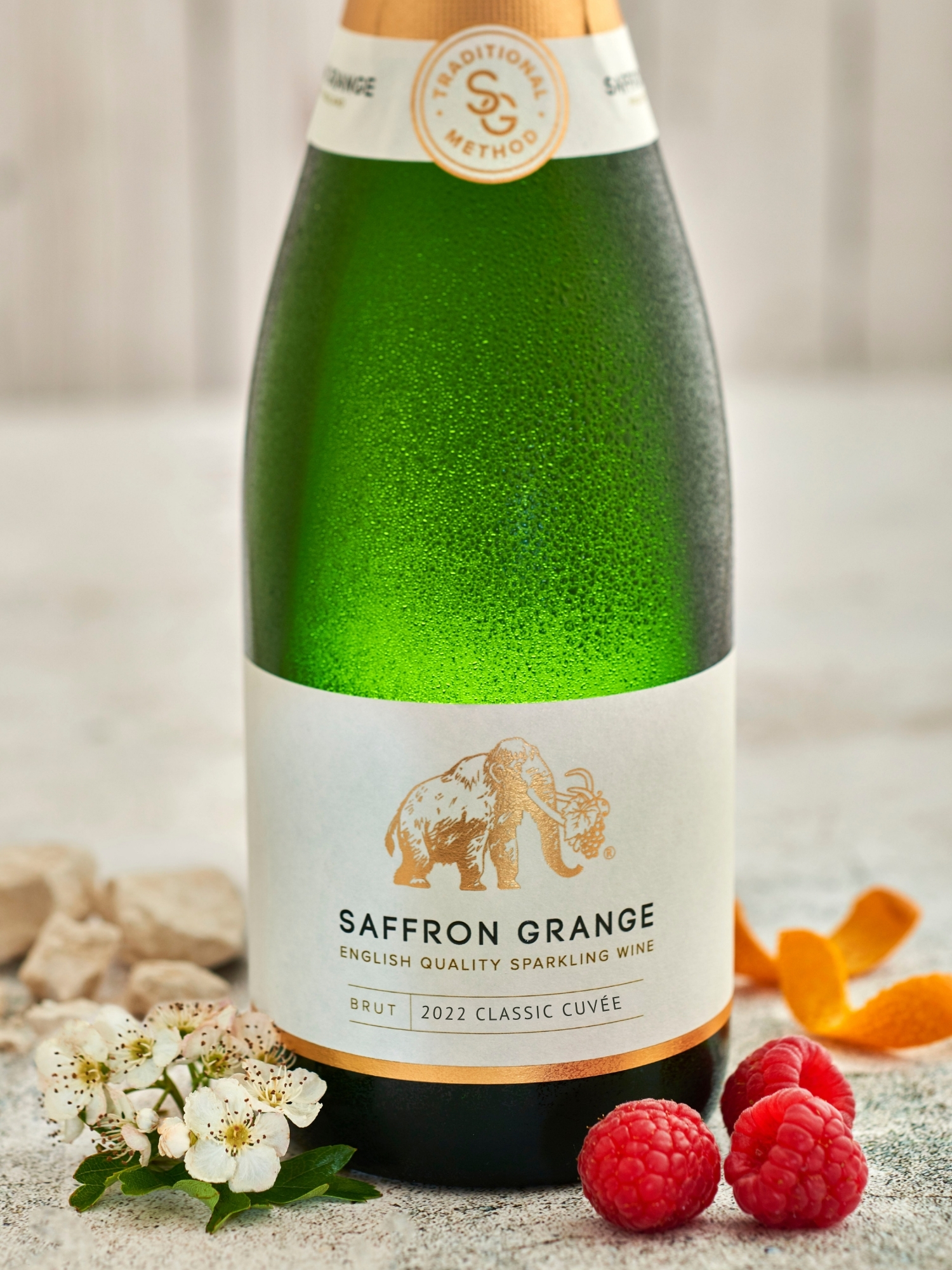
2022 Saffron Grange, Classic Cuvée Brut
£38.00
This time, I wrote up the 2019 vintage of CCB on this page in January 2024. So, what has changed over the last couple of years?
The blend remains the same: 50% Pinot Noir, 35% Chardonnay and 15% Pinot Meunier, in perfect harmony, and aged for 30 months on its lees. Nothing new there. Of course, the 2022 vintage was a ripe one, so the core fruit here is a little silkier and more buoyant, and to counterbalance this augmented exuberance, a full 2 g/L of residual sugar has been carved off the dosage. This is the magical ‘learning’ that has been confidently applied to this stupendous wine.
The woolly mammoth on the label perhaps needs some roller-skates, because the flavour glides across the palate with considerable grace, and the overall halo this wine brings is super-classy, mineral-tinged, with herb and lime hints, and it doesn’t flag or fade, maintaining gorgeous momentum throughout.
The 2019 vintage was drinking on release, open and enjoyable. This 2022 is dynamic, refreshing, and while it will develop over the coming five years, it will not broaden or lose focus, as it has done what all wines desire: it has become finer and more detailed, and this could not have been achieved overnight!