
The pressures on wine retail have been immense in recent years. Factors like rising production costs, changes in regulation and the impact of climate change – not to mention falling levels of wine consumption – have all played a part in making the environment a difficult one to negotiate. That said, research by Mintel estimates that the UK wine market was worth almost £15bn in sales in 2024. There is still undoubtedly a very large pie out there, and it is up to English and Welsh wine producers to determine how they can obtain a bigger slice. Industry expert Joe Fattorini gave Vineyard Magazine an overview of the current status of the market.
“Independent retailers particularly seemed to have a consistent message in 2025. It was a year with its challenges for sure but they were made far worse by the government, with duty increases, national insurance changes, waste regulations and more. People told me the issue of declining consumption was dwarfed by the actions of the government,” said Joe Fattorini.
“That said, there are clearly opportunities. I have worked with businesses selling wine at all price levels who have had a year of growth, driven by strong strategies and consistent execution. There are people doing well selling to older customers, and young people too, even if it is in pockets rather than across the board. But when you know the overall picture of flat or declining sales, it means someone else must have declined, particularly at the value end.”
Thinking more specifically about the trajectory of English and Welsh wine across 2025, Joe had this to say:
“In the vineyard it has clearly been a good year with a decent harvest of attractive fruit. But we know that in the finance department it has been tough, and it has taken its toll on some of the biggest names in the industry. In the long term, the industry has so much going for it. But it has to deal with great peaks and troughs. In the vineyard there are bumper crops that overwhelm wineries, followed by years that barely trouble the tanks.
“There is a need to invest in winery and visitor facilities like we’ve seen at Ridgeview, Hambledon or those planned at Chapel Down. But financing these things demands a steady, consistent cash flow over many years, not a massive year followed by some lean ones. 2025 has been a year where the mismatch between the two has treated some of the best people in the business very unfairly.”
Finally, Joe turned his attention to the actions that English and Welsh producers could consider to make their products more successful in retail in 2026:
“People don’t go out to buy English or Welsh wine. They go out to buy something that interests them. And sometimes that is English and Welsh wine. We are moving from a period where people bought English and Welsh wine because it was interesting. But as it’s become familiar we need to move to a period where we need to create specific interest around the names, and the people, and the styles.”
“Smaller producers often lead the way. Folc, Heretics or Flint, and others, have created interest around themselves in 2025. You might not always like the execution or messaging. But that is the point. They each have points of difference that create a mental “nucleation site” that lets memories, recognition, and recall bubble up. I work with a lot of producers – including some in the UK – and this is at the heart of how we develop plans and take them to market. In Sweden, we have developed a marketing activation approach that can be sales and margin positive as we execute it, even though it is focussed on building long term relationships and awareness. It is essential however, that it is interesting, distinctive, and memorable to cut through.”
With these observations in mind, it would be really helpful to access some cold hard data, to better understand the who, when, where and why of wine purchasing behaviour here in the UK. However, it is notably difficult to access information about retail trends without paying big bucks to market analysts for their reports. The biggest players in the retail sector tend to keep the detail close to their chests, understandably.
As an accessible middle ground, the annual food and drink report published by Waitrose in December is helpful because it covers a broad range of trends. While this only takes one retailer’s experience into account, and does not provide any specific data, the report can be a useful read to get a general feel for which way the wind is blowing with the major retail outlets and to garner an overview of consumer trends.
Unfortunately, in this year’s report wine doesn’t get much of a specific billing, and English and Welsh wine aren’t mentioned at all. However, there are still some useful nuggets if you dig deep:
“Bigger isn’t always better,” said Pierpaolo Petrassi MW, Waitrose head of beers, wines and spirits. “People are moving away from traditional, bold reds towards lighter, more gluggable options.”
The report goes on to say that this trend favours “Beaujolias-style wines with a lower alcohol content”, which sounds like it could be a possible bonus for typical English wines which can often fall perfectly within this sort of categorisation.
It is good news for English white wines too, with Waitrose observing that “consumers are opting for crisp, dry varieties.” That fits in with the flavour profile of the vast majority of English white still wines beautifully. The question is, how to get the supermarkets to increase their English wine offering on the shelves and to find a happy middle ground with the producers when it comes to pricing.
Wine merchant survey
Each year, the London Wine Fair Times undertakes a reader survey to find out more about what the trends are amongst wine merchants. This is another source of useful information in the public domain that can offer up some interesting reading for those in the trade.
Firstly, nearly 50% of independent wine merchants surveyed confirm that they now offer wine for consumption on the premises, as well as for retail sale. This is up significantly – in 2014, the London Wine Fair stated that only around 25% of retailers did this. Access to wine by the glass is potentially important for English and Welsh wine retail since tasting previously unknown products without having to commit to the purchase of a whole bottle is such a critical factor in converting interest into sales.
Of course, this approach is not for everyone in the independent retail sector. Offering wine for consumption brings with it a whole host of logistical issues for the wine merchant – licensing, longer opening hours, increased staffing, as well as actually having the space available to offer that service to customers. Many will still stick with offering tasters only in light of these complexities, but that can still work to the advantage of the English wine producer whose products may be less well known by the general audience.
Secondly, the London Wine Fair survey suggests that the average sale price for a bottle of still wine is £16.91 – an increase of £1.13 from the previous year. Of course, much of that increase will be burned up through duty and inflation, but it still gives an interesting insight into the sort of pricing levels that are being offered. A quality English or Welsh still wine would be hard pressed to come in much below that average at retail, but it does compare favourably with the entry level still wines being offered at the cellar door in many vineyards across the country.
This is a particularly interesting point, because there still seems to be a perception that English and Welsh wine is expensive. Stephen Crosland, the Buying Director for Tanners Wine Merchants in Shrewsbury, told Vineyard Magazine about where that merchant finds itself in relation to English and Welsh wine at the end of 2025.
“It’s all about sparkling wine still, we launched our own label Tanners English Sparkling Brut earlier this year which has been performing very well. In terms of what we stock for still wines especially, we look at local producers mainly as that seems to be the key selling point of English wines and the way to encourage people to buy them. But it can still be tricky given the price points.”
In contrast, James Hawkins of the dedicated English wine merchant Hawkins Bros Fine English Wine takes a different view, even though they have observed trading conditions to have quietened somewhat over the past 12 months.
“People are very aware of the cost of living at the moment,” James says. “The general consensus seems to be that English wines are an expensive thing. I don’t know where people get that idea from. We have to explain to them why they’re not expensive comparatively.”
The active role that James and his team take in helping to educate their customers about English and Welsh wine, how it is produced and where the value comes from is heartening to hear, but he is also complimentary about the level of knowledge that his customers have:
“I suppose people buy what they know. A lot of people come in and they know the local vineyards that are close to them and they’re very loyal to those. Other people know roughly what is available in this country. Bacchus has a good following, certainly. It’s the fourth most grown variety and a lot of people have heard of it and like it.”

New formats
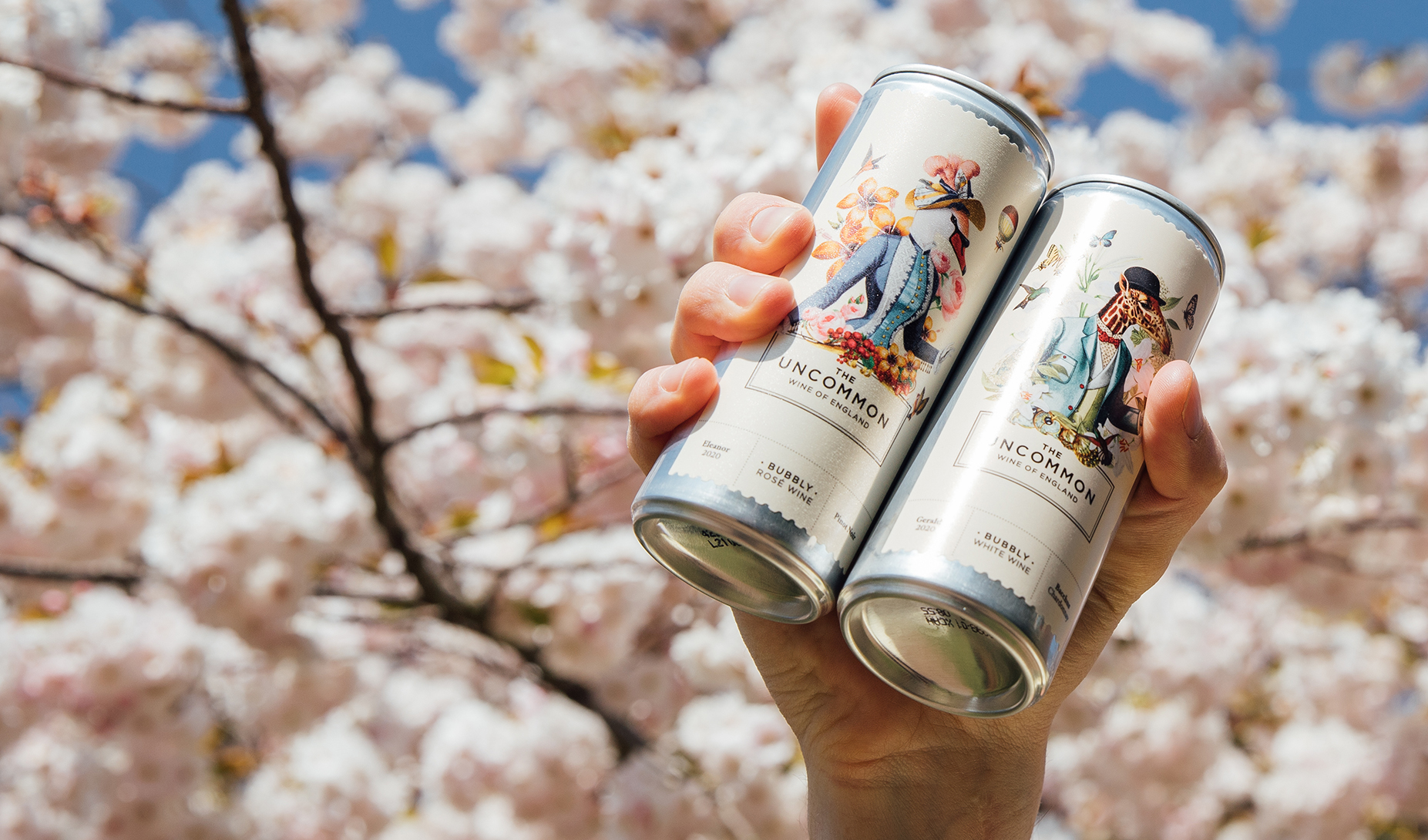
Large retailers have expressed an interest in “changing the narrative” around boxed wines, as well as continuing to experiment with alternative formats like canned wine.
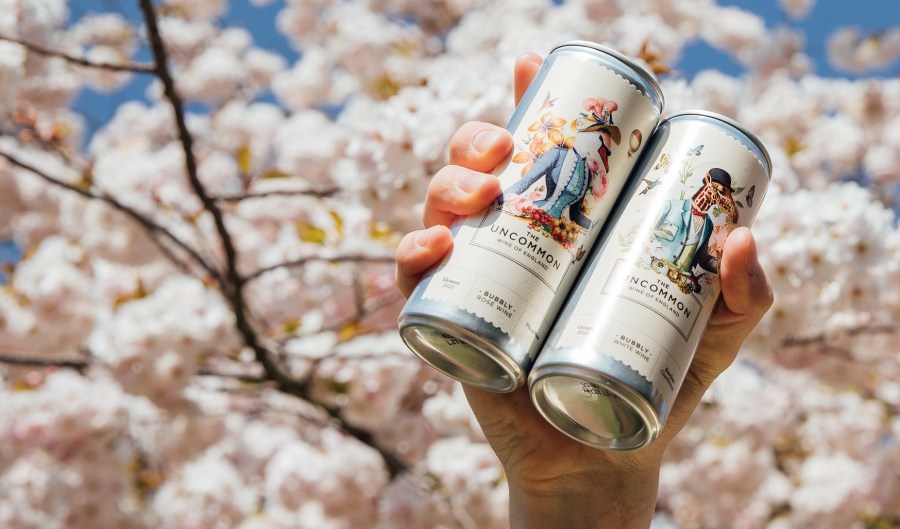
The range of English wines in cans is still extremely small, but has shown some growth in recent years. The canned wine market at large has boomed, by its own standards, with sales growing nearly 4000% in the early 2020s.
They do have a lot to offer both the consumer and the producer – cans attract lower transportation costs than glass, for example and are more robust when boxed for delivery. They also offer an accessible and casual single serve opportunity that makes them extremely flexible and may well have reach with new demographics of wine drinkers.
The increase in boxed wine sales has been attributed to younger shoppers looking for larger formats for sharing (the phrase “picnic perfect” has been thrown around a lot) that also offer value for money and stay fresh for longer.
There have been concerns in the past from both consumers and producers that boxed and canned wines do not have the same perceptions (or reality) of quality, or the same cache, as their glass counterparts. This is being countered by manufacturers who are seeking to leverage high quality materials and high end design to ensure that the formats appeal to customers seeking to buy at the premium end of the market – and they are filling them with products to match.
Selling stories
It continues to be true that successful winemakers are not just producing excellent products, but also offering their customers a glimpse behind the bottle by explaining more about who they are and why they do what they do.
This approach feeds in well to the methodology summarised in recent years by Erik Huberman, the CEO of Hawke Media, in his book The Hawke Method. He talks about three principles of marketing – awareness, nurturing and trust. All three are equally important – like a tripod that would fall if one leg did not match the others.
Telling potential and existing customers more about the ‘how’ and ‘why’ of your winemaking feeds into all three of these principles. It helps to give new customers awareness about your products. Existing customers are nurtured by feeling involved in your processes and they appreciate being kept up to date with new releases and why those wines are special. Finally, being honest and vocal about your story helps to build trust by showing consumers that your values are aligned. People are more likely to make a purchase from brands that share their world view and ethical standpoint.
James Hawkins at Hawkins Bros Fine English Wine is hugely keen on telling stories to customers face-to-face to achieve successful sales.
“The more information you have surrounding the wine, the better it is. I’m hand-selling most of the time because generally people don’t know that much about English wines – it is still about raising awareness and getting them to taste the wine.
“Making your brand stand out is very important too, considering how your brand looks. If you have got wines that are immediately identifiable and attractive then people will pay for it. A lot of sparkling bottles will look like Champagne – gold foil and a white label. But it is the ones that are doing something a bit different and stand out that people make a beeline for. Even just a different shaped label, no foil or using bright colours.”
Joe Fattorini is based in Scandinavia and has watched English and Welsh brands as they begin to enter the markets there. His anecdotal experience also stresses the importance of storytelling in building an effective brand.
“Norwegians love English wine and Simpson’s have shown how to successfully build a brand that taps into the Norwegian preference for the sort of fresh, elegant wines England and Wales make, not to mention leaning into a strongly Anglophile culture. But then they have never had the same degree of success in the much larger Swedish market. It is true that Norway and Sweden and Finland are all Nordic, monopoly markets. But there are crucial differences in trade structure, culture, and the best ways to connect with shoppers and enthusiasts. People who perform the best have found ways of connecting with wine drinkers at a one-to-one, individual level. It doesn’t need to be by the vineyard itself. It can be through retail staff, sommeliers, digital programmes, or events.”
Find out more about the Hawke Method : www.hawkemedia.com/insights/the-3-principles-of-marketing-awareness-nurturing-and-trust/