
Reducing fatigue during vineyard trimming by hand.
As the UK wine industry continues to mature, many vineyards are placing increasing emphasis on quality rather than simply maximising output. Canopy management plays a key role in achieving this, and while larger vineyards often rely on tractor-mounted equipment, manual trimming continues to have an important place, particularly in smaller vineyards or blocks where greater attention to detail is required.
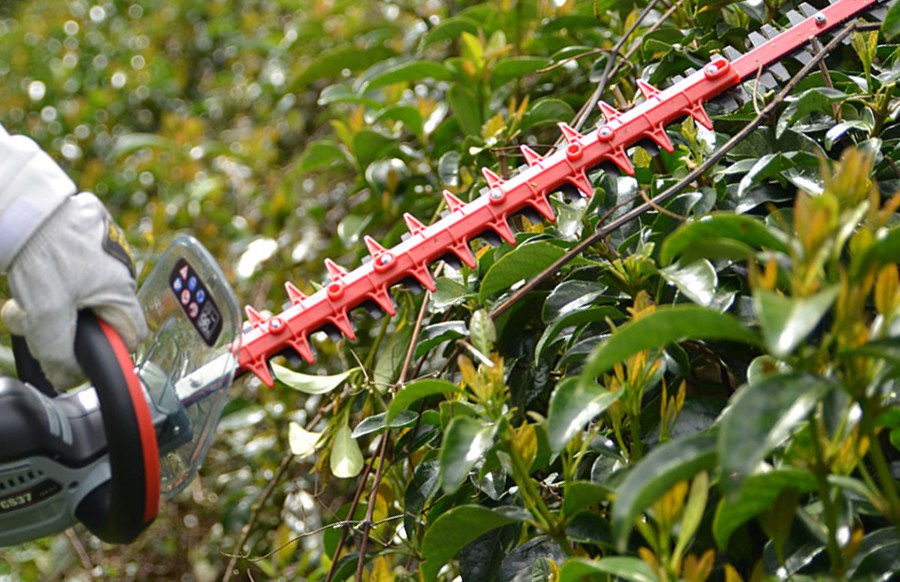
Working by hand allows operators to respond to the individual needs of the vines, producing a more considered finish around replacement vines, end posts and areas where machinery simply cannot achieve the same level of precision. The trade-off, however, is that trimming can be physically demanding, especially over a full day’s work.
One of the biggest contributors to operator fatigue is weight. On most battery-powered trimmers, the battery is mounted directly on the machine, meaning the operator is supporting its full weight with every movement. Over the course of a season, that extra weight can take its toll on shoulders, wrists and arms.
An increasingly popular alternative is to carry the battery in a backpack, leaving only the motor and cutting head in the operator’s hands. The reduction in weight is immediately noticeable, making the trimmer easier to manoeuvre and significantly less tiring to use throughout the day.
The Zanon RAPTOR is one example of this approach. By moving the battery onto the operator’s back, the tool feels lighter and better balanced, making it easier to maintain control and accuracy, particularly when working above shoulder height or moving between rows.
The benefits extend beyond comfort alone. Reduced fatigue helps operators maintain a consistent standard of work from the first row to the last, rather than seeing quality decline as tiredness sets in. For vineyards that value careful canopy management, this consistency can be just as important as outright productivity.
Battery-powered systems also bring quieter operation, reduced maintenance and the freedom to work without petrol engines, making them well suited to vineyards where staff may spend long days carrying out trimming by hand.
As labour remains one of the industry’s greatest challenges, investing in equipment that reduces physical strain can help make skilled manual work more sustainable. For vineyards that prioritise careful canopy management over covering the greatest number of hectares, ergonomic tools such as backpack-powered trimmers offer a simple but effective way to improve both operator comfort and the quality of the finished result.