

After a run of unsettled weather, many growers are already looking ahead and thinking about the disease pressure the coming season could bring. Damp conditions and slower drying times can quickly increase the risk of mildew and rot, placing extra importance on getting spray programmes right from the outset.
While product choice will always matter, the way sprays are applied is just as important. Uneven airflow, poor coverage or excessive drift can all leave gaps in protection – and those gaps are often where disease first takes hold. As a result, more attention is being given to application quality as a practical way to improve control while keeping input costs in check.
Traditional fan sprayers are widely used, but they do not always deliver the most controlled air movement in modern vineyard canopies. Adding a tower fan designs that direct air vertically through the row, helping improve penetration from top to bottom and achieving more consistent coverage in the leaf and bunch zone. Better airflow management also helps reduce turbulence and minimise unnecessary drift.
Coverage itself is another key consideration. The Martignani electrostatic sprayer uses electrically charged droplets to help spray adhere to plant surfaces and wrap around leaves and bunches. This can improve deposition on difficult areas such as leaf undersides while reducing run-off, meaning more of the product stays where it is needed. In practice, growers often find they can work with lower water rates and reduced chemical volumes, helping to lower overall spraying costs without compromising protection.
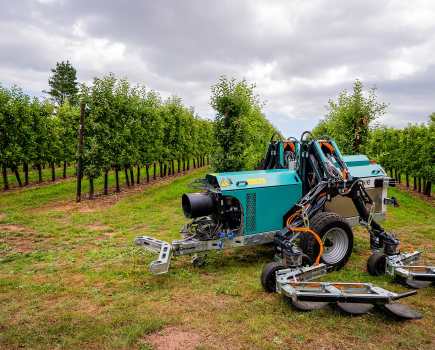
Drift reduction is also becoming increasingly important, both economically and environmentally. Recirculating systems like the Lipco sprayer enclose the canopy and capture spray that would otherwise be lost, returning it to the tank for reuse. By recycling this drift, chemical use can typically be reduced by around 35%–40%, offering significant long-term savings alongside more consistent application across the row.
As disease pressure becomes less predictable and input prices continue to rise, improving spray efficiency is proving to be one of the simplest ways to strengthen crop protection. Better airflow, improved coverage and reduced losses all help make each pass more effective.
Ultimately, reducing disease risk isn’t only about what goes into the tank, it’s about how well it reaches the crop.