
Dr Andrew Wood is author of Noble Nine a new book that directly tackles the science and history behind nine of the greatest known grape varieties. Dr Wood shares some of his insights regarding flavour profiles in wine and how they can be influenced in the vineyard.
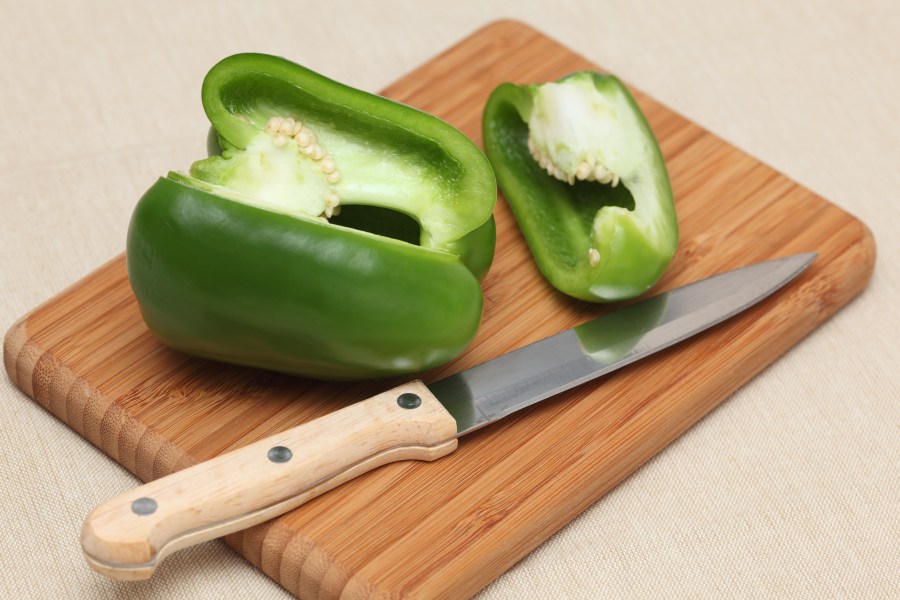
I often find that the best place to discover new scents is the kitchen. Cut into a green bell pepper and the smell is unmistakable. Zingy, fresh, sharp, and slightly bitter, it is instantly recognisable. When you next have a glass of Sauvignon Blanc or Cabernet Sauvignon from cooler regions, look out for the same hallmark vegetal smell. Some people like a hint of this green flavour in their wine, others find it a fault. Either way, it is one of the most distinctive aromas in wine.
Vegetal and green bell pepper aromas are often associated in wines with a family of compounds called methoxypyrazines. They are found naturally in a wide range of plants, including green bell peppers, and are also responsible for some of the broader herbaceous and vegetal characteristics found in wine. The most important compound is abbreviated to IBMP (3-isobutyl-2-methoxypyrazine), and whilst it is particularly associated with Cabernet Sauvignon and Sauvignon Blanc, it can also be found in Cabernet Franc, Merlot, and Carmenère, to name just a few.
One of the things that makes methoxypyrazines like IBMP particularly interesting is how differently people describe their smell. English sommeliers describe it as green bell pepper; South Korean tasters describe it as ginseng; and Zimbabwean tasters describe it as blackjack, after a small flowering plant used to make tea. In each instance, the IBMP aroma is both recognisable and the same, but the descriptive term used is shaped by what we know and what we have grown up smelling.
Inside the berry
Methoxypyrazines are nitrogen-containing organic compounds belonging to a family of molecules known as pyrazines. They have exceptionally low sensory detection thresholds, with IBMP reportedly detected in wine at very low concentrations (above 2 ng/L for white wine and 10-17 ng/L for red wine). Nanograms per litre are equivalent to parts per trillion, showing just how small an aroma concentration can influence the profile of the finished wine.
Methoxypyrazine concentrations in fruit are generally highest early in berry development. They accumulate after fruit set, reach a peak before véraison and then decline as the berries ripen. This decline is partly explained by the increasing size of the berry, which dilutes the compounds as it expands.
The timing and rate of decline also suggest a potential natural role for methoxypyrazines. It is proposed that their powerful green smell and bitter taste can act as a warning to generalist herbivores, like deer, birds, or insects such as aphids that may want to eat the grapes or leaves. The theory is that the unpleasant flavours are present in the grapes in order to signal to these animals that young leaves or unripe fruit are unpalatable. As fruit matures and methoxypyrazine concentrations decline, the fruit becomes more attractive to animals that consume the fruit and disperse its seeds. This protective role may well be the primary function of the compounds, with the wine flavour being a secondary impact.
Although the biochemical pathway is not yet fully understood, research has linked the production of different methoxypyrazines to different branched-chain amino acids, with other amino acids assisting in the process. Recent experiments in green bell peppers have identified the building blocks of IBMP. These experiments suggest that the branched-chain amino acid leucine gives both its distinctive side-branch and part of a ring of carbon and nitrogen (called pyrazine) to combine with atoms from serine and glutamine and eventually produce IBMP. The precise reactions are uncertain, but we do know that the final stage is enzymatic, with an enzyme attaching a small cluster made of one carbon atom and three hydrogen atoms to the oxygen already present on an intermediate, producing IBMP.
Managing the green
For growers, the objective is not necessarily to eliminate green character altogether. In Sauvignon Blanc, it is often an essential part of the wine’s identity. In Cabernet, too much can suggest under-ripeness, but a degree of herbal character will contribute complexity and I often find it surprisingly pleasant. The challenge is to produce the right balance. Methoxypyrazine concentrations can be influenced through vine management, particularly through canopy manipulation, which changes the light and temperature around the fruit.
In general, opening the canopy reduces the concentration of methoxypyrazines. Opening the canopy allows more light and heat to reach the grapes and leads to reduced methoxypyrazine accumulation. The challenge for viticulturists is to reduce the concentration of methoxypyrazines in order to limit green character without exposing grapes to so much sunlight that they burn, or lose their characteristic flavour.
The timing of leaf removal is particularly important. In a study on Sauvignon Blanc, Gregan and Jordan (2016) found that leaf removal before véraison significantly reduced methoxypyrazine concentration at harvest, whereas leaf removal after véraison had no impact. This suggests that the opportunity to influence methoxypyrazine levels is greatest before the berries begin their natural decline in concentration during ripening.
Temperature also matters. Removing the leaves and allowing the light to strike the berries increases fruit-zone temperature. This correlates with a reduction in the accumulation and retention of methoxypyrazines. However, this is not a direct relationship and excessive heat brings other challenges. Temperature is always a balancing act, with enough heat needed to stop the methoxypyrazines being overpowering, but not too much as grapes become over-ripe, losing not just methoxypyrazines but also freshness. The objective is therefore not simply to remove as many leaves as possible. It is to create a fruit-zone microclimate that encourages ripening without exposing the bunches to excessive heat.
A different approach at Château de Ferrand
Managing the temperature and light in the vineyard is becoming increasingly important as growing seasons warm. Practices that were once used primarily to encourage ripening in cooler conditions must now account for the risk of excessive afternoon temperatures. Vineyards must balance the reduction of green character against the preservation of acidity, fruit freshness, and healthy berries.
At Château de Ferrand in Saint-Émilion, Bordeaux, estate director Gonzague de Lambert and co-owner Philippe Chandon-Moët have adopted their own directional approach to leaf removal that addresses this problem directly. A few weeks before véraison, they remove all the leaves in the fruiting zone on the side of the vine exposed to the morning sun. On the opposite side, they retain a leafy canopy above the bunches, providing protection from the more intense afternoon sunlight.
Ferrand applies the technique to both Cabernet Franc and Cabernet Sauvignon vines, which together make up around a third of their vines. Because they vinify each parcel separately, they have determined that the wines from these plots have more even ripening and lower methoxypyrazine concentrations than before the technique was introduced. They report that the resulting wines show more pronounced ripe red-fruit flavours. This, they say, has led to fewer green pepper notes and less herbaceous character in their finished wines. With temperatures in Saint-Émilion now consistently hot enough each year, it has become part of their regular approach to vineyard management and climate change adaptation. For the estate, it has proved an effective way of managing the competing demands of exposure and protection.
Finding the balance in a changing climate
Canopy management cannot be reduced to a simple formula. The lesson from Ferrand is not that every vineyard should adopt the same leaf-removal strategy. Row orientation, variety, canopy vigour, and local weather will all influence the outcome; and what works in one Bordeaux vineyard may not translate directly to another site. Growers must therefore use the manipulation of their canopy to balance light exposure against berry temperature. Naturally, vintage variation and temperature rises will change the balance between exposure and protection of the fruit, with greater shade necessary as heat rises.
Ultimately, managing methoxypyrazines is not simply about completely removing the vegetal flavours. It is about understanding the factors that influence their concentration, and giving the grapes enough light to ripen without giving them more sun than they can handle.
Noble Nine by Dr Andrew Wood is published by Granta Books and is available directly from the publisher or through major retailers.